




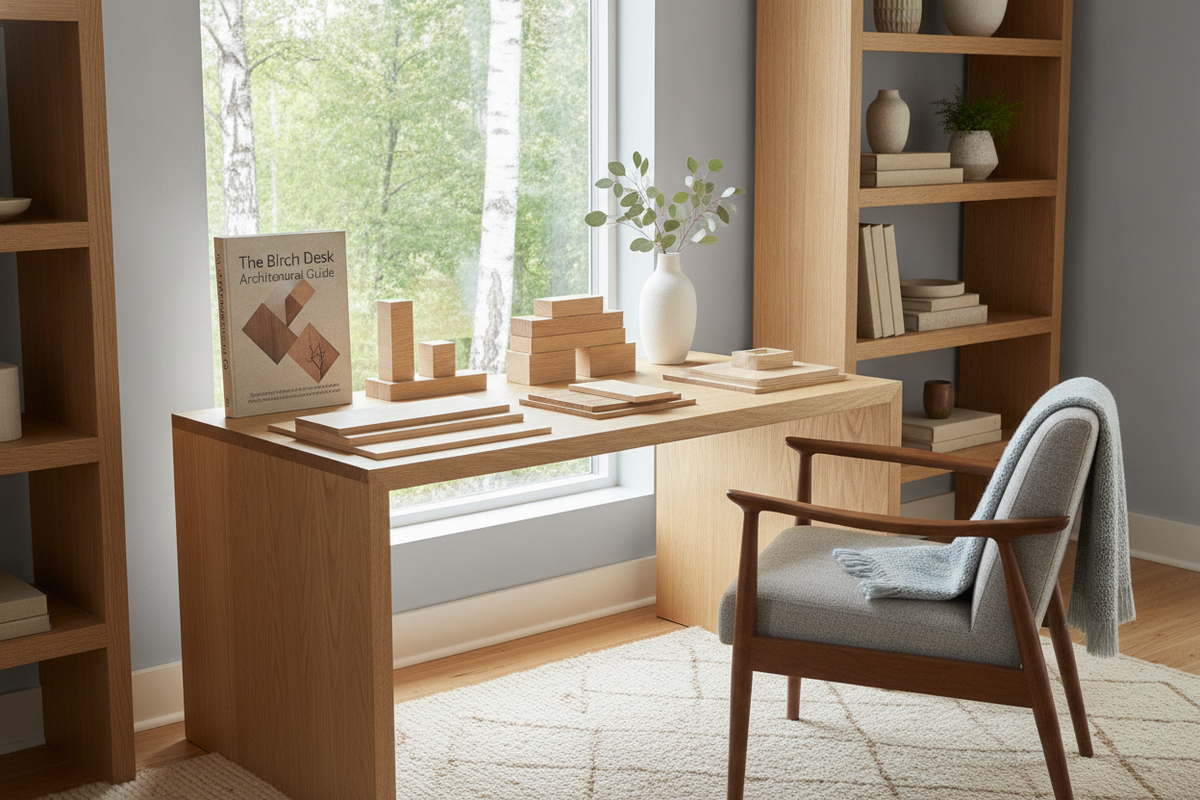
Light-toned woods have long served as the cornerstone of functional workspace design. Among pale hardwoods, birch holds a distinctive place due to its fine, straight grain, subtle figuring, and luminous natural hue. Popularized globally through Scandinavian furniture traditions, a birch desk introduces organic warmth into modern offices without visually overwhelming the surrounding interior.
Whether planning a dedicated home studio, a dual-purpose living room workspace, or an understated study alcove, selecting the right workstation requires balancing surface construction, footprint scale, and base support geometry. Understanding how natural birch elements interact with modular components allows you to design a tailored desk setup that remains visually quiet and structurally dependable over years of daily use.
Birch Material Construction Tiers: Solid Wood, Veneer, and Foil Finishes
When evaluating birch surfaces, workstations generally fall into three distinct fabrication categories. Each tier presents specific balances between aesthetic authenticity, weight, structural behavior, and maintenance requirements.
Solid Birch and Butcher Block Construction
Solid birch surfaces are composed of edge-glued staves or full-length planks of solid hardwood. This construction method offers exceptional surface density and authentic grain continuity across the top and side profiles. Solid wood can be repeatedly sanded, re-oiled, or refinished to remove localized wear. However, solid timber naturally responds to relative humidity fluctuations, requiring adequate perimeter clearance and slotted fastener attachment to accommodate minor seasonal movement without splitting.
Birch Veneer Over Engineered Cores
Birch veneer tabletops feature a genuine thin layer of real birch timber bonded under high pressure to a core of medium-density fiberboard or particleboard. This composite construction delivers the tactile texture and visual variation of natural wood while substantially improving dimensional stability across wide spans. Veneered surfaces resist seasonal warping and cupping far better than solid timber in moisture-variable environments, though their surface layer cannot withstand aggressive, repeated deep sanding.
Foil and Melamine Birch-Effect Laminates
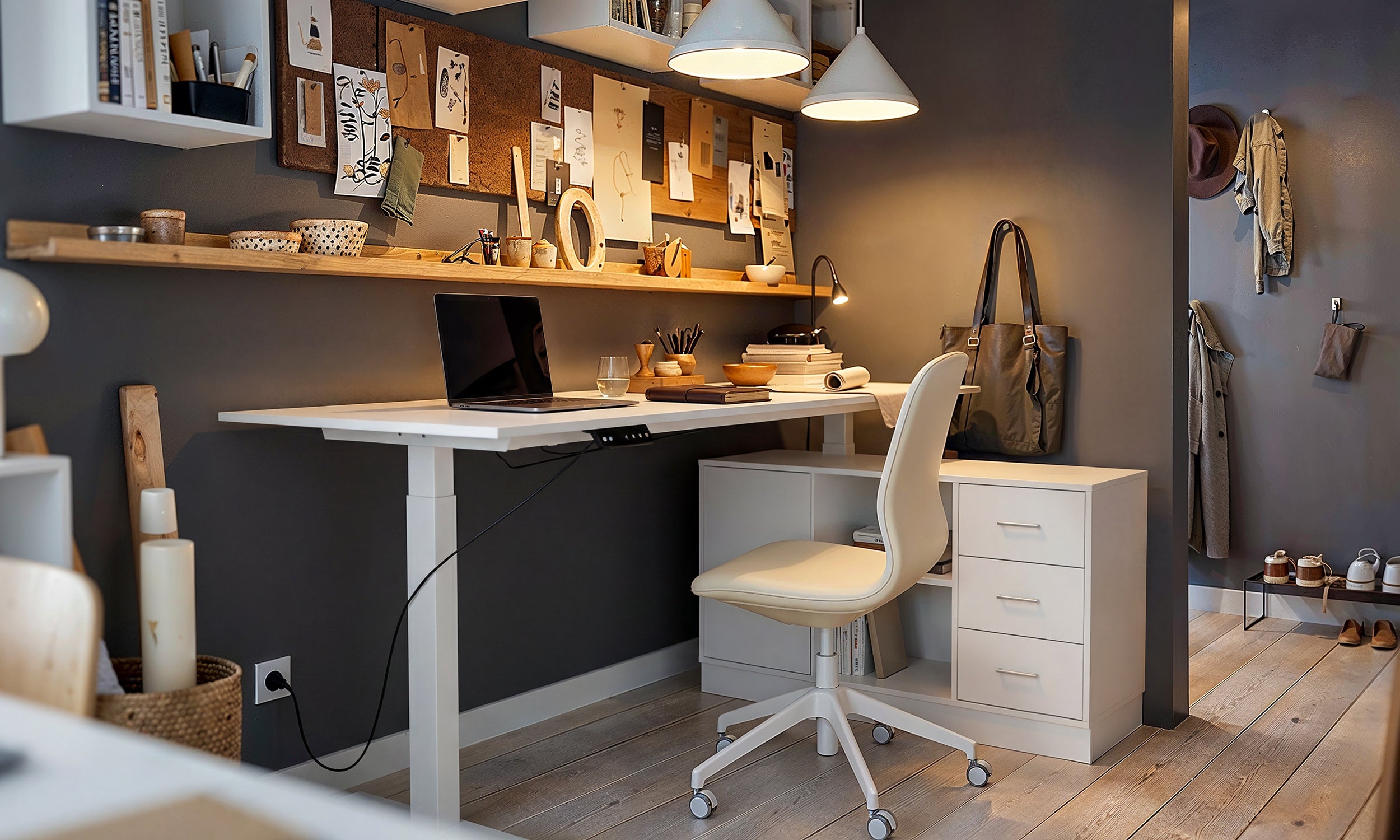
Entry-tier modular tops utilize a printed paper or resin foil bonded over a lightweight honeycomb or particleboard substrate. While these surfaces simulate the visual pattern of pale wood, they lack genuine grain depth and tactile variation. However, they offer consistent color uniformity across production batches and provide non-porous resistance against everyday surface spills. If you are planning high-load setups with multi-monitor arrays or heavy hardware, reviewing a specialized desk ikea guide can help clarify the structural surface density needed for dense equipment layouts.
Dimensional Sizing Categories and Room Layout Dynamics
Proper spatial planning ensures that a desk balances functional work surface area with comfortable pedestrian circulation within the room. Birch desks are typically categorized into three functional scale envelopes.
- Compact Surfaces: Designed for narrow alcoves, guest rooms, or secondary study nooks, compact formats emphasize shallow depths to preserve primary floor area. These work best for dedicated laptop tasks and streamlined document review. If spatial boundaries are tightly constrained, consulting an ikea desk guide focused on compact planning can help optimize perimeter clearances.
- Mid-Scale Standard Dimensions: The standard mid-tier footprint accommodates an external monitor, full keyboard, task lighting, and open notebooks simultaneously. This scale represents the ergonomic baseline for full-time remote professionals needing dedicated screen distance and forearm support.
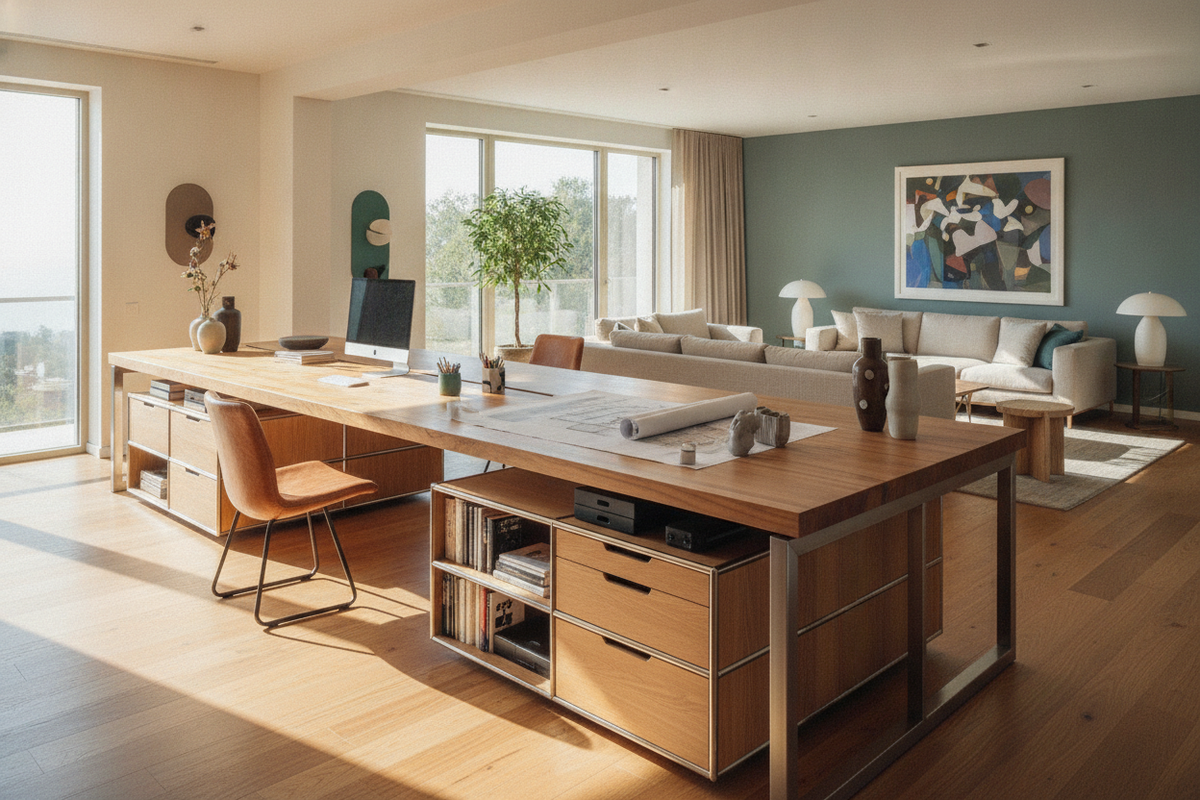
- Wide-Span Worktables: Extended surfaces offer expansive room for multi-screen arrangements, drafting tools, and collaborative multi-user workstations. Long spans introduce an architectural centerpiece quality to open-concept studios but require careful structural under-framing to prevent central sagging.
Base Geometry and Structural Support Configurations
The foundation supporting your birch tabletop determines lateral rigidity, legroom flexibility, and the visual weight of the overall workstation.
Minimalist Post Legs
Round or square tubular legs provide an open, airy silhouette that keeps floor space unobstructed. Post legs work exceptionally well in smaller rooms where preserving sightlines prevents visual crowding. To ensure adequate knee clearance and maintain proper upper-body alignment, pairing the desk base with adjustable task seating as detailed in an ikea desk guide ensures harmonious operational heights.
A-Frame Trestles and Architectural Stands
Trestle bases introduce structural character and visual stability. Many trestle designs incorporate integrated lower storage shelves, providing a convenient staging area for desktop towers, paper trays, or design portfolios. However, trestles occupy wider floor footprints and can restrict lateral leg movement near the perimeter of the tabletop.
Modular Drawer Units as Structural Supports
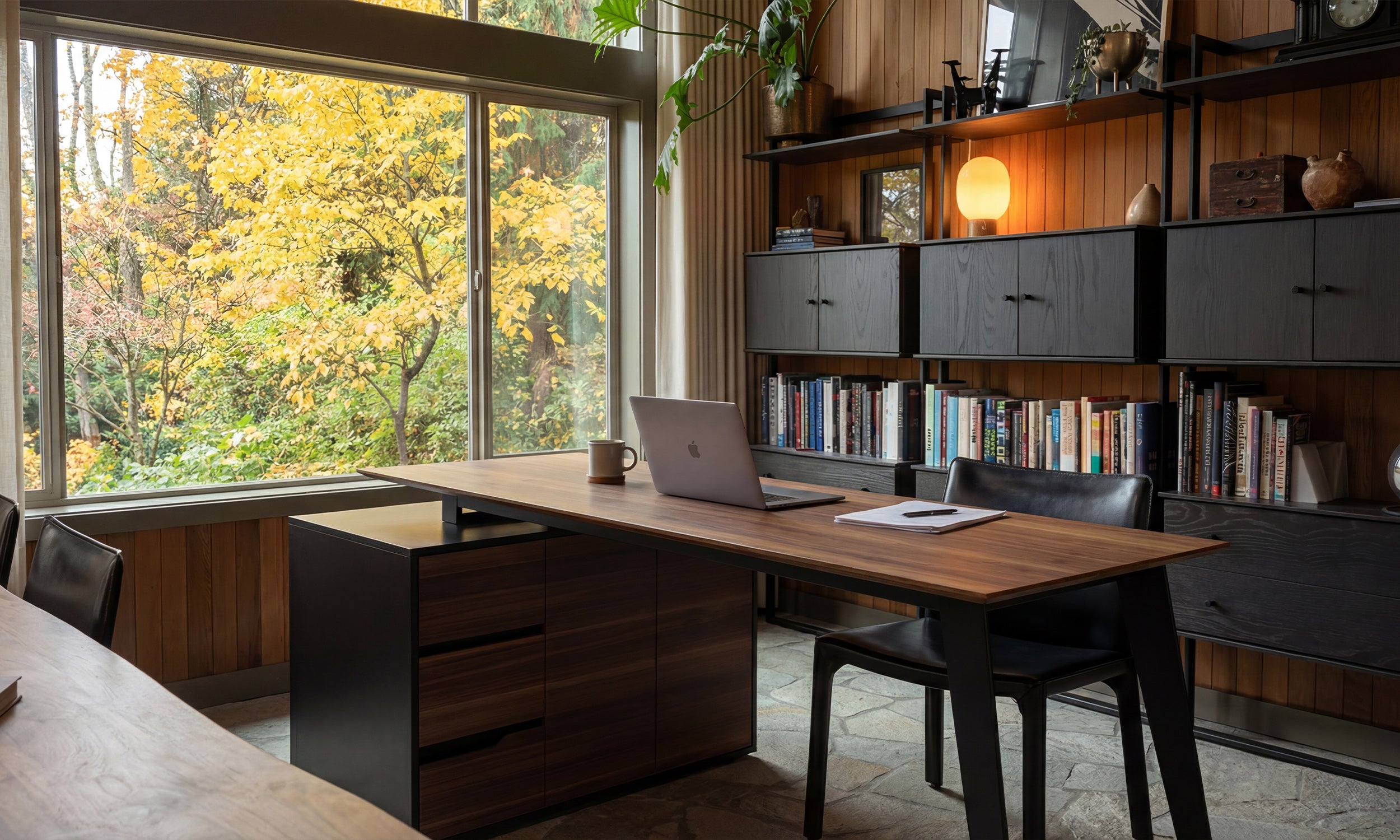
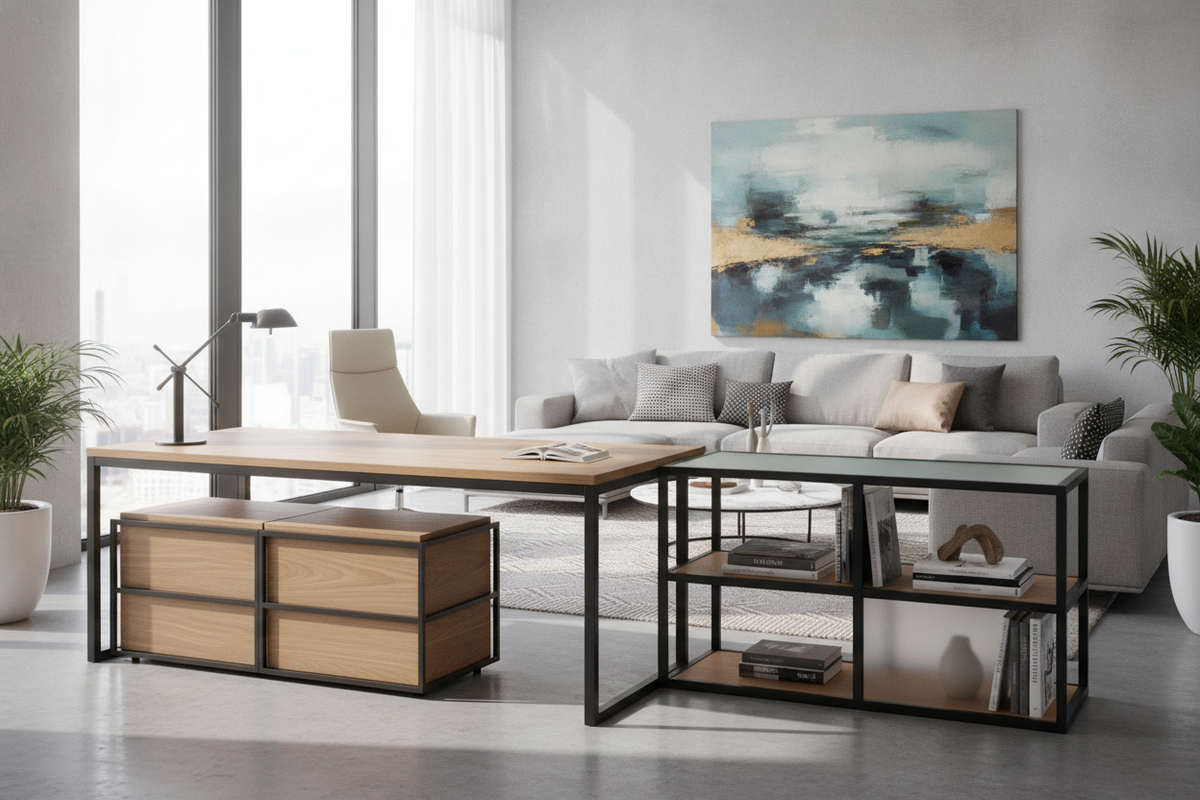
Replacing one or both leg pairs with modular drawer pedestals maximizes under-desk utility. A dual-drawer tower configuration transforms an ordinary birch top into a substantial executive workstation with immediate access to everyday office essentials, combining structural stability with dense functional storage.
Integrating Storage and Complementary Office Cabinetry
Maintaining the calm, minimalist appeal of pale wood requires intentional storage zoning to prevent surface accumulation. Light birch finishes pair seamlessly with neutral matte white, charcoal, or complementary wood-tone storage elements.
Vertical Wall Shelving and Floating Credenzas
To keep the primary work plane clear, consider utilizing vertical storage above and adjacent to the workstation. Floating birch shelves create visual continuity while displaying reference books and ambient decor. For larger rooms requiring expansive archive capacity, integrating low-profile credenzas or modular wall units—similar to concepts outlined in a built-in desk ikea guide—delivers a bespoke architectural look with abundant concealed storage.
Under-Desk Cable Concealment
Light wood surfaces emphasize cable silhouettes more prominently than dark tabletops. Installing under-desk wire management channels, power strip cradles, and adhesive cable organizers ensures that power leads and peripheral cords remain completely hidden from primary viewing angles.
Surface Care, Assembly, and Longevity Considerations
Protecting the pale, refined aesthetic of a birch desk involves simple yet critical preventive maintenance steps during assembly and everyday use.
- UV and Light Exposure: Pale hardwoods naturally mature over time when exposed to direct sunlight. To prevent uneven yellowing or ambering across the surface, avoid placing desk pads or heavy organizers permanently in a single position during the initial months of exposure.
- Moisture and Heat Protection: Unfinished or oiled birch surfaces are vulnerable to liquid rings and heat transfer from hot ceramic mugs. Always utilize cork or felt coasters and promptly wipe liquid spills with a slightly damp microfiber cloth.
- Deflection Prevention: On wide-span birch surfaces supported only at the outer edges, installing a central longitudinal stiffener rail or an auxiliary center support leg helps distribute hardware weight evenly and prevents gradual surface deflection over time.

Dejar un comentario
Este sitio está protegido por hCaptcha y se aplican la Política de privacidad de hCaptcha y los Términos del servicio.