


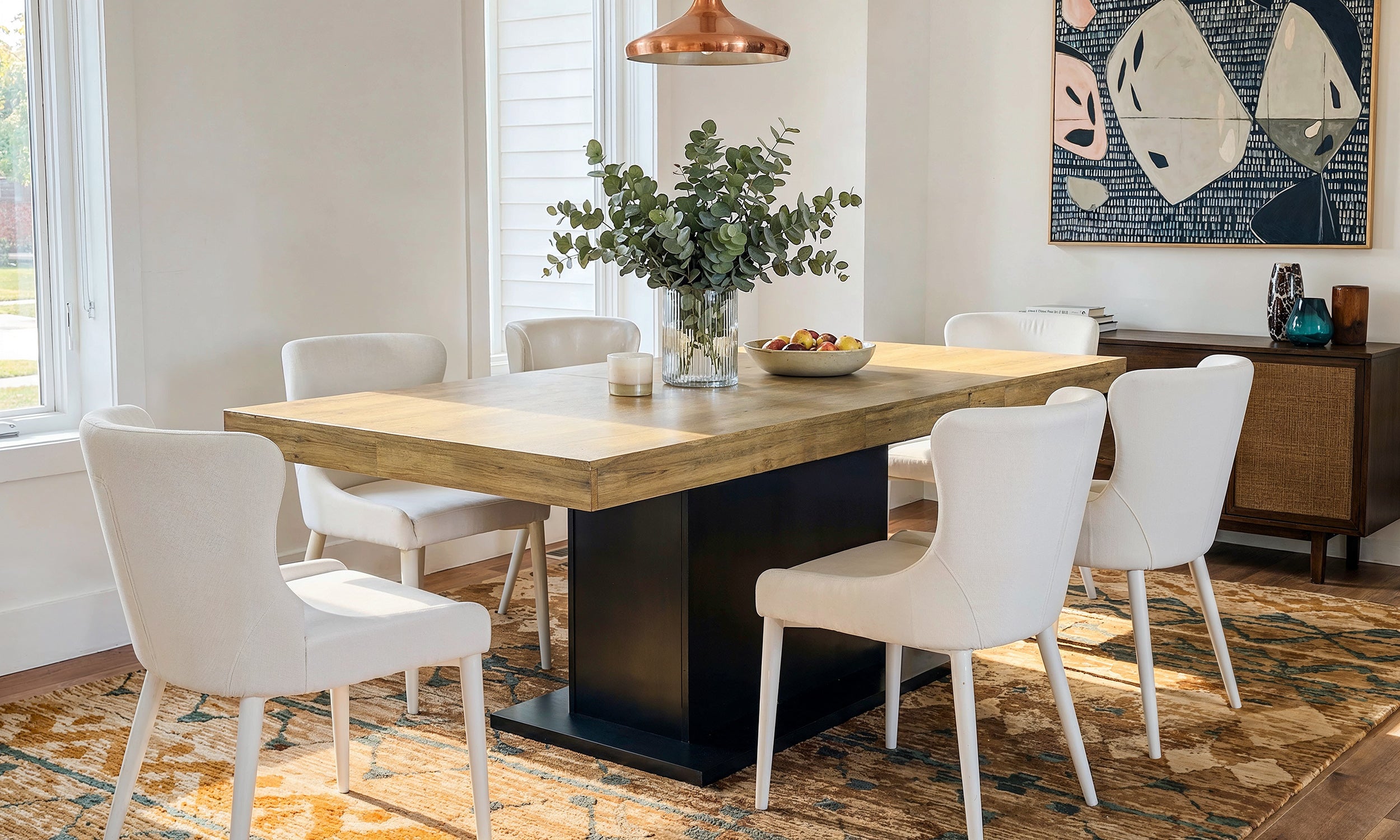
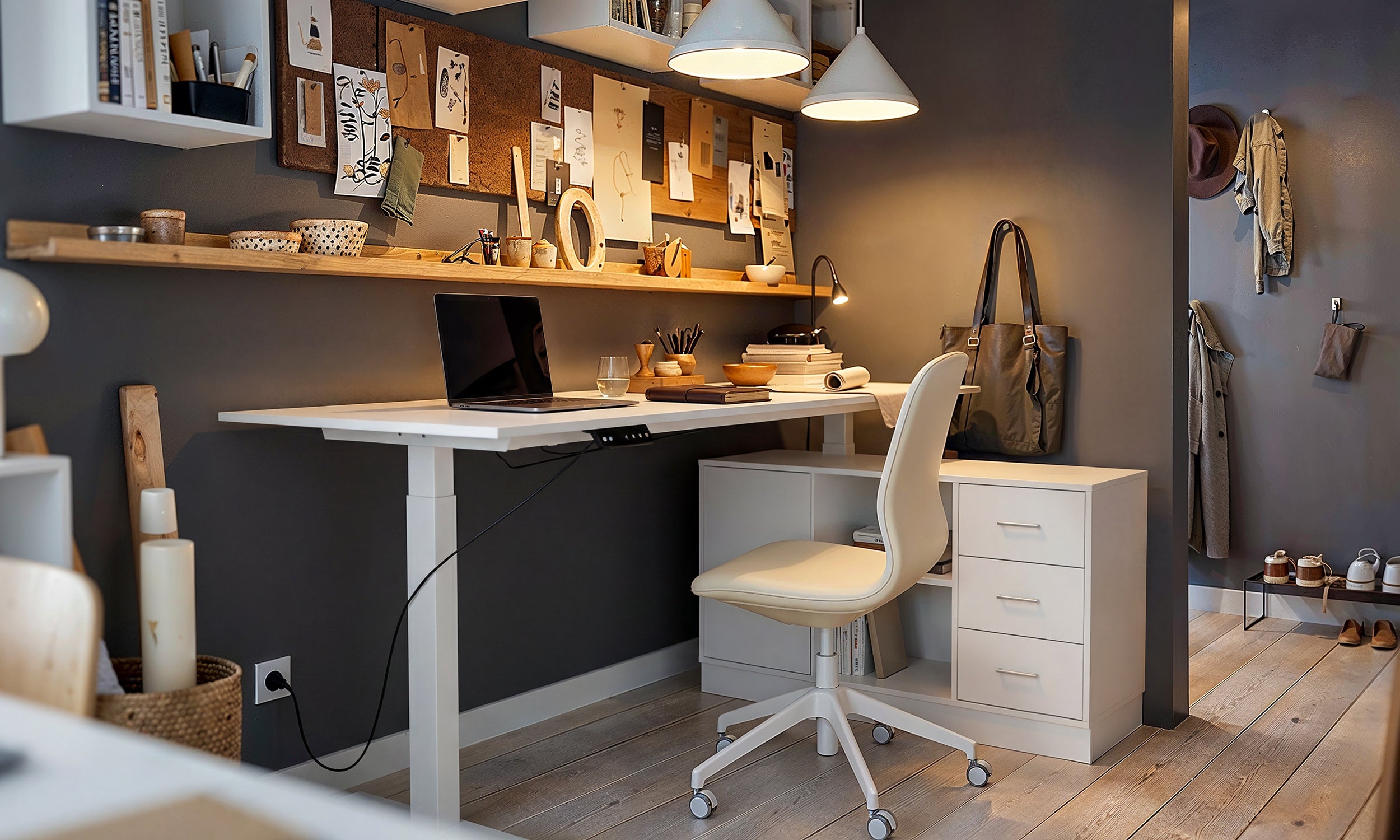
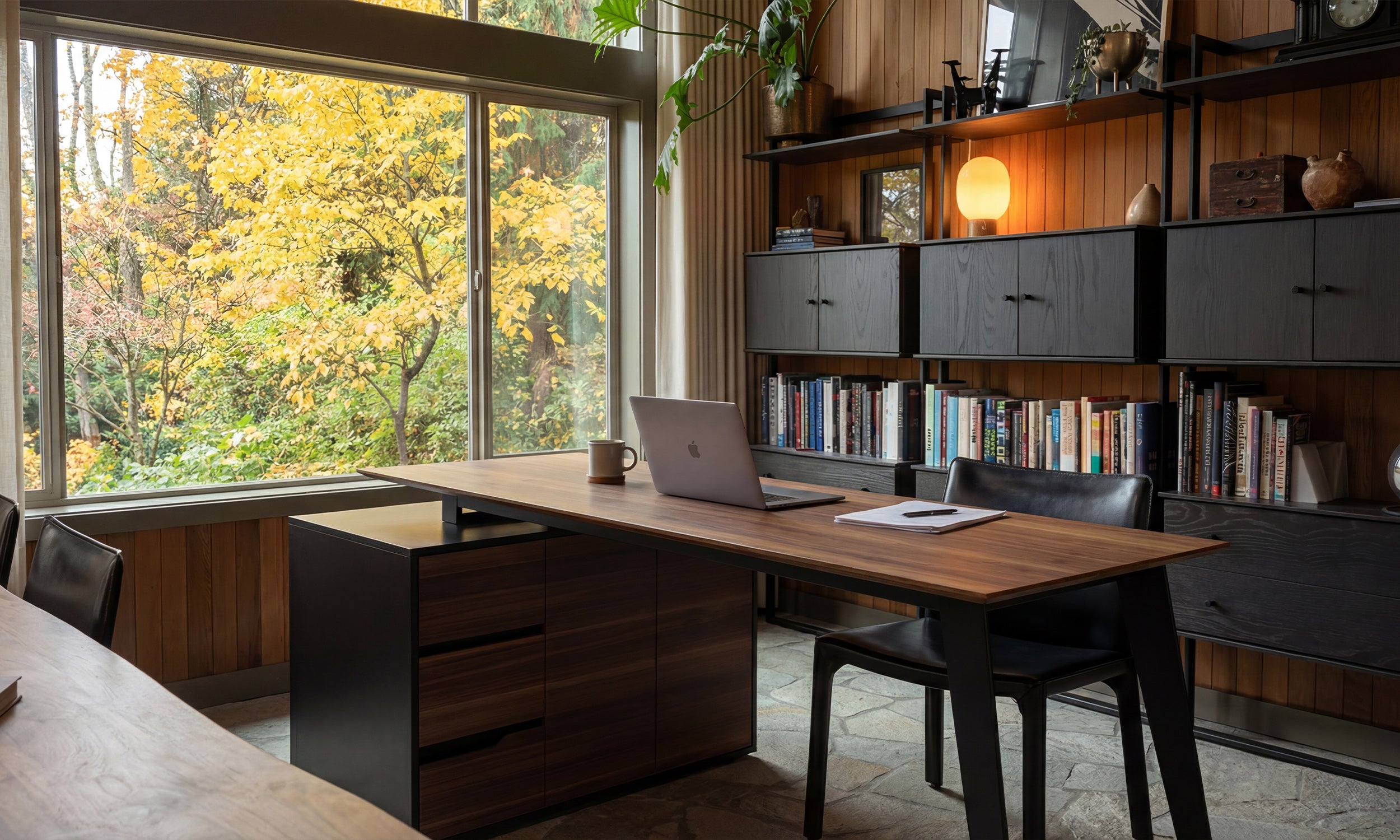


A big table desk serves as an architectural anchor within a contemporary office or studio, breaking away from the compartmentalized feel of traditional modular workstations. Rather than confining tasks to narrow cubicles or fixed drawer towers, a broad worktable establishes a continuous plane where digital devices, physical reference materials, and collaborative projects coexist naturally. Transforming an expansive table into an effective workspace requires careful attention to spatial proportion, structural span support, and peripheral storage balance.
The Architectural Appeal of a Big Table Desk in Modern Workspaces
Modern work frequently shifts between digital tasks, tactile prototyping, sketching, and discussions. A large desktop table accommodates these fluid transitions by functioning as an open work platform rather than a single-purpose computer station. With no fixed pedestals to restrict knee movement or dictate seating angles, users can reposition themselves, share the surface with colleagues, or maintain multiple active project zones simultaneously.
Visually, an open-frame table preserves sightlines and prevents a room from feeling crowded. Heavy executive desks often create visual mass that dominates smaller rooms, whereas a table desk elevated on slender posts, trestles, or inset metal frames allows ambient light and flooring to remain visible beneath the surface. This creates an airy, uncluttered aesthetic suitable for minimalist home offices, creative studios, and multi-functional residential floor plans.
Dimensional Tiers and Spatial Clearance: Scaling the Large Desktop Table
Choosing the right proportions requires balancing generous working space with clear movement pathways around the room. An oversized table positioned without adequate perimeter space quickly disrupts the circulation of the entire room.
- Standard Broad Desks: Suited for dedicated home offices, offering ample width for dual displays while leaving ample room for peripheral notebooks and lamps.
- Extended Wide-Format Tables: Ideal for shared dual-user workspaces or multi-monitor technical setups, providing distinct physical zones for distinct tasks.
- Executive and Conference-Scale Spans: Designed for central placement in large private offices or creative war rooms, supporting multi-person reviews and large layout tasks.
Surface depth is just as important as overall width. A deep tabletop places computer displays at an ergonomic viewing distance while leaving an expansive foreground zone for writing, drawing, and keyboard placement. However, excessive depth can make reaching rear-mounted accessories difficult if the user is seated against a wall. When placing broad furniture in multi-use rooms, aligning the scale with other substantial pieces—such as following principles used in large entertainment furniture planning—ensures a harmonious visual weight throughout the home.
Structural Architecture and Span Mechanics for Wide-Format Surfaces
As surface width increases, structural stability becomes a key engineering consideration. Wide table spans must resist mechanical deflection (sagging) across their center points, particularly when loaded with heavy displays, desktop speakers, books, and reference hardware.
To maintain long-term structural integrity without intrusive center legs, broad desks typically utilize under-table support frames. Longitudinal steel stringers, boxed aprons, or reinforced sub-structures distribute downward loads outward toward the structural uprights. When mounting display arms or articulating brackets, ensuring the tabletop core possesses sufficient density prevents surface crush or flex. In high-hardware environments, combining robust table construction with specialized mounting hardware for large displays preserves open usable desk space below the screen perimeter.
Leg silhouette also dictates ergonomic comfort. Corner legs maximize clear knee room under the central span, while inset trestle frames allow perimeter seating for collaborative work without hitting knee obstructions. Sturdy triangular or canted leg geometries offer lateral rigidity, resisting wobble when typing or drafting across long spans.
Storage Pairing Strategies: Balancing Openness and Organization
While an open-frame table offers spacious legroom and clean design, it lacks the built-in storage of traditional cabinetry. Maintaining an organized environment requires thoughtful secondary storage solutions positioned strategically around the desk perimeter.
Mobile filing pedestals and low-profile drawer units can slide neatly beneath the outer corners of the tabletop, preserving central legroom while keeping office supplies and documents within arm's reach. For users who prefer a completely open under-desk environment, pairing the table with a matching lateral credenza, tall shelving unit, or wall-mounted hutch relocates filing and peripheral hardware off the primary work surface.
For rooms where built-in storage is non-negotiable due to spatial limits, choosing a large corner desk with integrated storage or a dedicated computer desk with dedicated storage may offer a more compact footprint than a freestanding open-table and credenza pairing. Managing wiring across an open expanse is equally essential; under-mounted cable trays, horizontal raceways, and discrete desktop grommets ensure power feeds and network lines stay neatly tucked against the structural frame.
Material Selection and Surface Longevity
The choice of surface material directly impacts daily usability, tactile comfort, and durability over years of active use:
- High-Pressure Laminate and Engineered Cores: Highly resistant to surface scratching, heat from electronics, and accidental spills. Engineered composites provide dimensional stability, preventing warping across wide seasonal humidity shifts.
- Natural Hardwood Veneers: Bring warm grain character and natural texture to executive environments, requiring gentle cleaning routines and occasional surface conditioning to preserve their finish.
- Edge Profile Details: Impact-resistant edge banding, subtle bevels, or radiused perimeter corners soften contact points under wrists and protect the surface against edge chipping.
Multi-Modal Layout Scenarios: From Solo Executive Hub to Shared Studio
How you orient a broad table defines the flow and function of the entire room:
- The Floating Executive Centerpiece: Positioned in the center of the office facing outward toward the door. This arrangement provides a commanding presence, opens sightlines, and allows guest seating along the front perimeter. Where public facing privacy or transaction surfaces are required instead of an open table, a dedicated large reception desk unit offers specialized compartmentalization.
- The Dual-Sided Studio Hub: Situated perpendicular to windows or central to a creative room, enabling two team members to work face-to-face across the expansive depth while sharing central power hubs and lighting.
- The Hybrid Linear Workspace: Placed along a long wall to create dedicated, zoned territories—housing an active digital workspace on one side and an open tactile assembly or drafting surface on the other.
Assembly, Alignment, and Long-Term Spatial Care
Positioning a wide-format desk requires careful handling and deliberate staging. Due to the span and weight of broad surfaces, assembling the base frame in its designated room before attaching the primary top avoids unnecessary strain on structural joints during transit.
Ensuring precision leveling across flooring surfaces is critical. Most structural bases include adjustable leveling glides beneath each foot; tuning these glides eliminates subtle frame racking and stabilizes the desk against wobble. Periodically checking and tightening structural mechanical fasteners keeps the frame rigid over extended daily use, preserving an elegant, rock-solid workspace that effortlessly supports your daily workflow.


Dejar un comentario
Este sitio está protegido por hCaptcha y se aplican la Política de privacidad de hCaptcha y los Términos del servicio.