






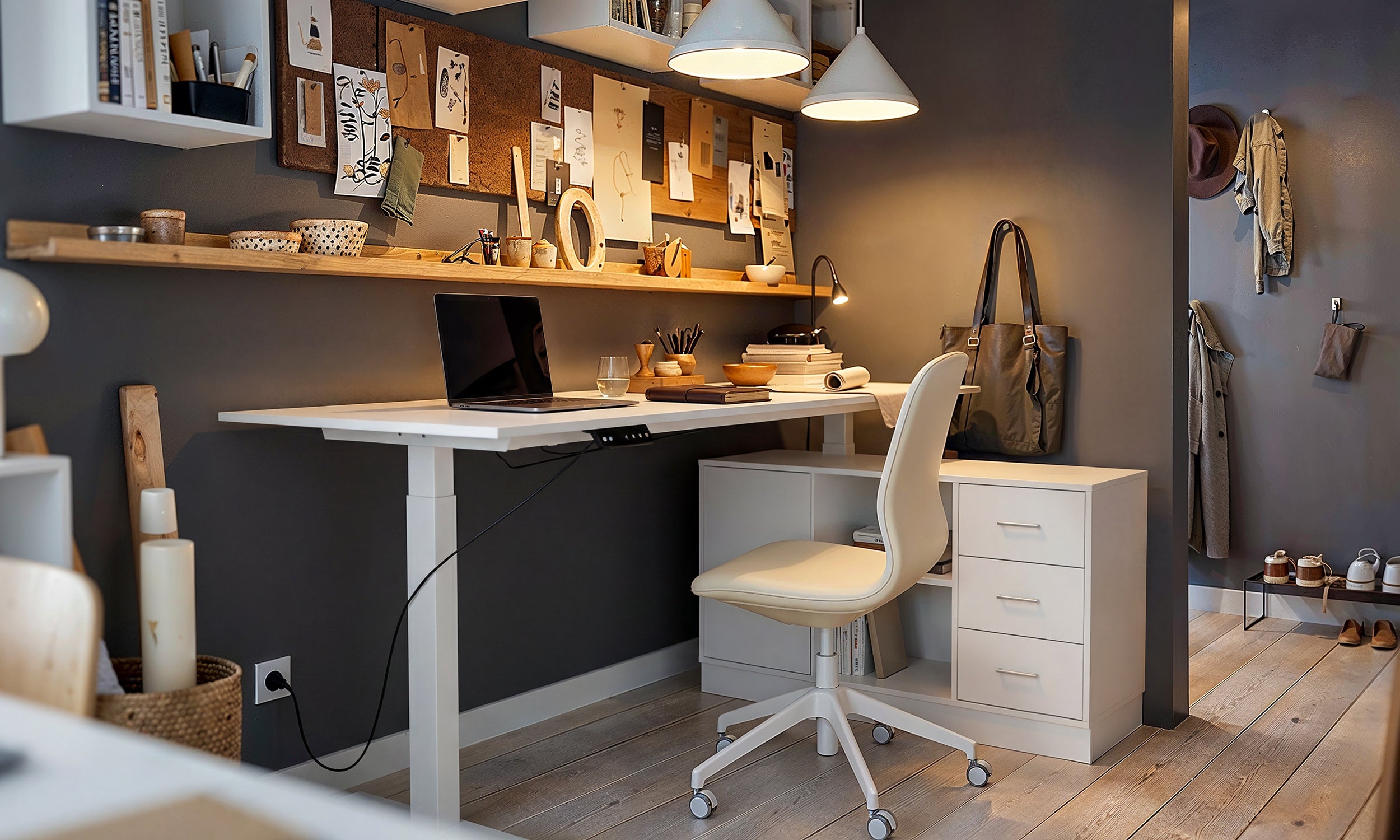



Core Work Categories and Task Envelopes for Office Seating
Selecting the right chair office use profile requires understanding the relationship between physical posture and daily workflow. Workspace seating is not a one-size-fits-all product category; different professional routines demand distinct mechanical capabilities and structural support envelopes. When professionals sit in a chair at work, their movement patterns range from static, task-focused keyboard work to dynamic collaborative conversations and relaxed document reviews.
For computer-intensive roles involving extended data entry or writing, dedicated typing chairs prioritize upright backrest engagement and active lumbar contact. These seats generally feature independent back angle adjustment and forward tilt mechanisms that encourage open hip angles without placing unnecessary pressure on the thighs. In contrast, multi-tasking executive models often incorporate synchro-tilt mechanisms, where the backrest reclines at a higher ratio than the seat pan to support alternating between deep focus and relaxed thought.
Evaluating how different chairs work across varying shifts requires assessing posture dynamics alongside task variation. If your daily schedule alternates between digital input, physical paper handling, and team conferences, a versatile mid-back or high-back chair with adjustable armrests and seat sliders offers balanced movement. For a broader spatial perspective on layout strategy, consult our work desk office guide to understand how your overall posture interacts with surface placement.
Spatial Clearance Geometry: Integrating Chairs with Desks and Leg Wells
A frequent oversight when configuring an office setup is the dimensional compatibility between the chair and the primary work surface. A high-performance seat can quickly become impractical if its components collide with drawer aprons, keyboard trays, or side storage returns. Achieving smooth movement and efficient under-desk parking requires careful measurement of armrest heights, base diameters, and knee-well clearances.
- Armrest Drop Height: Measure the distance from the floor to the lowest point of your desk frame apron. Ensure your chair armrests can adjust downward sufficiently to tuck fully under the worktop when not in use.
- Five-Star Base Footprint: Verify that the diameter of the caster base fits comfortably within the desk leg opening, preventing wheel collisions against interior panel walls.
- Perimeter Roll Zones: Maintain sufficient clearance behind the chair to allow easy entry and exit without striking credenzas, filing drawers, or wall baseboards.
When pairing seating with comprehensive setups like an office desk product, assessing corner knee-well depth ensures your chair glides cleanly without scuffing perimeter finishes or restricting leg movement.
Material Construction and Maintenance Tiers for Everyday Office Use
The longevity and day-to-day comfort of seating depend directly on upholstery choice, structural frame design, and caster engineering. Evaluating these material tiers helps ensure your seating stands up to consistent daily use while complementing your decor scheme.
Upholstery choices typically balance breathability and cushioning density:
- Breathable Mesh: Tensioned mesh promotes continuous airflow, making it well-suited for warm environments or high-activity workspaces. Ensure the mesh exhibits firm elasticity to prevent sagging over time.
- High-Density Molded Foam: Fabric-covered or smooth-surfaced molded foam distributes body weight evenly across the seat pan, providing durable cushioning for structured sitting.
- Reinforced Frame Materials: Look for heavy-duty nylon composite or reinforced metal sub-frames that maintain rigid stability through routine tilt and swivel cycles.
- Surface-Appropriate Casters: Pair your chair with soft polyurethane casters for hardwood or laminate floors to prevent surface marking, while standard dual-wheel nylon casters perform reliably on commercial carpets.
Integrating well-designed seating into a refined workspace also involves aesthetic cohesion. You can explore creative ways to coordinate textures and color palettes by browsing our desk office work guide for practical decor planning tips.
Sourcing Online Desk Chairs: Assembly Verification and Storage Harmony
When ordering desk chairs online, planning ahead for delivery, unboxing, and structural assembly ensures safe and quiet long-term operation. Flat-pack seating requires methodical assembly to prevent looseness, squeaking, or premature mechanical wear.
- Component Inspection: Unpack all hardware, verifying that the pneumatic gas lift cylinder, tilt mechanism, seat pan, backrest bracket, and caster base are undamaged.
- Pneumatic Cylinder Seating: Insert the gas cylinder straight into the center collar of the five-star base, ensuring firm, vertical alignment before attaching the seat plate.
- Hardware Torque Sequence: Thread all structural bolts loosely by hand before systematically tightening them in a cross-pattern to distribute tension evenly across the frame brackets.
- Mechanism Calibration: Test the pneumatic height lever, tilt-lock lever, and tilt-tension knob to ensure smooth motion and positive engagement.
Finally, consider how the footprint of your office chair harmonizes with surrounding cabinetry. Matching your chair's visual scale and movement radius with an integrated office desk product creates an efficient, clutter-free workspace that promotes focus and organized productivity throughout the work week.


Dejar un comentario
Este sitio está protegido por hCaptcha y se aplican la Política de privacidad de hCaptcha y los Términos del servicio.