








Architectural Overview: The Functional Role of Student Desk Seating
Selecting appropriate student desk chairs requires balancing structural proportion, durability, and daily ergonomics. Unlike standard adult office chairs that prioritize fixed administrative postures, a student study chair must accommodate shifting developmental needs, multi-modal assignments, and varied room layouts. Whether a student is handwriting in a workbook, typing on a laptop, or completing creative art projects, their seating foundation directly affects their daily comfort and focus.
Creating an effective homework station starts with analyzing task profiles and physical clearance. A dedicated chair for homework should encourage neutral alignment without restricting natural, subtle movement. When planning a study zone, evaluating the mechanical base, seat pan depth, backrest contour, and textile resilience helps ensure the furniture delivers enduring practical value throughout the academic years.
Dimensional Sizing Tiers and Desk Clearance Geometry
Proper chair proportions prevent physical strain and maintain clear sightlines across the study surface. Rather than relying on a one-size-fits-all approach, youth workstation planning benefits from evaluating developmental stages and their corresponding dimensional needs.
Primary and Junior Sizing Tiers
For younger learners in elementary stages, seating must provide stable support that keeps feet grounded or firmly braced on an integrated footring. Chairs with excessive seat depth force children to slouch forward or sit on the edge without back support. Choosing scaled-down seat pans with rounded waterfall front edges relieves pressure behind the knees while promoting an upright, comfortable posture during reading and writing tasks.
Secondary and Young Adult Proportion Envelopes
As learners enter middle and high school, their physical profile approaches adult dimensions. Workstations for older students demand greater seat depth, broader backrest support, and extended height adjustment travel. Selecting models with pneumatic height controls allows the seat to adapt as the student grows, maintaining a balanced relationship with the desktop work plane.
Under-Desk Knee Well and Armrest Clearance Checks
Before finalizing seating, measure the vertical clearance between the chair's armrests and the desk's lower apron or keyboard tray. Armrests that collide with desk drawers prevent the chair from tucking in fully, wasting circulation space in compact bedrooms. For comprehensive clearance considerations and shopping advice, consult our detailed chair desk guide to ensure proper spatial fit.
Base Kinematics: Wheels, Swivels, and Stationary Glides
The mobility profile of study seating directly impacts concentration and classroom-style discipline within a home setting. Choosing between mobile casters and stationary glides depends on the student's age, work habits, and flooring materials.
Evaluating a Student Desk Chair with Wheels for Multi-Tasking
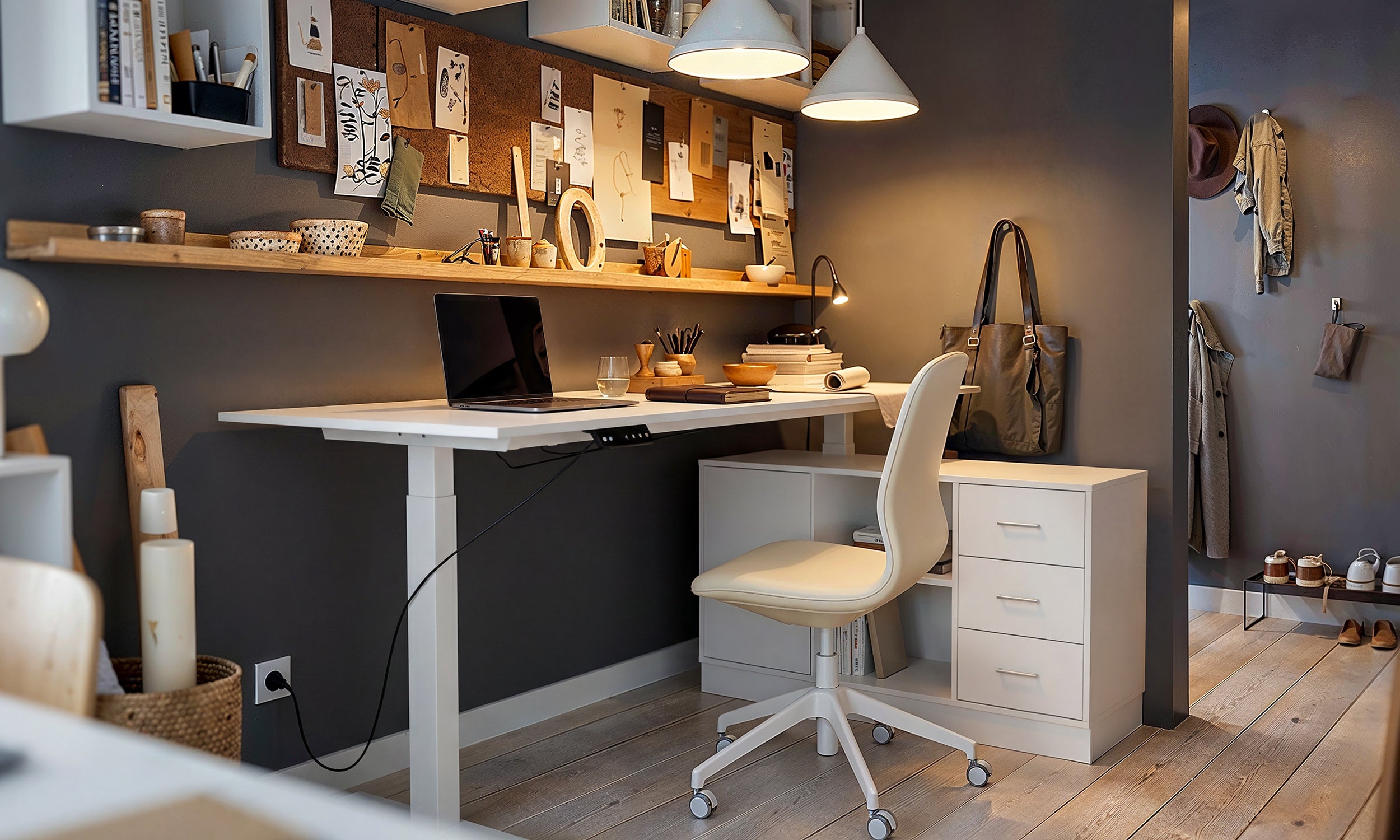
A student desk chair with wheels provides fluid transition across wider L-shaped desks, credenzas, and nearby storage units. High-mobility bases work exceptionally well for secondary students who routinely alternate between computer monitors, reference textbooks, and secondary writing surfaces. However, multi-directional casters can sometimes encourage fidgeting in younger children who benefit from a more anchored foundation.
Stationary Glides and Controlled Swivel for Focus-Driven Environments
For younger children or learners prone to distraction, stationary glides or auto-braking casters offer enhanced stability. Auto-locking casters engage resistance when weight is applied to the seat, preventing unintended rolling during focused writing sessions while allowing easy repositioning when the student stands up. Alternatively, swivel-only mechanisms without wheels allow smooth rotation without erratic movement across the room.
Flooring Interface: Soft Casters, Hard Casters, and Floor Mats
Caster selection should always correspond with the floor finish. Hard nylon wheels are suitable for low-pile carpets, whereas soft polyurethane-coated wheels prevent scuffing on hardwood, laminate, or vinyl surfaces. Adding a rigid desk mat provides an even rolling surface and protects high-traffic bedroom zones from surface wear over time.
Material Substrates, Breathability, and Maintenance Durability
Materials in youth study environments face intense daily wear, ranging from ink marks and adhesive spills to continuous mechanical adjustment. Balancing durability with tactile comfort is essential for long-term satisfaction.
Reinforced Polymer Shells vs. Upholstered Cushioning
Molded polypropylene and reinforced resin shells offer exceptional stain resistance and simple wipe-down maintenance, making them ideal for crafting, painting, and junior study stations. In contrast, upholstered high-density foam cushions provide superior pressure relief for extended study sessions typical of high school and university workloads.
Breathable Mesh Backs and Stain-Resistant Textiles
Tensioned elastomeric mesh backrests promote constant airflow, preventing heat retention during prolonged homework blocks in warmer months. When selecting upholstered seats, prioritize high-rub-count woven textiles treated with water- and stain-repellent coatings. For creative inspiration on balancing playful color palettes with enduring aesthetics, explore our desk chair guide.
Structural Frame Assemblies: Steel Tubes vs. High-Grade Resins
The core framework dictates the longevity of a study chair for students. Heavy-gauge tubular steel and reinforced nylon five-star bases deliver dependable load stability and resist structural fatigue under daily dynamic movement. Avoid lightweight, unreinforced plastics in high-stress connection points such as the cylinder hub and caster sockets.
Spatial Synergy: Integrating Study Seating with Room Storage and Desks
A study chair does not function in isolation; it operates as an integral element within the broader bedroom or study layout. Designing for clear movement corridors ensures the workspace remains calm and uncluttered.
Small Bedroom and Shared Study Nook Clearances
In compact rooms or shared sibling study areas, prioritize armless designs or flip-up armrest mechanisms that allow the chair to tuck completely beneath the desk when not in use. Maintaining open walkway clearance behind the seated student ensures safe movement throughout the room. To optimize traffic paths and workspace zoning, review our comprehensive study desk guide.
Coordinating with Storage Hutches, Bookcases, and Side Cabinets
Ensure the chair's rotational radius does not obstruct access to low file drawers, adjacent bookcases, or storage hutches. When arranging multi-piece modular setups, position primary supply drawers within comfortable arm's reach to minimize the need for awkward stretching or overextension while seated.
Visual Harmony and Styling Cohesion in Youth Workspaces
Coordinating chair frame finishes, base metals, and upholstery colors with existing cabinetry and desk surfaces elevates the visual tone of the bedroom. For techniques on matching contemporary finishes with practical study storage, see our curated study desk guide.
Assembly Rigor, Safety Inspections, and Maintenance Protocols
Maintaining mechanical stability requires careful assembly and periodic preventative checks, particularly for furniture subjected to active daily use by growing students.
Hardware Tightening and Weight Distribution Fasteners
During initial assembly, hand-thread all bolts into the base plate and backrest before applying final torque. This ensures even alignment across all structural threads. Periodically inspect and retighten structural fasteners to prevent wobbling, frame creaking, and uneven joint strain. For practical assembly checks and hardware evaluation tips, consult our desk chair guide.
Routine Cleaning and Mechanical Lubrication Checks
Establish a regular maintenance schedule that includes wiping down polymer surfaces with mild soap solutions, vacuuming mesh crevices to clear debris, and checking caster axles for trapped hair or floor fibers. Keeping the mechanical cylinder clean and clear of dust buildup preserves smooth height adjustment and responsive swivel performance.
Strategic Selection Matrix for Student Workstation Seating
Selecting the optimal student study chair involves aligning the chair's mechanical features with the learner's academic routine, study habits, and physical workspace constraints.
Comparing Task Profiles and Study Habits
- Early Learners: Emphasize stationary stability, shallow seat pans, wipe-clean resin shells, and integrated foot supports.
- Middle Grade Students: Choose adjustable seat height, durable mesh or treated upholstery, and moderate-swivel mobility with optional caster locks.
- Secondary & Young Adults: Prioritize high-density cushioning, fully articulated height mechanisms, tensioned mesh backs, and smooth-gliding multi-surface casters.
Final Buying Checklist for Long-Term Value
- Verify that the seat height allows the student's feet to rest comfortably while keeping forearms level with the desk surface.
- Check that the armrests clear the underside of the desk apron for full tuck-in storage.
- Match caster composition to the room's flooring type to protect surfaces and provide controlled movement.
- Select low-maintenance, stain-resistant materials suited to the student's typical daily activities.
- Ensure the base structure provides broad, stable support to withstand regular posture adjustments.



Dejar un comentario
Este sitio está protegido por hCaptcha y se aplican la Política de privacidad de hCaptcha y los Términos del servicio.