





Introduction: Aligning Workspace Functionality with Residential Living
Modern remote and hybrid working arrangements require a thoughtful balance between professional utility and domestic comfort. Selecting a functional desk for home use goes beyond picking a flat surface; it involves understanding how dimensional footprints, task requirements, and existing interior decor interact. When planning your layout, studying an office desks use guide helps bridge professional ergonomics with comfortable residential styling.
A well-planned workstation preserves room flow while providing dedicated zones for technology, writing, and storage. Whether organizing a multi-use living space or designing a dedicated study room, understanding desk geometry and construction ensures your workspace remains productive and visually uncluttered over the long term.
Dimensional Tiers and Spatial Footprint Planning
Evaluating room volume and user movement is the foundation of workspace ergonomics. Selecting an appropriate in home desk requires categorizing available floor space into distinct functional tiers to avoid overcrowding.
Compact Alcoves and Multi-Use Nooks
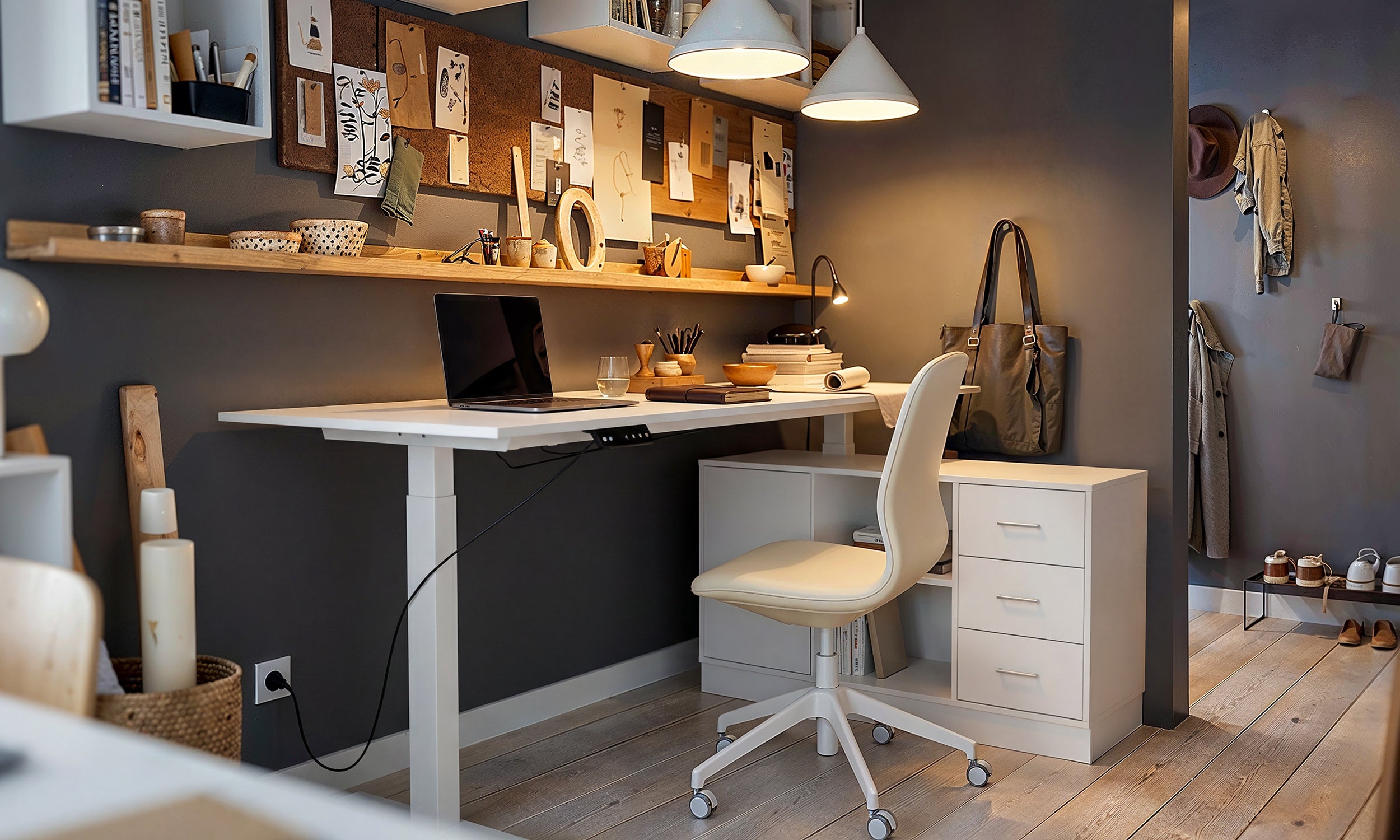
In shared rooms, bedrooms, or underutilized architectural recesses, compact writing desks provide an unobtrusive work zone. These configurations prioritize shallow depths and streamlined leg structures to maintain open pathways. A successful alcove arrangement focuses on clean horizontal lines and minimal visual mass, preventing the desk from overpowering nearby residential furnishings.
Standard Dedicated Study Workstations
Dedicated home offices accommodate mid-sized desks that balance desktop surface area with adequate leg clearance. These desks comfortably support a primary screen, peripheral accessories, and basic desktop organization. When establishing a permanent setup, maintaining generous clearance beneath the worktop ensures natural seated posture and freedom of movement.
Corner and Executive Expanses
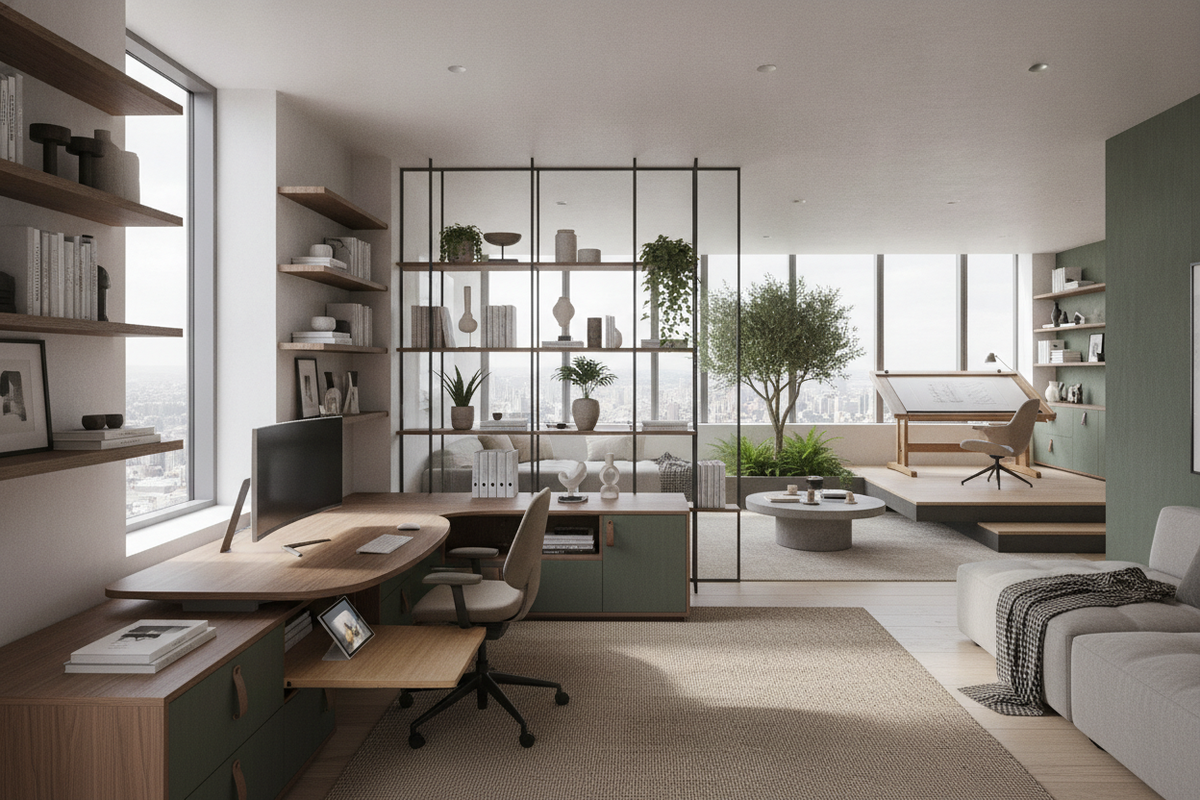
For individuals managing multiple monitors or physical paperwork, corner and L-shaped desks maximize perimeter walls without encroaching into central walkway paths. For corner layouts requiring ample surface depth and shelf capacity, an office desk product engineered for corner organization optimizes floor clearance while providing defined workflow zones.
Storage Architecture: Built-In Modules vs. Modular Organization
Managing physical materials, tech peripherals, and paperwork is essential for maintaining a clean surface on any home office workstation desk. Homeowners generally choose between fully integrated desk cabinetry and modular, freestanding units.
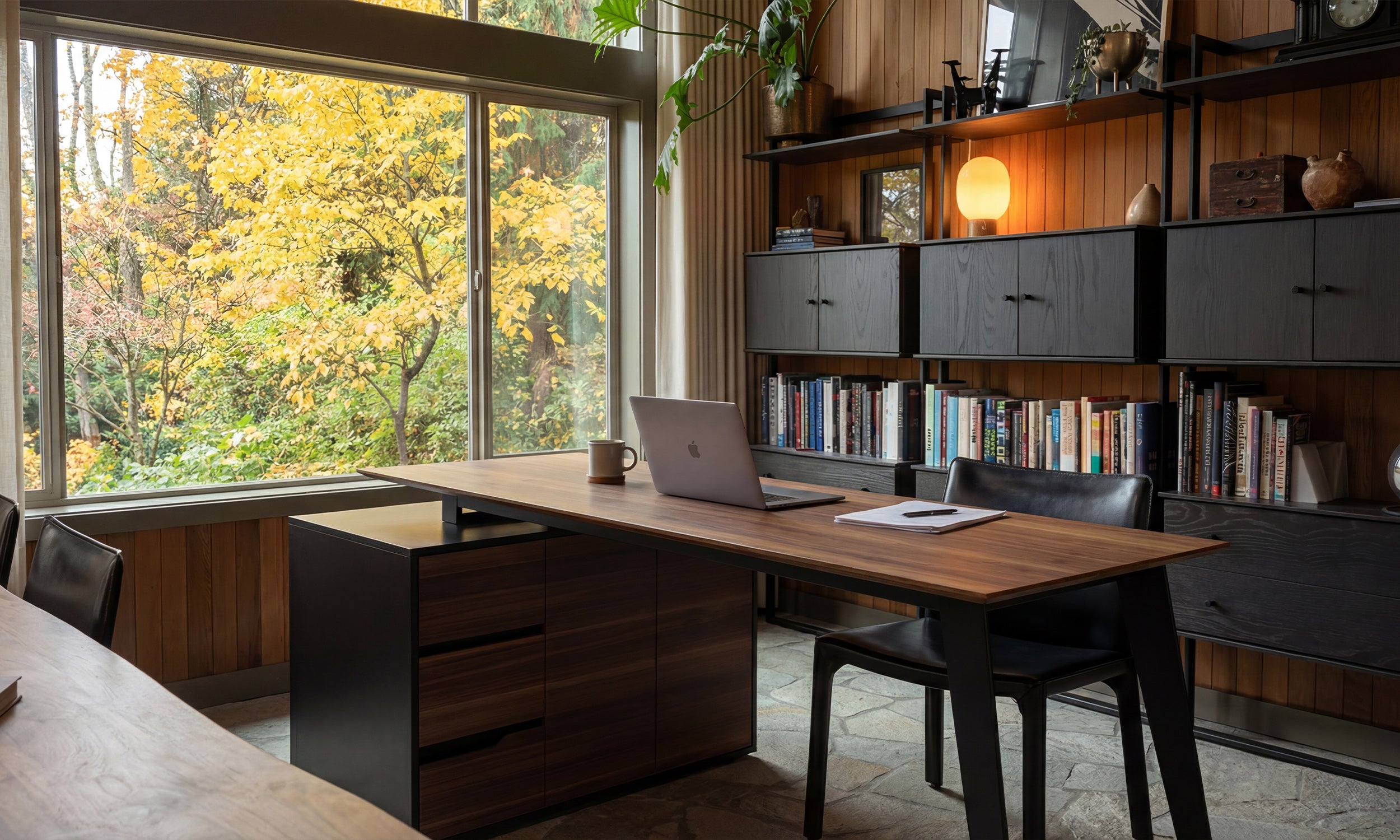
- Integrated Pedestals and Drawers: Built-in side drawers and lower shelving maintain a unified aesthetic, keeping essential documents within arm's reach. Combining file management and open shelves directly into the workstation frame, a multi-drawer office desk product keeps daily clutter off the primary desktop.
- Freestanding Credenzas and Mobile Carts: Modular storage pieces offer flexibility, allowing users to reconfigure layouts as working needs change over time.
- Open Utility Shelving: Integrated open shelves beneath the main surface provide quick access to books, reference binders, or computer towers without consuming visible desktop space.
Vertical Flow and Aesthetic Integration
When horizontal floor area is limited, utilizing vertical wall space preserves an open, breathable room atmosphere. Upper shelving, hutches, and wall-mounted boards expand organizational capacity without requiring a larger furniture base. To keep sightlines open and maintain aesthetic balance, consulting a desk office guide on vertical styling prevents heavy visual overhead.
Coordinating finishes—such as matching desk surfaces with surrounding bookcases, trim work, or flooring tones—helps the workspace integrate naturally into the home rather than feeling like a stark commercial intrusion.
Substrate Mechanics and Structural Framing
The longevity and stability of home office desks depend largely on the choice of materials and structural engineering. Understanding common furniture substrates helps in selecting a desk that withstands daily use:
- Engineered Wood Cores: Medium-density fiberboard (MDF) and high-density particleboard offer consistent density and dimensional stability, resisting warping from indoor temperature fluctuations.
- Melamine and Laminate Overlays: Durable laminate surfaces provide resistance against scratches, moisture rings, and everyday surface wear while offering diverse grain and color textures.
- Powder-Coated Steel Frames: Metal understructures, support beams, and leg assemblies deliver rigid structural support and structural resistance against lateral wobbling.
Executive Multitasking and Dual-Purpose Workstations
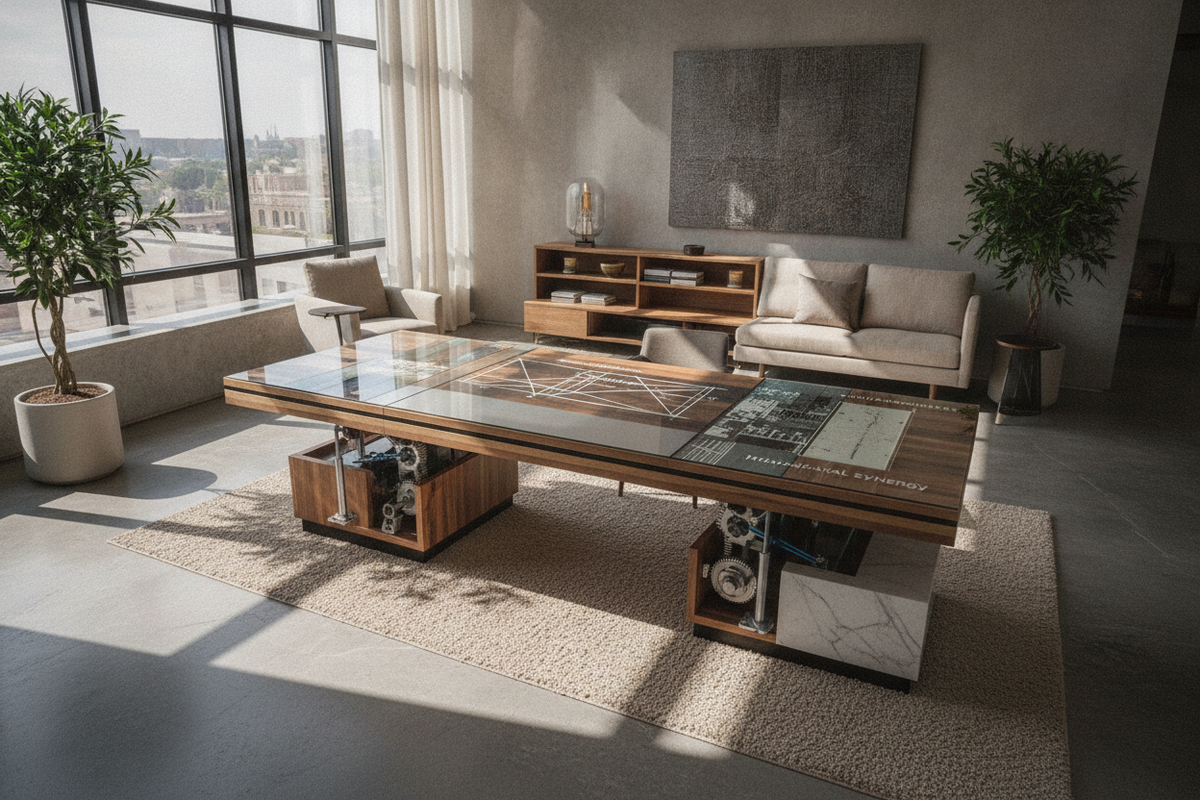
Broad-format workstations serve professionals who manage diverse tasks throughout the day, such as creative layout work, administrative filing, and client-facing digital meetings. For expansive multi-screen setups or professional studio offices, a high-capacity desk office product provides extensive horizontal workspace and privacy paneling.
These expansive formats create natural task separation, allowing one section to house computer hardware while the adjacent return stays open for reading, drawing, or offline planning.
Assembly, Stability Verification, and Cable Routing Logistics
Proper assembly and routine maintenance are essential for maximizing the lifespan and stability of residential office furniture:
- Leveling and Foot Adjustment: Use adjustable leveling glides to balance the desk on uneven flooring or rugs, preventing unwanted frame stress.
- Hardware Tightening Sequence: Assemble frame components loosely first, ensuring square alignment across all joints before fully torquing fasteners.
- Integrated Cable Management: Route power cords, monitor cables, and charging leads through modesty panel grommets or under-desk channels to maintain clean sightlines.
- Weight Distribution: Position heavier tech equipment directly over frame supports or vertical pedestals to maintain balanced load transfer across the desktop.
Summary: Selecting Your Ideal Home Office Desk Configuration
Selecting the best desk configuration requires aligning spatial dimensions, storage requirements, and structural quality. By choosing a design that harmonizes with your room's layout and personal work habits, you create a balanced, durable environment tailored for daily focus and productivity.

Dejar un comentario
Este sitio está protegido por hCaptcha y se aplican la Política de privacidad de hCaptcha y los Términos del servicio.