




Understanding Standing Desk Stability: Lateral Shear vs. Front-to-Back Deflection
When evaluating workstation ergonomics, discovering a genuinely sturdy standing desk often comes down to understanding physical forces at elevation. As a desk rises from seated to standing height, its center of gravity shifts upward, amplifying natural mechanical vibrations. Instability generally manifests in two distinct movement patterns: lateral shear, which refers to side-to-side sway during typing or leaning, and front-to-back deflection, commonly experienced as monitor bouncing or surface tilting under downward forearm pressure.
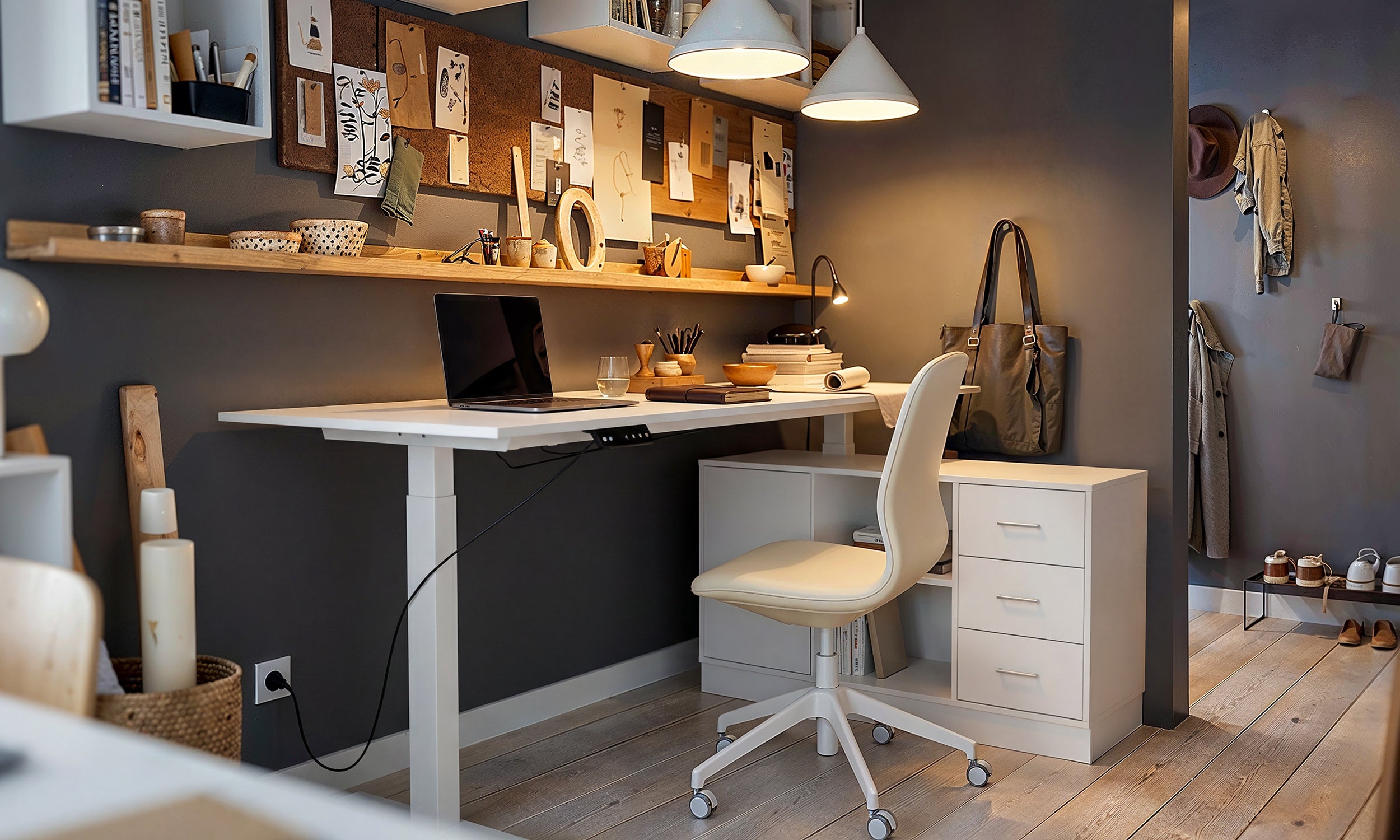
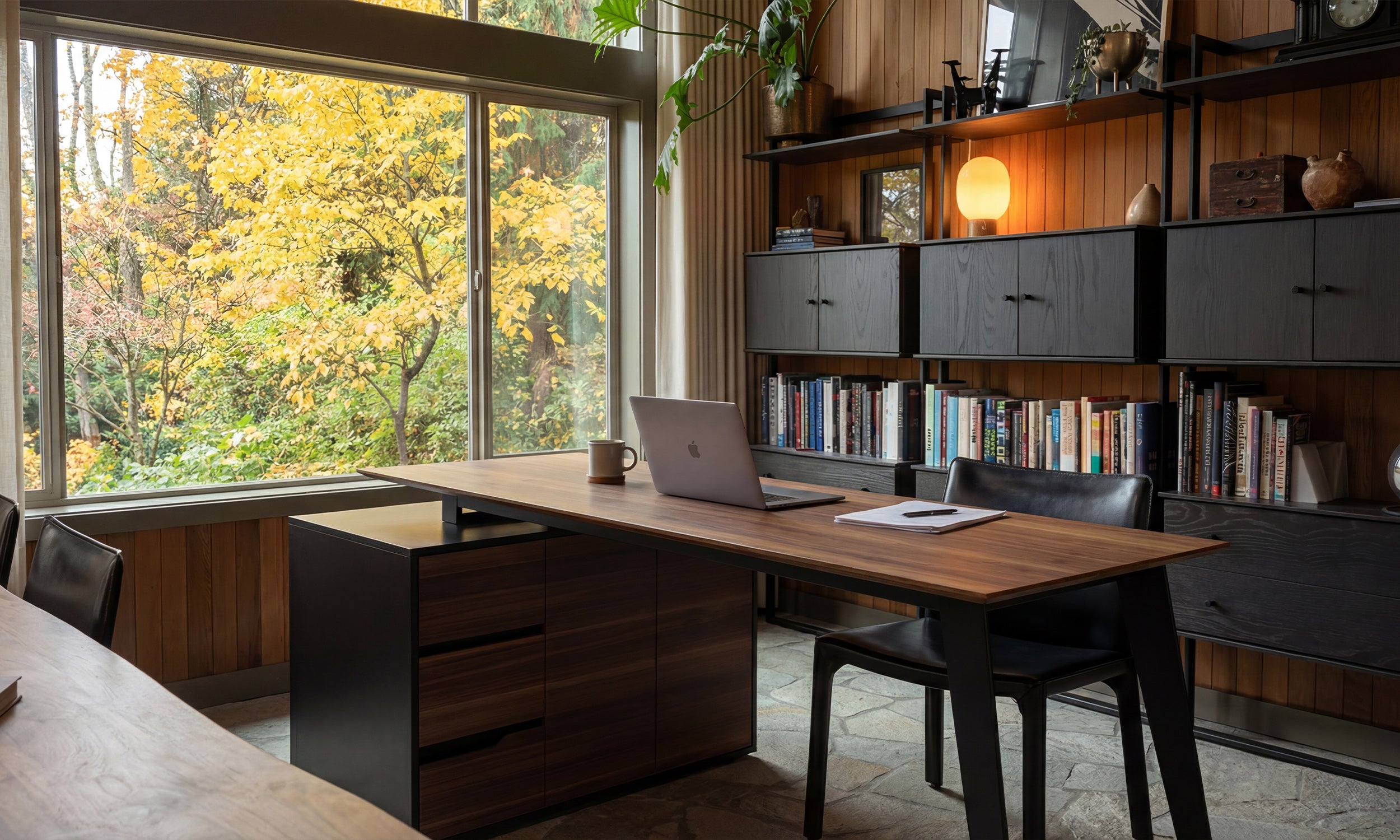
Minimizing these movements requires thoughtful mechanical design rather than sheer bulk alone. While visual aesthetics create a welcoming work environment, structural rigidity determines daily comfort and screen stability. For those exploring broader spatial arrangements alongside structural planning, reviewing a standing desk that guide offers helpful perspective on integrating practical furniture lines into modern interior themes.
Core Engineering Factors in Frame Rigidity
The foundation of any stable desk rests on its underframe construction. Steel gauge, joint tolerances, and motor housing geometry dictate how effectively the framework resists kinetic energy generated during typing, mouse movement, and task execution.
Telescoping Leg Stages and Column Orientation
Height-adjustable frames rely on telescoping columns that nest inside one another. Two-stage columns provide fewer junction points, offering reliable structural simplicity across standard height profiles. Three-stage columns, by contrast, incorporate two overlapping seams to deliver a wider travel range suitable for diverse user heights.
Column orientation also influences load transfer. Standard upright orientations place the widest segment at the floor, establishing a broad footprint, while inverted designs position the thicker segment beneath the desktop to counter bending forces directly beneath the work surface. High-precision internal glide pads between these stages minimize mechanical play without hindering smooth vertical transit.
Crossbar Architecture, Wedge Brackets, and Footplate Length
To eliminate lateral shear, frames frequently employ crossbar architectures that tie the dual lifting columns into a unified structural box. High-rigidity frames either utilize reinforced upper crossbeams directly beneath the tabletop or low-mount structural stretchers. In addition, extended top support brackets with wedge-shaped gussets disperse torsional forces across the underside of the desktop, while elongated steel footplates maintain continuous ground contact to arrest front-to-back rocking.
Desktop Dimensions, Material Density, and Weight Distribution
The top surface is an integral structural member of the complete desk system. The density and continuous span of the desktop directly influence resonance dampening, helping absorb peripheral vibrations before they reach mounted displays.
Dense engineered cores, thick composite boards, and solid hardwoods provide natural ballast that anchors the upper frame. Selecting an adjustable standing desk product allows users to distribute hardware across a spacious footprint without clustering excessive mass on one edge. Balancing heavy hardware—such as computer towers, document stacks, and audio equipment—evenly across both lifting columns prevents uneven motor wear and maintains equal tension across internal frame fasteners.
Room Fit, Flooring Surfaces, and Leveling Glide Calibration
Even the most rigid frame can exhibit distracting wobble if the floor interface lacks uniform contact. Flooring surfaces introduce distinct boundary conditions that must be addressed during initial placement:
- Hardwood and Tile: Smooth, unyielding surfaces reveal micro-variations in floor level. Threaded leveling glides must be adjusted individually until each corner bears proportional weight without spinning freely.
- Plush Carpet and Padding: Deep pile carpet creates a cushioned base that naturally compresses under point loads. Using broad-base leveling feet helps disperse mass through the carpet pile directly to the subfloor.
- Area Rug Seams: Positioning front and rear desk feet across different flooring transitions can induce structural tilt. Ensuring all four contact points rest on identical surface materials stabilizes the base plane.
Balancing Workstation Storage and Equipment Without Compromising Stability
Maintaining a clutter-free workstation often requires integrating functional storage elements without overloading the motorized lifting mechanism or shifting the center of gravity off-center. Incorporating an adjustable desk product provides structured compartments and vertical mounting grids that keep essential accessories centered over the frame.
When organizing accessories above the work plane, consult a desk that guide for ideas on vertical arrangement that avoid high-leverage top-heaviness. For heavier items like extensive reference libraries, archives, and bulk supplies, anchoring nearby furniture from a adjustable collection preserves desk stability by keeping static mass completely independent of the moving work surface.
Assembly Protocols and Ongoing Fastener Maintenance for Long-Term Rigidity
Initial assembly precision dictates how well a standing desk retains its rigidity over extended use. Applying methodical fastening sequences creates uniform clamping tension across all frame joints:
- Loose-Fit Component Alignment: Position all crossbeams, top brackets, and leg assemblies with hardware threaded loosely, allowing components to settle into their natural geometry.
- Diagonal Cross-Torque Tightening: Gradually tighten opposing fasteners in an alternating pattern to prevent twisting the steel frame out of square.
- Desktop Securement: Fasten the work surface securely into pre-drilled points, ensuring the top draws down flush against frame damping pads.
- Periodic Fastener Inspection: Routine height adjustments and daily typing induce subtle vibrations that can slowly loosen threaded hardware. Periodic inspection and tightening of frame bolts and glide feet will keep the desk operating smoothly and securely.


Dejar un comentario
Este sitio está protegido por hCaptcha y se aplican la Política de privacidad de hCaptcha y los Términos del servicio.