










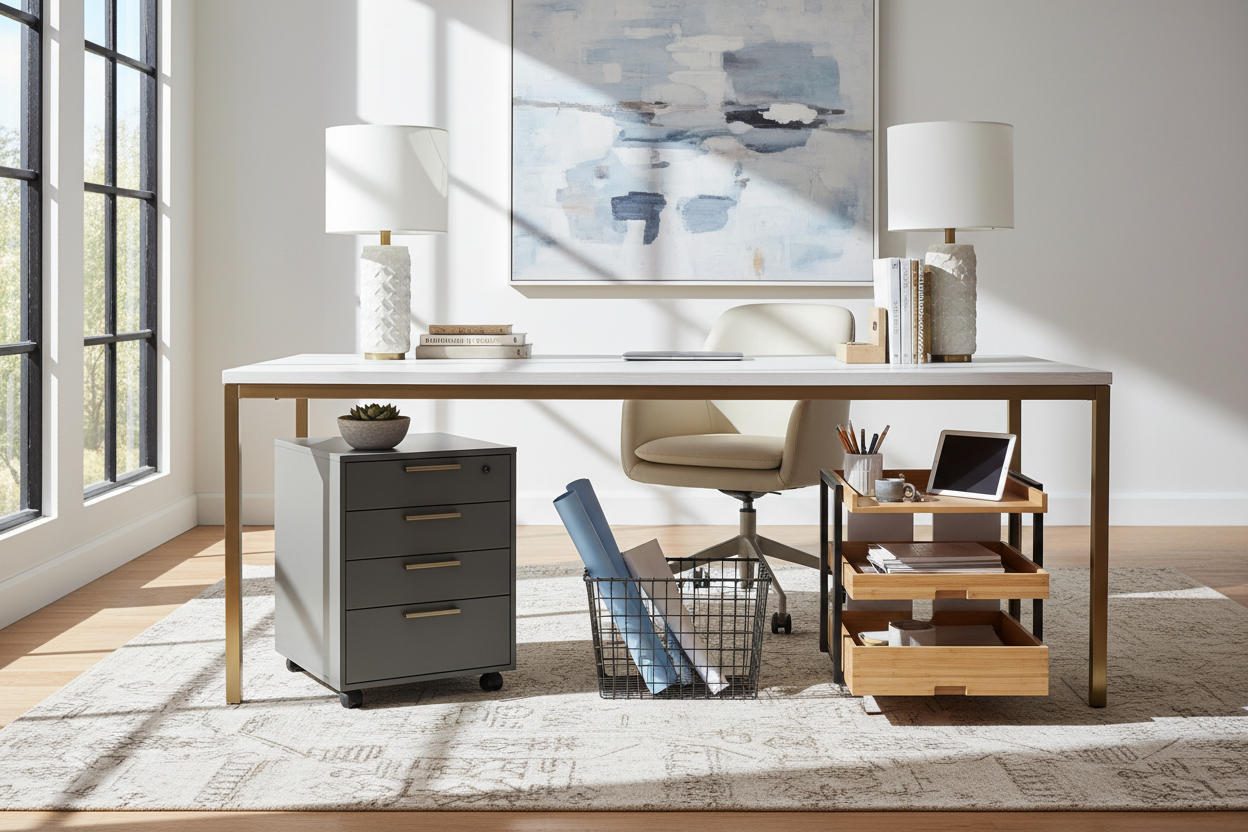
There is a distinct tension that exists in a home office when the surface is beautiful, but the functionality is lacking. You sit down to work, but your knee bumps a stack of papers, or you cannot find a pen because there is simply no place to put it. The visual noise of clutter competes with your focus. The solution is rarely a larger desk; it is almost always smarter, more cohesive under desk storage units. As a designer, I see these pieces not just as bins for clutter, but as foundational elements that ground the room’s aesthetic while liberating your workspace.
Key Features to Look For
- Vertical Clearance: Always measure the distance from the floor to the desk apron, leaving at least 2 inches of gap for movement.
- Drawer Configuration: Determine if you need deep file drawers for documents or shallow stationery drawers for supplies.
- Mobility vs. Stability: Decide between locking casters for flexibility or a fixed plinth base for a permanent, furniture-like look.
- Material Durability: Assess whether the finish can withstand daily foot traffic and potential scuffs from chair legs.
Mastering the Spatial Layout
The most common error homeowners make when selecting home office under desk storage is ignoring the ergonomic footprint. A storage unit should never compromise your seating position. Ideally, you want to maintain a "leg corridor" of at least 24 to 30 inches wide.
If you have a wider desk, consider flanking the seating area with two narrow units to create symmetry and balance the visual weight. For smaller footprints, a single unit placed on your non-dominant hand side usually improves workflow efficiency without cramping your style.
Material Selection: Metal vs. Wood
When curating the best drawers for desk setups, the material choice dictates the vibe of the room. This is where we balance utility with sophistication.
The Case for Metal
Powder-coated steel units offer a sleek, architectural silhouette. They are often thinner than wood, maximizing interior drawer volume. In modern or industrial spaces, a matte black or crisp white metal unit disappears into the background, allowing your desk to remain the focal point. They are also incredibly resilient against the accidental kicks and bumps that happen in tight quarters.
The Warmth of Wood
If your goal is to make the office feel less corporate and more residential, wood veneers or solid timber are superior. A walnut or oak pedestal adds texture and warmth, softening the harsh lines of computer monitors. However, pay close attention to the edge banding. High-quality units will have solid wood edging or high-pressure laminate that won't peel away after a year of use.
Functionality and Hardware
Office desk storage drawers must offer a tactile experience that matches their look. I always advise clients to test the drawer slides. You want full-extension ball-bearing slides that allow you to reach the very back of the drawer. There is nothing more frustrating than a drawer that only opens three-quarters of the way, creating a "dead zone" of lost supplies at the back.
Furthermore, consider the handle design. Integrated finger pulls or recessed handles offer a cleaner look and prevent snagging on clothing, whereas statement hardware can tie the unit into other furniture pieces in the room, like a bookshelf or credenza.
Lessons from My Own Projects
I learned the hard way that specs on paper don't always translate to real-life usage. A few years ago, I specified a gorgeous, high-gloss lacquered storage unit for a client's minimalist studio. It looked stunning upon installation.
However, three months later, the client called me back. The issue wasn't the storage capacity; it was the finish maintenance. Because the unit sat on the floor, every time the cleaners vacuumed, the machine bumped the bottom edge, leaving visible spiderweb cracks in the lacquer. Furthermore, the unit was on wheels but lacked a counterweight. When the client pulled the top drawer open fully while the unit was empty, it nearly tipped forward.
Now, I strictly recommend units with a recessed "kick plate" or durable metal bases if they are in high-traffic cleaning zones. I also test the "tipping point" of every mobile pedestal before recommending it. These unpolished details—how a vacuum interacts with furniture or the center of gravity—are what separate a purchase you regret from an investment that lasts.
Conclusion
Selecting the right storage is about more than hiding paperclips; it is about curating a workflow that feels seamless. By paying attention to dimensions, materials, and the tactile quality of the hardware, you turn a utilitarian necessity into a design asset. Elevate your standard of living by ensuring everything has a place, leaving your desk—and your mind—clear for big ideas.
Frequently Asked Questions
What is the standard height for under desk storage units?
Most standard units range between 24 and 28 inches in height. Standard desks are usually 29 to 30 inches high. Always ensure there is a gap to prevent the unit from scraping the underside of your desktop.
Should I choose a unit with wheels (casters) or without?
If you anticipate needing to access cables behind your desk frequently, or if you use your desk for multiple tasks (sketching vs. typing), casters offer necessary flexibility. For a more built-in, luxurious aesthetic, a fixed base is preferable.
How do I stop my storage unit from rolling when I open the drawers?
High-quality mobile pedestals come with locking casters, usually on the front two wheels. Ensure these are engaged. Additionally, loading the bottom drawer with heavier items (like reams of paper) anchors the unit, providing stability.

Dejar un comentario
Este sitio está protegido por hCaptcha y se aplican la Política de privacidad de hCaptcha y los Términos del servicio.