










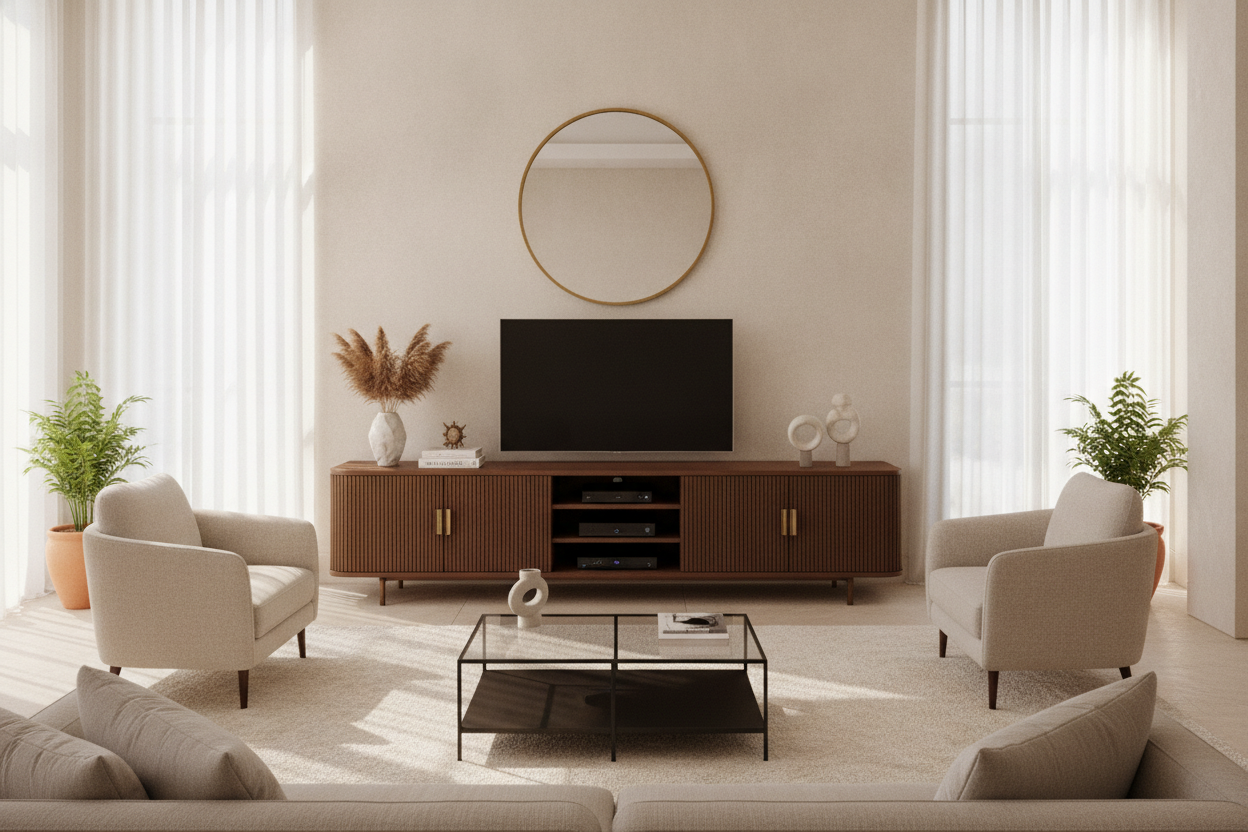
I spent three years staring at a $40 particle board stand that sagged in the middle under the weight of a 55-inch TV. Every time I looked at it, I felt like I was still living in my first off-campus apartment. It didn't matter that I had a nice rug or custom curtains; that flimsy little stand screamed 'temporary.'
The realization hit me when I finally invested in a tv console credenza. It wasn't just about having a place to put the screen. It was about visual weight. A real piece of furniture anchors the room, whereas a stand just holds an object. If your living room feels 'off,' look at your TV setup first.
- Credenzas offer more length, which balances out today's massive 65+ inch screens.
- Closed storage hides the technological spaghetti of routers and power strips.
- The lower profile keeps your neck at a comfortable viewing angle.
- Extra surface area allows for actual decor, making the TV feel integrated into the room.
The Moment I Realized My Living Room Looked Like a Dorm
It was a Tuesday night, I had friends over, and I noticed everyone was carefully avoiding putting their drinks near the TV stand because it literally wobbled if someone breathed too hard. I had spent thousands on a velvet sofa and a wool rug, but I was still using a piece of furniture held together by plastic cams and hope. It looked pathetic.
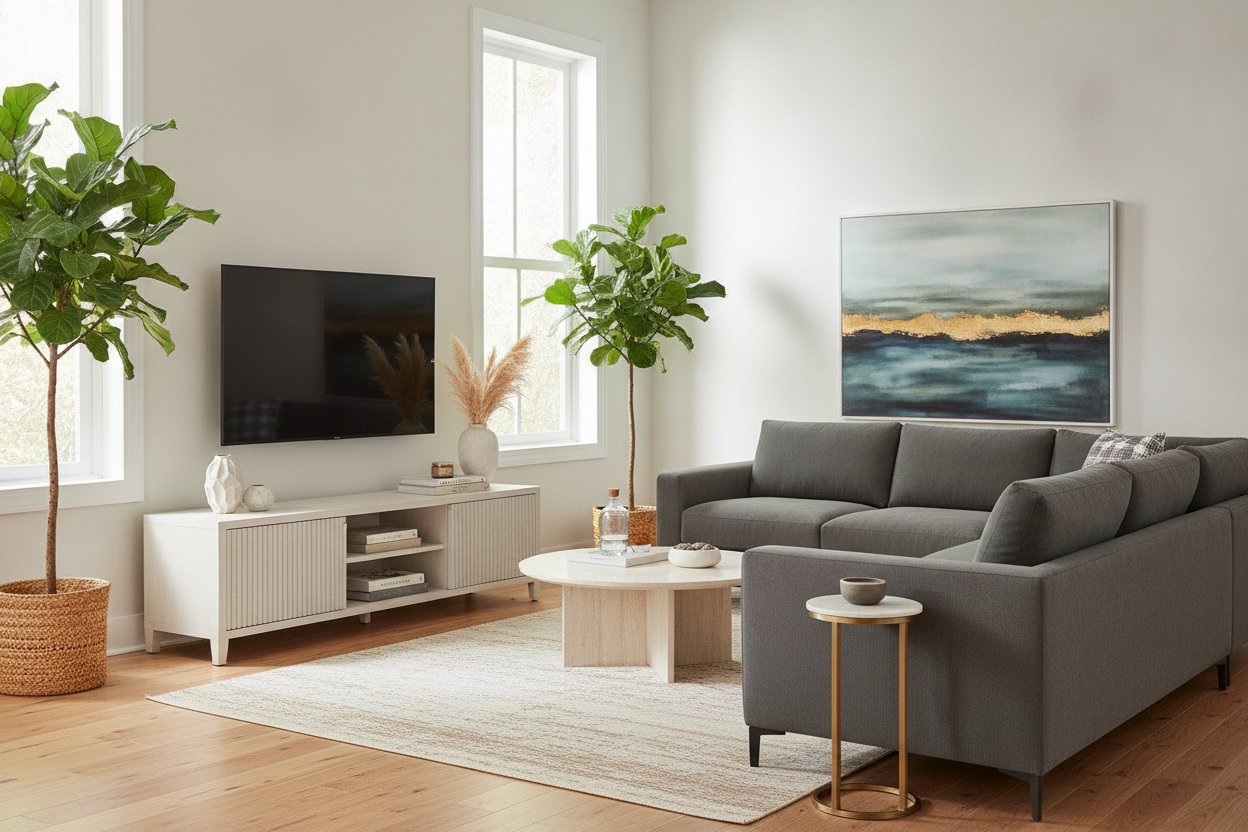
I used to think a TV stand was just a utility. You buy the screen, you buy the thing to hold the screen, done. But a small stand makes a large room feel empty and a small room feel cluttered. When I swapped that 40-inch stand for an 80-inch media console credenza, the entire wall suddenly looked intentional. It stopped being a 'TV area' and started being a living room.
What Even Is a Media Console Credenza?
The furniture industry loves to throw around words like buffet, sideboard, and console. Historically, a credenza was a piece of dining room furniture used for serving food. It was long, low, and usually had a solid base to the floor. Modern designers realized those same proportions are perfect for electronics.
The difference between a media console and credenza today usually comes down to height and cable management. A true media version will have cord cutouts in the back and maybe some ventilation so your PlayStation doesn't melt. A standard stand is often too tall and too narrow, whereas a credenza gives you that sleek, mid-century stretch that grounds the entire wall.
The Magic of Extra Length and Proportions
Size matters, and most people go too small. If your TV is wider than your stand, you’ve failed the proportion test. It creates a 'top-heavy' look that makes the ceiling feel lower and the room feel cramped. You want at least 6 to 10 inches of breathing room on either side of the screen to maintain visual balance.
For a 65 or 75-inch screen, a long four-drawer media console is the sweet spot. At nearly 80 inches wide, it provides a solid horizontal line that draws the eye across the room. I’ve seen people try to save money by getting a 50-inch stand for a massive TV, and it always looks like a bodybuilder standing on a pogo stick. Don't do that to your aesthetic.
Hiding the Ugly Stuff (Beautifully)
Open shelving is a lie sold to us by people who don't own routers or cable boxes. In reality, open shelves just become a dust-covered graveyard for tangled black wires. A credenza fixes this by putting everything behind closed doors. It’s the easiest way to make your house look clean without actually cleaning anything.
If you're worried about losing remote signal, look for a console with glass doors and lighting. Ribbed or smoked glass is my personal favorite because it hides the clutter while still letting the IR signal from your remote pass through. Plus, the internal lighting makes your favorite books look like they're in a gallery. I once tried to hide my router in a wicker basket on an open shelf—it looked okay for five minutes until the router overheated and died. Lesson learned.
How to Style That Extra Surface Area
Once you have a long credenza, you'll have a few feet of empty space on the sides of the TV. Resist the urge to fill it with tiny knick-knacks. Think big and low. A chunky stack of coffee table books or a wide, minimalist tray works wonders. You want items that have enough presence to stand up to the size of the TV.
I'm a big fan of the one-lamp rule. A low-profile table lamp on one end of the console provides a soft glow that's much better for movie nights than harsh overhead lights. As you browse modern TV stands, imagine how a ceramic vase or a small trailing plant would look next to the screen. The goal is to make the TV part of the decor, not the only thing worth looking at.
How high should my TV console be?
Ideally, the center of your TV should be at eye level when you're sitting down. Most credenzas are between 24 and 30 inches high, which is perfect for a standard sofa. If it's higher than 32 inches, you're going to be tilting your head back like you're in the front row of a movie theater.
Will my electronics overheat inside a closed cabinet?
They can if there is no airflow. Look for units with pre-drilled holes in the back. If you have a high-powered gaming console, I usually recommend leaving the cabinet door cracked an inch during heavy use or choosing a unit with slatted doors.
Can I use a regular dining sideboard as a TV stand?
You can, but check the height. Dining sideboards are often 36 inches tall, which is a bit high for comfortable viewing. Also, you'll likely have to drill your own holes in the back panel to get your cables through, which can be a project depending on the material.

Dejar un comentario
Este sitio está protegido por hCaptcha y se aplican la Política de privacidad de hCaptcha y los Términos del servicio.