










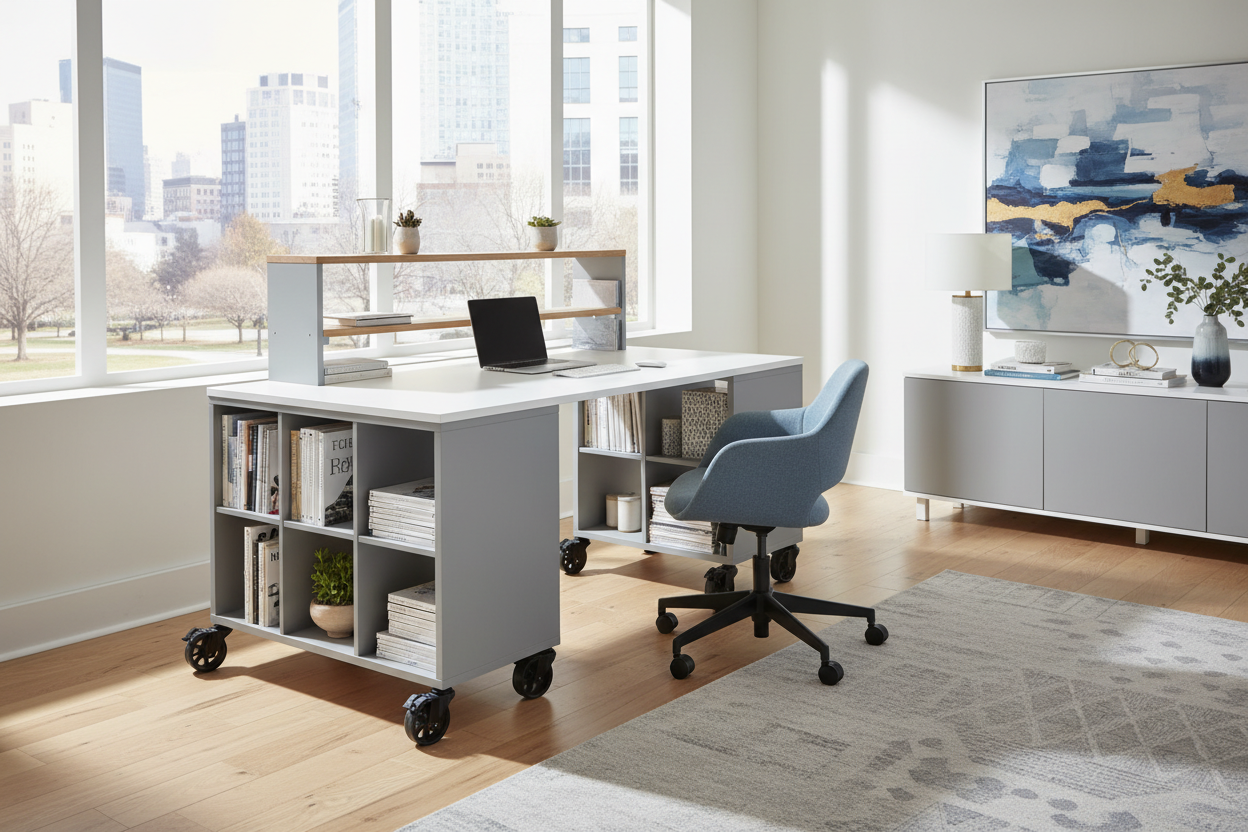
One of the most frequent dilemmas I encounter when planning home offices is the battle between permanence and flow. Clients often want a dedicated workspace, yet they hesitate to commit a large footprint to a static piece of furniture, especially in multi-use living areas. This is where the concept of a mobile workstation becomes a critical design asset. A well-chosen desk on wheels ikea configuration offers a solution that static furniture simply cannot match: the ability to redefine the function of a room in seconds.
Quick Decision Guide: Selecting Mobile Components
Before you head to the warehouse, understand that achieving a high-end mobile setup requires looking at specific components rather than just pre-boxed units. Here is what matters for longevity and function:
- Caster Quality: Ensure the wheels have a locking mechanism (brakes). Without this, typing stability is compromised.
- Leg Material: Opt for steel or powder-coated aluminum legs (like the Krille line) over plastic composites for better weight distribution.
- Tabletop Density: For rolling desks, a lightweight honeycomb structure (like Lagkapten) is easier to move, but solid wood (like Karlby) provides better anchor weight.
- Depth vs. Width: In mobile setups, depth is crucial. A standard 24-inch depth prevents the unit from feeling tippy when moved.
Structuring Your Rolling Workspace
When sourcing an ikea rolling desk, you are rarely looking for a single SKU. As a designer, I view IKEA as a modular system. The secret lies in pairing the right tabletop with the appropriate caster legs or mobile storage units. This approach allows us to create a bespoke piece that fits your specific ergonomic needs.
The "Compact Mobile" for Tight Corners
For urban apartments, a small desk on wheels ikea setup is often the only viable option. If you are working with limited square footage, avoid heavy, dark finishes. White or birch veneers help the piece disappear visually when pushed against a wall. If you are hunting for a specific dimension, such as a 36 inch wide desk ikea hack, you may need to look at their narrower console tops or modify a Linnmon top. The goal is to maintain a silhouette that doesn't encroach on the room's traffic flow.
Creating an L-Shape with a Mobile Return
A sophisticated way to increase surface area without bulk is to simulate a desk with return ikea configuration. Instead of buying a massive corner unit, I often advise clients to pair a static main desk with a slightly lower ikea rolling computer desk or a drawer unit on casters (like the Alex series). This allows you to pull the "return" out when you have large blueprints or multiple monitors, and tuck it away when you need floor space. It creates a dynamic L-shape that adapts to your workload.
Materiality and Visual Weight
The aesthetic danger with a rolling desk ikea setup is that it can look utilitarian or temporary. To elevate the look, focus on texture. If you choose metal legs with casters, balance that coolness with a warm, walnut-effect top. If you prefer a monochrome look, ensure your cable management is impeccable. Dangling wires on a mobile desk ruin the illusion of clean design; use under-desk trays or spinal cord cable organizers to keep the visual noise to a minimum.
Lessons from My Own Projects: The "Wobble" Factor
My Personal Take on desk on wheels ikea configurations
I learned a hard lesson early in my career while fitting out a co-working space in a converted loft. We outfitted the entire team with DIY IKEA tables mounted on generic aftermarket casters. It looked brilliant in photos—industrial, chic, and flexible.
However, two weeks later, I got the call. The issue wasn't the look; it was the physics. We hadn't accounted for the "monitor shake." When you type vigorously on a lightweight IKEA honeycomb top sitting on wheels, the lack of mass causes the monitor to jitter. It was nauseating for the designers.
The fix? We swapped the lightweight tops for the heavier, solid wood kitchen countertops (cut to size) and ensured only two legs were on wheels, while the back two were anchored, or we used heavy-duty locking casters on all four. The takeaway is simple: if you are building an ikea computer desk on wheels for full-time work, mass is your friend. Don't go for the lightest option if you are a heavy typer.
Conclusion
Integrating a mobile desk into your home is not just about saving space; it is about acknowledging that modern life is fluid. By carefully selecting the right materials and focusing on stability, you can curate a workspace that serves you during the 9-to-5 and politely steps aside for the 5-to-9.
Frequently Asked Questions
Can I put wheels on any IKEA desk legs?
Not exactly. While many IKEA legs have an M8 bolt that fits standard casters, some thinner legs (like the Adils) are not designed to handle the lateral stress of rolling. It is safer to buy legs specifically designed with casters, like the Krille, or use a trestle base with wheels.
How do I manage cables on a rolling desk?
Mobility makes cabling tricky. The best approach is to mount a power strip directly to the underside of the desk. This way, you only have one main power cord trailing to the wall outlet, rather than five or six cables tangling as you move the desk.
Is a rolling desk stable enough for a dual monitor setup?
Yes, but weight distribution is key. Place your monitors over the rear axis of the wheels to prevent tipping. Ensure your casters have high-quality locks to prevent the desk from drifting while you work.


Dejar un comentario
Este sitio está protegido por hCaptcha y se aplican la Política de privacidad de hCaptcha y los Términos del servicio.