










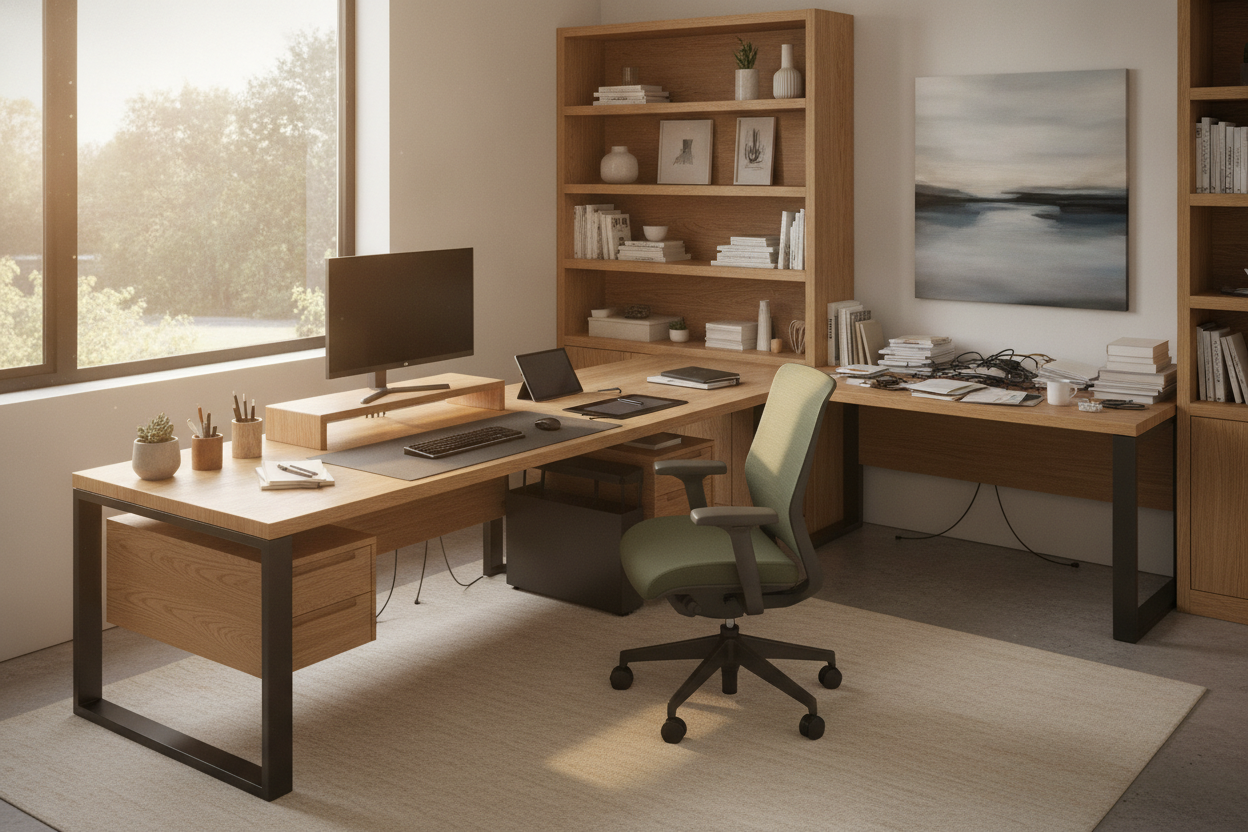
I once spent $800 on a solid walnut mid-century writing desk because it looked like something a 1960s ad exec would use to drink scotch and write slogans. It was beautiful. It was also a nightmare. Within a week, my wrists were aching because the desk was too high, and my monitor was so close to my face I could see individual pixels. I was choosing computer desk styles based on a curated Pinterest board rather than the reality of my eight-hour workday.
Quick Takeaways
- Writing desks are for laptops and aesthetics, not heavy-duty monitor setups.
- L-shaped desks are the ultimate solution for people who need a separate 'paper' and 'digital' zone.
- Depth matters more than width; aim for at least 24 to 30 inches to save your eyesight.
- Always mock up your desk size with a dining table or cardboard before clicking 'buy.'
The 'Pinterest-Perfect' Trap I Fell Into
We've all done it. You see a photo of a minimalist workspace with a single plant, a slim laptop, and exactly zero cables. It looks peaceful. But the moment you bring that 'minimalist' piece home, reality hits. You have a keyboard, a mouse, a phone charger, and maybe a second monitor. Suddenly, that sleek computer desk styles you admired is buried under a mountain of clutter because it has zero cable management and even less surface area.
I realized that I was shopping for a vibe, not a tool. If you spend more than four hours a day at your station, your desk is a tool. It needs to accommodate your reach, your hardware, and your specific brand of chaos. Choosing between different desks requires an honest look at your habits, not your aspirations.
Breaking Down the Main Computer Desk Styles (The Good and Bad)
Not all types of office table are created equal. Some are designed to look good in a guest room, while others are built to survive a 12-hour coding marathon. You need to decide if you're a 'clear desk' person or a 'piler.' I'm a piler, and trying to force myself into a tiny desk was a recipe for back pain and frustration.
The Minimalist Writing Desk (Looks Great, Hides Nothing)
The classic writing desk is usually just a tabletop with four legs and maybe one shallow drawer. It’s the most common types of office table you'll find in lifestyle stores. If you only use a laptop and you want your room to feel open, this is your winner. However, if you have a desktop tower or dual monitors, avoid this like the plague. There is nowhere to hide the 'cable spaghetti,' and your legs will constantly hit the crossbars.
The Massive L-Shaped Corner Beast
I used to think L-shaped desks were for corporate middle managers in the 90s. Then I tried one. If you have the floor space, this is the only style that actually works for multi-taskers. You can have your computer on one side and a completely clear space for sketching, reading, or eating lunch on the other. It defines the room, sure, but it also defines your workflow in a way a straight desk never can.
The Standing Desk (With or Without Vintage Hacks)
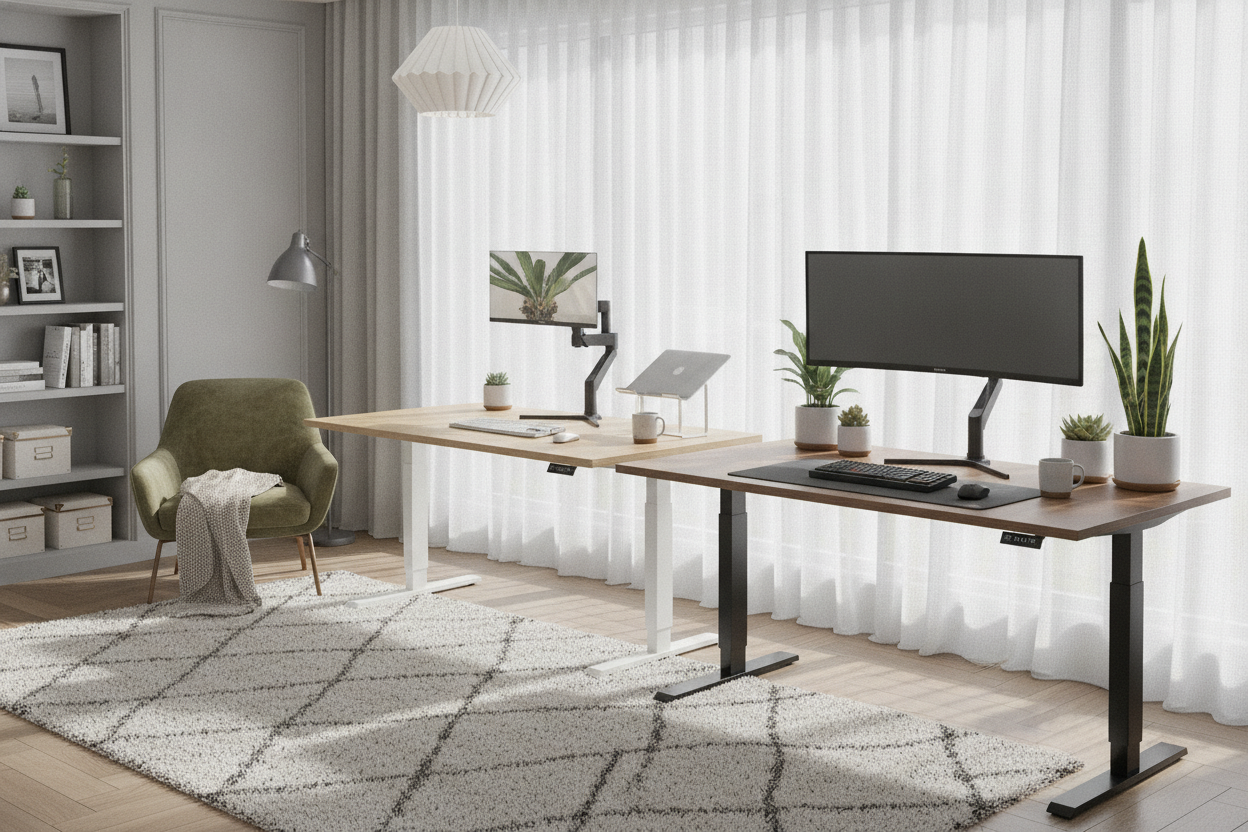
The motorized standing desk is the darling of the ergonomic world. Being able to shift heights keeps your blood flowing, but let's be real: most of them look like lab equipment. If you hate the industrial aesthetic, you don't have to settle for gray metal legs. I've seen some incredible projects where people turn a vintage table into a standing desk by mounting a solid wood antique top onto a high-quality motorized frame.
How to Test Different Desks Without Buying Them
Before you commit to a new setup, do a trial run. I spent years guessing until I finally cleared off my dining table and used it as a desk for a week. I realized that a standard 24-inch depth felt cramped, but 30 inches allowed me to push my monitor back and actually rest my forearms on the surface. If you're considering buying a massive desk table, use blue painter's tape on your floor to see how much space it actually eats up.
Most people underestimate how much 'swing room' they need for their office chair. If your desk is 60 inches wide but tucked into a corner, you might feel trapped. Test the footprint with cardboard boxes if you have to. It feels silly until you realize you just saved yourself a $100 return shipping fee.
Wait, Do I Just Need a Vanity Instead?
Sometimes, the best computer desk isn't a desk at all. If you live in a studio apartment and your 'office' is also your bedroom, a modern vanity desk with mirror can be a brilliant hybrid. They usually have better drawer organization for small items like USB drives and pens, and they don't scream 'corporate cubicle' when you're trying to relax at night. Just make sure the height is right for your chair.
The Final Verdict: Match Your Desk to Your Mess
Your desk should be the most invisible part of your work. If you're constantly thinking about how wobbly it is, or how your legs don't fit, or where to put your coffee, it's the wrong style. Be honest about your mess. If you're a cable-hoarder, get something with a built-in tray. If you're a minimalist, go for the writing desk. Browse a solid writing and computer desk collection with your actual measurements in hand, not just your aesthetic dreams.
FAQ
How deep should a computer desk be?
Ideally, 24 to 30 inches. Anything shallower than 24 inches usually places the monitor too close to your eyes, leading to strain, and leaves no room for your keyboard and wrists to sit comfortably.
Are glass desks a good idea?
Only if you love cleaning. Glass desks show every fingerprint, every speck of dust, and every single cable underneath. Plus, many optical mice won't work on them without a mousepad.
Can I use a dining table as a desk?
Absolutely. In fact, many professional 'desks' are just overpriced, smaller dining tables. Just check the height; dining tables are often an inch or two taller than standard desks, which might require an adjustable chair to keep your elbows at 90 degrees.


Dejar un comentario
Este sitio está protegido por hCaptcha y se aplican la Política de privacidad de hCaptcha y los Términos del servicio.