










One of the most frequent challenges clients bring to me isn't choosing a sofa—it's figuring out where to put a workspace in a room that wasn't designed for one. You might be working with a cramped apartment corner or a multi-purpose guest room where floor space is premium currency. This is where the specific dimensions of a 32 inch desk ikea often come into play as a strategic solution. While not a standard category name on their showroom signs, finding a desk with this specific footprint—whether referring to a compact width or a generous executive depth—requires a discerning eye for modularity and finish.
Quick Decision Guide: What Matters Most
Before you commit to a purchase, consider these core factors to ensure the piece serves your ergonomic and aesthetic needs:
- Define the Dimension: Clarify if you need a 32-inch width (for small nooks) or 32-inch depth (for ample monitor distance).
- Material Core: Distinguish between hollow-core honeycomb structures (lightweight, affordable) and solid wood or bamboo (durable, tactile).
- Leg Configuration: Opt for adjustable legs like the OLOV for ergonomic height tuning on uneven floors.
- Visual Weight: In tight spaces, lighter finishes and slender legs prevent the room from feeling overcrowded.
Mastering Space Planning with Compact Desks
In interior design, we talk a lot about "negative space"—the area around furniture that allows a room to breathe. A desk that is approximately 32 inches wide (like certain configurations of the MICKE or modified modular tops) is a surgical tool for preserving flow. It fits effortlessly into alcoves or beside a bed acting as a dual-purpose nightstand.
However, if you are searching for a 32-inch depth, you are likely looking at the BEKANT or IDÅSEN series. This depth is superior for ergonomics, allowing you to extend your legs fully and keep monitors at a safe viewing distance to reduce eye strain.
Materiality and Texture: Beyond the White Foil
IKEA is famous for its melamine foil finishes, but as a specialist, I encourage you to look closer at texture. If you are selecting a smaller desk, the surface texture becomes more noticeable because you are physically closer to it.
Solid Wood vs. Honeycomb Structure
Most budget-friendly options utilize a honeycomb paper filling. While strong enough for a laptop, they cannot support heavy clamp-mount monitor arms, which can crunch the hollow interior. If you plan to use heavy peripherals, look for solid tops or bamboo options like the ANFALLARE, which offer better structural integrity and a warmer, more organic silhouette.
Scaling Up: The 6-Foot Alternative
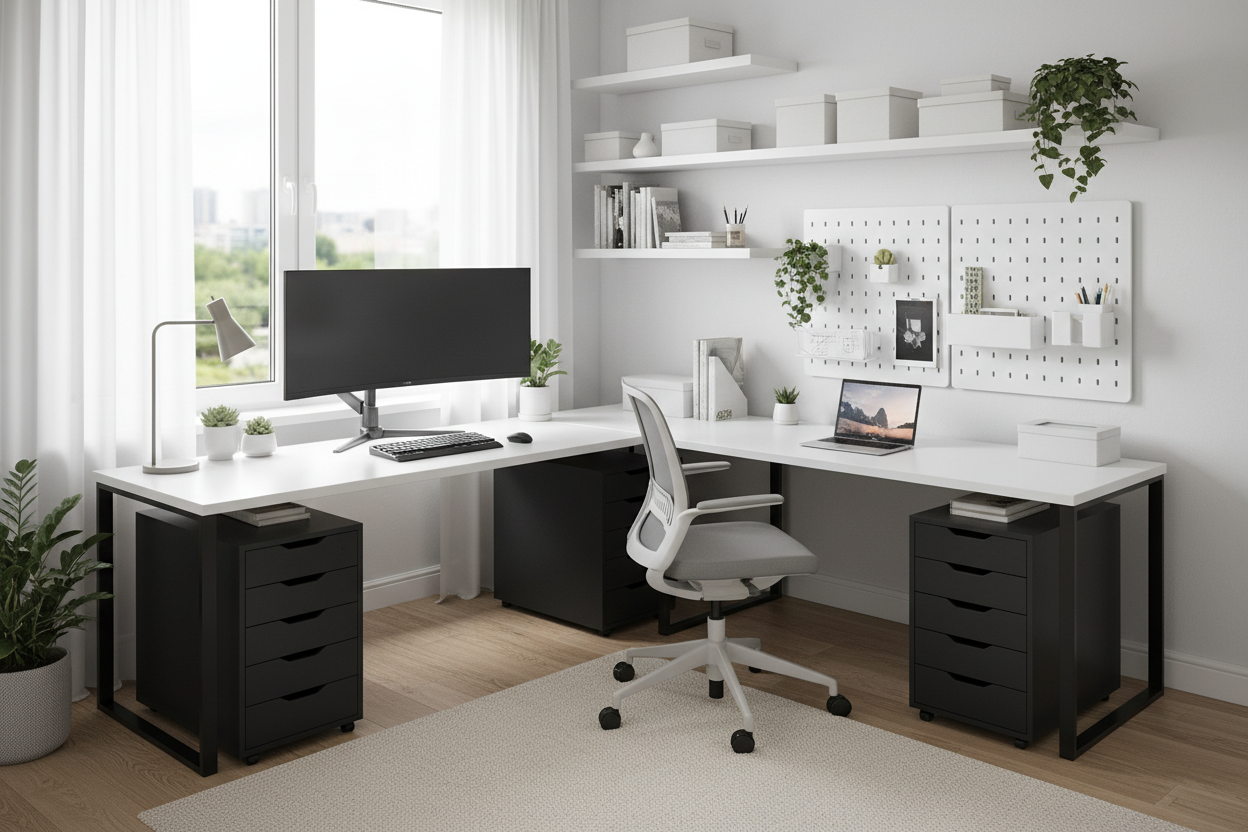
Sometimes, a compact desk is simply too small for the task at hand. If you measure your space and realize a 32-inch width will leave you feeling claustrophobic, you might have the wall clearance for a 6 foot desk ikea setup. This is rarely a single product but rather a "hack" involving a 74-inch countertop (like the SALJAN or KARLBY) resting on two drawer units.
The 6 ft desk ikea configuration creates a linear architectural element in the room. It shifts the focus from "squeezing in furniture" to creating a deliberate, expansive workstation that can accommodate dual monitors, lamps, and decor without clutter.
Lessons from My Own Projects: The "Hollow" Sound Issue
I want to share a specific detail that specs sheets won't tell you, based on a project I did for a client's home office in a loft. We utilized a standard LINNMON top (often used in compact setups) because the size was perfect for the niche.
However, within a week, the client noted the acoustics. Because many of these 32-inch range tops are hollow-core, placing a mechanical keyboard or a heavy coffee mug down creates a distinct, amplified "thud" or drum-like sound. It felt cheap compared to the rest of the room. My fix? We didn't replace the desk. Instead, I sourced a thick, high-quality wool felt desk pad. It dampened the acoustics completely and added a layer of luxury that masked the budget-friendly nature of the table. Also, be wary of the edges; on the foil finishes, the edge banding is the first thing to peel if you tend to lean against your desk while thinking. A clear edge protector is a small investment that saves the look.
Conclusion
Whether you require the surgical precision of a compact workstation or decide to upgrade to a sprawling layout, the key is intentionality. Don't just buy a surface; curate a workspace that respects your room's architecture and your personal workflow. A well-chosen desk disappears into the design when not in use but performs flawlessly when it's time to work.
Frequently Asked Questions
Can I use a monitor arm on a hollow-core IKEA desk?
It is risky. The pressure from the clamp can crush the honeycomb interior. If you must use one on a hollow desk, use a reinforcement plate to distribute the weight, or opt for a solid wood top.
What is the best way to stabilize a small lightweight desk?
Small desks often lack mass, making them prone to wobbling. Push the desk flush against a wall, and if possible, use L-brackets to anchor it to a stud. Alternatively, placing a heavy drawer unit (like an ALEX) on one side adds necessary grounding weight.
Is a 32-inch desk wide enough for a full workday?
For laptop work, yes. However, if you use a mouse and a separate keyboard, it can feel tight. If you have the room, consider the 6 ft desk ikea options for better ergonomics, or use a keyboard tray to free up surface area on the smaller desk.

Dejar un comentario
Este sitio está protegido por hCaptcha y se aplican la Política de privacidad de hCaptcha y los Términos del servicio.