










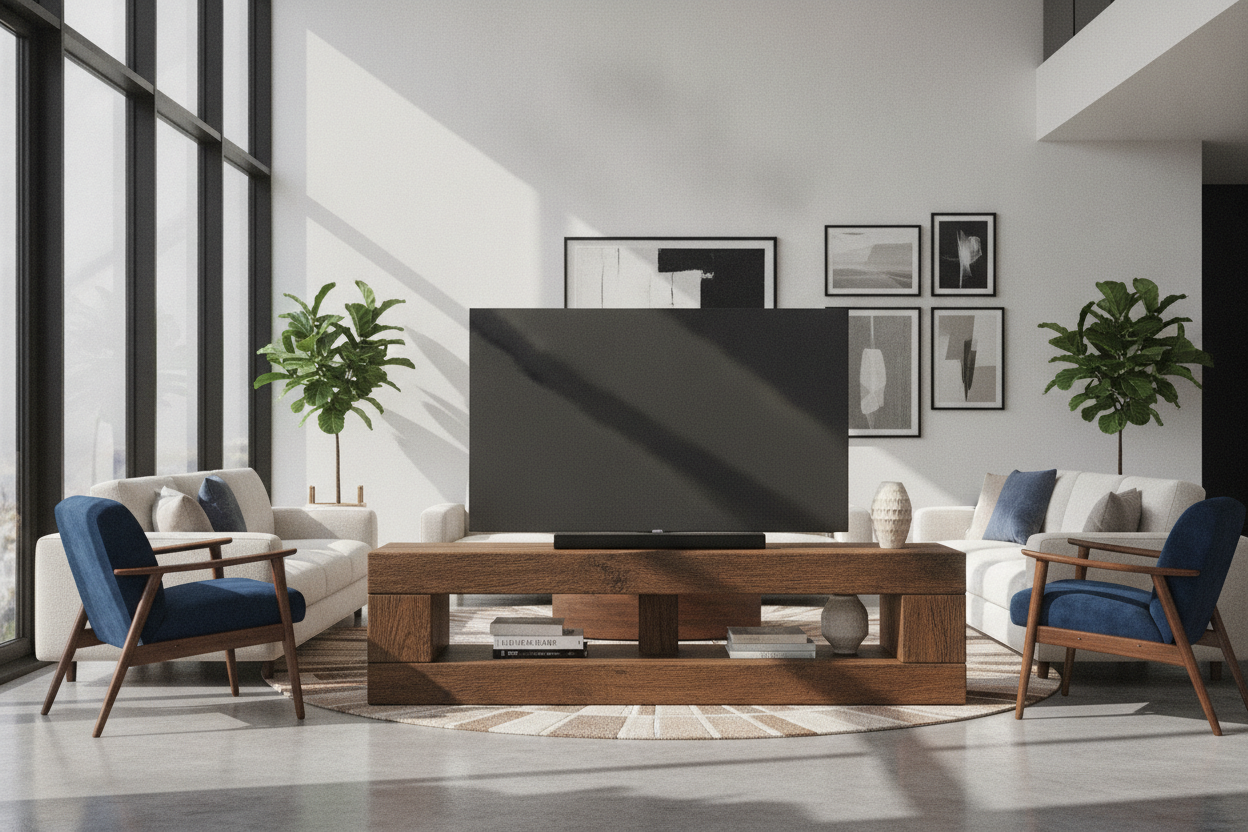
I remember unboxing my first OLED. It was so thin I was afraid I’d snap it just by breathing too hard. I sat it on a spindly metal rack I’d dragged from my college apartment, and the whole setup looked like an iPad glued to a toothpick. It wasn't until I swapped that rack for a proper furniture television stand that the living room finally stopped feeling like a temporary staging area.
We spend thousands on the screen but often treat the base as an afterthought. If your TV looks like it’s floating awkwardly or about to tip over the moment a breeze hits it, you have a visual weight problem. You need something substantial to ground that tech.
Quick Takeaways
- OLEDs and QLEDs are too thin to stand alone; they need a heavy base for visual balance.
- Solid wood anchors a room and prevents a 'tech-heavy' clinical vibe.
- Your stand should be at least 6-10 inches wider than your TV on both sides.
- Real furniture features like dovetail joints beat flat-pack cam-locks every time.
- Airflow and cable management are non-negotiable for longevity.
The Paper-Thin Screen Problem No One Talks About
Modern TVs are engineering marvels, but they are aesthetic nightmares when it comes to interior design. When you place a millimeter-thin screen on a delicate, minimalist rack, you create a top-heavy look that makes people subconsciously nervous. It feels fragile.
The eye craves a foundation. Without a substantial furniture tv stand, your high-end display just looks like a black rectangle stuck to a wall or hovering on sticks. It’s the difference between a framed masterpiece and a poster taped to the wall. You need the bulk of a real piece of furniture to tell the room that this setup is intentional, not just a place where you put the screen because there was a plug nearby.
Why Visual Weight is the Secret to a Cozy Living Room
Design is all about contrast. If you have a piece of high-tech glass and plastic, you need to pair it with something organic—think oak, walnut, or reclaimed timber. A substantial piece with slatted doors open shelves provides the texture that a flat screen lacks.
That visual weight acts as an anchor. It draws the eye down and keeps the room from feeling like a sterile showroom. I’ve found that pieces with a bit of 'heft'—thick side panels, heavy legs, and visible grain—make the flickering light of a movie feel much warmer. It turns a 'media center' into a living room.
Stop Buying Tech Accessories (Buy Real Furniture Instead)
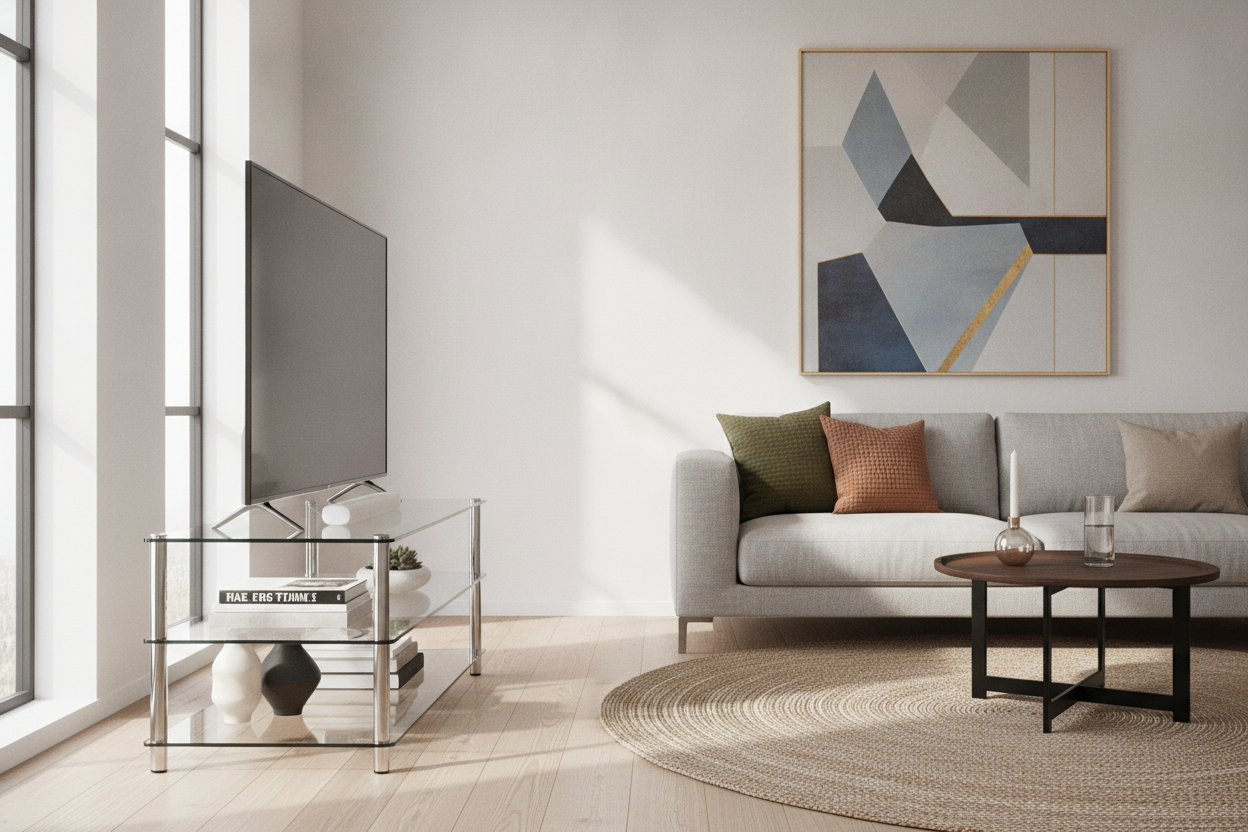
Stop looking in the electronics aisle for your furniture. If it comes in a box with more plastic than wood, skip it. Most 'tech stands' are just glorified server racks. They use thin metal tubes and glass shelves that show every speck of dust and every tangled HDMI cord.
Investing in a high-quality living room furniture tv stand means looking for actual craftsmanship. I’m talking about kiln-dried hardwoods and joints that don't rely on those crappy metal cam-locks that strip the moment you tighten them. A real cabinet will last twenty years; a flat-pack unit will start to sag in two.
The Proportions You Need for a Heavyweight Console
The biggest mistake I see is the 'hat on a toothpick' look. If your TV is 65 inches, your stand shouldn't be 60 inches. It looks cramped and cheap. You need 'breathing room' on either side of the screen to maintain a sense of luxury.
Following the apartment size tv stand rule, your console should be about 20-30% wider than the screen itself. This creates a pleasing pyramid shape for the eye. If the stand is too small, the TV dominates the room in an aggressive way. If the stand is wide and heavy, the TV becomes part of the decor.
But What About the Ugly Cable Box?
I get it—you have a PS5, a cable box, and a nest of wires that looks like a bowl of black spaghetti. You might think you need an open rack for airflow, but that’s a myth. High-quality heavy furniture is designed with ventilated back panels and cord cutouts.
If you’re worried about using your remote through solid wood, look for a credenza with sliding glass doors or mesh inserts. This allows IR signals and air to pass through while hiding the blinking blue lights and plastic boxes. You get the heavy, traditional look without sacrificing the functionality of your smart home tech.
FAQ
How do I know if a stand is 'heavy' enough?
Look at the weight capacity and materials. If it’s under 80 lbs and made of 'engineered wood,' it’s probably going to look flimsy. Aim for solid wood or high-grade veneers on plywood cores.
Will a heavy wood stand block my Wi-Fi?
Unless you’re wrapping your router in lead, no. Wood doesn't interfere with signals nearly as much as metal racks do. Just make sure your router isn't shoved in a tiny, unventilated corner.
What height should my TV stand be?
Your eyes should be level with the middle of the screen when you're sitting on the sofa. Usually, that means a stand height between 22 and 28 inches.

Dejar un comentario
Este sitio está protegido por hCaptcha y se aplican la Política de privacidad de hCaptcha y los Términos del servicio.