










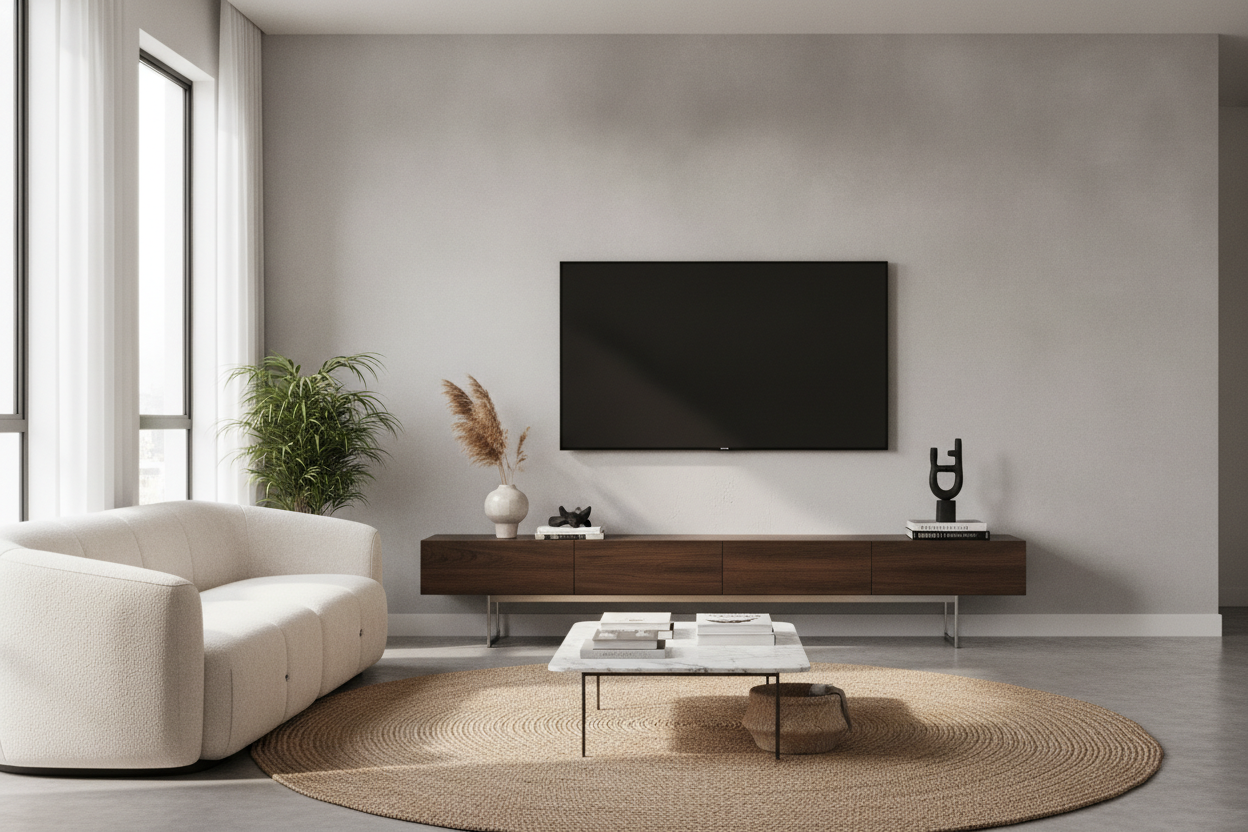
I remember the first time I mounted a 65-inch screen in my old apartment. I felt like a DIY god for about ten minutes until I sat on the sofa and realized the wall looked completely naked. It wasn't the sleek, minimalist vibe I saw on Pinterest; it just looked like a giant black rectangle was haunting my living room. That's the problem with a table under tv setup—or rather, the lack of one.
Most people think mounting the screen means they've 'saved space' and can leave the floor empty. In reality, you've just created a visual void that makes your ceiling feel lower and your room feel unfinished. You need an anchor. It’s the difference between a curated home and a dorm room where someone just discovered a stud finder.
- Your console should be at least 20% wider than the TV screen.
- Use closed storage to hide the 'tech spaghetti' of routers and wires.
- Aim for a height that leaves 4 to 8 inches of breathing room below the screen.
- Depth is key: 12-15 inches is the sweet spot for most living rooms.
The 'Floating Screen' Illusion (And Why I Hate It)
There is something fundamentally unsettling about a massive piece of tech hovering over a bare floor. It lacks a visual foundation. When you have a table for under tv on wall, it creates a vertical line that draws the eye down, making the room feel grounded. Without it, your TV looks like it’s waiting for the rest of the furniture to arrive. It’s top-heavy, and not in a good way.
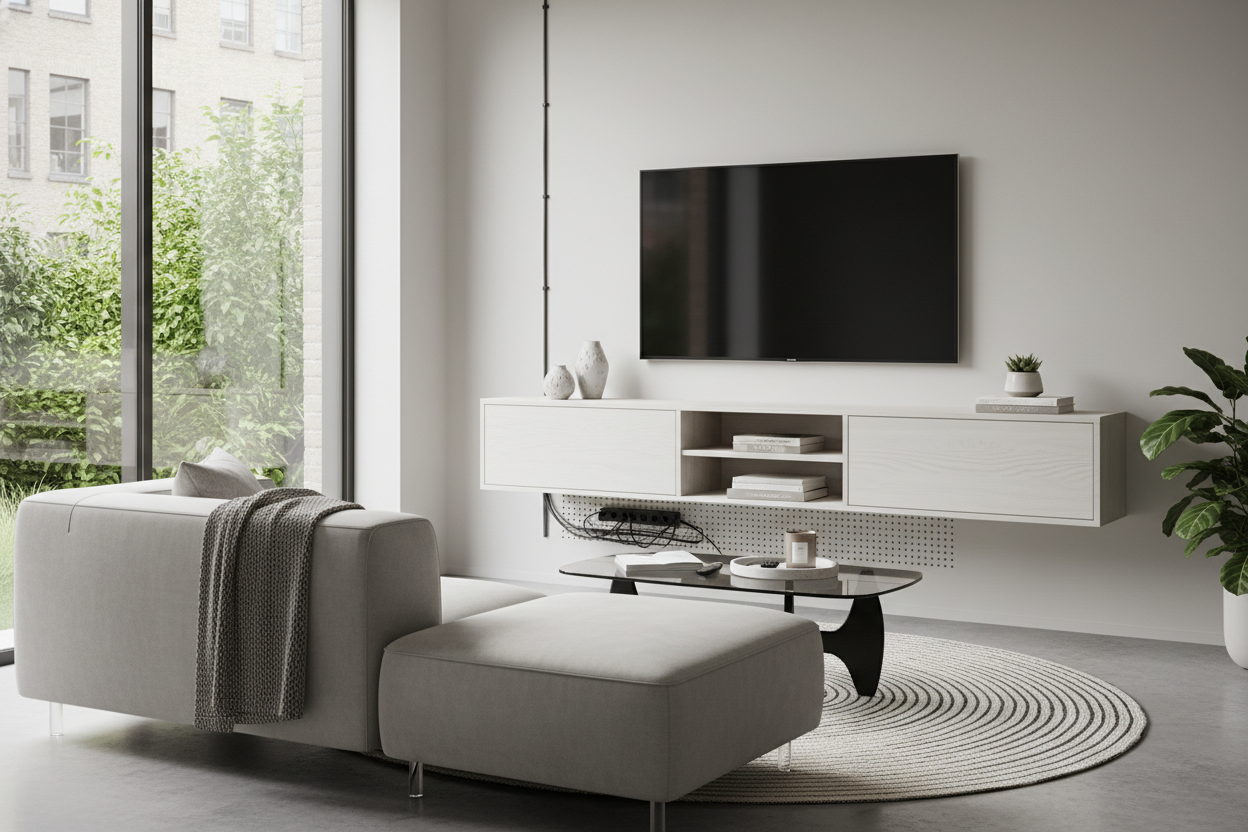
Then there’s the reality of the 'minimalist' dream. Unless you’ve paid a contractor to snake every single wire through the studs, you’re going to have a black cord dangling like a tail. It’s messy. I’ve met plenty of people who refuse to wall mount specifically because they don't want to deal with the spatial awkwardness of a floating screen. A table under tv on wall isn't just for looks; it’s a tactical shield for your surge protector and that blinking router.
Getting the Proportions Right for a Console Table for Under TV
The biggest mistake I see? The 'postage stamp' effect. This happens when someone puts a small table under tv that is narrower than the screen itself. It makes the TV look massive and the table look like a tiny afterthought. Ideally, your console table under wall mounted tv should extend at least 6 inches past the edges of the screen on both sides. This creates a balanced silhouette that feels intentional and expensive.
If you're working with a narrow walkway, don't feel like you need a massive 20-inch-deep credenza. I’ve seen a slim console table tv solution work wonders in tight apartments. You get the visual anchor without sacrificing the floor space you need to actually walk to the kitchen. Just make sure the material is substantial—kiln-dried wood or heavy metal—so it doesn't look flimsy against the visual weight of the screen.
Storage vs. Aesthetics: Hiding the Ugly Stuff
Let’s be honest: we all have too many plastic boxes. Between the Apple TV, the gaming consoles, and the router that looks like a robotic spider, the area under your TV can quickly become a graveyard of blinking LEDs. This is why I almost always advocate for closed storage. You want a table for under wall mounted tv that can actually hide the chaos while looking like a piece of art.
I personally love using a solid wood modern sideboard for this. It’s high-quality enough to look like elevated furniture rather than a cheap 'media unit' from a big-box store. Sideboards usually offer more vertical height than standard low-slung consoles, which helps fill that awkward gap if you accidentally mounted your TV a little too high (it happens to the best of us).
How to Style the Awkward Gap Between Screen and Surface
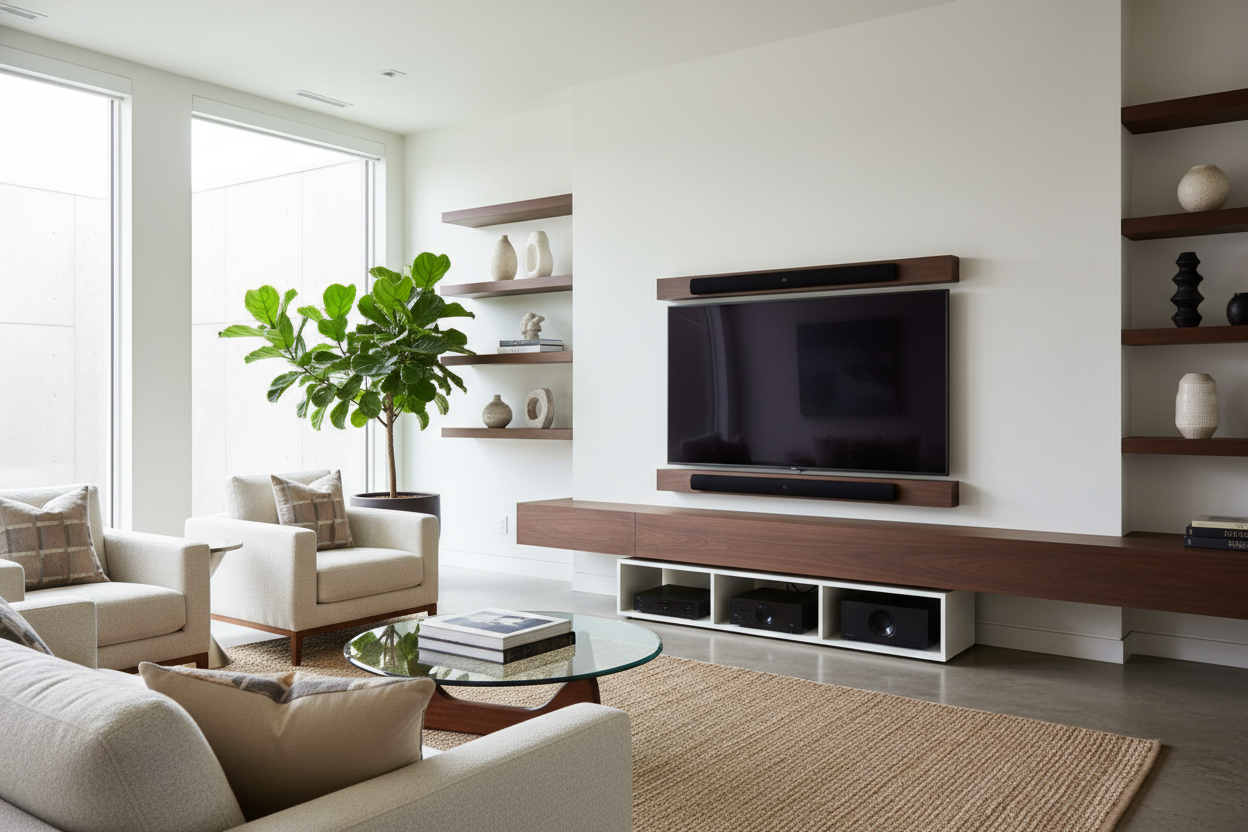
Once the table is in place, you’ll likely have a 5-to-10-inch gap of 'dead air.' If you leave it totally empty, the table and the TV feel like two strangers on a bus. You need to bridge that gap. A low-profile soundbar is the easiest fix, but if you aren't an audiophile, try a few horizontal stacks of coffee table books or a long, shallow wooden bowl.
I also love adding a trailing plant like a Pothos on one end. The vines break up the hard horizontal lines of the screen and the table, adding some life to all that glass and metal. Just avoid tall vases or lamps that block the bottom corners of the screen—nothing ruins a movie night like a lampshade silhouette in the corner of your vision. A well-styled console table for under wall mounted tv should complement the screen, not compete with it.
How far below the TV should the table be?
Usually, 4 to 8 inches is the 'sweet spot.' It’s close enough to feel connected but far enough that you can actually put a few decorative items on the surface without blocking the remote sensor or the bottom of the picture.
Can I use a small table under tv if my room is tiny?
Yes, but prioritize width over depth. A long, shallow shelf or a floating ledge can work if a full-depth table blocks your walkway. Just avoid 'small' in terms of width; it must be wider than the TV.
Do I really need a table if my TV is wall-mounted?
Technically, no, your TV won't fall off the wall. But visually, yes. Without a table to put under wall mounted tv, the room usually feels top-heavy and unfinished. It’s the easiest way to make a living room feel like a home instead of a waiting room.

Dejar un comentario
Este sitio está protegido por hCaptcha y se aplican la Política de privacidad de hCaptcha y los Términos del servicio.