










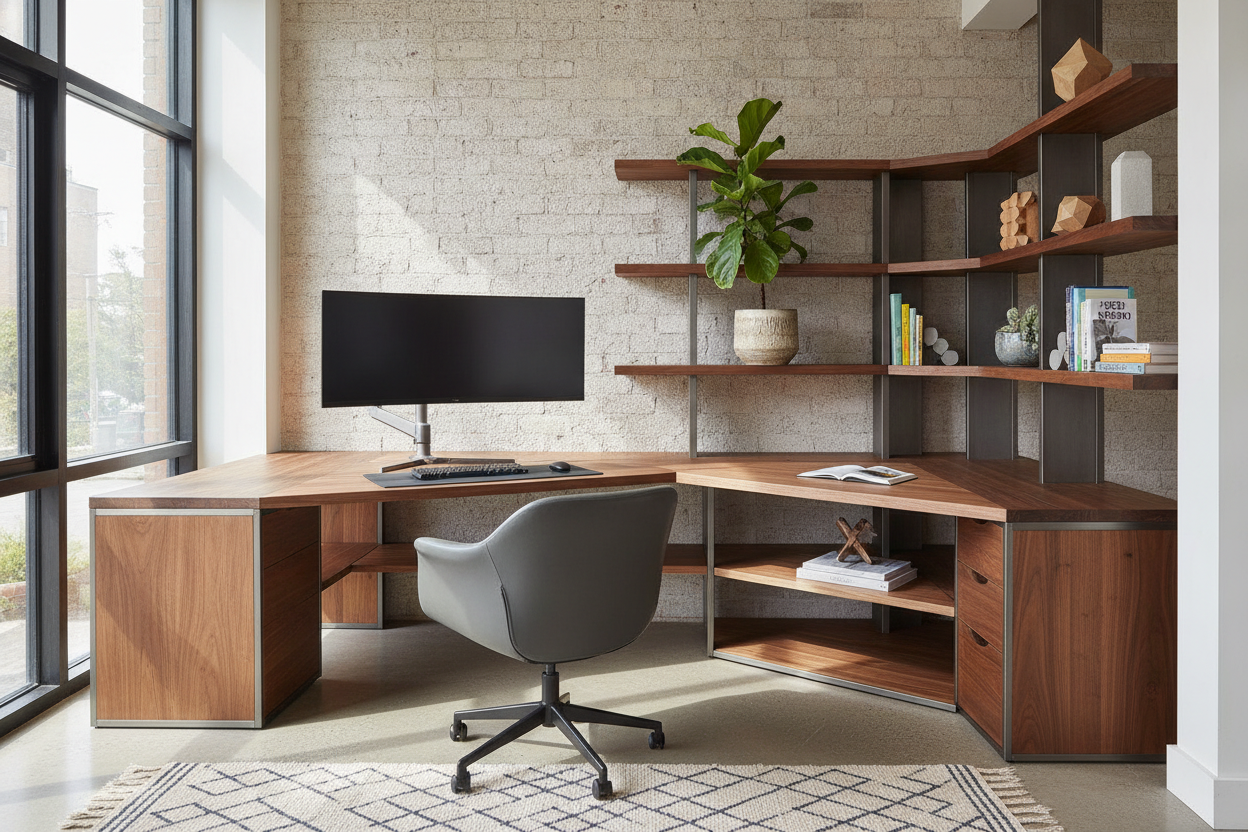
I spent three weeks staring at a 44-inch alcove in my guest room, convinced that a standard 48-inch desk would eventually fit if I just believed in it hard enough. I measured, re-measured, and finally accepted that the furniture industry doesn't care about my 1920s bungalow's erratic floor plan. After returning my third 'compact' desk that was still three inches too deep for the door to open, I realized the only way out was to create your own desk.
- Standard desks are built for standard rooms; if your space is 'unique,' custom is the only way to avoid wasted square footage.
- Prioritize depth—30 inches is the sweet spot for eye strain, while 24 inches feels like you're hugging your monitor.
- A modular approach lets you upgrade the top or the frame independently as your budget allows.
- Don't underestimate cable management; if you don't plan for it during the build, you'll regret it by day two.
The harsh reality of 'standard' desk dimensions
The furniture industry loves a 48x24-inch rectangle. It's easy to ship and fits the average cubicle, but it's often a nightmare for a home office. If you're looking at a basic writing computer desk, you'll quickly find that 24 inches of depth is barely enough room for a keyboard and a coffee mug, let alone a 27-inch monitor. You end up with your face pressed against the screen, wondering why you have a headache by 2 PM.
When you start looking at custom desk dimensions, you realize that the extra six inches of depth (moving to a 30-inch top) changes everything. It gives you room for a desk mat, a real speakers setup, and—heaven forbid—a place to rest your elbows. I’ve seen people try to squeeze massive setups into tiny corners, only to realize their chair won't even tuck in because the legs are too wide. Customizing the width to the exact half-inch means you aren't leaving a 'dust alley' between the desk and the wall.
Falling down the 'design your own desk' rabbit hole
I used to think 'custom furniture' meant hiring a local woodworker for $3,000. Then I discovered the world of the custom desk builder online. It’s a revelation for people who want a specific look without needing a woodshop in their garage. You can toggle between butcher block birch, solid walnut, or even high-pressure laminates that can survive a spilled energy drink without bubbling up like cheap MDF.
My journey started when I tried to elevate your workspace with a custom Ikea long desk, but I quickly realized that modularity is the real secret. Using a desk builder allows you to visualize how a 72-inch top looks on different leg styles. Do you want T-legs for maximum knee clearance or O-legs for that industrial architectural vibe? Being able to design your own desk virtually saves you from the 'it looked better in the catalog' heartbreak. It turns the process from a guessing game into a precise project.
What actually matters when you build your desk
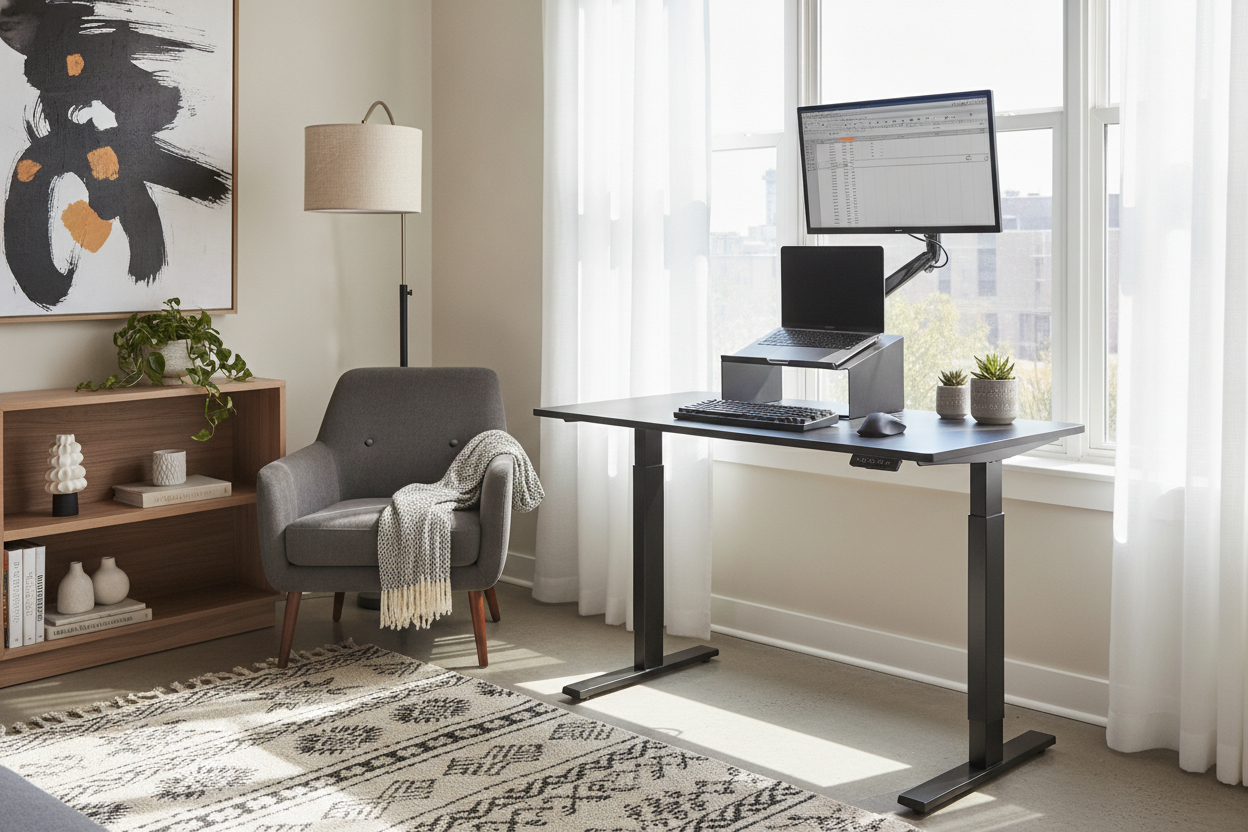
If you're going to use a build your own desk website, don't get distracted by the fancy finishes until you've nailed the foundation. The frame is the soul of the desk. I’ve tested enough wobbly legs to know that if the base is flimsy, the most expensive oak top in the world won't save it. I eventually opted for a heavy-duty sit stand up desk with memory preset because my back simply cannot handle eight hours of sitting anymore.
When you build your desk, think about the 'collision zones.' Will the legs hit your baseboards? Is there enough clearance for your armrests to go under the table? I made the mistake once of ordering a beautiful slab of reclaimed wood that was so thick I couldn't actually cross my legs underneath it. Now, I always check the under-desk clearance before hitting 'order.' Also, look for frames with a crossbar if you're going wider than 60 inches—nothing kills a custom desk design faster than a sagging middle.
Is piecing it together actually worth the cost?
Let’s talk numbers. A high-end, pre-assembled executive desk can easily run you $1,500, and you’re stuck with whatever cable holes they decided to drill. By using a desk builder, I spent about $800 and got exactly the 54-inch width I needed for my specific wall. It’s not just about the money, though; it’s about the longevity. When you choose your own components, you aren't buying a disposable piece of furniture that will end up on a curb in two years.
My favorite part was the finishing touches. Once the structure was solid, I was able to style your Ikea desk accessory for a custom look, adding leather pads and cable trays that actually fit my gear. The result is a workspace that feels like it was meant to be there, not something I forced into the room. If you’re tired of 'making it work,' stop looking at the standard catalog and start measuring your own walls.
Is a custom desk harder to assemble?
Usually, no. Most online builders use pre-drilled holes or standardized mounting plates. If you can handle a power drill and an Allen wrench, you can put together a custom build in under an hour. Just make sure you have a second person to help flip the desk over—solid wood tops are deceptively heavy.
What is the best material for a custom desktop?
Solid wood (like oak or walnut) is the gold standard for durability and aesthetics, but it requires occasional oiling. If you want zero maintenance, a high-quality laminate or a bamboo top offers a great balance of toughness and price. Avoid thin particle board; it won't hold the screws for your monitor arms over time.
How do I know if the desk will be stable?
Look at the weight of the frame. A frame that weighs 60-80 lbs on its own is going to be significantly more stable than a 20-lb set of hairpin legs. If you're building a standing desk, check for 'wedge' designs at the leg joints, which prevent that annoying monitor shake while you type.


Dejar un comentario
Este sitio está protegido por hCaptcha y se aplican la Política de privacidad de hCaptcha y los Términos del servicio.