










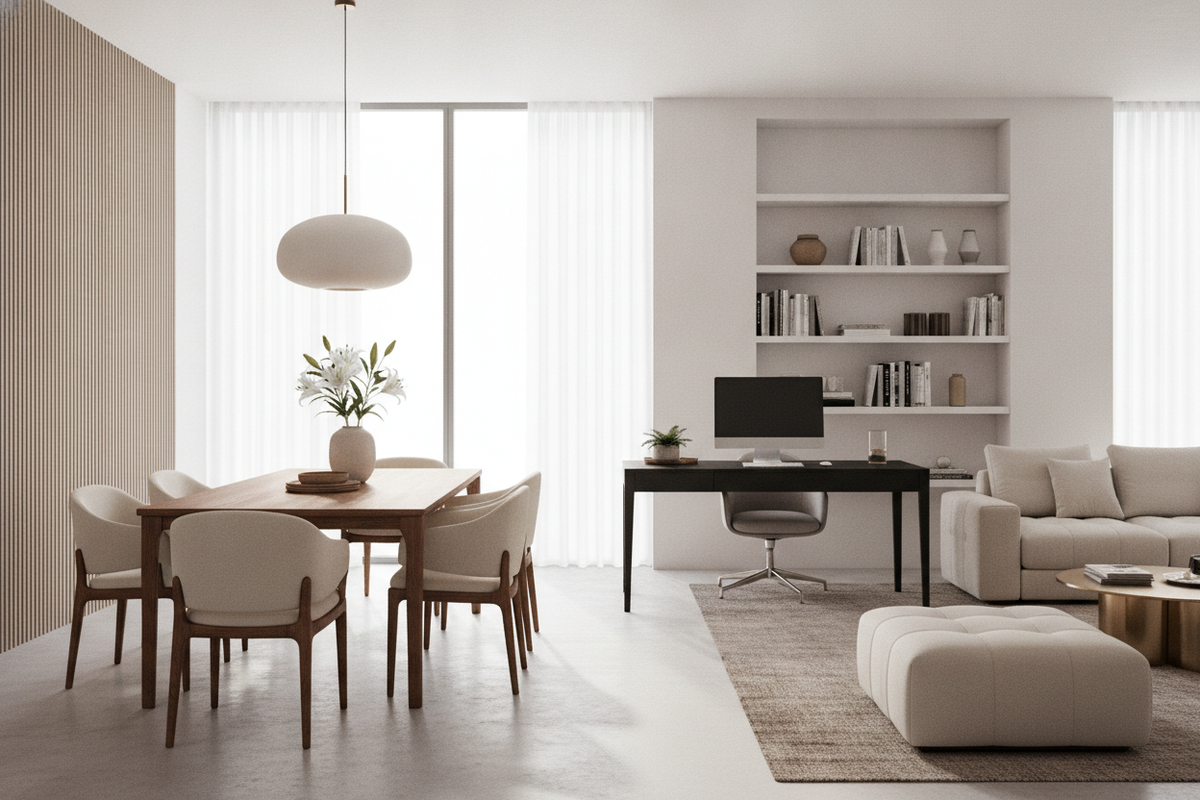
When planning a multipurpose home layout or setting up a remote work station, homeowners and apartment dwellers often ask: are dining tables and desks the same height? At first glance, standard dining furniture and home office desks seem interchangeable. Both serve as stable platforms for seated activities, and both occupy central positions in everyday interior design.
While standard dining surfaces and traditional writing desks frequently fall within very similar overall height ranges, crucial structural differences define how each piece performs. Factors such as under-top structural aprons, leg placement, surface depth, and chair pairing significantly alter daily comfort and posture.
Are Dining Tables and Desks the Same Height? Quick Comparison
In general furniture design, standard dining tables and standard office desks share closely aligned vertical profiles. Both are engineered around standard human seated geometry, assuming a common baseline between the floor, the seat pan, and the upper working plane.
However, the comparison between desk height vs table height involves more than measuring from the floor to the top surface. A dedicated desk is designed specifically for task ergonomics, arm support, peripheral placement, and free leg movement. A dining table is built for communal gathering, plate settings, and shared center space. The following sections outline the core dimensions, structural elements, and ergonomic nuances that differentiate the two.
Standard Height Ranges and Dimensional Profiles
Standard dining tables are typically designed to accommodate multiple diners seated comfortably around a shared perimeter. The tabletop elevation provides enough clearance for relaxed posture during meals while keeping diningware easily reachable.
Standard writing and computer desks share an almost identical tabletop height baseline. Despite this surface similarity, desks and dining tables distribute their dimensional volume differently:
- Top Surface Elevation: Both categories occupy roughly equivalent overall vertical bands above the floor.
- Surface Depth: Dining tables are significantly deeper from front to back to accommodate place settings on opposing sides and serving dishes in the middle. Desks are generally shallower, keeping monitors, keyboards, and task lighting within arm's reach.
- Perimeter Design: Desks are often designed to sit flush against a wall or float with dedicated front-facing seating, whereas dining tables require open circulation on all four sides.
Key Structural Distinctions: Aprons, Clearance, and Surface Depth
The primary functional difference between a dining surface and a desk lies beneath the tabletop. Understanding under-desk clearance helps prevent unexpected discomfort when trying to repurpose furniture.
Under-Top Aprons and Knee Clearance
Traditional wood dining tables feature an apron—a vertical wooden framework positioned directly beneath the tabletop that connects the legs and provides lateral stability. While structurally important for large dining surfaces, the apron reduces the usable vertical space between the user's thighs and the underside of the table. Crossing your legs or using an ergonomic office chair with raised armrests can become difficult when an apron is present.
In contrast, modern desks often utilize reinforced steel under-frames, cantilevered supports, or recessed crossbars. This keeps the immediate under-desk area open, allowing free knee movement and accommodating various seating postures without bumping into lower support rails.
Wire Management and Surface Utilities
Office desks are built around technology integration. Desks often include cable pass-through grommets, rear modesty panels, integrated power hubs, and cord-trough mounting channels. Dining tables prioritize a clean, continuous decorative finish across all edges, requiring standalone cord tidies or floor cable covers if used for computer setups.
Seating Geometry: Dining Chairs vs Ergonomic Office Seating
A table or desk is only half of the ergonomic equation; the accompanying chair determines overall comfort. Comparing dining seating and office seating reveals major functional distinctions, as detailed in our dining tables guide.
Dining chairs feature fixed heights, static backrests, and minimal padding intended for meal-length durations. When paired with a dining table for an entire workday, the lack of height adjustability can cause shoulder elevation or wrist strain. Dedicated task chairs offer pneumatic height adjustment, lumbar support, swivel mobility, and adjustable armrests, allowing the user to align forearms parallel to the working surface.
Using a Dining Table as a Desk: Benefits and Trade-Offs
Repurposing an option from a dining tables collection as a spacious shared workstation has become popular in modern open-plan living. Weighing the advantages against the limitations helps determine if this setup fits your routine.
Advantages of a Dining Table Workstation
- Expansive Work Surface: The generous width and depth provide ample room for multi-monitor setups, reference books, architectural drawings, and collaborative projects.
- Aesthetic Cohesion: A stylish dining table can blend seamlessly into open-concept living rooms without giving the space an overly commercial office appearance.
- Multipurpose Flexibility: A single large surface can transition from a daytime family workstation to an evening dinner table.
Potential Trade-Offs
- Absence of Built-in Storage: Dining tables lack pencil drawers, filing cabinets, and organizer trays, which can lead to tabletop clutter.
- Depth Inefficiencies: Excess depth can push computer monitors too far back or leave awkward, unused center space.
- Surface Sensitivity: Delicate dining finishes like high-gloss veneers or soft woods may require protective desk pads to prevent scratches from laptops, writing instruments, and accessories.
Dedicated Workstations and Adjustable Height Alternatives
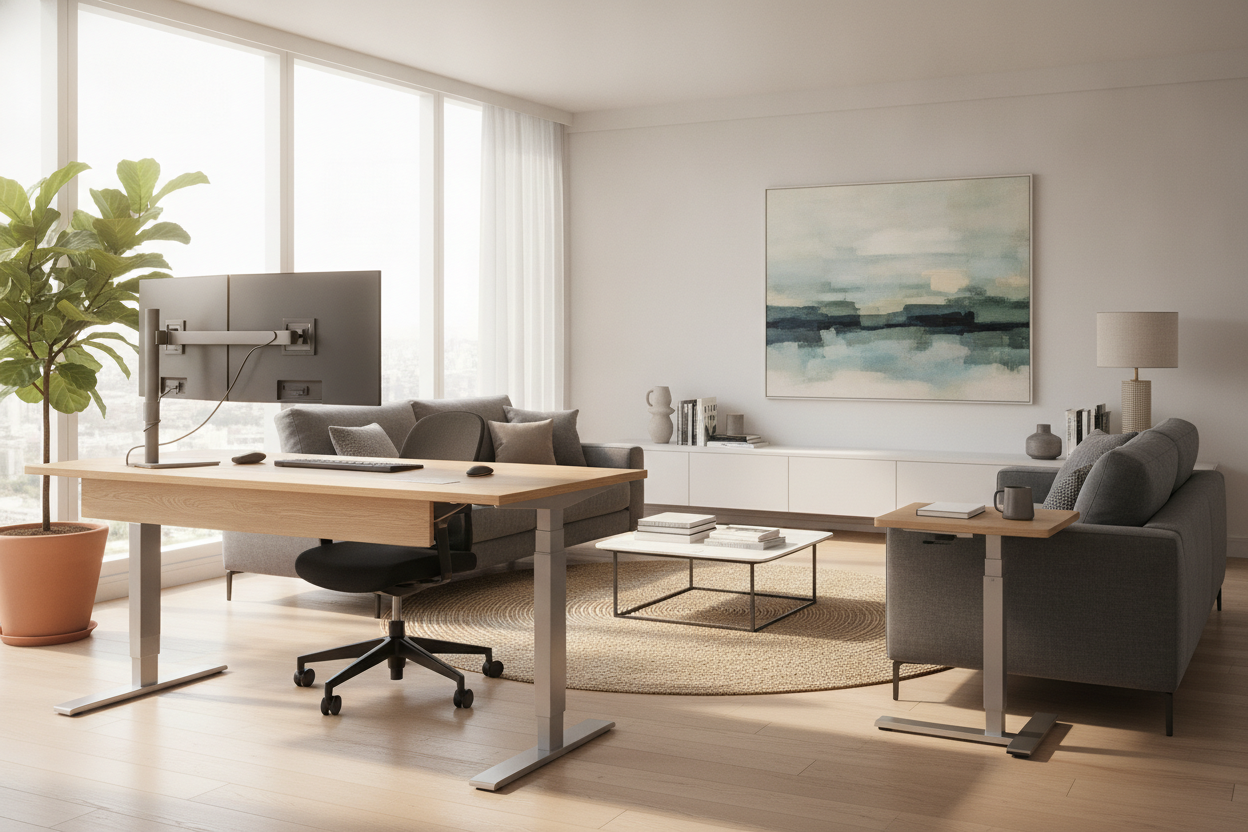
If you require tailored ergonomics, task-specific desks provide specialized adjustability that dining tables cannot match. In modern work environments, dynamic elevation options allow users to shift between seated and standing postures throughout the day.
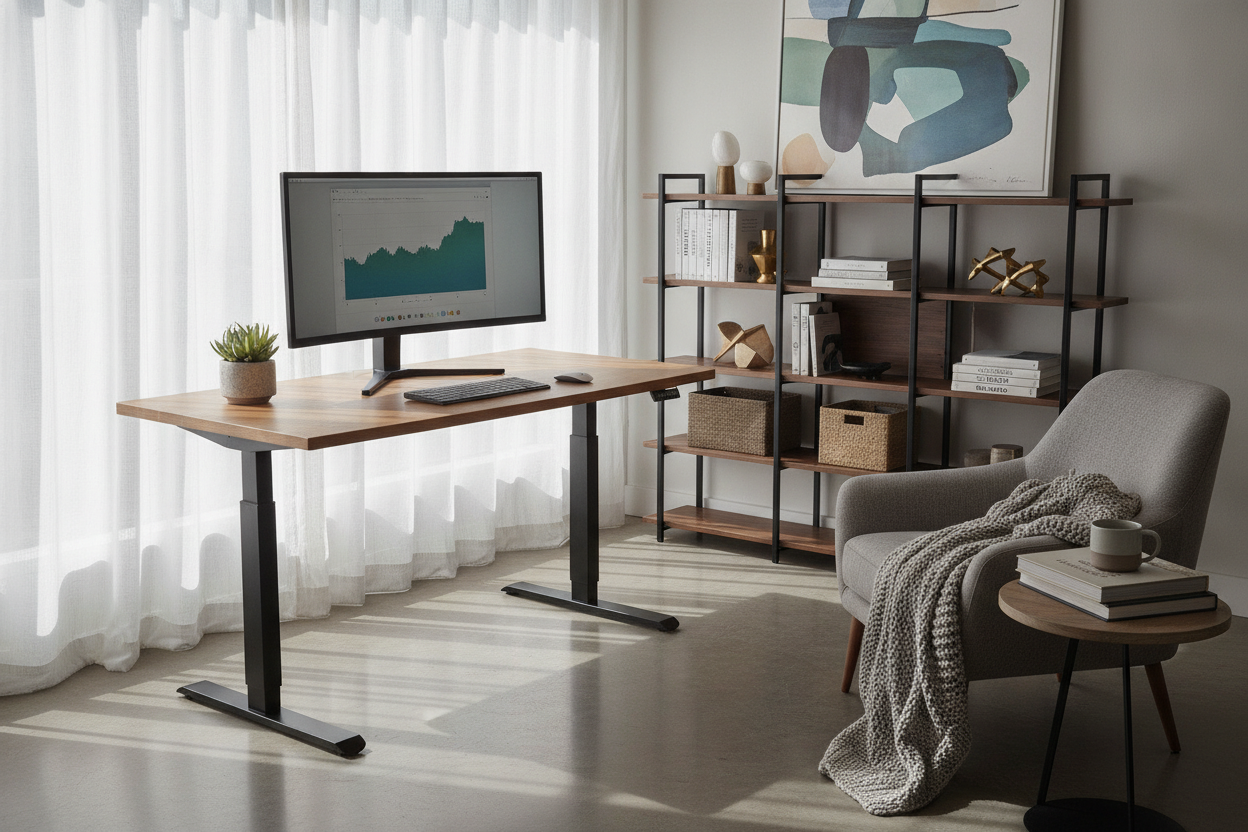
Choosing a dedicated height desk product provides customized vertical positioning at the push of a button or via manual adjustment. This ensures your keyboard and screen align perfectly with your body geometry, whether sitting or standing, rather than forcing you into a single static surface elevation.
Workspace and Dining Integration: Modular Storage Solutions
For homes where the dining area must double as a daytime home office, maintaining clean boundaries between work and leisure is essential. Implementing modular storage allows you to clear the tabletop quickly at the end of the day:
- Sideboards and Buffets: Position a credenza near the dining table to store laptops, notebooks, chargers, and desktop organizers when work hours conclude.
- Mobile Rolling Carts: A compact drawer unit on casters can slide under a dining table during the workday and tuck into a closet or corner during dinner.
- Cable Sleeves and Organizers: Use discreet, removable cable wraps to keep power cords organized without permanently altering the table frame.
Decision Matrix: Choosing the Right Surface for Your Home
To decide whether to use a dining table or purchase a dedicated office desk, consider the primary demands of your space and routine:
- Choose a Dining Table If: You need a shared communal surface, host frequent group work sessions, have limited space for multiple large pieces of furniture, and prefer expansive tabletop space.
- Choose a Dedicated Task Desk If: You work long, focused hours at a computer, require integrated cable management and drawer storage, or need adjustable height settings to support proper posture.
By assessing surface heights, under-table clearances, and seating compatibility, you can choose the optimal furniture configuration for comfortable dining and productive daily work.

Leave a comment
This site is protected by hCaptcha and the hCaptcha Privacy Policy and Terms of Service apply.