










TV Stands


2-Year Warranty
Basic Warranty Terms
Products Covered: All furniture
Duration:
All furniture:2 years from date of delivery
Exception: The fabrics, seat cushions, leather covers, and LED lighting components are 1-year warranty and can be replaced at a minimal cost, provided the original warranty documentation is still available.
Accessory Warranty Terms: All purchased accessories are non‑refundable once ordered and delivered. We provide free re‑shipment replacement for any accessories damaged during transit. Accessories enjoy a 1‑year limited warranty commencing on the delivery date. This warranty does not cover defects resulting from improper installation, misuse, accidental damage, normal wear and tear, or unauthorized disassembly and modification.
Notice: This warranty policy is effective starting January 1, 2026, and applies exclusively to orders placed directly on the official FUFUGAGA website (fufugaga.com). Purchases from any third-party retailers, online marketplaces, or unauthorized resellers are not covered. The Warranty policy applies solely to the original purchaser from the official FUFUGAGA website.
*For more information, Warranty Policy .
Warranty Agreement and Restrictions
This limited warranty DOES NOT cover any loss and/or damage due to:
1. Improper Use.
2. Accident.
3. Neglect.
4. Acts of God. Relate to events outside human control, like flash floods, earthquakes, or other natural disasters.
5. Improper installation.
6. Improper maintenance and care. Using abrasive cleaners such as powders, bleach, ammonia, alcohol, or chlorine, or steel wool, or wire brushes.
7. Modification, or adjustment or repair.
8. Normal wear and tear from daily use.
Before You File a Warranty Claim
If you believe that you have a warranty claim, contact FUFUGAGA.com .
Email: customerservice@fufugaga.com
Hours:
Monday to Friday: 10a - 6p EST
Saturday to Sunday: 10a - 2p EST
Please be sure to provide all pertinent information regarding your claim, including a copy of your original order confirmation, confirm the item number & Qty of the defective item(s), a complete description of the problem, provide pictures or video evidence clearly showing the problem.
Product Details
Product Description
Details
Specs
Warranty
Reviews
This collection brings together modern TV stands, low media consoles, floating TV stands, electric fireplace TV stands and full entertainment centers, with listed fits for TVs from 32 to 88 inches. To pick the right TV stand, match its width to your TV, check that its height puts the screen near seated eye level, and confirm the weight capacity covers your TV plus your media devices.
How to Choose the Right TV Stand Size
Measure the television, not just the diagonal. A 16:9 screen is about 0.87 times its diagonal in width, so a 65-inch TV is roughly 57 inches wide. A well chosen TV stand is at least as wide as the TV, ideally several inches wider, so the TV feet sit fully on the top surface with room for a soundbar. Each product page lists the maximum TV size the stand fits.
| TV size | Approx. TV width | TV stand width to look for |
|---|---|---|
| 55" | 48" | 55–70" |
| 65" | 57" | 63–80" |
| 75" | 65" | 71–95" |
| 85" | 74" | 80–110" |
Height matters as much as width. Most stands here are low-profile consoles with a median height of about 19.5 inches, while tall entertainment centers and TV hutches reach up to 86 inches. For a typical sofa, aim for the center of the screen at around 42 inches from the floor, which is why a larger TV size usually pairs with a lower console. Depth runs from slim 8.7-inch units to 23.6 inches, with most around 15.7 inches, enough for TV feet, a soundbar and gaming consoles. Our TV stand size chart covers every common size from 43 to 85 inches.
Types of TV Stands in This Collection
Media Consoles and Modern TV Stands
Long, low TV units with drawers, doors and open shelves for cable boxes, streaming devices and DVDs. Widths run from about 59 inches up to 133.9-inch consoles with adjustable length. Styles include mid century modern slatted doors, high-gloss fronts with clean lines and natural wood tones that blend seamlessly with other furniture in the living room.
Floating TV Stands
A floating TV stand mounts to the wall, sits 5.9 to 9.8 inches tall and keeps the floor clear, which helps in apartments and rooms with limited wall space. Fix it into studs and note that floating models carry lower weight ratings (55–150 lb) than most floor consoles.
Electric Fireplace TV Stands
Ten models include an electric fireplace with a flame effect, and most add a heater, remote and timer. Plug them directly into a wall outlet. Our fireplace TV stand safety guide explains what to look for.
Entertainment Centers and TV Hutches
Multi-piece entertainment centers frame the TV with side towers, bridges and overhead cabinets for maximum storage and display space. Always check the TV opening: some hutches fit TVs up to 55 inches, others up to 75 inches. Not sure which type suits your room? Compare them in TV stand vs. entertainment center.
Materials, Storage and Features
- Materials: Most stands combine solid wood with manufactured wood, mainly MDF, which resists warping. Some add metal frames, iron legs or glass doors.
- Weight capacity: Most consoles are rated 100–150 lb on top, and heavy-duty models reach 250–300 lb. Add up your TV, soundbar and devices first (see how much weight a TV stand can hold).
- Cable management: 20 models list cable cut-outs or routing holes to hide wires; vented or open-back cabinets help airflow around media devices.
- Storage: Drawers with safety stops, adjustable shelves, dedicated soundbar shelves and, on two models, a built-in power outlet.
- Décor details: LED lighting, high-gloss, fluted or glass fronts for a cohesive look.
Safety and Assembly
Anchor both the TV stand and the TV to the wall, as the CPSC Anchor It! campaign recommends, especially in homes with children. A tip-over restraint is included with many models but not all (26 of the 47 that list this spec), so check "Tipover Restraint Device Included" on each page and add a kit if needed. Most stands ship flat-packed and need assembly, usually by two people.
Shipping, Returns and Warranty
Orders on fufugaga.com ship free to the 48 contiguous US states and DC, and most in-stock items dispatch within 48 hours from US warehouses, with typical delivery in 7–9 days. You also get 35-day returns on unused, unassembled items, an exclusive 2-year limited warranty (1 year on LED lighting components), replacement parts support and Klarna's 4 interest-free payments.
TV Stands FAQs
What size TV stand do I need for a 65-inch TV?
A 65-inch TV is about 57 inches wide, so look for a TV stand at least 60 inches wide, ideally 63 to 80 inches. That leaves room for the TV feet and a soundbar and keeps the setup visually balanced. Check the "Maximum TV Screen Size Accommodated" spec on each product page; many of our 70.9-inch and 78.7-inch consoles are rated for 65- to 85-inch TVs. Our TV stand size chart covers 43 to 85 inches.
How tall should a TV stand be for a living room?
Choose a height that puts the center of the screen near seated eye level, about 42 inches from the floor for most sofas. Because bigger screens are taller, larger TVs need lower stands: roughly 24 to 28 inches for a 55-inch TV, 21 to 25 inches for 65 inches and 16 to 20 inches for 85 inches. Most stands in this collection are low-profile consoles around 15 to 22 inches tall.
What is the difference between a TV stand and an entertainment center?
A TV stand or media console is a single low piece that holds the TV on top, with drawers, doors or shelves below. An entertainment center is a larger, often multi-piece unit that surrounds the TV with towers, a bridge or a hutch, adding far more storage but limiting TV size to its opening. Read TV stand vs. entertainment center for room-by-room advice.
Are TV stands with fireplaces worth it?
They are worth it if you want a flame effect and supplemental heat in one piece of furniture. Most electric fireplace inserts run the flame with or without heat, plug into a standard household outlet and need no chimney or venting. They are not meant to heat a whole house. Plug the unit directly into a wall outlet, never an extension cord, and check its safety listing. See our fireplace TV stand safety guide.
How much weight can a TV stand hold?
Most TV stands in this collection are rated for 100 to 150 lb on the top surface, while heavy-duty models reach 250 to 300 lb and floating stands sit around 55 to 150 lb. A modern 65-inch TV usually weighs about 35 to 55 lb, so most consoles have plenty of margin. Add your soundbar and devices, and see TV stand weight capacity for TV weights by size.
Do I need to anchor my TV stand to the wall?
Yes. The U.S. Consumer Product Safety Commission recommends anchoring TVs and furniture with drawers, doors or shelves to the wall to prevent tip-overs, especially around children. Use the included tip-over restraint where one is supplied, and buy an anchoring kit for models that do not list one. A stand rated for your TV size can still tip if a child climbs on open drawers.
Is it better to hang a TV or put it on a stand?
A stand is easier to set up, needs no wall drilling, works for renters and gives you storage for gaming consoles, cable boxes and a soundbar. Wall mounting saves floor space and lets you set the exact height, but it needs studs and a mount rated for the TV. Many homes combine both: a wall-mounted TV above a low media console or floating TV stand that hides the cables.
Do FUFU&GAGA TV stands require assembly, and how does delivery work?
Most TV stands ship flat-packed and need assembly, typically by two people. Orders on fufugaga.com ship free to the 48 contiguous US states and DC; most in-stock items leave US warehouses within 48 hours and arrive in about 7 to 9 days with front-door delivery. Unused, unassembled items can be returned within 35 days, and furniture carries a 2-year limited warranty.
TV Stands Guides & Ideas
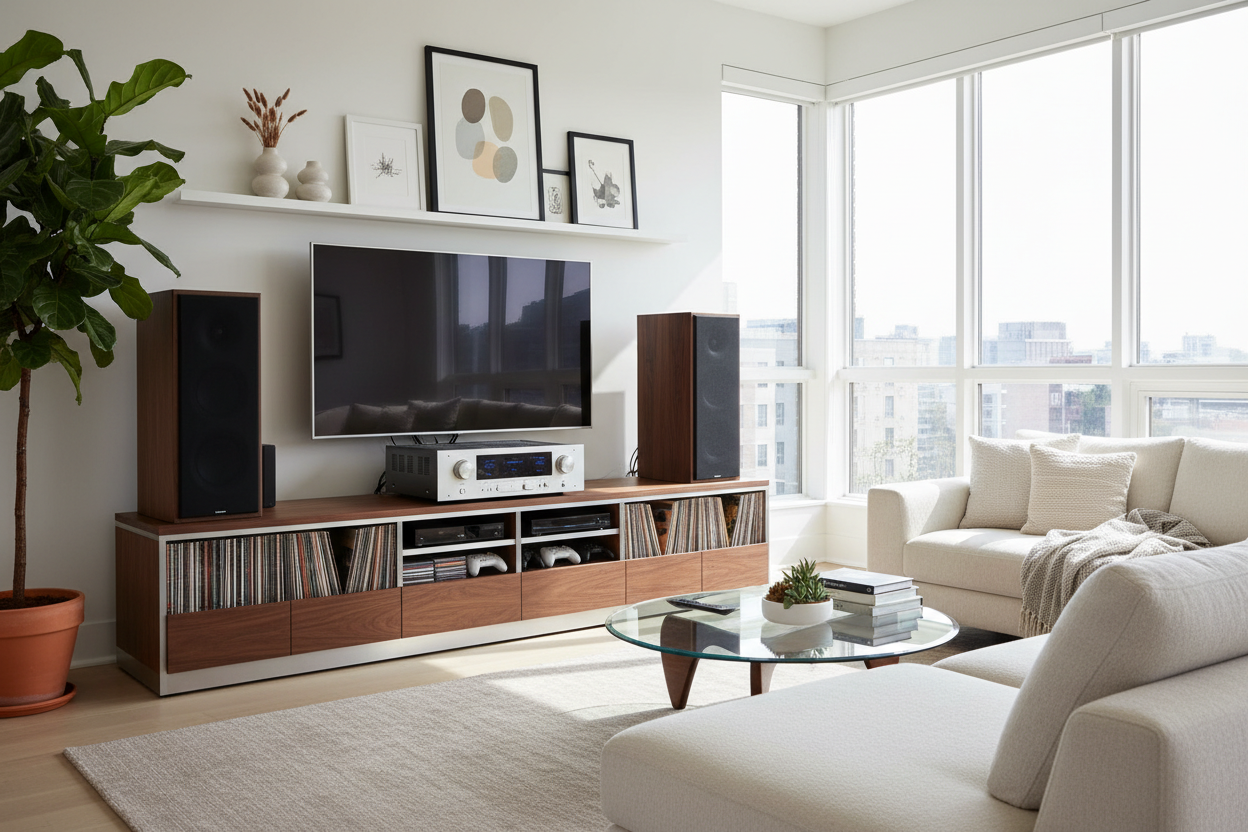
Audio Cabinet Guide: Stereo Cabinets and Stands That Fit a Big Receiver
How to choose an audio cabinet or stereo stand that fits a full-size receiver: shelf depth and height, ventilation, turntable placement, cables and record storage, plus four media consoles to compare.
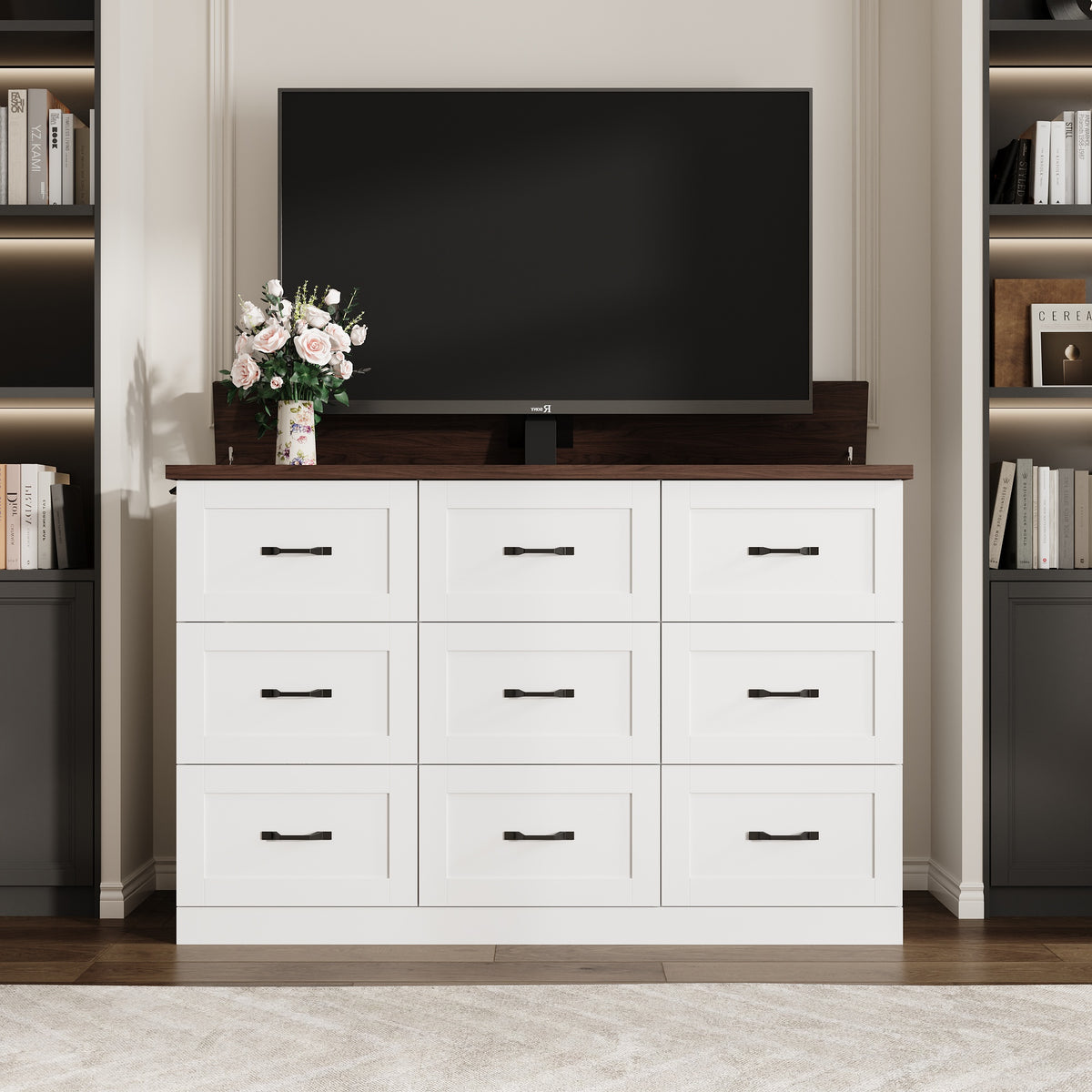
TV Lift Cabinet Buying Guide: Size, Lift Height and Safety
A TV lift cabinet raises a hidden TV at the press of a button. Here is how to match screen size, interior space and lift height, plus three picks for 50- to 65-inch TVs.

What Size TV Stand Do I Need? Size Chart for 43- to 85-Inch TVs
A TV stand should be wider than your TV's actual body and put the screen center near seated eye level. This chart gives width, height and depth targets for 43- to 85-inch TVs.
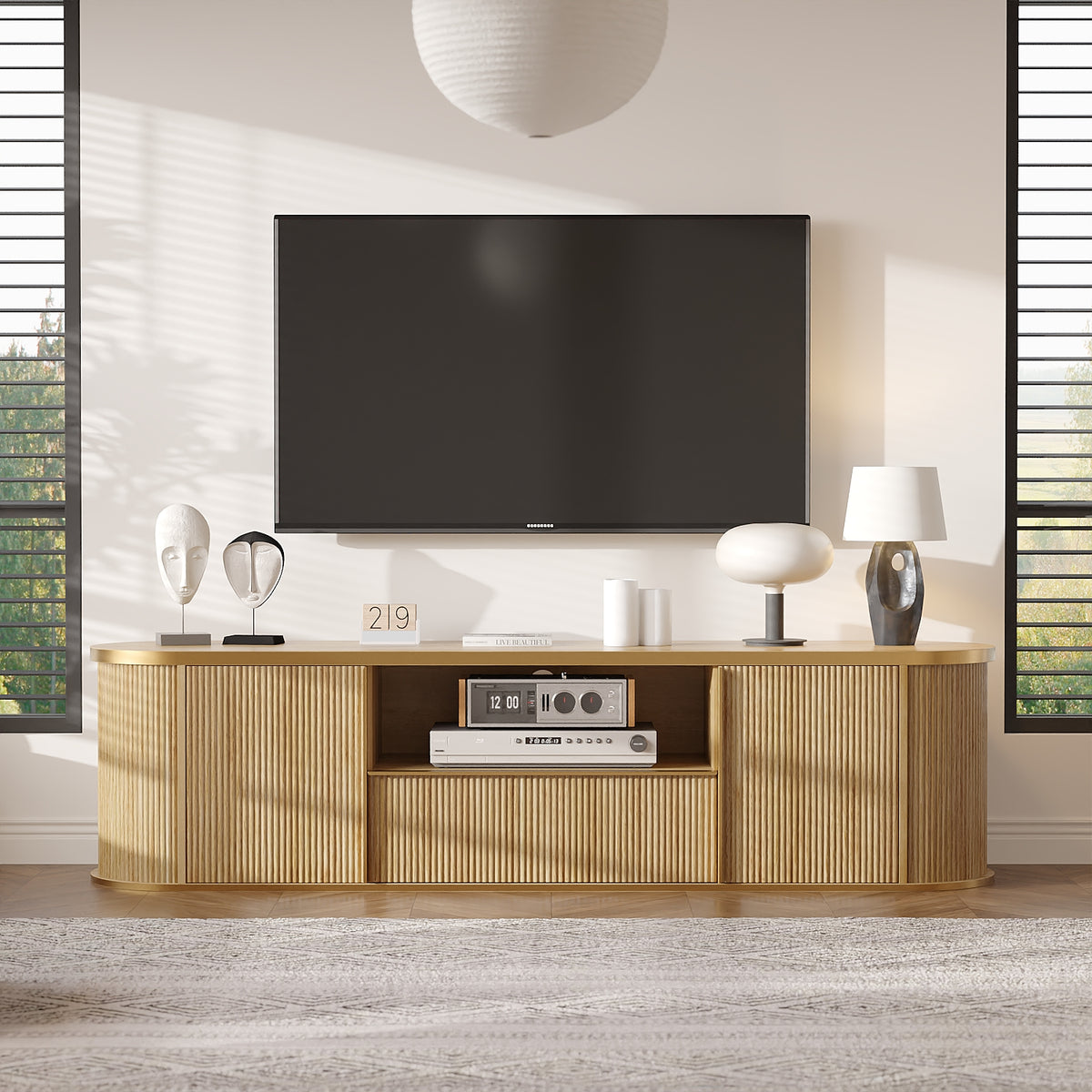
TV Stand Weight Capacity: How Much Weight Can a TV Stand Hold?
Most TV stands hold 75 to 150 lb on top, and heavy-duty consoles 250 to 300 lb. Learn typical TV weights by size and how to check a stand against your full setup.

Are Electric Fireplace TV Stands Safe? Heat, Outlets, Clearances and a Buying Checklist
Electric fireplace TV stands are safe when the insert is safety listed, plugged straight into a wall outlet and given clear space around its vents. Here is what to check before you buy.

TV Stand vs Entertainment Center: Differences, Sizes and Which Fits Your Room
A TV stand or media console sits under the TV; an entertainment center surrounds it with storage. Compare real sizes, storage and TV limits, and find the right fit for each room.