










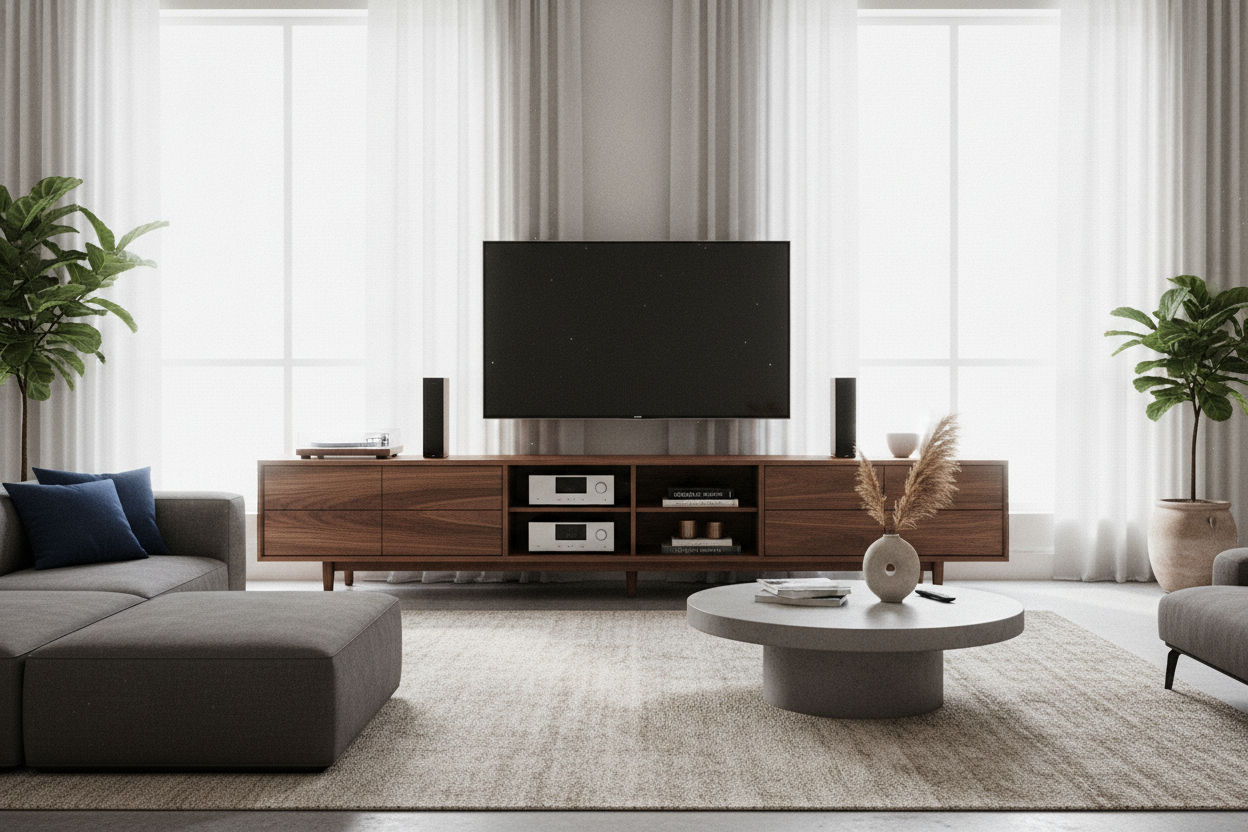
I spent six months hunting for the perfect vintage teak sideboard on Craigslist. I finally found one, hauled it up three flights of stairs, and proudly set my 55-inch TV on top. It looked like a spread from a mid-century design magazine. Forty-five minutes into a movie marathon, my neck was throbbing, my router was hot enough to fry an egg, and a literal nest of black cables was spilling out from the side like a tech-themed horror movie. I had fallen for the trap of thinking all long, low cabinets were created equal.
While they look similar in a grainy social media photo, entertainment credenzas are a completely different breed of furniture than the buffets meant for your dining room. One is built for napkins and heirloom silver; the other is engineered to keep your expensive electronics from melting while saving you a trip to the chiropractor. If you are currently eyeing a tall dining console for your living room, stop. Your tech (and your spine) deserve better.
Quick Takeaways
- Dining buffets are usually 32–36 inches high, which is far too tall for ergonomic TV viewing.
- Electronics need airflow; dining furniture is often a sealed wooden box that traps heat.
- Media-specific units include cord management cutouts so you don't have to drill holes in a vintage piece.
- The depth of a media unit is optimized for modern components like soundbars and gaming consoles.
The 'Vintage Buffet as a TV Stand' Trap
We have all seen the Pinterest boards where a sleek, 1960s sideboard serves as the focal point of a living room. It is a tempting look. These pieces have character, history, and that rich wood grain that modern flat-pack furniture often lacks. But after three days of living with one, the reality sets in. These pieces were never intended to hold a 60-pound screen or a PlayStation that puts out as much heat as a small space heater.
The moment of regret usually happens when you realize you have to leave the cabinet doors wide open just so your Apple TV remote can signal the box, or when you notice the wood starting to warp under the concentrated weight of a TV base. Dining furniture is designed for static storage, not the active, heat-generating life of a media hub. Using the wrong piece of entertainment credenza furniture makes your high-end living room feel like a cluttered dorm room within a week.
The Height Problem: Why Your Neck is Screaming
The biggest difference is the tape measure. A standard dining buffet or sideboard sits at 'counter height'—usually 32 to 36 inches. When you add a TV on top, the center of the screen ends up being five or six feet off the ground. Unless you are sitting in a literal barstool to watch Netflix, you are constantly tilting your head back. It is the same reason people hate the 'TV over the fireplace' look; it is ergonomically exhausting.
True media units are significantly lower, typically sitting between 20 and 28 inches off the floor. This height ensures that when you are sunk into your sofa, your eyes land naturally on the top third of the screen without any neck strain. It is worth checking out what designers look for before you buy to understand how these few inches of difference can completely change the comfort level of your room. If you find yourself rubbing your neck after one episode of a show, your furniture is too tall.
Your Router is Suffocating (The Ventilation Issue)
I once tucked my gaming console inside a beautiful, solid oak dining cabinet. Within an hour, the fans were screaming so loud I could hear them over the game. Dining buffets are built to be airtight to keep dust off your plates. That is a death sentence for tech. Modern media units are engineered with 'breathing' in mind, featuring slatted backs or mesh doors that allow hot air to escape.
Beyond heat, there is the cable nightmare. A dining buffet has a solid back. To get power to your gear, you either have to leave the back off entirely—which looks cheap—or take a hole saw to a piece of furniture you probably paid a lot of money for. A dedicated wood grain entertainment center with pull-down doors is designed with these realities in mind, offering hidden channels that keep your living room from looking like a server room at a tech startup.
How to Get the Look Without the Hassle
You do not have to sacrifice that sophisticated, 'grown-up' aesthetic just to get a functional media unit. The industry has finally caught up to the fact that we want our homes to look like homes, not showrooms for Best Buy. You can find low-profile units with the same tapered legs and walnut finishes as those vintage sideboards, but with the internal shelving adjusted for soundbars instead of gravy boats.
If you want to maintain a clean look, seek out entertainment center ideas that actually look like furniture rather than tech stands. Look for pieces with infrared-friendly glass or slatted wood doors that allow your remotes to work while the gear stays hidden. When you are ready to make the switch, browse dedicated entertainment centers that prioritize both the silhouette of the piece and the reality of your cable management. Trust me, your neck and your Wi-Fi signal will thank you.
FAQ
Can I just drill holes in my existing buffet?
You can, but you risk splintering the wood or compromising the structural integrity. Most dining buffets use the back panel for lateral stability; if you cut too much out, the whole piece can start to lean or wobble under the weight of a heavy TV.
Is a 30-inch high console too tall for a 65-inch TV?
Usually, yes. The larger the screen, the lower the stand should be. For a 65-inch screen, you ideally want a stand that is 22 to 24 inches high to keep the viewing angle comfortable from a standard sofa height.
What is the best material for a media credenza?
Look for kiln-dried hardwoods or high-quality veneers. Avoid thin MDF if you have a heavy TV, as it tends to sag in the middle over time. Ensure the unit has a center support leg if it is wider than 60 inches.

Leave a comment
This site is protected by hCaptcha and the hCaptcha Privacy Policy and Terms of Service apply.