










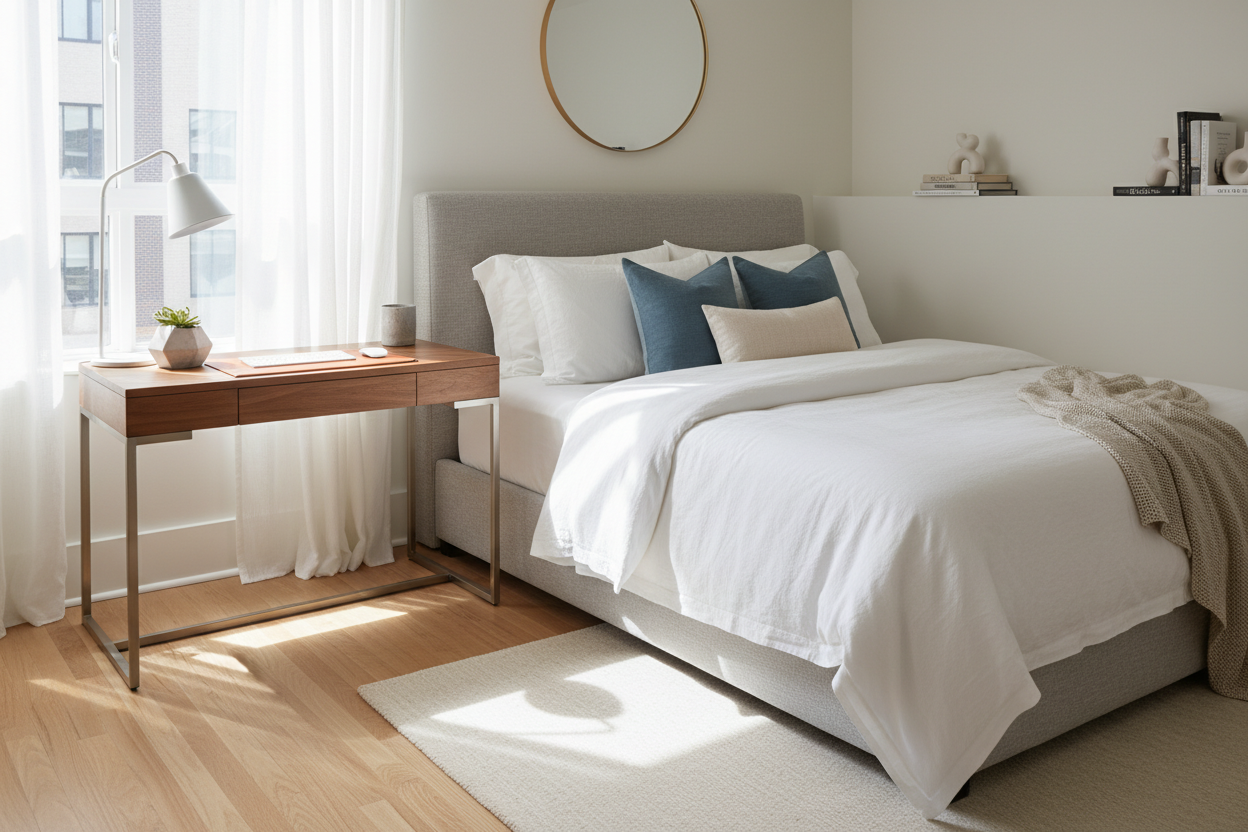
We have all been there: trying to squeeze a functional workspace into a room primarily meant for rest. When floor space is at a premium, the default solution often becomes wedging a workstation wherever it physically fits. But placing a bedroom desk next to bed can easily make your sleep sanctuary feel like a cramped corporate cubicle if you ignore scale, proportion, and visual flow.
Whether you are renting a tight urban apartment or updating a suburban guest room, balancing a sleep space with a work zone requires strategic planning. In this guide, I will walk you through exact clearance measurements, visual weight strategies, and my personal designer tricks for making a small room with desk and bed feel intentional, rather than accidental.
Quick Decision Guide
- Double up on function: In a tight desk next to bed layout, let the desk serve as your nightstand to save 20 to 30 inches of valuable floor space.
- Mind the clearance: Always leave at least 24 to 36 inches between the desk edge and the bed for chair pull-out space and a comfortable circulation path.
- Watch the visual weight: Opt for desks with slender legs, glass tops, or wall-mounted floating designs to maintain a sense of openness.
- Separate the zones: Use targeted task lighting (like a brass articulated sconce) to define the work area without flooding the mattress with bright light.
Space Planning: How to Put a Desk in a Small Bedroom
When clients ask me how to arrange bedroom with desk setups, the conversation always starts with the floor plan. A successful desk and bed layout relies entirely on traffic flow. You never want to feel trapped between your mattress and your swivel chair.
The Nightstand Swap Strategy
If you are figuring out how to fit desk in small bedroom footprints, the most effective trick is the nightstand swap. By placing the furniture directly beside the mattress, it pulls double duty. A bed with desk next to it allows you to keep a glass of water and your phone charger nearby at night, while functioning as a laptop station by day. Just ensure the desk height is comfortable from the mattress—ideally around 28 to 30 inches high, which is standard for workspaces but slightly taller than a typical nightstand.
Fitting a Desk and Dresser Together
Designing a small bedroom with desk and dresser requires careful balancing of bulky items. A dresser carries heavy visual weight because it is a solid block of wood down to the floor. To counter this, choose a visually light desk—think hairpin legs or a minimalist Scandinavian profile. Place the dresser on the wall opposite the bed, and tuck the desk into an alcove or right next to the bed to balance the room's proportions.
Strategic Placement: Where to Put Your Desk in Your Bedroom
Finding the best place to put desk in bedroom spaces is a mix of ergonomics and psychology. You want a spot that feels productive during the day but easily ignored when it is time to wind down.
The Command Position
In interior design, the best position for office desk setups is the command position. This means your home office desk facing door allows you to see who is entering the room, without being directly in line with the doorway. If you have the square footage, floating the desk near the foot of the bed facing the door creates a brilliant physical barrier between "work" and "sleep" zones.
Window Views vs. Wall Facing
When considering where to place desk in room layouts, natural light is crucial. Placing the desk perpendicular to a window reduces screen glare while still giving you a view to rest your eyes. If you must face a wall due to fitting a desk in a small bedroom, use a large mirror or a piece of serene landscape art above the monitors to mimic a window and create visual depth.
Designer's Honest Take: Lessons from My Own Projects
A few years ago, I designed a 10x12 condo bedroom for a client who worked from home full-time. We decided on a bedroom desk placement right next to the bed, using a beautiful, custom walnut floating desk. It looked incredible in the initial renderings.
However, I made a rookie mistake with the dimensions. I ordered a 24-inch deep surface. Once installed, the chair pushed back right into the side of the mattress, making it incredibly frustrating for my client to get in and out of her seat. We had to rip it out and replace it with an 18-inch deep profile. The hard truth about a desk and bed for small room setups? A shallow desk saves your sanity and your shins, but the downside is you will have to sacrifice using a large secondary monitor. You have to choose between screen real estate and physical floor space—you rarely get both in a tiny room.
Frequently Asked Questions
Where should a desk be in a room?
The best place to put a desk in bedroom layouts is typically near a natural light source, either perpendicular to a window or in a quiet alcove. Avoid placing it where your back is to the door, or directly blocking the primary circulation path around the bed.
How do I layout a bedroom with a desk without it looking cluttered?
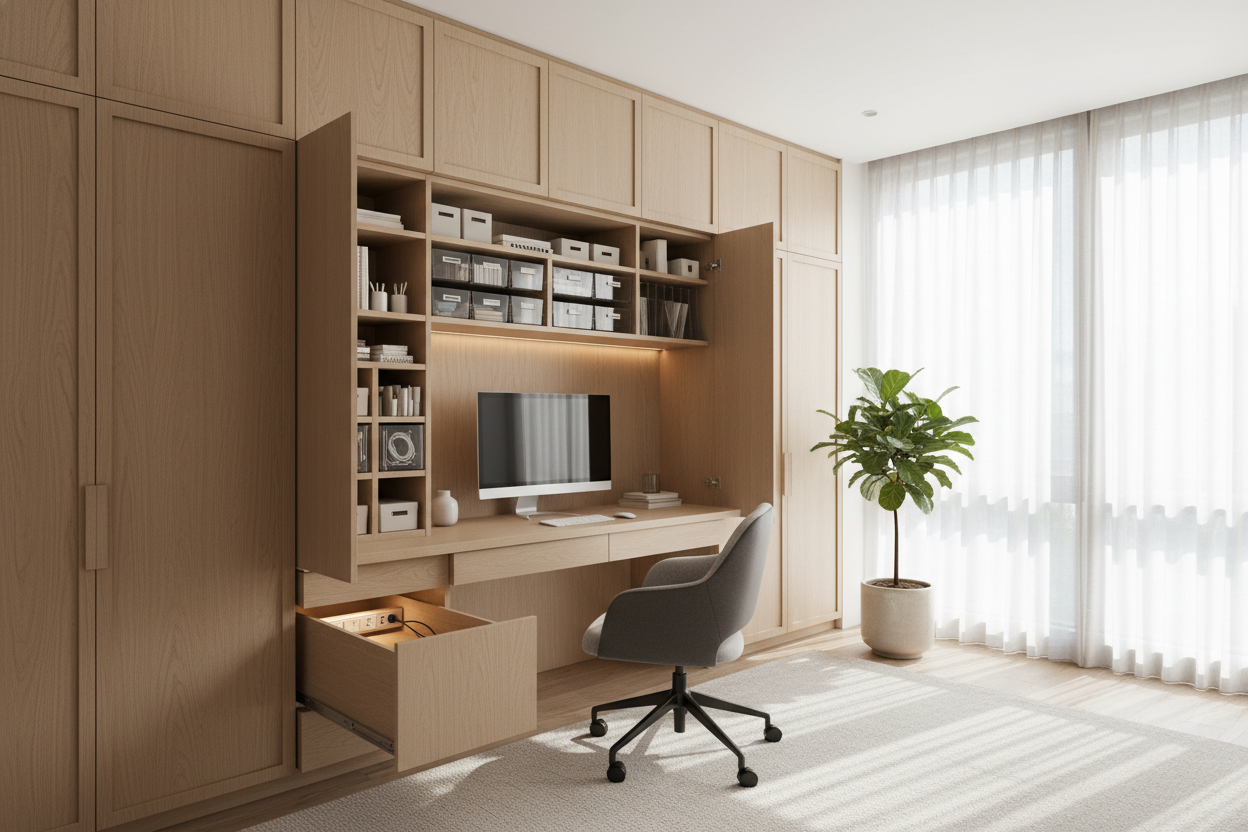
To successfully figure out how to layout bedroom with desk setups, invest in closed storage. A desk with drawers hides laptops and paperwork at night. Creating negative space around the desk—by not cramming furniture right up against it—also prevents a chaotic aesthetic.
How to have a desk in a small bedroom if there is no wall space?
If you lack wall space, consider placing a slim console-style desk at the foot of your bed. This bedroom arrangement with desk acts as a functional footboard. Just ensure you leave at least 30 inches of walkway between the desk chair and the opposite wall or closet.

Leave a comment
This site is protected by hCaptcha and the hCaptcha Privacy Policy and Terms of Service apply.