










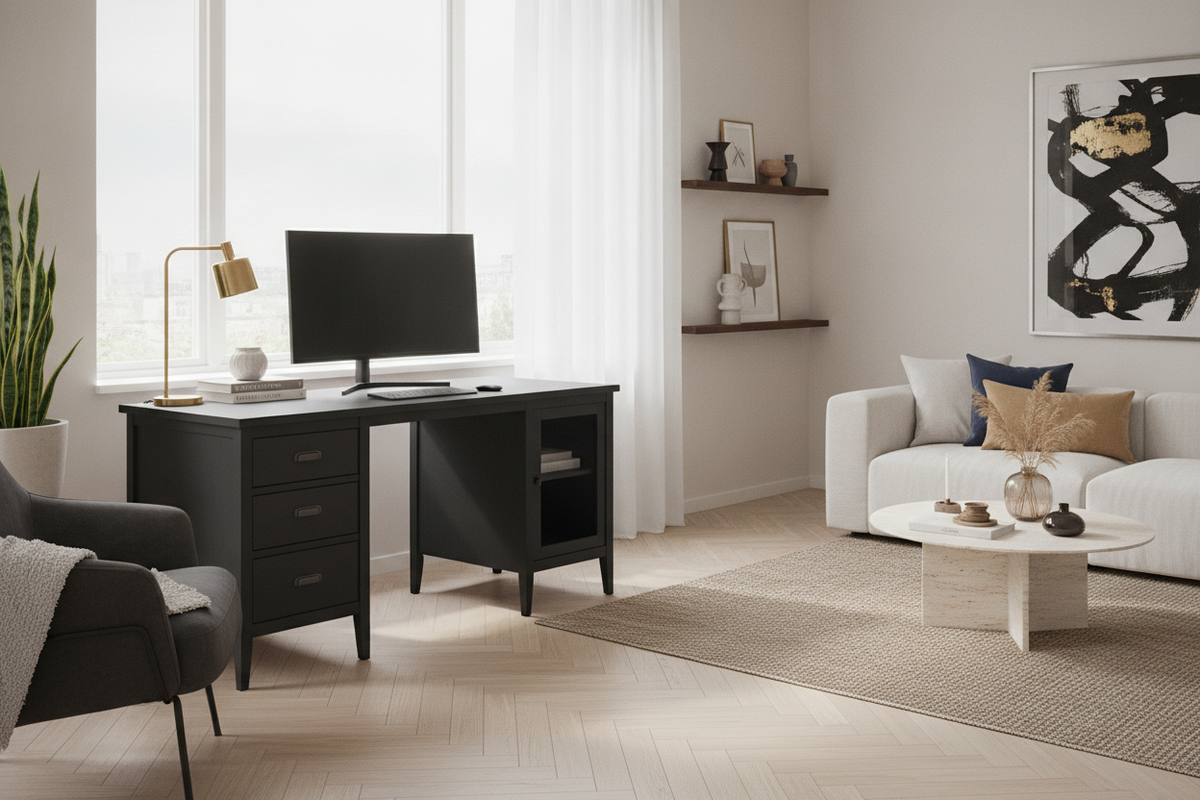
Introduction: The Versatility of a Dark Desk Setup
Selecting a workstation finish sets the tone for an entire home office. Choosing a black desk from IKEA or a related deep-toned workstation offers an immediate sense of structure and visual depth. Dark furniture pieces anchor floating floor plans, define dedicated study zones in multi-use bedrooms, and conceal subtle wire pathways more discreetly than pale surfaces. However, introducing deep furniture into a room requires thoughtful coordination around finish undertones, available floor area, storage requirements, and ambient lighting.
Whether planning a compact reading station, an intensive gaming battlestation, or a dual-monitor work area, understanding how dark surfaces behave helps ensure your space feels intentional rather than enclosed or dim.
Finish Profiles: Matte Black vs. IKEA Black-Brown and Dark Wood
When searching for a black ikea desk, shoppers frequently encounter two dominant finish families: true solid black and IKEA's classic black-brown or dark wood stain. Distinguishing between them is essential for pairing with existing cabinets, bookcases, and flooring.
- Solid Matte and Satin Black: A pure black surface delivers an uncompromising, contemporary look. It pairs naturally with industrial powder-coated metal legs, monochromatic wall tones, and modern minimalist task lamps. True black surfaces show sharp contrast against desk accessories, though flat matte coatings may highlight everyday hand oils or dust under direct downlighting.
- Black-Brown and Stained Wood Finishes: Many popular lines feature a black-brown finish rather than absolute jet black. Under natural sunlight, this tone reveals subtle warm undertones and gentle wood-grain texturing. It softens the visual weight of wide furniture and harmonizes smoothly with traditional wood furniture. If you want to compare veneer undertones with natural timber textures, exploring our ikea desk wood guide provides deeper perspective on coordinating natural materials with engineered finishes.
Deciding between an ink-black laminate and a warm dark brown surface depends largely on your room's flooring. Cool light oak, concrete, or gray carpets work seamlessly with crisp black, while warmer cherry, walnut, or honey-colored floors benefit from the gentle transition provided by dark brown or black-brown finishes.
Footprint and Dimension Profiles for Home Workstations
Scale is critical when styling dark office furniture. Because deep pigments visually command more presence than light reflective finishes, an oversized dark surface can easily overpower a modest layout. Consider three functional footprint profiles when planning your setup:
Compact Study Desks
Ideal for apartment alcoves, guest rooms, or secondary student setups, a compact desk prioritizes a slender depth and narrower width. These models provide adequate clearance for a laptop, a writing pad, and a task light without encroaching on room walkways. Selecting open-leg trestle or wire-frame designs keeps the lower visual field light and airy.
Mid-Size Computer Workstations
A mid-sized footprint serves as the standard for daily remote work. These surfaces comfortably house an external monitor, full-size keyboard, mousepad, and modest desktop organization trays. In this footprint category, look for integrated wire cutouts or grommet passages that keep peripheral cords organized directly below the tabletop.
Expansive and Double Workstations
For creative professionals handling multi-display arrays or users needing separate writing and digital zones, extended tabletops provide generous elbow room. When configuring long side-by-side workstations or corner corner layouts, consulting our office ikea desk guide can help you calculate floor clearances, shared storage modules, and balanced seating layouts.
Storage Configurations: Integrated Drawers, Shelves, and Modular Pods
Maintaining an uncluttered workspace is especially important on deep-toned surfaces, where stray papers and bright desktop items create sharp visual contrast. Matching your work habits with the right storage configuration is essential:
- Integrated Drawer Pedestals: Desks equipped with built-in side drawers offer immediate, closed organization for stationery, notebooks, and hardware accessories. Choosing shallow top drawers for small implements and a deep lower drawer for hanging files keeps everyday necessities within arm's reach.
- Overhead Shelving Units: Combining a dark desktop with vertical hutch storage or wall-mounted shelving capitalizes on unused vertical wall space. This approach keeps reference binders and decor elevated off the main work plane.
- Independent Storage Pods: For spaces requiring modular versatility, pairing a streamlined dark table with freestanding cabinetry preserves leg clearance. You can coordinate your workstation with complementary vertical storage such as a dark wood shelves product to keep books and equipment nearby while maintaining an open desk underframe.
Room Placement and Lighting Strategies for Dark Workspaces
Dark furniture absorbs ambient light, making thoughtful illumination a practical necessity rather than merely a decorative choice. Position your desk perpendicular to natural window light whenever possible. Facing a window directly can cause eye strain through extreme contrast between bright sunlight and a dark desktop, while backing directly into a window often casts your own shadow over the work plane.
Layered artificial lighting delivers the most ergonomic environment for a dark work surface:
- Diffused Ambient Lighting: Overhead fixtures should cast a broad, soft wash over the entire room to prevent intense high-contrast shadows around the perimeter of the desk.
- Adjustable Task Lighting: Use an articulated desk lamp equipped with warm, dimmable LED lighting directed onto your primary reading or typing zone.
- Subtle Accent Furniture: Soften the intensity of a solid dark furniture group by integrating accent pieces that blend wood and light tones, such as a drawer dark wood product in an adjacent lounge or reading corner.
Assembly Integrity, Cable Routing, and Long-Term Surface Care
Ensuring that your workstation remains sturdy and visually pristine requires attentive assembly and simple, consistent maintenance habits.
Assembly and Structural Alignment
When assembling flat-pack particleboard or fiberboard components, hand-tighten cam locks and structural bolts until snug before securing them fully. Over-tightening fasteners can damage manufactured core materials. Assembling the main desk upside down on a soft rug or blanket protects the dark veneer from scratches before the piece is uprighted and placed.
Concealing Cable Runs
One of the primary aesthetic advantages of a dark desk frame is how easily black charging cords, monitor power cables, and power strips blend against the legs. Use adhesive channel clips or an under-desk wire basket along the underside of the rear frame. Securing cords along the inward-facing side of a black leg creates an uncluttered, floating silhouette.
Preserving Dark Surfaces
Dark laminated surfaces and paper foils maintain their rich finish when cleaned with gentle methods. Wipe the surface using a soft microfiber cloth slightly dampened with mild soapy water, avoiding abrasive cleaning pads, bleach, or ammonia-based sprays that can leave cloudy streaks. If you appreciate the resilience and refined look of dark timber textures across other entertaining or storage areas, styling alongside a piece like a black wood drawer product helps establish visual continuity throughout your home.
Summary Checklist: Selecting Your Ideal Dark Office Desk
Before purchasing your dark workstation, review this planning checklist to verify that the piece aligns with your spatial and everyday routine:
- Undertone Coordination: Confirm whether your existing room trim and furniture favor crisp jet black or warmer black-brown graining.
- Footprint Suitability: Measure perimeter walk pathways to ensure comfortable chair push-back distance without colliding with walls or storage units.
- Storage Architecture: Choose between built-in pedestals for dedicated paper-heavy tasks or open-frame legs paired with adjacent shelving for digital setups.
- Lighting Balance: Verify that task lamps and ambient room fixtures provide sufficient coverage to illuminate your work plane without producing harsh screen glare.

Leave a comment
This site is protected by hCaptcha and the hCaptcha Privacy Policy and Terms of Service apply.