











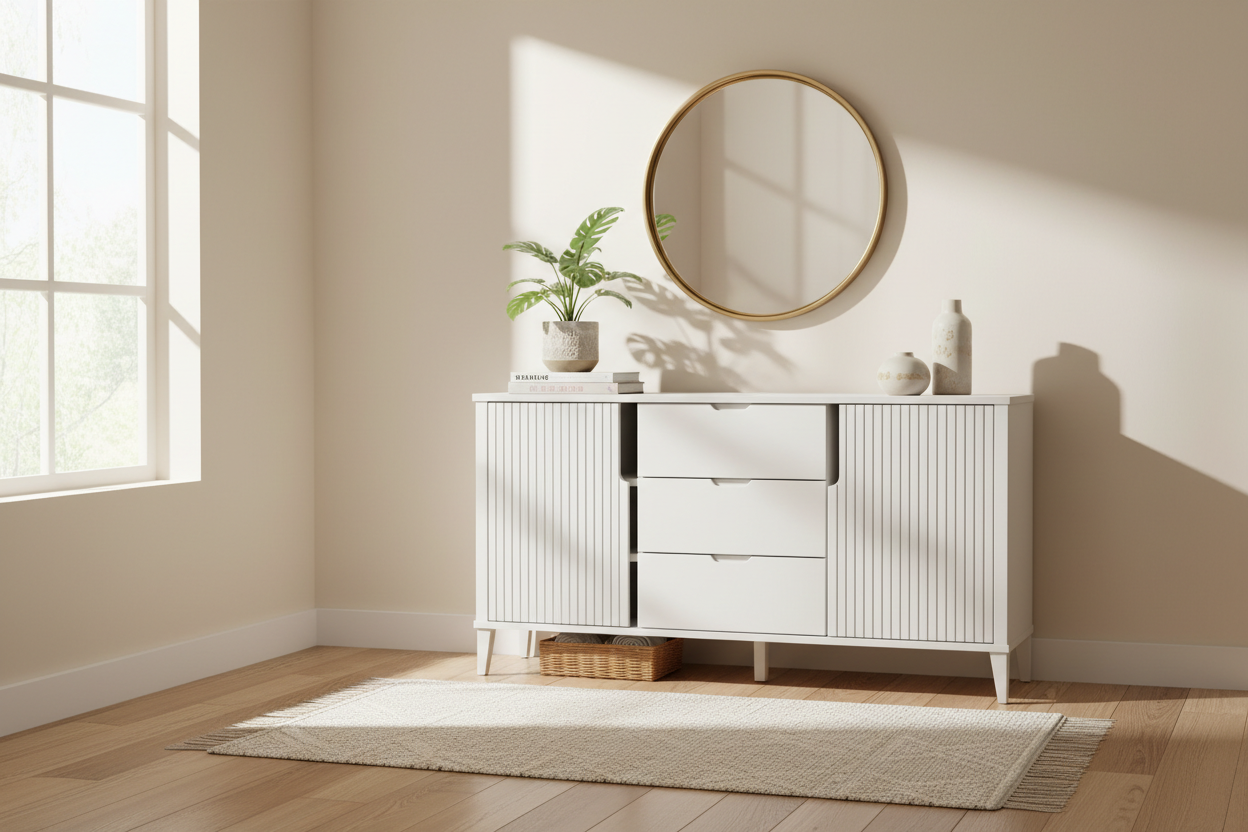
The moment you step through the front door, your home should feel like a sanctuary, not a storage unit. Yet, for many of us, the entryway becomes a magnet for chaos. Shoes pile up, mail accumulates on the floor, and keys vanish into thin air. The solution isn't just about finding a box to throw things in; it is about selecting a piece that anchors the space while keeping it airy and inviting. A white entryway cabinet does exactly that. It acts as a visual palate cleanser, offering a clean, crisp focal point that hides the mess while brightening what is often the darkest part of the house.
Choosing the right furniture for this transitional space requires balancing durability with aesthetics. You need something that can handle the traffic of daily life but still looks curated. White furniture reflects natural and artificial light, creating an illusion of space that is invaluable in narrow corridors or small foyers. Whether you are dealing with a cramped apartment hall or a spacious suburban entrance, the right white storage piece sets the tone for the rest of your home.
My Battle with the Dark Hallway
I learned the value of lighter furniture the hard way. In my previous home, the hallway was long, narrow, and windowless. I initially placed a heavy, dark mahogany console there, thinking it looked sophisticated. It didn't. It sucked the life out of the space and made the hallway feel like a tunnel. Every time I walked in, the space felt closing in on me.
I eventually swapped it for a slim white entryway storage cabinet. The difference was immediate and shocking. The white surface bounced light from the living room down the hall, making the ceiling feel higher and the walls wider. It wasn't just about the color; it was the psychological effect of walking into a bright, clean space. That cabinet became my dedicated drop zone, but because it blended into the light walls, it never felt bulky or intrusive. That experience taught me that in tight spaces, high-contrast, heavy furniture often works against you.
The Design Psychology of a White Entryway
There is a reason interior designers frequently return to the white entryway aesthetic. White represents cleanliness, simplicity, and freshness. When guests enter, you want to convey a sense of calm. Darker colors can sometimes feel imposing or formal, whereas white feels open and breezy.
Beyond the vibe, there is the practical aspect of visual weight. A massive oak chest feels heavy to the eye. A white foyer cabinet of the same size feels lighter. If your front door opens directly into a living area or a tight corridor, you want furniture that recedes rather than dominates. This allows you to layer on personality through accessories—a colorful runner rug, a bold mirror, or a vase of fresh flowers—without the space feeling cluttered.
Choosing the Right Configuration for Your Space
Not all storage is created equal. The market is flooded with options, but the best choice depends entirely on what you are trying to hide. If your main nemesis is footwear, look specifically for white hall cabinets designed with tilting drawers. These keep shoes vertical and hidden, reducing the cabinet's depth to as little as 10 inches, which is a lifesaver in narrow passages.
For general clutter—dog leashes, winter hats, stacks of mail—a white entryway cabinet with doors is superior to open shelving. Open shelves require you to be tidy constantly. If you toss your keys and wallet in a bowl and shut a door, the visual noise is gone instantly. Solid doors also protect your items from dust and reduce the need for constant cleaning inside the unit.
Material Matters: Paint vs. Laminate
When shopping for white entryway furniture, pay close attention to the finish. Painted wood looks classic and adds texture, especially if it has a bit of distressing for a farmhouse look. However, painted surfaces can chip if you tend to kick the baseboards or if you have aggressive vacuum cleaners. High-quality laminate or melamine finishes on hallway storage white units are often more resistant to scratches and moisture, making them a smart choice for families with kids or pets coming in from the rain.
Styling Your Cabinet to Avoid the "Clinical" Look
One valid concern people have is that white furniture can look too sterile, like a doctor's office. The key to warming up a white entryway storage unit is texture and contrast. You never want the cabinet to look like a lonely white box against a white wall.
Try swapping out the standard hardware. Replacing generic knobs with brushed brass, matte black, or leather pulls can instantly upgrade a budget-friendly piece into something that looks custom. Place a natural wood tray on top to catch keys; the wood tone warms up the white lacquer. Woven baskets placed on a bottom shelf or beside the cabinet also add organic texture that softens the sharp lines of modern white entryway furniture.
Maintenance Reality Check
Let's address the elephant in the room: dirt. An entryway sees mud, dust, and wet umbrellas. Will a hallway cabinet white finish survive? Yes, but it requires a different approach than wood grain. The advantage of white is that you can see the grime immediately, prompting you to wipe it down, whereas dark wood hides dust until it becomes a thick layer.
For painted cabinets, a magic eraser is your best friend for scuff marks from shoes. If you choose a glossy finish, it will be easier to wipe down with a damp cloth than a matte finish, which can sometimes hold onto fingerprints. If you are terrified of mud splatters, look for a unit with legs that elevate the main storage compartment off the floor, keeping the pristine white surface away from the immediate splash zone of wet boots.
Making the Most of Vertical Space
If you lack floor area, look up. Many homeowners make the mistake of choosing a low, wide unit when a tall, narrow one would serve them better. A tall white entryway storage cabinet can act as a mini-mudroom, offering hooks for coats in the upper section and shoe storage below. Because it is white, it won't loom over you like a dark wardrobe would. This vertical approach draws the eye upward, once again helping to make a small entry feel more spacious.
Ultimately, the goal is to create a transition space that serves you. Whether you choose a sleek, modern floating unit or a vintage-inspired piece with glass panes, the brightness of white furniture provides a forgiving, flexible backdrop for the chaotic reality of coming and going.
Frequently Asked Questions
How do I stop my white entryway cabinet from turning yellow over time?
Yellowing usually occurs due to exposure to direct sunlight or low-quality oil-based paints. To prevent this, choose cabinets finished with water-based acrylic paint or high-quality laminate, and try to position the furniture out of harsh, direct UV rays, or use UV-filtering window film on your front door.
What is the ideal depth for a hallway cabinet in a narrow entry?
For tight hallways, look for a depth between 10 to 13 inches. This is deep enough to store shoes (often at an angle) and small items without obstructing the walkway. Standard console tables are usually 15 to 18 inches deep, which can cramp a narrow corridor.
Can I mix a white cabinet with dark wood floors?
Absolutely, this is actually a classic design choice. The high contrast between dark floors and a white cabinet makes the furniture pop and look more intentional. To bridge the gap, consider adding a runner rug that incorporates both light and dark tones to ground the cabinet.

Leave a comment
This site is protected by hCaptcha and the hCaptcha Privacy Policy and Terms of Service apply.