










We have all been there: trying to balance a laptop on a dining table or squeezing into a corner that was never meant for productivity. The search for the perfect home computer desk for sale is rarely just about buying a surface to work on; it is about reclaiming your focus and defining the aesthetic of your workspace. As an interior designer, I see clients treat desks as an afterthought, only to realize later that the piece dominates the room's visual weight and dictates their physical comfort.
Key Features to Look For
If you want to make a decision you won't regret in six months, prioritize these structural and functional elements before clicking "buy."
- Depth Requirements: Ensure a minimum depth of 24–30 inches to allow proper focal distance between your eyes and the monitor.
- Material Integrity: Distinguish between solid wood (heirloom quality), veneers (aesthetic but delicate), and melamine (durable commercial grade).
- Cable Management: Look for integrated grommets or modesty panels to hide the "spaghetti" of wires.
- Leg Clearance: Check that the space under the desk is at least 24 inches wide to accommodate your chair and leg movement.
Analyzing Material and Silhouette
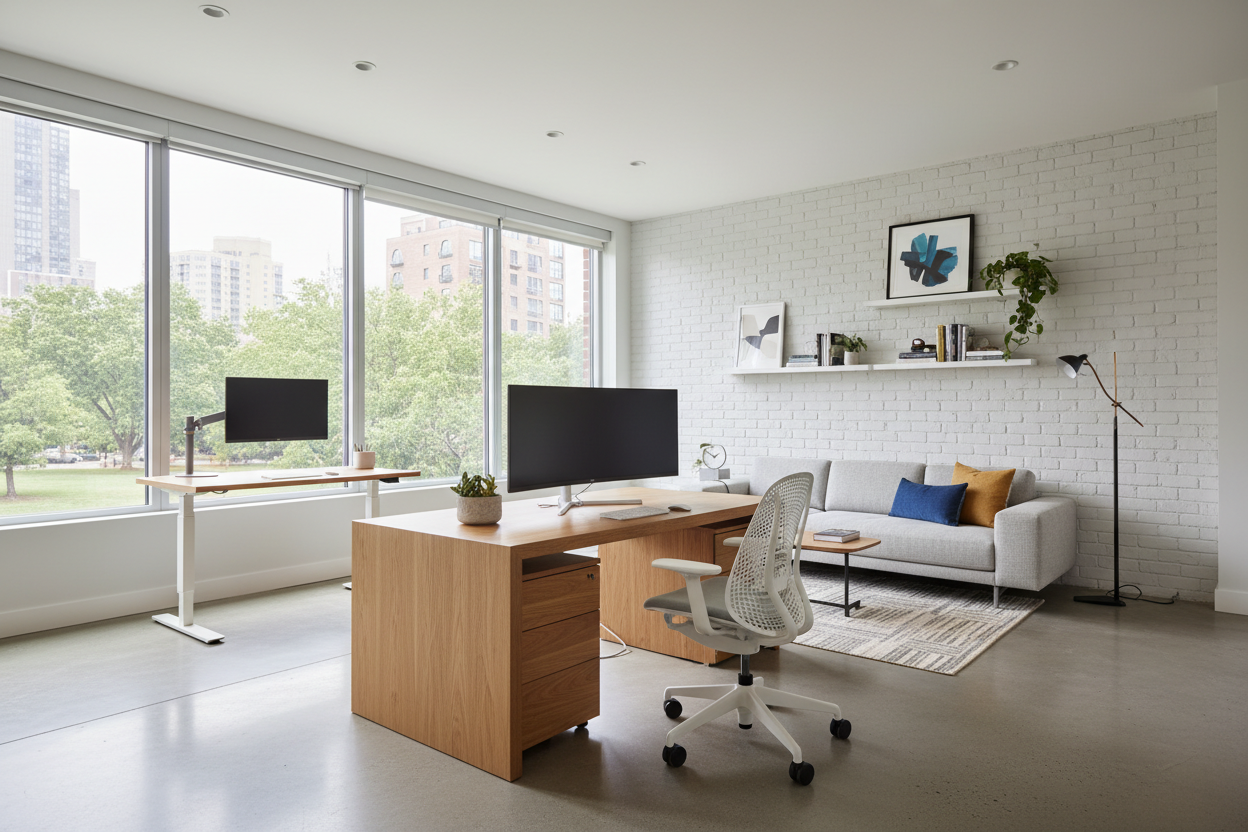
When selecting a home office furniture computer desk, the silhouette dictates the room's flow. In a compact urban apartment, a desk with a heavy, blocky pedestal base will make the room feel claustrophobic. Instead, opt for a "parsons" style or a desk with slender metal legs to maintain an airy, open feel. This is what we call reducing visual mass.
Solid Wood vs. Engineered Surfaces
While solid wood offers a luxurious, tactile experience and ages beautifully, it reacts to humidity. If your office is in a climate-controlled environment, wood is ideal. However, for high-traffic zones or kids' study areas, high-pressure laminate (HPL) offers scratch resistance that wood cannot match. Be wary of cheap "paper" veneers often found on a budget office supply computer desk; they tend to peel at the edges within a year.
The Functionality Factor: Storage and Ergonomics
A beautiful desk is useless if it becomes a clutter magnet. The modern workflow usually requires less paper but more tech accessories. A home office computer desk with storage should prioritize shallow drawers for tablets and charging cables rather than deep file drawers, unless you work in a paper-heavy legal or medical field.
Ergonomics and Height
The standard desk height is 29 to 30 inches. However, if you are petite or taller than average, this standard might cause shoulder strain. If you are not opting for a sit-stand mechanism, ensure your chair has enough adjustability to align your elbows at a 90-degree angle with the desktop. The desk edge profile matters too; a "waterfall" (curved) edge is far gentler on your forearms than a sharp, squared-off edge.
My Personal Take on Buying Computer Desks
I learned a hard lesson early in my career regarding desk finishes. I specified a stunning, high-gloss black lacquer desk for a client who was a graphic designer. It looked incredible in the portfolio photos. However, two weeks later, the client called me. The issue wasn't the size or the shape—it was the fingerprints and the micro-scratches.
Every time she set down her coffee mug or rested her wrists, it left a mark. The glare from her overhead lighting also bounced off the glossy surface, causing eye strain. Now, I always advise clients to test the "touch factor." I personally prefer matte or satin finishes with a slight texture. They hide dust, resist fingerprint oil, and provide a warmer tactile experience during long work sessions. It is a small detail that you don't see in a catalog, but you definitely feel it when you live with it.
Conclusion
Your desk is the cockpit of your career. Don't settle for a wobbly makeshift solution. By focusing on the right depth, durable materials, and a silhouette that compliments your home's architecture, you turn a simple purchase into a long-term investment in your productivity. Measure twice, buy once, and prioritize quality over a quick fix.
Frequently Asked Questions
What is the ideal depth for a computer desk?
For a laptop setup, 20-24 inches is acceptable. However, if you use an external monitor, aim for 28-30 inches deep. This prevents eye strain by keeping the screen at an arm's length distance.
How do I protect a wood desk from scratches?
Use a high-quality desk pad (leather or felt). Not only does this define the workspace visually, but it also provides a soft barrier for your keyboard and mouse, preventing the finish from wearing down in high-contact areas.
Can I put a computer desk in the bedroom?
Yes, but visual separation is key. Choose a desk that doubles as a vanity or console table when not in use. Ensure all electronics can be hidden away in drawers or baskets to maintain a restful atmosphere at night.


Leave a comment
This site is protected by hCaptcha and the hCaptcha Privacy Policy and Terms of Service apply.