










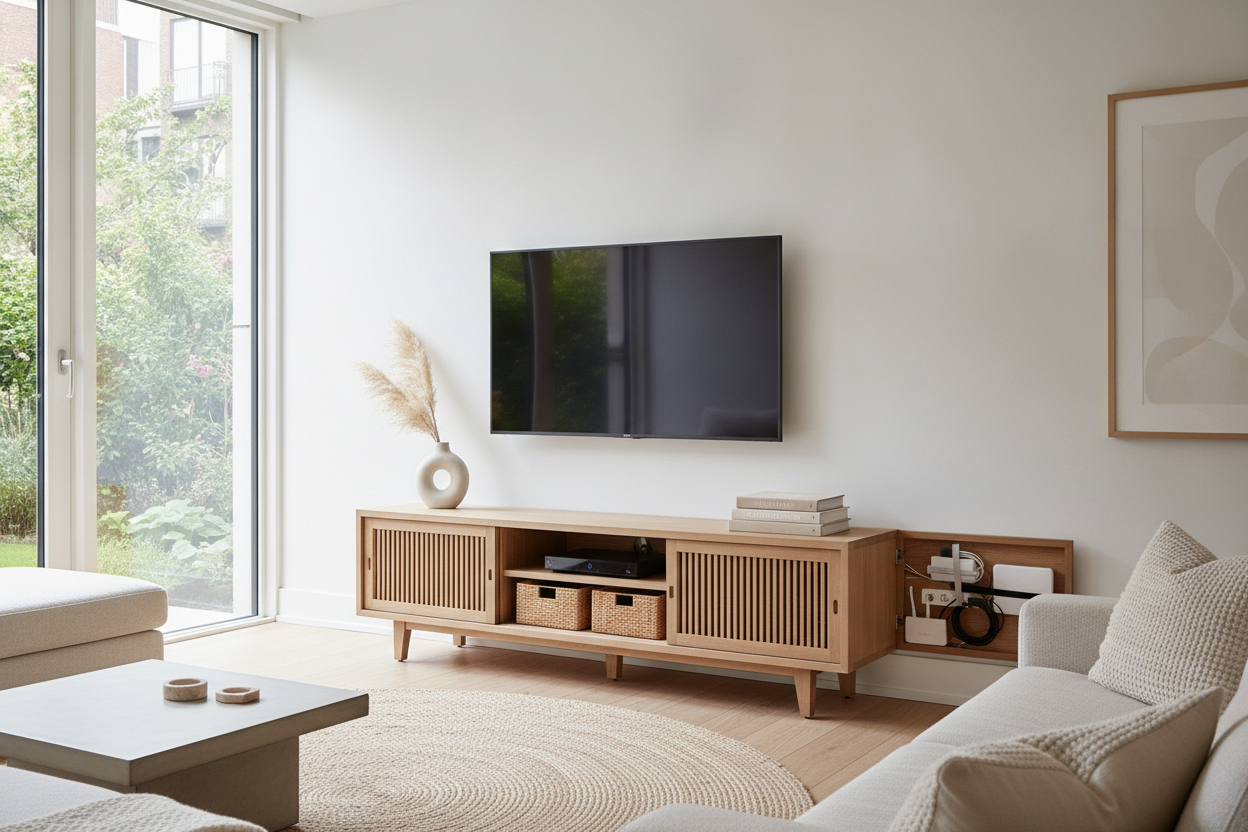
I spent three weeks staring at a tangled nest of black plastic snakes behind my television. Every time I sat down for a movie, my eye drifted from the screen to the dust-caked power strip visible from the side. I wanted a beautiful tv stand, but I also needed a place for my PS5 and router that didn't look like the back of a server room.
It is a classic design trap. You buy the minimalist, mid-century piece that looks stunning in a studio-lit catalog, only to realize it has zero wire management. Suddenly, your $2,000 living room makeover is ruined by a white HDMI cord draped over a walnut shelf like a stray noodle.
Quick Takeaways
- Ventilation is non-negotiable; don't cook your electronics in a sealed box.
- Slatted doors are the gold standard for hiding tech while keeping remotes functional.
- Always check the depth—modern receivers are often deeper than 'slim' furniture.
- Look for pre-drilled holes that align with your shelf heights.
The Ugly Truth About Storing Modern Tech
The modern living room is a lie. We see these minimalist photos of floating TVs and empty surfaces, but where is the hardware? Where is the Nintendo Switch dock, the Sonos bridge, or the massive power brick for the soundbar? Most 'design-forward' pieces are built for a world where people only own a single candle and a coffee table book.
When you bring home a piece that wasn't engineered for media, you end up in cable hell. You’re forced to either leave the doors open—defeating the purpose of the cabinet—or drill jagged, splintered holes into the back panel yourself. A piece of furniture that doesn't account for the heat generated by a gaming console isn't a media center; it's an oven for your expensive electronics.
What Separates a Beautiful TV Console From a Basic Rack?
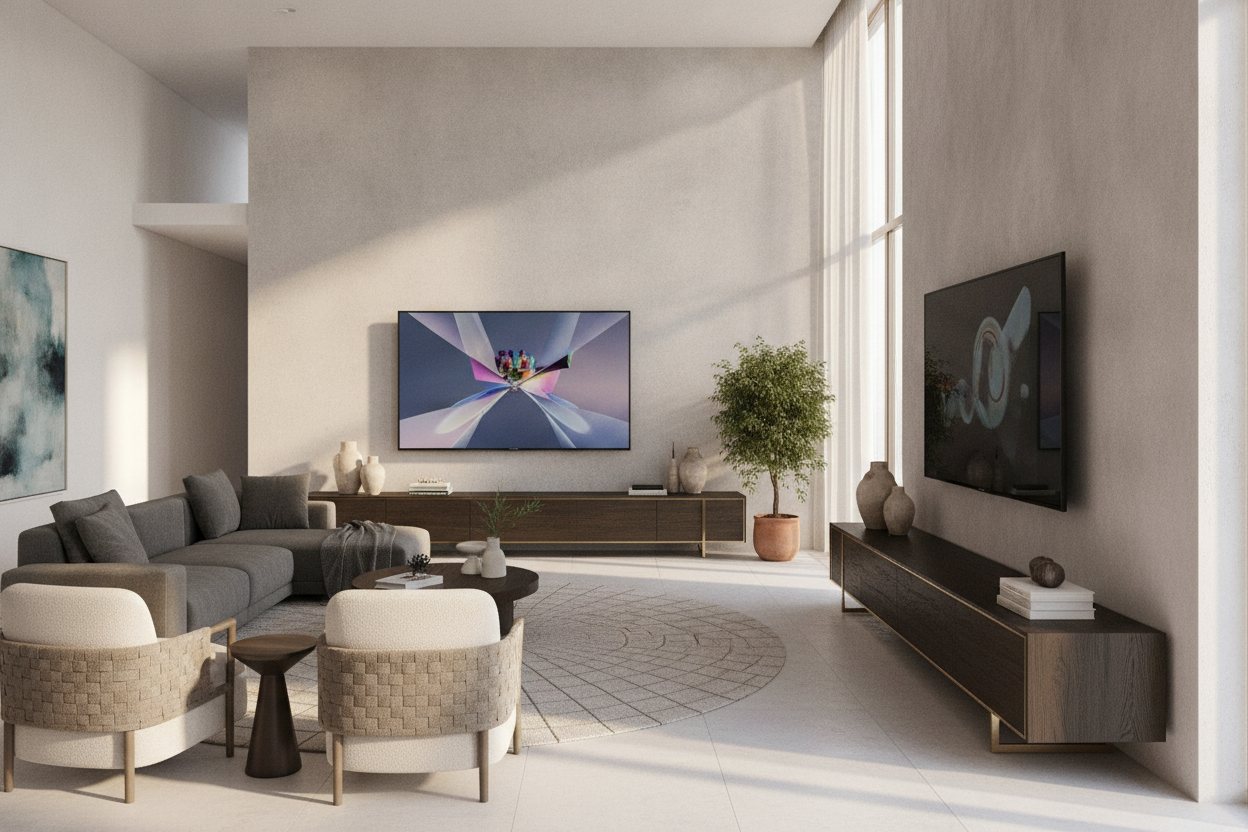
A basic rack is just powder-coated steel and regret. It’s the kind of thing you buy for your first apartment because it’s cheap and holds a screen. But as you curate a space that feels like home, you start looking for a beautiful tv console that actually complements your architecture. We are talking fluted wood details, solid brass hardware, and integrated stone tops.
The terminology has shifted over the years, too. People often ask what does tv stand for anymore because the line between a high-end credenza and a media unit has blurred. A true console today should look like a piece of art when the TV is off, using texture and material to add warmth to the room rather than just being a black hole for gear.
The 3 Non-Negotiable Features I Looked For
After my sagging-shelf disaster of 2019, I developed a strict checklist. First: cord cutouts. They need to be large enough to pass a three-prong plug through, not just a skinny USB cord. Second: slatted or mesh doors. If you have solid wood doors, your infrared remote signals won't pass through, and you'll be standing up to change the volume like it’s 1975.
Third: closed storage. You need enough height for vertical consoles and enough drawers for the 'junk' like extra controllers and manuals. A 4 drawer tv stand media console is usually the sweet spot. It provides enough hidden real estate to keep the surface clear of everything but the TV itself. I look for kiln-dried hardwood frames—avoid the cheap 1.5 lb density MDF that sags under the weight of a 65-inch OLED within a year.
The Sideboard Debate: Can You Just Repurpose Dining Furniture?
Everyone tries the vintage buffet route at least once. It looks cool, and the height is often better for viewing from a bed or a high sofa. But you’re almost certainly going to end up drilling into a 1960s heirloom just to get power to your Apple TV. Plus, sideboards rarely have the internal shelf depth for a heavy-duty receiver.
If you're wondering if a sideboard for tv stand better than a console, the answer is usually 'no' for power users. Unless you are strictly streaming via built-in TV apps and have zero external peripherals, the lack of ventilation in a dining sideboard will eventually lead to hardware failure. Electronics need to breathe, and dining furniture is designed to keep air out to protect linens and silver.
Styling the Area So the Screen Disappears
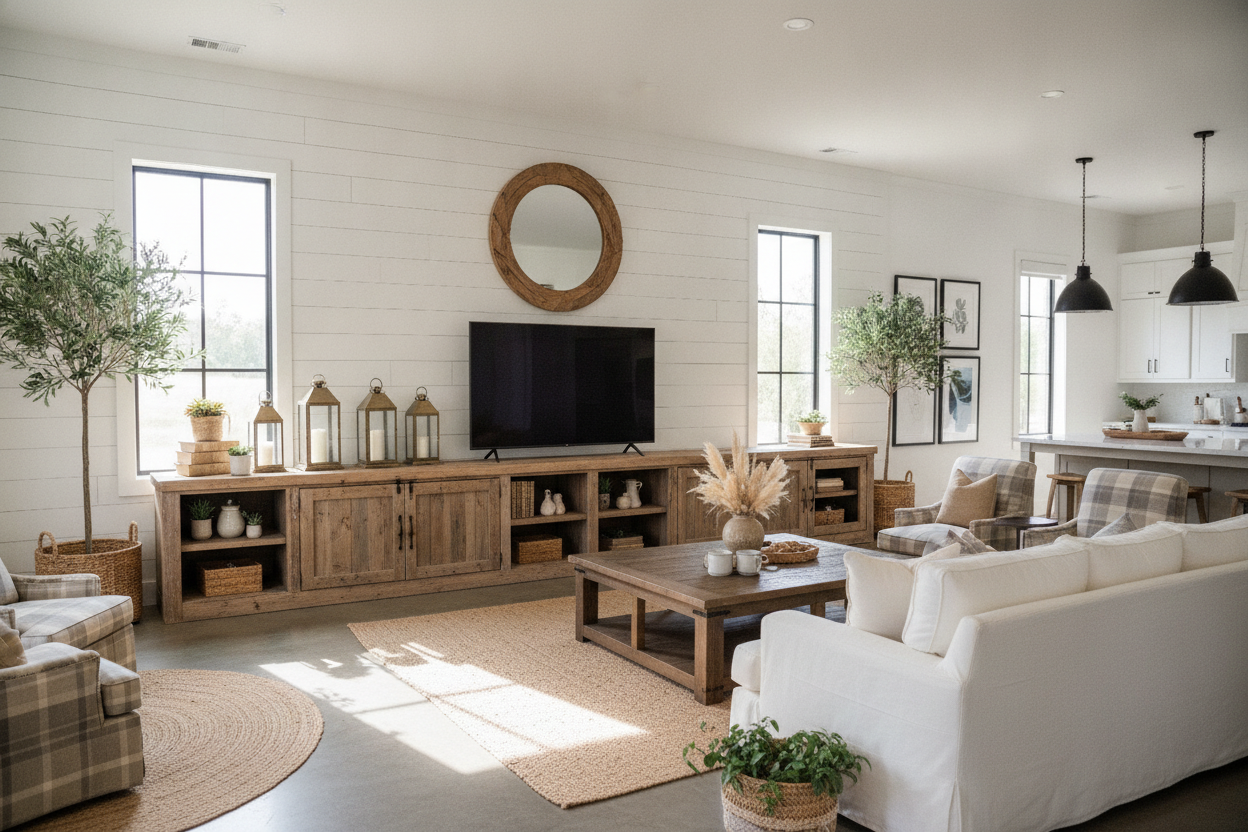
The goal is to distract the eye. A giant black rectangle is never going to be 'pretty,' but you can soften its impact. I like to use asymmetry—place a tall, structural lamp on one side and a stack of oversized books on the other. Lean a piece of framed art against the wall so it slightly overlaps the edge of the TV frame. It breaks up the rigid geometry.
If you’re ready to stop looking at those cords and start looking at your decor, you should shop our tv stands to find a piece that actually balances these two worlds. Use a cable sleeve for the small stretch of wire between the stand and the wall, and suddenly, the tech chaos vanishes. It’s about making the room feel lived-in, not lived-around.
My Personal Lesson in 'Cheap' Furniture
I once bought a $150 'walnut-finish' stand from a big-box retailer. It looked fine for about two months. Then, the humidity hit, and the paper-thin veneer started peeling at the corners. Because it was made of low-grade particle board, the weight of my center-channel speaker caused the top panel to bow, making the cabinet doors rub every time I opened them. I ended up spending more money to replace it than if I’d just bought a solid wood piece to begin with. Quality hardware and real wood aren't just for show; they're for structural integrity.
Frequently Asked Questions
How do I hide the gap between the TV and the stand?
Use a paintable cord cover. You can stick it to the wall and paint it the exact shade of your room. It makes the wires virtually invisible against the drywall.
Will my router work inside a wooden cabinet?
Yes, usually. Wood is transparent to Wi-Fi signals. However, avoid metal cabinets if you're putting your router inside, as those can act as a Faraday cage and kill your speeds.
What is the ideal height for a TV stand?
For most sofas, you want the center of the TV at eye level. This usually means a stand height of 20 to 24 inches. If you're sitting higher, like at a bar-height table, look for 30 inches.

Leave a comment
This site is protected by hCaptcha and the hCaptcha Privacy Policy and Terms of Service apply.