










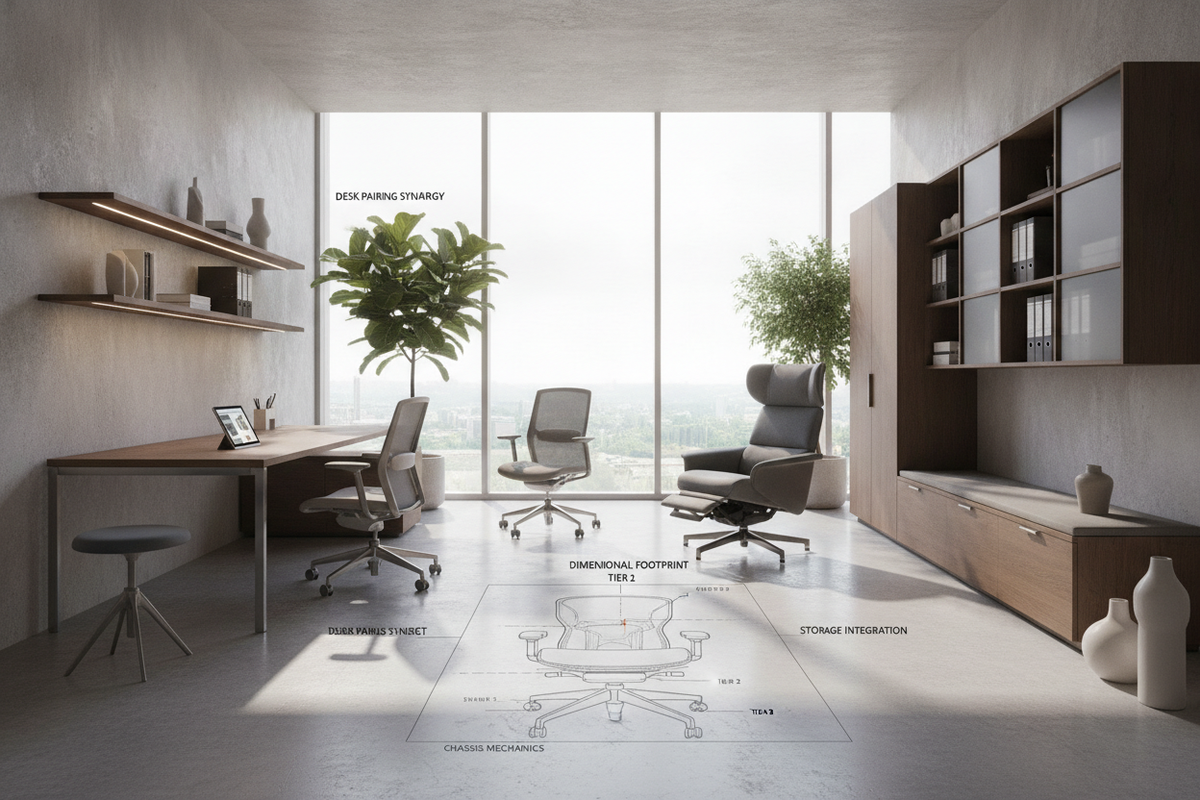
Architectural Overview: The Role of Chairs in Office Workspaces
Selecting appropriate chairs in office layouts requires balancing kinetic movement, seating support, and room circulation. A dedicated chair for office environments functions as the primary physical bridge between the user and their immediate workstation surface. Unlike static accent chairs or casual dining seating, task chairs must accommodate varied postures throughout prolonged sessions while maintaining structural equilibrium.
Achieving harmony in a workspace involves more than just aesthetics. Effective layout planning evaluates how a working chair for office tasks interacts with floor space, swivel perimeters, and adjacent furniture. When properly scaled, an office chair office chair setup enables fluid rotation, effortless ingress and egress, and unobstructed perimeter walkways across both dedicated corporate suites and compact home workstations.
Kinetic Chassis Dynamics and Essential Adjustment Mechanisms
The operational core of task seating lies in its kinetic chassis. A multi-functional working chair for office routines typically integrates mechanical adjustment points designed to adapt the seat pan and backrest to different body dimensions and functional tasks.
- Pneumatic Height Adjustment: Smooth vertical travel ensures the seat pan can align comfortably relative to the desktop surface, maintaining level thigh positioning and foot contact with the floor.
- Recline and Tilt Tension: Synchro-tilt mechanisms recline the backrest at a gentle ratio relative to the seat pan, keeping the feet anchored while supporting dynamic shifts in posture. Tilt-lock controls allow users to secure upright or relaxed angles as work demands shift.
- Multi-Directional Armrests: Height, depth, and pivot adjustments on armrests relieve shoulder tension and permit the chair to slide cleanly beneath the desk apron without striking drawer fronts.
Dimensional Sizing Tiers and Spatial Footprint Categories
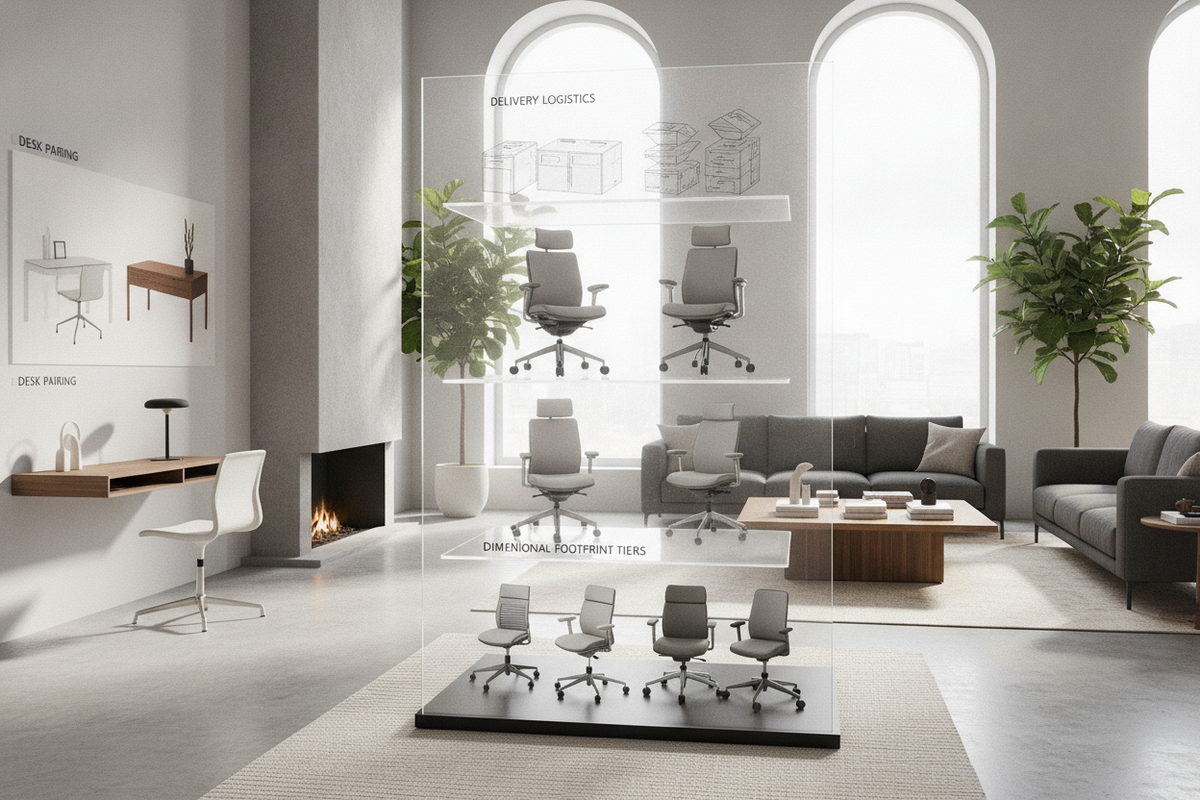
Task seating generally falls into distinct dimensional tiers based on backrest height, base diameter, and overall physical scale. Matching the chair profile to room proportions prevents visual crowding and physical bottlenecks.
Compact Task Seating for Tight Alcoves and Nooks
Compact task chairs feature streamlined silhouettes, low backrests, and modest five-star base diameters. These chairs excel in multi-purpose rooms, study alcoves, and concealed workstation setups. For small rooms where visual footprint must remain minimal, exploring practical concepts in our computer desk office guide can help you integrate low-profile seating into tight spaces.
Mid-Back Standard Footprints for Dedicated Home Offices
Mid-back seating represents the standard profile for everyday productivity. These chairs provide targeted lumbar support while keeping the overall profile balanced against standard writing desks. When designing an organized workspace on a reasonable budget, consulting our office computer desk guide offers useful insights into balancing proportions and functional decor.
High-Back Executive Profiles for Expansive Workstations
High-back and executive chairs incorporate extended headrests and wider seat pans, creating substantial visual presence. Because of their wider five-star bases and deeper tilt arcs, these chairs demand generous perimeter clearance behind the desk to avoid scuffing adjacent wall paneling or blocking pathways.
Desk Pairing Synergy: Coordinating Office Desks Chairs for Cohesive Workflows
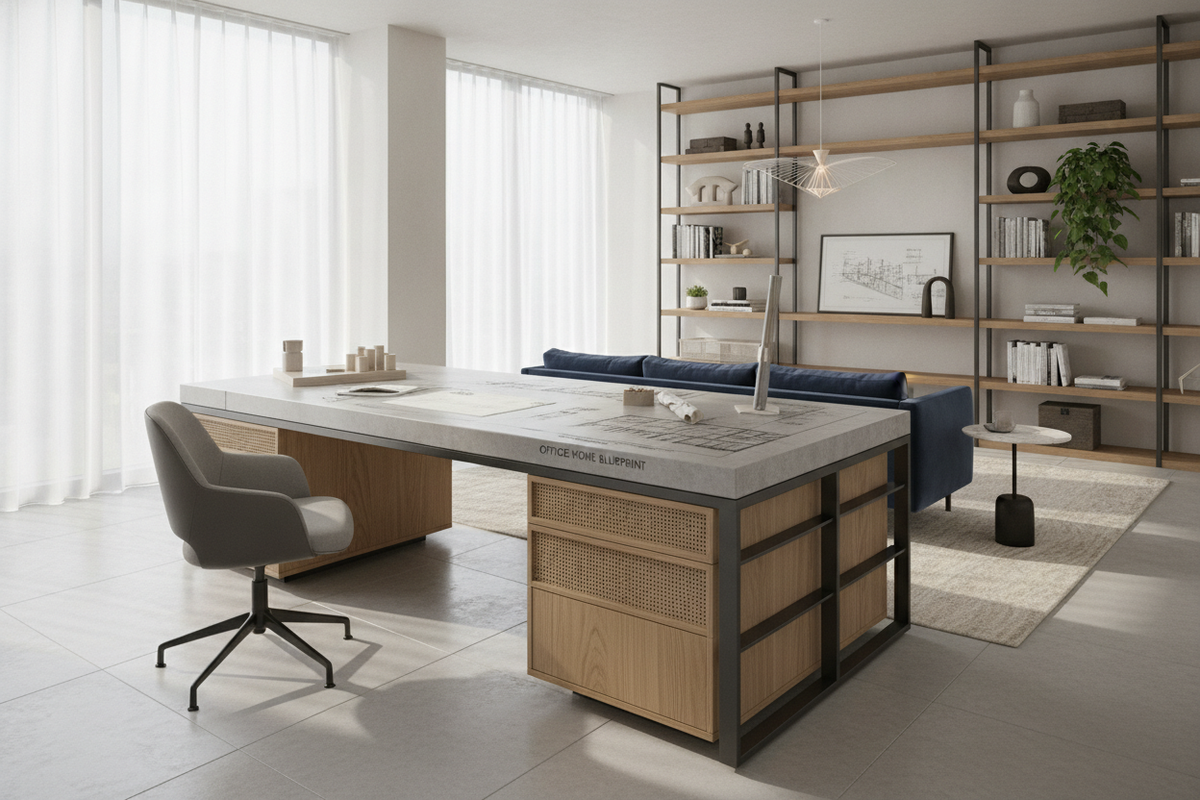
Integrating office desks chairs requires careful coordination of vertical clearances and horizontal knee wells. The interaction between an office chairs desk combination dictates whether an individual can sit comfortably without bumping armrests against the desktop underside or feeling constrained by narrow leg openings.
Clearance Ratios Between Chair Seat Pans and Desk Undersides
Ensure adequate space between the top of the chair seat pan and the lower edge of the desktop or keyboard tray. Standard writing desks with shallow aprons offer substantial vertical freedom, while desks with under-mount drawer units require careful armrest height calibration. To explore complementary desk architectures, browse our comprehensive computer desk collection.
Integrating Computer Desk & Chair Combos in Corner Layouts
Corner workstations create unique diagonal swivel angles. When pairing a computer desk & chair within an L-shaped or corner configuration, ensure the five-star base has sufficient clearance to rotate without snagging corner support posts or storage returns. Choosing a well-proportioned office computer desk product ensures your chair can rotate seamlessly while keeping essential storage within easy reach.
For minimalist or contemporary workspaces, pairing a streamlined task chair with a modern office computer desk product maintains clean lines and open legroom while accommodating continuous kinetic movement.
Material Architecture: Structural Frames, Mesh, and Upholstery Options
The materials utilized in chair construction directly impact thermal regulation, tactile comfort, and long-term durability across daily work routines.
- Breathable Elastomeric Mesh: Mesh backrests promote continuous airflow, preventing heat buildup in warm climates or long study sessions. High-tensile mesh conforms flexibly to the back without requiring thick internal padding.
- High-Density Molded Foam: Dense foam cushions wrapped in durable woven fabric distribute body weight evenly across the seat pan and resist premature sagging over time.
- Engineered Faux Leather and Polyurethane: Smooth synthetic leather surfaces offer a sleek executive appearance and effortless wipe-clean maintenance, making them ideal for high-traffic home offices and client-facing areas.
- Reinforced Frame Materials: Molded nylon, glass-filled polypropylene, and polished metal bases provide high structural rigidity while remaining lightweight enough for easy repositioning.
Assembly Protocols, Caster Mechanics, and Floor Protection
Proper assembly and routine maintenance preserve the kinetic performance of office seating. When unboxing a flat-pack chair, stage all pneumatic components, caster wheels, and chassis bolts in an open area to avoid misaligning hardware during assembly.
Caster selection should always correspond to the primary flooring surface. Standard hard nylon casters glide smoothly across low-pile carpets, whereas soft polyurethane-coated wheels are recommended for hardwood, laminate, or tile to prevent surface abrasion. Periodically checking and tightening chassis bolts ensures the chair mechanism remains secure and squeak-free throughout daily use.
Perimeter Storage Synergy and Room Flow Integration
A well-balanced workspace balances task seating with surrounding storage furniture, such as lateral filing cabinets, credenzas, and modular shelving. Maintaining a clear clearance buffer behind the chair ensures users can push back from the desktop and stand up without colliding with storage unit doors or drawer fronts.
To create a cohesive aesthetic, coordinate the finish of your chair chassis—such as matte black, crisp white, or brushed chrome—with the hardware pulls and accents of surrounding cabinets. By considering the full interaction between chairs in office layouts, desk dimensions, and surrounding storage, you create an organized, efficient, and inviting work environment tailored to daily productivity.

Leave a comment
This site is protected by hCaptcha and the hCaptcha Privacy Policy and Terms of Service apply.