










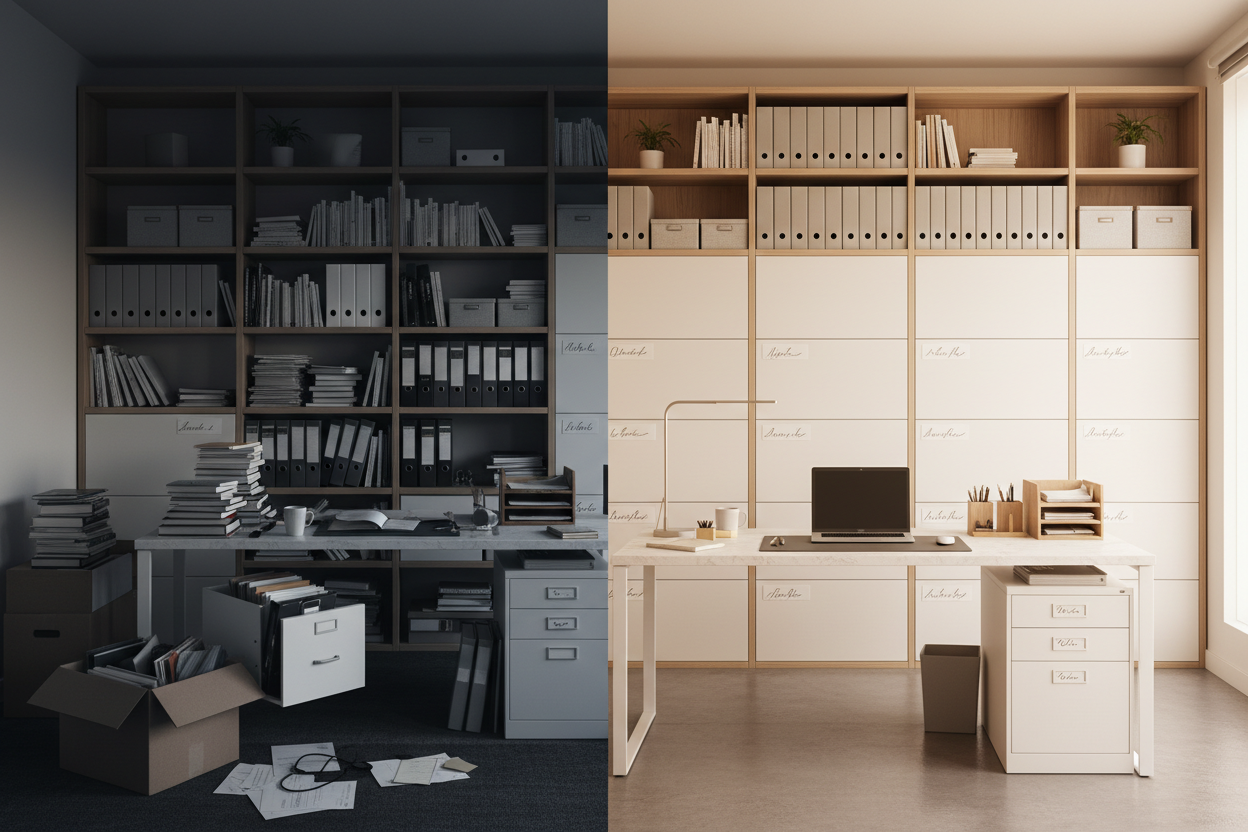
A cluttered desk often leads to a cluttered mind. When you sit down to work or read, the environment around you dictates your ability to focus. If your workspace is overrun with loose papers, tangled cables, and stacks of unread books, your productivity takes a hit before you even start. The solution isn't just "cleaning up"; it is establishing a permanent infrastructure for organization. Investing in the right study cabinets transforms a chaotic corner into a functional sanctuary.
Storage is rarely the first thing people think about when setting up a home office—usually, the desk and chair get all the attention. However, the cabinetry is the engine room of the study. It dictates workflow, accessibility, and the overall aesthetic of the room. Whether you are retrofitting a small nook or designing a dedicated library, selecting the right storage units requires balancing form with function.
The Real Impact of Proper Storage: A Personal Lesson
I learned the hard way that open tables are not enough. Years ago, I attempted to run a freelance business from a sleek, minimalist writing desk. It looked fantastic in photos, but within two weeks, the floor around me was covered in bankers' boxes and plastic bins. I spent more time hunting for invoices than actually working. Eventually, I bit the bullet and installed floor-to-ceiling cabinetry along the back wall. The change was immediate. Being able to close a door on the mess didn't just clean the room; it mentally signaled that the work day was done. That separation is vital for anyone working from home.
Assessing Your Storage Profile
Before browsing catalogs or hiring a carpenter, you must audit what you actually own. A lawyer with hundreds of case files has different needs than a digital artist who only needs a place to store a tablet and a few hard drives. Cabinets for study room layouts generally fall into two categories: active storage and archival storage.
Active storage should be within arm's reach of your chair. This includes drawers for stationery, shelves for current reference books, and filing systems for active projects. Archival storage can go higher up or further away. This is where you keep tax returns from five years ago or books you've already read. If you buy a cabinet that is all deep shelves but you have mostly loose papers, you will end up with messy piles inside the cabinet. Match the interior fittings—drawers, pull-outs, or shelves—to your specific inventory.
Open Shelving vs. Closed Cabinetry
The debate between display and concealment is the most common design hurdle. Open shelving creates an airy, academic atmosphere and makes resources easy to grab. However, it requires discipline. If you aren't naturally tidy, open shelves quickly look like a disaster zone.
Closed study room cabinets offer a visual reset. They allow you to hide the ugly realities of office work—the printers, the routers, and the binders—behind a clean facade. A hybrid approach often works best. Consider a unit with solid doors on the bottom half to conceal heavy equipment and files, with open shelving on top for books and decorative items. This anchors the room without making it feel like a corporate file room.
Freestanding vs. Built-in Units
If you own your home and plan to stay for a while, built-in cabinetry adds significant value. It maximizes vertical space, often reaching right up to the ceiling, which prevents that annoying layer of dust from collecting on top of the unit. Built-ins can be customized to navigate around skirting boards, uneven walls, or radiators.
For renters or those who like to rearrange furniture, modular freestanding units are superior. Modern modular systems allow you to start with a base unit and add hutches or side extensions later. The key here is stability. Ensure any tall freestanding unit is anchored to the wall to prevent tipping, especially when loaded with heavy books.
Material Selection and Durability
Office storage takes a beating. Drawers are opened and slammed shut; heavy encyclopedias weigh down shelves. The material you choose dictates the longevity of the furniture. Solid wood is the gold standard for aesthetics and strength, but it reacts to humidity and carries a high price tag. High-quality plywood with a wood veneer is often a more stable and cost-effective alternative for study cabinets.
Be wary of cheap particle board. While budget-friendly, these shelves often bow (sag) under the weight of books over time. If you must go with a composite material, look for shelves that are at least one inch thick or have a reinforced front edge. For a more industrial or modern look, metal cabinets are virtually indestructible and add a unique texture to the room, though they can be noisy when opening and closing.
Optimizing for Small Spaces
Not everyone has a sprawling library. In compact apartments, verticality is your best friend. Tall, narrow cabinets for study room corners utilize dead space without encroaching on the floor plan. Wall-mounted floating cabinets are another excellent trick; by keeping the floor visible beneath the cabinet, the room feels larger and less cramped.
Another often-overlooked area is under the desk. A rolling pedestal cabinet can slide out when you need an extra surface and tuck away when you need legroom. Look for units with castors that lock to prevent them from rolling away while you are trying to open a drawer.
Hardware and Ergonomics
The user experience of a cabinet comes down to the hardware. Soft-close hinges prevent the jarring noise of doors slamming, which maintains the quiet atmosphere necessary for study. Full-extension drawer slides are non-negotiable for deep storage; they allow you to pull the drawer all the way out to see what is at the very back, preventing items from being lost in the dark abyss.
Handles and knobs also play a role. In a tight space, protruding handles can snag on clothing. Recessed pulls or push-to-open mechanisms offer a sleeker profile and eliminate this hazard. These small details might seem insignificant in the showroom, but they make a massive difference in daily use.
Final Thoughts on Organization
Once your study room cabinets are installed, the work isn't quite done. The interior organization is just as important as the exterior structure. Use drawer dividers to separate pens from cables. Label the spines of your binders. Treat the cabinet not as a dumping ground, but as a curated library of your professional life. When every item has a designated home, your mind is free to focus on the task at hand, turning your study into a place of genuine productivity.
Frequently Asked Questions
What is the ideal depth for study cabinets?
For general book storage, a depth of 12 to 14 inches is standard and sufficient. If you plan to store large binders, printers, or archival boxes inside the cabinets for study room use, aim for a depth of at least 18 to 20 inches to ensure the doors can close fully without crushing the contents.
How do I prevent shelves from sagging under heavy books?
Limit the span of the shelf. The wider the shelf, the more likely it is to bow. For heavy loads, keep the shelf width under 30 inches or choose materials like solid wood or metal. Alternatively, you can reinforce existing shelves by adding a stiffener strip of wood along the front edge.
Should I choose drawers or shelves for my study?
A combination is usually best. Drawers are superior for small, loose items like stationery, cables, and files that create visual clutter. Shelves are better for books, binders, and display items. When designing study room cabinets, try to place drawers at lower levels for easy access and shelves at eye level.

Leave a comment
This site is protected by hCaptcha and the hCaptcha Privacy Policy and Terms of Service apply.