










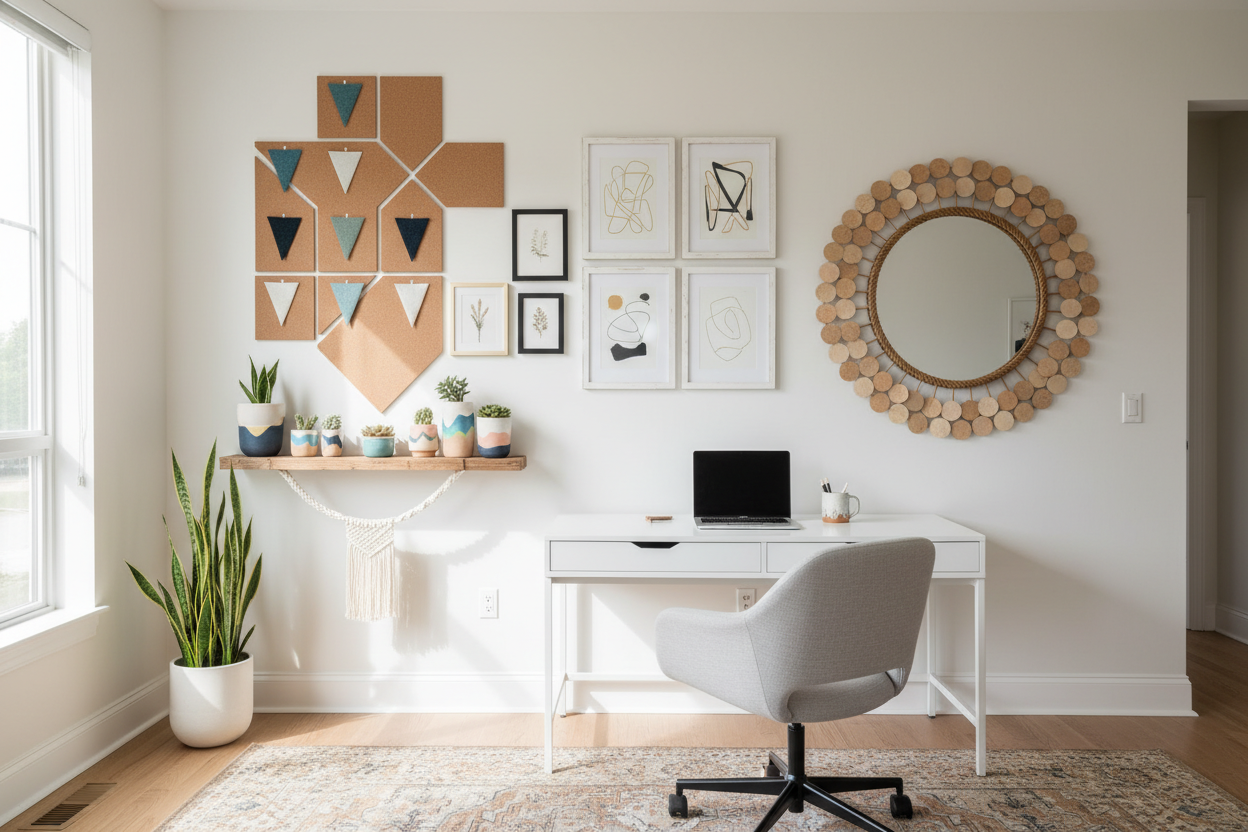
There is nothing more draining to creative energy than staring at a blank, sterile wall while trying to meet a deadline. The environment we work in directly influences our output, yet many professionals hesitate to personalize their space, fearing it might look cluttered or unprofessional. The solution lies not in purchasing generic prints from a big-box store, but in curating diy office wall decor ideas that blend functionality with high-end aesthetics.
Key Principles for Professional DIY Decor
- Scale and Proportion: Ensure your art occupies roughly 60-75% of the available wall space to avoid the "floating stamp" look.
- Acoustic Value: Prioritize materials like felt, canvas, or wood slats that dampen echo in video calls.
- Visual Weight: Balance heavy, dark textures with lighter elements to maintain an airy atmosphere.
- Color Psychology: Utilize blues and greens for focus, or warm earth tones for a welcoming client backdrop.
Elevating the Standard Gallery Wall
While a gallery wall is a staple in residential design, translating it to a professional setting requires a stricter editorial eye. To create sophisticated diy office wall art, consistency is your greatest asset. Rather than a chaotic mix of frames, opt for a unified frame finish—matte black or brushed brass often works best.
The Grid Layout
For a structured, architectural look, arrange identical frames in a tight grid. I often advise clients to use oversized matting with smaller images. This negative space creates a sense of luxury and calm, preventing the visual noise that often distracts during deep work sessions.
Texture Over Prints: The 3D Approach
Flat prints can feel one-dimensional. To truly elevate your space, consider diy wall decor for office environments that introduces texture. This is where you can bridge the gap between art and architecture.
Wood Slat Features
Vertical wood slats are currently dominating commercial design. You can achieve this look by mounting stained 1x2 pine strips onto a painted black plywood backing. This not only adds warmth and verticality—making low ceilings feel higher—but also acts as a subtle sound diffuser.
Textile and Fiber Art
For a softer touch, large-scale framed textiles work wonders. Stretching a vintage rug or a piece of high-quality linen over a canvas frame introduces tactile softness. This is particularly effective in spaces with hard surfaces like glass desks or concrete floors, softening the overall ambient noise.
Functional Decor: Merging Utility with Style
In a working office, wall space is premium real estate. A diy office wall setup should often serve a dual purpose without sacrificing style.
The Elevated Pinboard
Standard cork boards are an eyesore. Instead, create a custom pinboard by wrapping high-density fiberboard in a heavy linen or wool felt. Frame it in a shadow box. This turns your notes and swatches into a curated display rather than a cluttered mess. The texture of the fabric elevates the piece from a utility item to a focal point.
My Personal Take on DIY Office Wall Decor Ideas
I learned a hard lesson about diy office wall decor during a renovation for a client's home office in a rental property. We decided to install those trendy hexagonal acoustic felt tiles using the heavy-duty adhesive strips they came with. They looked fantastic and dampened the echo perfectly for her podcast recordings.
However, when she moved out two years later, removing those strips took the drywall paper right off with them. It turned a budget-friendly DIY into a costly wall repair job. Since then, my rule is simple: if you are installing adhesive-based decor, mount the items onto a thin, painted plywood board first, and then hang that board like a heavy picture using French cleats. It protects the architectural integrity of the room and allows you to take your investment with you when you move.
Conclusion
Transforming your workspace doesn't require a contractor or a massive budget. By focusing on scale, texture, and functional elegance, you can execute projects that look bespoke rather than homemade. Take the time to plan your layout and choose materials that speak to the quality of work you produce. Your environment is a tool; sharpen it.
Frequently Asked Questions
How do I choose the right size art for behind my desk?
A general rule of thumb is that the artwork or decor arrangement should be at least two-thirds the width of your desk. If it is too small, the desk will visually swallow the art; too wide, and it can feel top-heavy.
What are the best DIY materials for soundproofing an office?
While true soundproofing requires construction, sound dampening can be achieved with DIY decor. Look for open-cell materials. Felt panels, thick canvas paintings with acoustic foam stuffed behind the stretcher bars, and cork are excellent for reducing reverb.
Can I mix different wood tones in my office wall decor?
Yes, but proceed with caution. Identify the dominant wood tone of your furniture (e.g., walnut desk). Your wall decor should either match that tone or contrast significantly (e.g., light oak or painted wood). Avoid mixing woods that are too similar but slightly off, like cherry and mahogany, as it looks accidental.


Leave a comment
This site is protected by hCaptcha and the hCaptcha Privacy Policy and Terms of Service apply.