










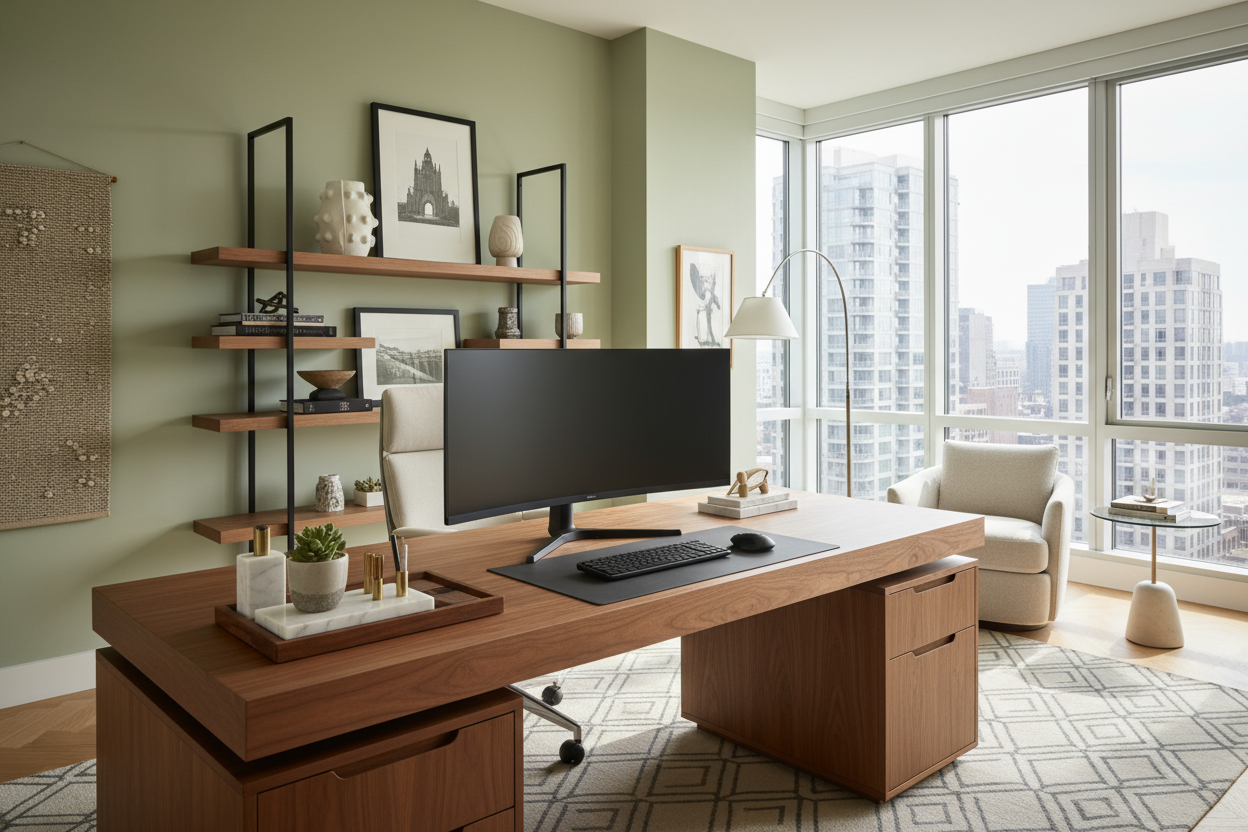
There is a distinct difference between a workspace that feels like a chaotic drop zone and one that feels like a command center. Often, the defining factor isn't the desk itself, but the curation of the smaller elements that inhabit it. As designers, we know that the right accessories for home office setups do more than just hold pens; they establish a visual rhythm and dictate the tactile experience of your workday. If your current setup feels uninspiring or cluttered, it is likely a failure of curation rather than a lack of space.
Key Features to Look For
Before purchasing individual items, consider these fundamental design pillars to ensure a cohesive look. This checklist helps filter out impulse buys that contribute to clutter:
- Material Continuity: Stick to two or three primary materials (e.g., walnut, brushed brass, and leather) to avoid visual noise.
- Scale and Proportion: Ensure lamps and organizers do not overpower the desk surface area.
- Ergonomic Integration: Accessories should facilitate movement, not obstruct it.
- Acoustic Properties: Soft materials like felt or leather blotters help dampen sound in echo-prone rooms.
Establishing the Foundation: Materials Matter
When selecting home and office accessories, the material palette is your primary tool for setting the tone. In luxury residential design, we steer clients away from generic plastics unless they are high-grade, weighted acrylics. Instead, focus on natural materials that develop a patina over time.
The Tactile Experience
Your hands are constantly in contact with your workspace. Solid wood trays, full-grain leather desk pads, and weighted metal pens offer a grounding, substantial feel. A leather blotter, for instance, provides a superior writing surface and protects the joinery of your desk, serving as both a functional tool and a visual anchor.
Functionality: Professional Desk Accessories
The challenge with home office desk accessories is balancing utility with display. In a corporate setting, utility rules; in a home, aesthetics must take the lead to prevent the room from feeling sterile. Look for professional desk accessories that hide their function. Cable management boxes should mimic the finish of your furniture, and paper trays should have a silhouette that looks sculptural when empty.
Managing Tech and Peripherals
Office peripherals—webcams, docks, and drives—are necessary evils that often disrupt a clean design. Rather than leaving them exposed, integrate them using elevated monitor stands with hidden storage compartments. This vertical layering recovers valuable desk real estate while keeping technology accessible yet discreet.
Visual Balance and Styling
Styling is about negative space. A common mistake is filling every square inch of the desktop. Group your home office accessories in odd numbers (the rule of three) to create dynamic vignettes. For example, pair a tall task lamp with a low, wide paper tray and a medium-height plant. This variation in height keeps the eye moving and prevents the setup from looking static.
My Personal Take on Accessories for Home Office
I learned a hard lesson early in my career regarding finish durability. I once specified a stunning set of unsealed, raw brass trays for a client with a pristine white lacquer desk. It looked incredible for the photoshoot. However, three months later, the client called me—the brass had oxidized, and the chemical reaction left faint green rings on the white lacquer that were impossible to buff out.
Now, I am obsessive about the underside of accessories. If I buy a stone or metal object, I immediately check if it has a felt or cork backing. If it doesn't, I add it myself before it ever touches a client's surface. It’s a small, unpolished detail, but preserving the integrity of your furniture is just as important as the accessory itself. Also, avoid felt that is too thin; heavy marble bookends need thick, industrial-grade felt to prevent sliding and scratching.
Conclusion
Transforming your workspace doesn't require a renovation; it requires intentional selection. By investing in high-quality materials and prioritizing accessories for home office that offer both beauty and utility, you create an environment that respects your professional ambitions and your home's aesthetic. Start with one focal point—perhaps a quality lamp or a leather mat—and build outward from there.
Frequently Asked Questions
How do I mix metals in my office accessories?
Treat metals like a hierarchy. Choose a dominant metal (e.g., matte black) for 70% of the items, and an accent metal (e.g., antique brass) for the remaining 30%. Avoid mixing more than two distinct metal finishes to maintain a sophisticated look.
What is the most essential accessory for a small desk?
A monitor riser with built-in storage is critical for small spaces. It improves ergonomics by raising your screen to eye level and allows you to tuck the keyboard and mouse away when not in use, instantly converting the desk into a reading table.
Are leather desk accessories difficult to maintain?
High-quality full-grain leather is durable but requires care. Dust it regularly with a dry cloth and apply a leather conditioner every 6-12 months to prevent cracking. Avoid placing hot mugs directly on leather blotters to prevent permanent rings.

Leave a comment
This site is protected by hCaptcha and the hCaptcha Privacy Policy and Terms of Service apply.