










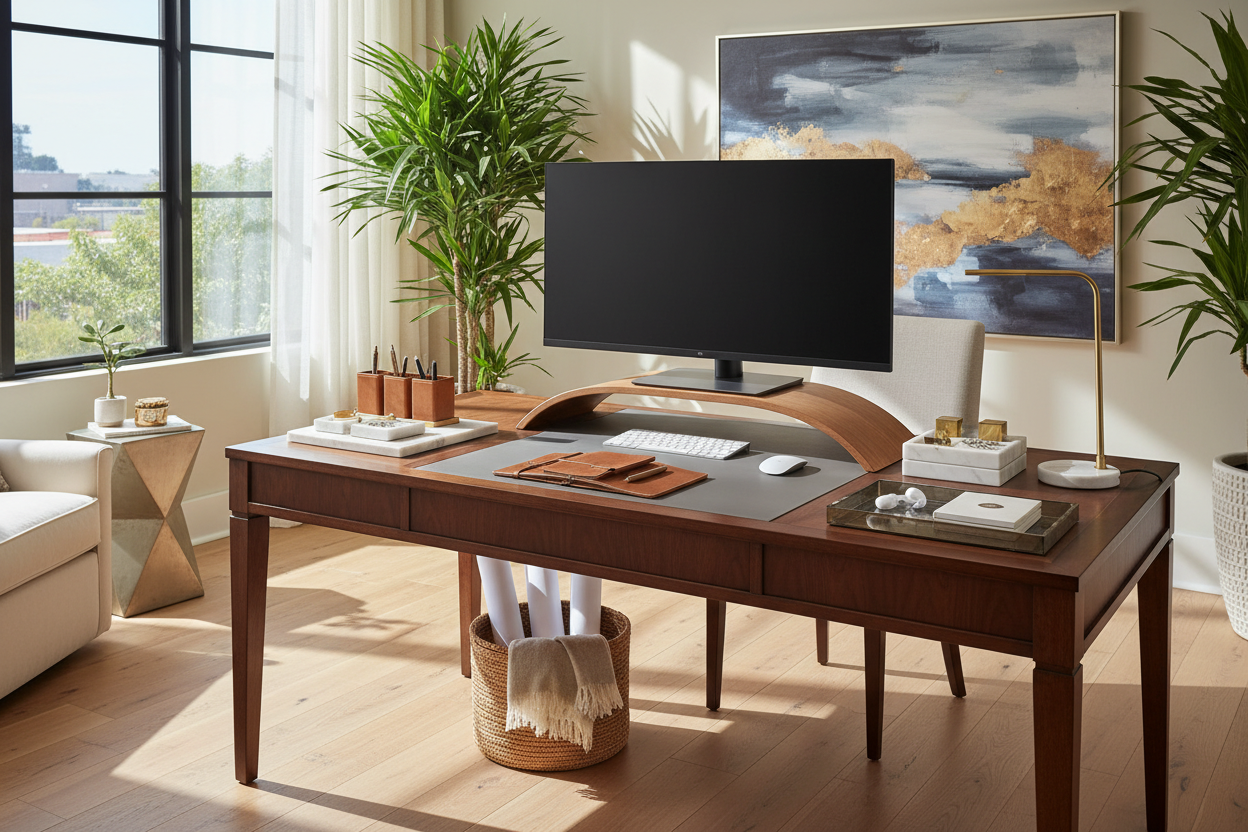
There is a distinct difference between a workspace that merely functions and one that inspires. As an interior designer, I often walk into home offices where the furniture is exquisite, but the surface styling feels cluttered or disjointed. The visual noise created by mismatched accessories can subconsciously derail your focus. True mastery of desk decor and organization lies in the intersection of ergonomics, material integrity, and visual balance. It is not about hiding everything away; it is about curating a landscape that serves your workflow while delighting the eye.
Key Principles of Desk Styling
- Material Continuity: Select accessories that complement your desk's finish (e.g., walnut trays on an oak desk or leather pads on glass).
- Zoning: Define specific areas for digital work, analog writing, and storage to maintain workflow efficiency.
- Vertical Utilization: Use monitor risers or wall shelving to free up prime surface real estate.
- Negative Space: Leave at least 30% of the desktop clear to prevent visual overcrowding and allow for active work.
Establishing the Foundation: Materiality and Texture
Before buying a single bin or tray, consider the tactile experience of your workspace. Cheap plastics often degrade the aesthetic value of a high-end desk. Instead, look for desk organization products made from materials that age gracefully.
Full-grain leather desk pads, for instance, ground the space and provide a soft acoustic barrier for your keyboard. Solid wood organizers add warmth and weight, preventing them from sliding around when you reach for a pen. If you prefer a modern silhouette, opt for heavy-gauge aluminum or brass, which adds a sense of permanence and luxury that wire mesh simply cannot achieve.
Strategic Layout and Space Planning
The placement of your desk organization tools is just as critical as their design. I always advise clients to follow the 'reach radius' rule. Items used daily—your phone, a specific pen, a notepad—should be within an arm's arc. Archival items belong in drawers or on shelves.
Integrating Space-Saving Solutions
For compact urban apartments or smaller writing desks, space-saving desk accessories are non-negotiable. Look for modular systems that stack vertically. A monitor riser with integrated drawers is a classic designer trick; it elevates your screen to eye level for better ergonomics while hiding clutter underneath. This maintains a clean sightline, essential for a calm mind.
Curating the Essentials: What to Keep on Display
One of the most common questions I field is what to put in a desk organizer. The answer is: only what you use daily. A desktop organizer should not become a junk drawer. Limit it to:
- Two or three writing instruments (test them to ensure they work).
- A high-quality notebook.
- Essential tech peripherals (charging cables, drives).
Anything else creates visual drag. If you are a hybrid worker moving between locations, consider investing in a premium on the go office organizer or a tech folio. These allow you to pack up your 'desk' in seconds, maintaining the sanctity of your home design when the workday ends.
My Personal Take on Desk Decor and Organization
I learned a hard lesson about finishes early in my career while styling a home office in a sun-drenched loft. We chose a stunning, completely clear acrylic organization set to make the small desk feel 'lighter' and less obstructed. It looked incredible on installation day.
However, three months later, I visited the client and the acrylic was a disaster. It was a magnet for dust, showed every single fingerprint, and had developed micro-scratches just from sliding a stapler across it. It looked cheap and grimy, ruining the sleek vibe we aimed for. Since then, I steer clients toward matte finishes, leather, or textured wood. They hide the reality of daily use—dust and oils—much better than high-gloss or clear materials. Design must be livable, not just photogenic.
Conclusion
Elevating your workspace requires a shift in mindset from simple storage to thoughtful curation. By selecting materials that age well and arranging them with intention, you create an environment that respects both your design sensibility and your professional ambition. Clear the surface, and you clear the path for your best work.
Frequently Asked Questions
How do I mix metals in desk decor?
Treat metals like jewelry for your desk. If your drawer pulls are brass, try to coordinate your lamp or pen cup in a similar warm tone. However, mixing one cool metal (like matte black steel) with a warm accent (like copper) can create a sophisticated, layered look.
What is the best way to manage cables on a glass desk?
Glass desks are unforgiving regarding cables. Use adhesive cable clips that match the color of the desk legs to run wires down the frame. Alternatively, use a weighted cable block in a material like marble or silicone to keep cords neatly anchored on the surface without slipping off.
How do I organize a desk without drawers?
If your desk is a simple table or trestle style, you must rely on desktop storage that looks like decor. Use lidded boxes (leather or linen-wrapped) to hide unsightly office supplies. A mobile pedestal cabinet tucked under the desk is also a practical solution that doesn't ruin the desk's silhouette.


Leave a comment
This site is protected by hCaptcha and the hCaptcha Privacy Policy and Terms of Service apply.