










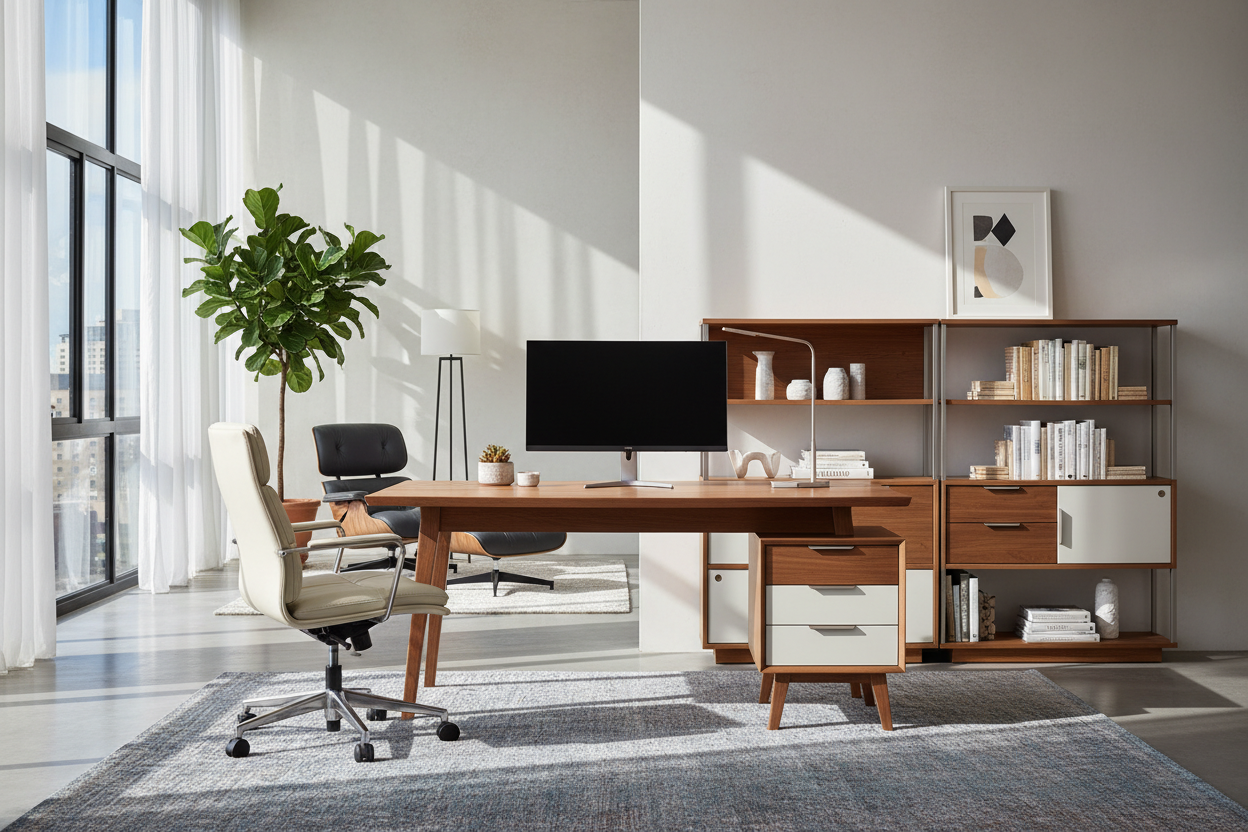
There is a distinct allure to purchasing a complete suite for your workspace. It promises instant cohesion and eliminates the guesswork of matching wood stains or metal finishes. However, simply dropping a catalog-ready arrangement into your room often results in a space that feels flat, impersonal, or spatially awkward. As an interior designer, my goal is to help you select a home office furniture set that balances professional functionality with the curated aesthetic of a residential space.
Key Features to Look For
- Material Integrity: Prioritize kiln-dried hardwoods or high-grade veneers over particle board to prevent sagging shelves.
- Ergonomic Flexibility: Ensure the desk height accommodates your specific chair armrests (standard is 29-30 inches).
- Modular Components: Look for sets that allow you to separate the credenza or filing cabinets from the main desk.
- Cable Management: Check for built-in grommets and modesty panels to hide unsightly wiring.
Analyzing Material Quality and Finish
When evaluating home office collections furniture, the finish is usually the first thing to catch your eye, but the substrate underneath dictates the longevity. In my showroom experience, I advise clients to look for "contract-grade" surfaces if the desk will see heavy daily use.
Solid wood offers a luxurious, heavy hand-feel and can be refinished, but it is susceptible to humidity changes. High-pressure laminate (HPL) offers superior scratch resistance but lacks the warmth of natural grain. If you are eyeing a veneer set, inspect the edge banding. If you can peel it with your fingernail, walk away. That edge will lift within a year of use.
The Ergonomics of the Set
A common pitfall with pre-packaged office furniture sets home retailers sell is the chair inclusion. Often, the chair included in a set is designed for visual harmony with the desk, not for eight hours of spinal support.
I frequently recommend buying the hard goods (desk, credenza, bookshelf) as a set to maintain the visual silhouette, but swapping the chair for a dedicated performance task chair. You can bridge the design gap by matching the chair's metal base to the hardware handles on the desk drawers.
Spatial Planning and Visual Weight
A heavy, dark mahogany set might look majestic in a showroom with 15-foot ceilings, but it can suffocate a standard 10x12 bedroom. This is a concept we call "visual weight."
For smaller footprints, look for collections with "leggy" designs—desks and cabinets raised on feet rather than sitting flush on the floor. Seeing the flooring continue underneath the furniture tricks the eye into perceiving the room as larger. Conversely, executive sets with full modesty panels and hutch tops are best reserved for dedicated library spaces where they act as the room's focal point.
Lessons from My Own Projects
I want to share a specific detail that rarely makes it into product descriptions but has caused headaches in my own installations. A few years ago, I installed a stunning, high-gloss lacquered executive set for a client. It looked incredible on installation day.
However, within two weeks, the client called me. The issue wasn't the build quality; it was the maintenance. The high-gloss finish acted like a magnet for fingerprint oils and dust. Every time he rested his wrists on the desk or opened a drawer, it left a smudge. We ended up having to have a custom glass top cut to protect the surface and reduce the cleaning burden.
Another "unpolished" reality: Check the size of the wire management grommets. I once bought a set where the holes were too narrow to fit the plug head of a heavy-duty surge protector, forcing us to use a hole saw to widen them on site—a nerve-wracking experience on a brand-new piece of furniture. Always measure your plugs before you buy.
Conclusion
Investing in a coordinated furniture suite is an efficient way to achieve a professional look, provided you pay attention to the tactile details and spatial requirements. By focusing on material durability and ensuring the scale fits your room, you can create a workspace that feels both productive and intentionally designed.
Frequently Asked Questions
Should I buy a set with a hutch?
Hutches offer excellent vertical storage, but they can make a room feel smaller and cast shadows on your work surface. If you choose a hutch, ensure it has built-in task lighting or space to install an LED strip.
Can I mix pieces from different collections?
Absolutely. In fact, designers prefer this. A common trick is to buy the desk and filing cabinet from a set for functional consistency, then bring in a vintage bookshelf or a contrasting credenza to add character and avoid the "catalog" look.
How do I measure for a U-shaped desk set?
Measure the full footprint, including the chair clearance. You need at least 36 to 48 inches of space behind the desk to push your chair back comfortably without hitting a wall or the return side of the desk.

Leave a comment
This site is protected by hCaptcha and the hCaptcha Privacy Policy and Terms of Service apply.