










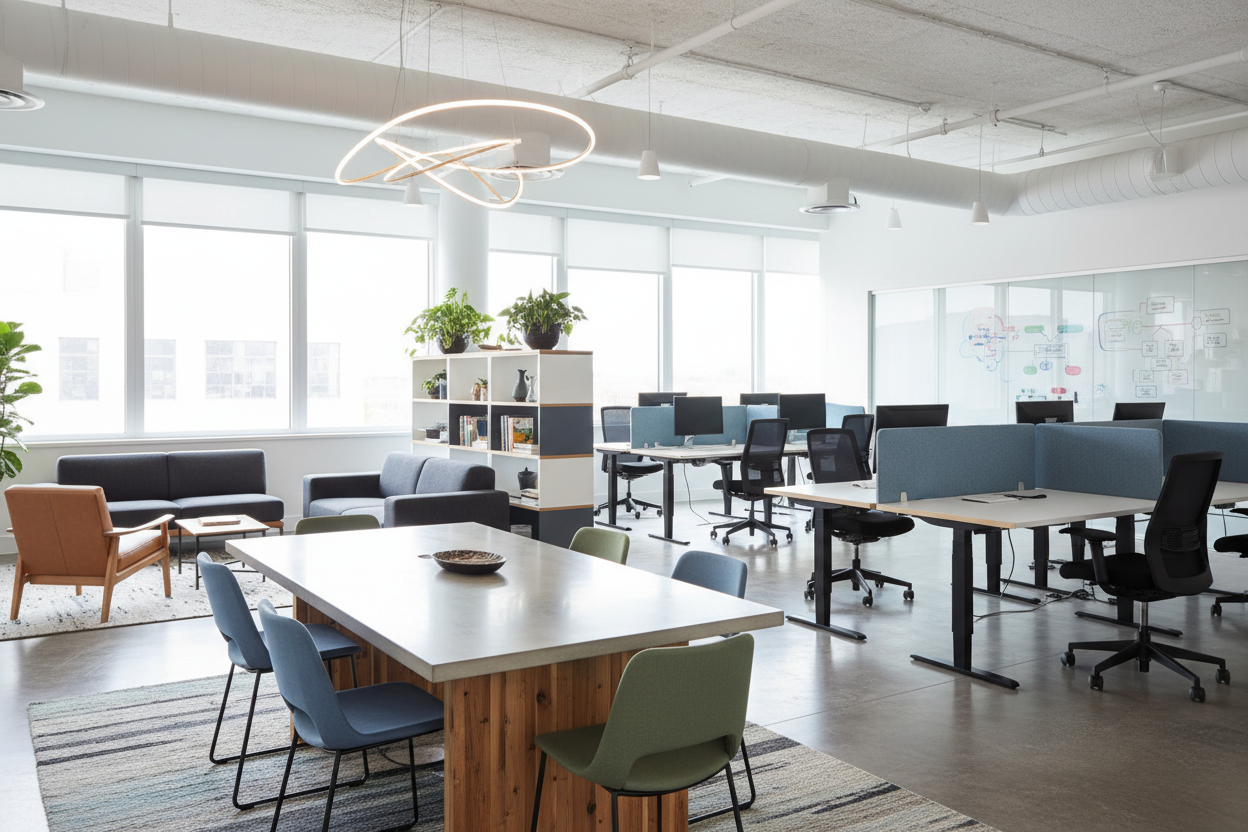
Staring at a blank, beige wall under flickering fluorescent tubes is the fastest way to stifle innovation. In my fifteen years designing commercial and residential workspaces, I have learned that the environment dictates the workflow. We are not just placing desks; we are engineering moments of inspiration. A truly effective workspace balances high-end aesthetics with serious productivity mechanics. This guide explores how to cultivate creative offices that move beyond gimmicks to provide a sophisticated, functional foundation for deep work and collaboration.
Core Elements of an Innovative Workspace
- Zoning Dynamics: Distinct areas for high-focus work versus collaborative brainstorming.
- Acoustic Control: Integrating sound-absorbing materials like felt baffles or acoustic panels to manage noise levels.
- Lighting Layers: A blend of ambient, task, and accent lighting (3000K-4000K temperature) to reduce eye strain.
- Ergonomic Integration: Furniture that supports posture without sacrificing the visual silhouette.
- Biophilic Design: Incorporating living elements and natural textures to reduce stress.
Defining the Aesthetic: Beyond the "Funky" Office
There is a misconception that a cool office requires bright primary colors and slides. In reality, the most innovative office design relies on a sophisticated palette and honest materials. When I curate an office design for creativity, I look for visual texture rather than visual noise.
Materiality and Texture
Avoid the sterility of pure white laminate. Instead, opt for materials that engage the senses. Solid wood desks (walnut or white oak) ground a space and age beautifully, whereas veneers may chip and reveal the particle board underneath within a year. For seating, look for high-performance textiles like wool blends or commercial-grade leathers that offer breathability. A unique office design often juxtaposes raw elements—like exposed concrete in unique office buildings—with soft, tactile rugs to soften the acoustics.
Space Planning and Layout Strategies
The layout is the skeleton of your design. A cool office layout must prioritize flow. If you have to squeeze sideways to get past a colleague's chair, the design has failed, regardless of how beautiful the furniture is.
The Activity-Based Working Model
Creative office space ideas now revolve around Activity-Based Working (ABW). This means moving away from assigned seating toward zones tailored to tasks. You might design a quiet library zone with high-walled wingback chairs for deep focus, and a separate, open-plan area with a large communal table for energetic meetings. This approach turns a standard room into an amazing office that adapts to human behavior.
Lighting: The Unsung Hero of Creative Workspace Ideas
Bad lighting is the enemy of a cool looking office. Overhead grid lighting flattens the space and causes fatigue. To create a unique office space, layer your lighting. Start with general ambient light, then add architectural task lamps with adjustable arms for workstations. Finally, use accent lighting—such as LED strips under floating shelves or a statement pendant—to create a focal point. This creates a creative office design that feels residential and welcoming rather than clinical.
My Personal Take on Creative Offices
I recall a project where a client was adamant about having a "Google-style" funky office with polished concrete floors and open ceilings. It looked incredible in the renderings—truly a cool office space visually. However, three months post-installation, they called me in a panic. The echo was unbearable. Every phone call ricocheted off the hard surfaces, making focus impossible.
We had to retrofit the space with acoustic ceiling clouds and heavy wool drapery. The lesson? Innovative office ideas must respect physics. Now, whenever I see cool ideas for office space that involve hard surfaces, I immediately check the acoustic absorption coefficient. A space can look like a magazine cover, but if it sounds like a gymnasium, it fails as a workspace.
Conclusion
Transforming a room into a hub of innovation requires more than just buying trendy furniture. It requires a thoughtful approach to how light, sound, and texture interact. By investing in quality materials and prioritizing a layout that supports different working styles, you can build a creative office space design that remains timeless and functional for years to come.
Frequently Asked Questions
What is creative office space?
What is creative office space? It is a workspace designed to foster innovation through flexible layouts, inspiring aesthetics, and non-traditional environments. Unlike corporate cubicles, these spaces prioritize collaboration, comfort, and visual stimulation to enhance employee well-being and output.
How can I make a small office look creative?
For unique office ideas in small footprints, utilize vertical space. Install floor-to-ceiling shelving to draw the eye up and keep desks clutter-free. Use a bold, monochromatic color scheme to unify the room, and invest in one statement piece, like a sculptural chair, to serve as the focal point of your creative office ideas.
Is "cool" office furniture durable enough for daily use?
Not always. When looking for office space for creatives, avoid "fast furniture." Always check the Martindale rub count on fabrics (aim for 20,000+ for commercial use) and ensure joinery is reinforced. A cool office loses its charm quickly if the chair lifts fail or the desk surfaces scratch easily.

Leave a comment
This site is protected by hCaptcha and the hCaptcha Privacy Policy and Terms of Service apply.