










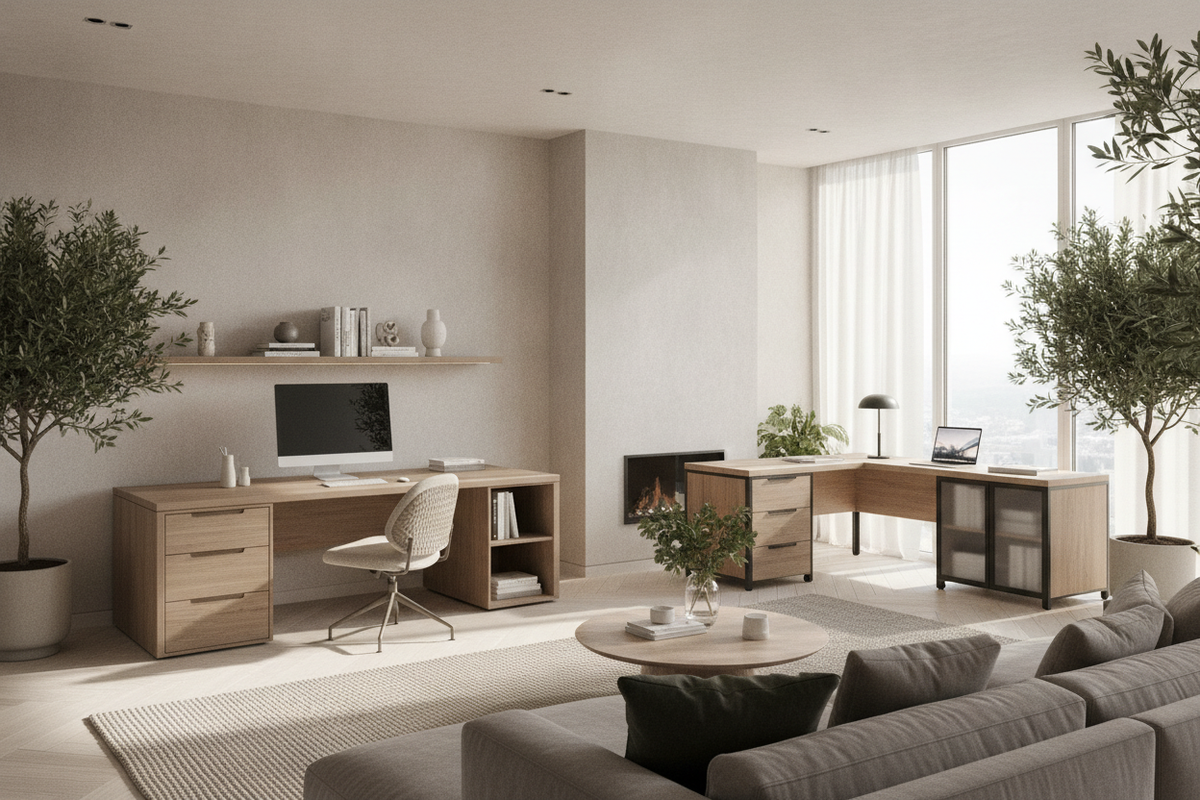
Establishing a productive, comfortable workspace begins with understanding how furniture proportions, surface architecture, and room circulation interact. Selecting among the diverse range of desks for home office environments requires evaluating far more than desktop styling alone. A functional workstation must accommodate technical hardware, reference documents, and daily personal routines while preserving clear walkways throughout the residence. When selected with care, home office desks strike an elegant balance between task-oriented utility and the warm visual character of residential interiors.
Every household presents distinct spatial parameters and functional demands. A dedicated study with ample perimeter walls invites expansive furniture configurations, whereas a dual-purpose guest bedroom or living room corner requires compact, intentional tailoring. By approaching the selection process through clear dimensions, storage layouts, structural materials, and zoning principles, you can curate a practical work setting that supports focus throughout long workdays without compromising the comfort of your home.
Evaluating Workstation Footprints: Sizing and Scale Categories
Workstation scale dictates both daily ergonomic comfort and the visual balance of your room. Compact writing desks represent an efficient baseline for laptop-centered tasks, occupying modest footprints that slip naturally into alcoves or multipurpose living areas. However, when daily tasks require auxiliary monitors, external keyboards, and open reference notebooks, a shallow surface can quickly feel cluttered. Selecting home desks with adequate surface depth ensures that display screens sit at an appropriate viewing distance while leaving sufficient room for forearm support and peripherals.
For rooms that serve multiple functions, mid-size rectangular designs strike a dependable equilibrium. They supply sufficient vertical and horizontal clearance beneath the tabletop for natural leg movement, footrests, and ergonomic task seating while preserving open transit paths around the room perimeter. Corner configurations and L-shaped arrangements maximize floor utility along unused boundary walls, effectively establishing an expansive home office workstation zone without protruding into central pathways. When assessing desks for home, consider whether your equipment layout requires linear surface area or a wraparound configuration that places secondary gear within an arm's reach.
Storage Architecture: Open Shelving vs. Concealed Pedestals
Managing equipment cords, paperwork, peripheral hardware, and daily stationery demands intentional storage planning. Integrating home office desk and storage elements preserves an uncluttered desktop, which actively fosters sustained focus during detailed tasks. Storage architecture generally divides into two main strategies: enclosed cabinetry and open display shelving, each serving unique functional purposes.
Concealed pedestals, file drawers, and drop-down compartments provide an organized home for items that do not need to sit in view. Closed cabinetry shields visual clutter such as backup cords, printer cartridges, and loose paperwork, a capability that is especially valuable when your workstation shares space with a bedroom or main living room. For comprehensive room organization and complementary cabinetry, consulting a curated office storage collection offers practical strategies to coordinate freestanding credenzas and bookcases with primary workstations.
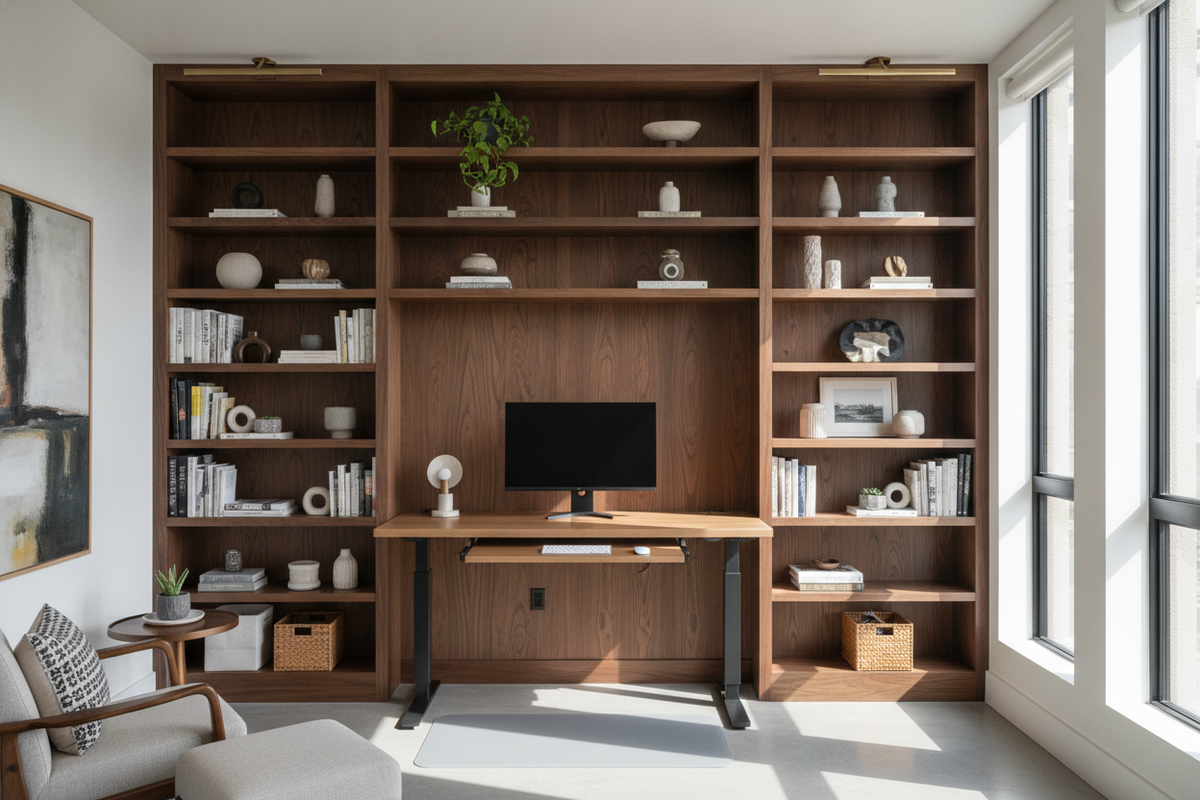
Open shelving, under-desk ledges, and desktop risers, on the other hand, provide rapid access to frequent-use tools. Open cubbies naturally accommodate reference manuals, decorative baskets, and external hard drives that benefit from free airflow. To keep these open surfaces tidy, reviewing an informative desk storage office guide can assist you in categorizing smaller office sundries into structured bins and desktop trays. Incorporating well-balanced home office desk units ensures that every critical accessory has a predictable location, preventing surface accumulation over the course of the week.
Room Zoning and Spatial Flow Across Residential Layouts
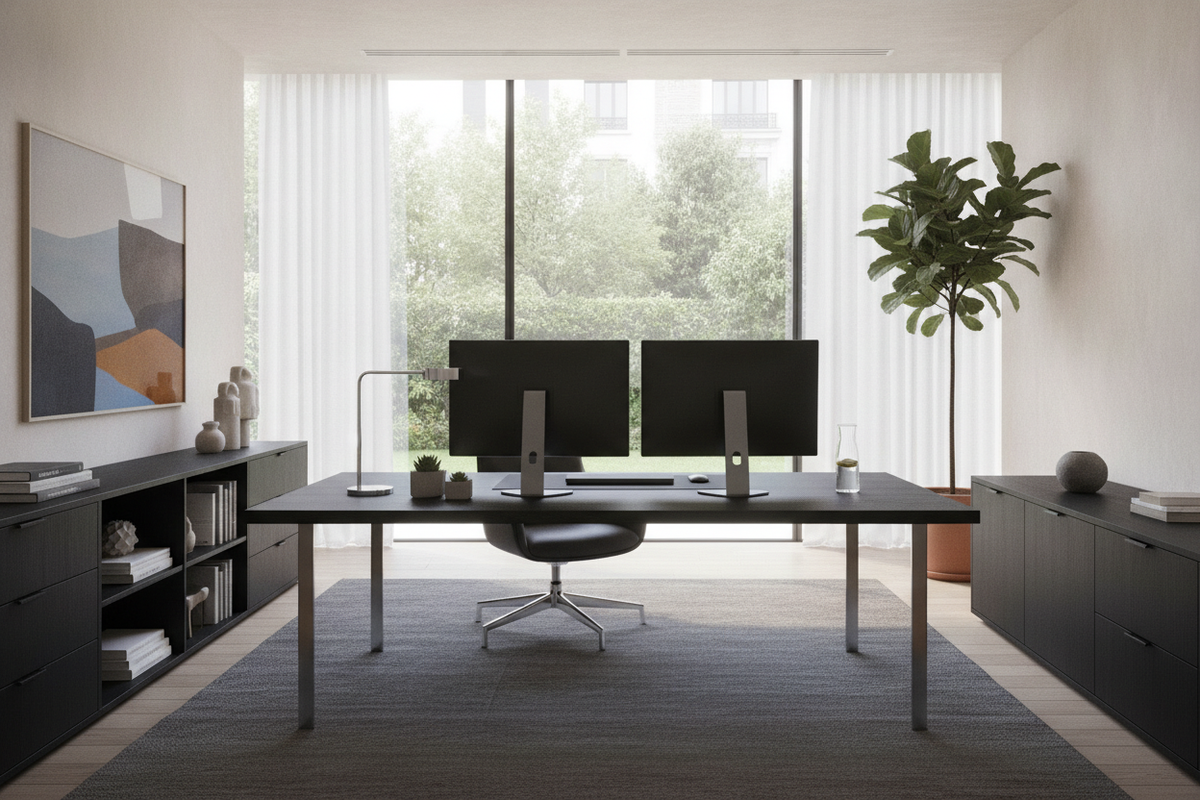
Arranging a home work desk demands careful consideration of ambient lighting, doorway sightlines, and daily room circulation. Positioning a desk perpendicular to natural window openings helps mitigate direct screen reflections while preserving access to daylight and outside views. Floating a desk in the center of a dedicated library or executive study creates a distinguished presence, provided sufficient clearance remains behind the desk chair for smooth movement without scuffing nearby walls or credenzas.
In shared or open-concept floor plans, locating an at home work desk along an architectural recess or beneath a stair landing maintains the natural flow of household traffic. Low storage credenzas, decorative room dividers, or strategically placed area rugs can visually define the work zone, distinguishing professional tasks from domestic leisure. Exploring a layout-focused office desks guide can offer valuable spatial guidance for placing a home office table desk in harmony with existing residential floor plans and everyday living patterns.
Material Composition, Structural Frames, and Visual Cohesion
The durability, tactile feel, and longevity of a desk rely directly on the materials used in its construction. Powder-coated steel and reinforced metal frames provide dependable structural stability, minimizing wobble during intense typing or height adjustments. Surface materials such as durable laminates, natural wood veneers, and sealed engineered boards deliver resistance against daily wear, pen pressure, and accidental moisture from coffee mugs or water glasses.
When searching for a nice desk for home office settings, choose surface tones that complement the existing woodwork and architecture of your home. Warm timber grains, clean matte neutrals, and subtle metallic accents help a fancy computer desk integrate smoothly into living rooms or master suites rather than looking like cold corporate equipment. Investing in a nice home office desk built with sturdy hardware and finished surfaces ensures that your in home office desk endures daily demands while elevating the aesthetic harmony of the room.
Workflow Alignment: Matching Desk Configurations to Daily Tasks
Every professional workflow carries distinct structural needs. Creative professionals who work with drafting tools, design tablets, and large sketchpads benefit from expansive, dual-surface layouts that separate digital computing zones from hands-on creative projects. A versatile office computer desk product demonstrates how an integrated return credenza can cleanly host secondary screens and printers without crowding primary desktop activities.
Administrative, accounting, and analytical workflows often rely on quick access to physical files, reference binders, and desktop peripherals. Before you buy home office desk furniture, list the specific technology items, monitors, docks, and paper supplies you touch on a typical workday. Aligning furniture layout with your practical daily tasks ensures that your home office work desk becomes a supportive, durable foundation for long-term productivity and residential comfort.

Leave a comment
This site is protected by hCaptcha and the hCaptcha Privacy Policy and Terms of Service apply.