










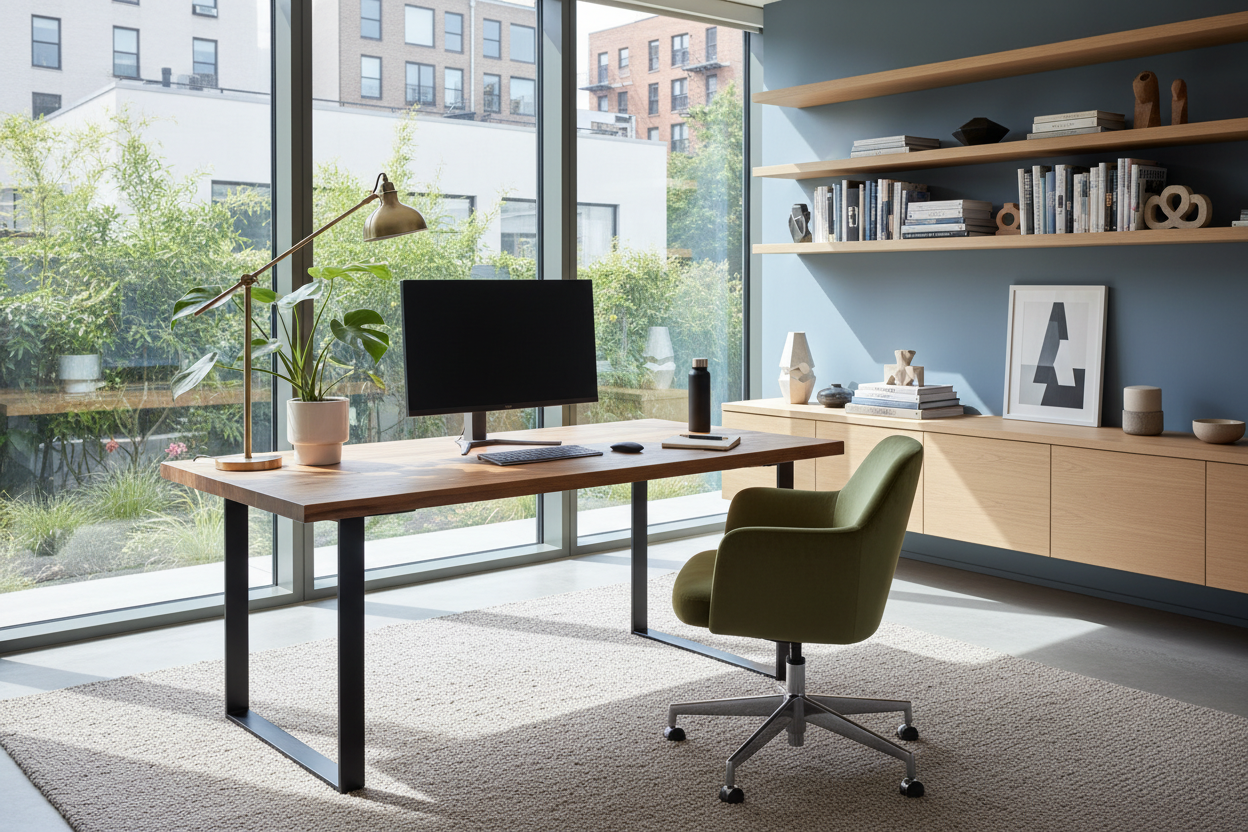
There is nothing quite as disruptive to a cohesive interior as a workspace that feels like an afterthought. Whether you are outfitting a corporate suite or carving out a niche in a master bedroom, the table you choose acts as the anchor for the entire room's energy. Yet, most homeowners rush the process, prioritizing immediate availability over architectural integrity. When selecting desks, the goal is to find a piece that balances ergonomic performance with a silhouette that complements your existing casegoods.
Key Features to Look For
- Material Integrity: Prioritize solid hardwoods or high-grade commercial laminates over hollow-core particle board for longevity.
- Visual Weight: Ensure the desk's scale matches the room; heavy pedestal desks ground large rooms, while writing desks suit open plans.
- Joinery: Look for dovetail drawers and reinforced corners—signs of quality construction that prevent wobbling.
- Ergonomics: Standard height is 29-30 inches; ensure knee clearance is sufficient if the desk has a center drawer.
- Cable Management: Integrated grommets or hidden channels are essential for maintaining a clean aesthetic.
Navigating the Market: Where to Shop for Office Desks
The first hurdle is determining the source. If you simply type "desks stores" into a search engine, you will be inundated with mass-market options that often lack structural integrity. As a designer, I categorize sourcing into two distinct paths.
The Specialized Office Desk Store
For those requiring heavy daily use, a specialized office desk store is often superior to a general home goods retailer. These vendors focus on commercial-grade durability. When you shop for office desks here, you are paying for scratch-resistant surfaces and hardware rated for thousands of cycles. This is where to buy office desk solutions that need to withstand 40+ hour workweeks without showing wear on the office worktop.
Boutique and Furniture Stores for Desks
If aesthetics are your primary driver, look towards high-end furniture stores for desks that focus on residential design. These pieces often feature richer textures—walnut veneers, shagreen inlays, or brass ferrules. If you are wondering where to buy home office desks that don't look like cubicle furniture, this is your avenue. The trade-off is often functionality; you may need to add external cable management solutions to preserve the clean lines.
Materiality and Construction
When you prepare to buy office desks, the material dictates both the lifespan and the "hand" of the piece. A solid timber desk offers warmth and can be refinished over time, making it an heirloom investment. However, wood reacts to humidity. For a more maintenance-free option, high-pressure laminate (HPL) mimics wood grain but resists coffee rings and heat.
If you choose to purchase office desk units online, pay close attention to the weight capacity and finish descriptions. An online office desk listing should explicitly state whether the surface is a veneer (a thin layer of wood over a composite) or solid. Veneers are excellent for achieving consistent grain patterns, but cheap veneers will peel at the edges within a few years.
Space Planning: Desks for Office Space Layouts
A common mistake is buying a desk that physically fits but visually chokes the room. When browsing desk shops or planning your layout, allow for at least 48 inches of clearance behind the chair for comfortable movement. If you are tight on square footage, avoid heavy pedestal desks. Instead, look for desks shopping options that feature "parsons" style legs—this open space creates a sense of airiness, making the room feel larger.
Lessons from My Own Projects
I once specified a stunning, vintage-inspired writing desk for a client who wanted a "Mad Men" aesthetic. It looked incredible in the showroom. However, I failed to account for the "apron" (the vertical drop of wood beneath the top surface that often hides a drawer).
Once we installed it, we realized the apron was too deep. Every time the client crossed their legs, their knees hit the wood. It was a beautiful piece of joinery, but functionally, it was a disaster for a tall person. We had to have a carpenter shave down the underside of the drawer to gain an inch of clearance. Now, whenever I help clients decide which desks buy-ing decisions to make, I physically sit at the desk and cross my legs. If I can't do it comfortably, the desk stays in the store, no matter how beautiful the finish is.
Conclusion
Selecting the right workspace furniture is an exercise in restraint and foresight. It requires looking past the initial styling to understand how the piece is built and how it will function in your specific environment. By investing in quality materials and respecting the flow of your room, you create a space that invites focus rather than clutter.
Frequently Asked Questions
What is the ideal depth for a functional office desk?
For a laptop setup, 24 inches is sufficient. However, if you use multiple monitors or require space for paperwork, aim for a depth of 30 inches or more to prevent eye strain and clutter.
Should I choose a standing desk or a traditional desk?
If you prefer a traditional aesthetic but want health benefits, consider a standing converter or a "hidden" lift desk where the mechanism is concealed within a traditional wood shell.
How do I protect a wood desk from scratches?
Always use a high-quality leather or felt desk pad. This defines the work area and protects the finish from the heat of laptops and the pressure of writing instruments.

Leave a comment
This site is protected by hCaptcha and the hCaptcha Privacy Policy and Terms of Service apply.