










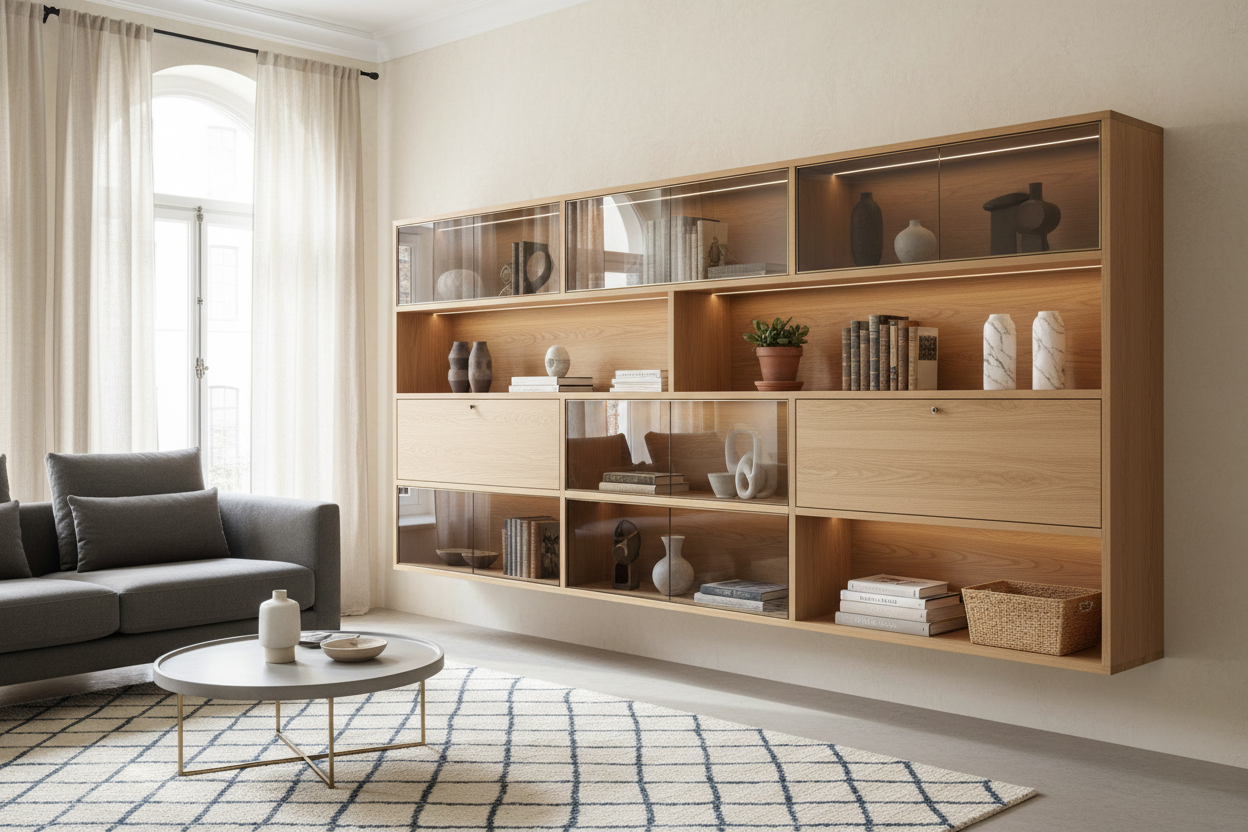
We have all stared at that awkward, empty expanse of drywall above a console table or living room chair, wondering how to fill it without making the room feel cluttered. Floor space is a premium in most North American homes, and adding another bulky freestanding piece isn't always the answer. That is where a display cabinet on wall becomes a brilliant spatial problem-solver. By moving your storage vertically, you create a striking focal point that draws the eye up while keeping your square footage completely open.
Whether you want to show off vintage glassware, a collection of travel finds, or simply add architectural interest to a plain room, a display cabinet wall hanging offers the perfect balance of aesthetics and utility. But getting it right requires more than just finding a stud and driving in a screw. Here is exactly how to choose, scale, and style these pieces for a high-end look.
Quick Decision Guide
- Measure your clearance: Always leave at least 18 inches of clearance between the bottom of the cabinet and any furniture below it to avoid a cramped look.
- Match the visual weight: A heavy, solid wood cabinet needs visual anchoring below, while a glass display cabinet for wall can float effortlessly on its own.
- Hardware is non-negotiable: Never rely on drywall anchors alone; these pieces must be secured directly into wall studs.
- Lighting matters: Opt for cabinets with integrated LED strip lighting or puck lights to prevent the interior from looking like a dark cavern.
Maximizing Your Vertical Real Estate
Incorporating a wall hung display cabinet is one of my favorite ways to cheat the dimensions of a small room. In tight urban apartments or cozy suburban dens, freeing up the floor instantly makes the room feel wider. However, proportion is everything.
Clearance and Placement Rules
When planning your layout, treat the wall cabinet display just like a piece of art. If you are hanging it above a sofa, it should be about two-thirds the width of the seating area. If you are grouping small wall mounted display cabinets, treat them as a gallery wall, leaving 3 to 4 inches of negative space between each unit. For open-concept spaces, integrating it with other wall units display setups can create a custom built-in look for a fraction of the cost.
Material Matters: Glass vs. Solid Framing
The material you choose dictates the entire mood of the room. A solid oak or walnut frame feels traditional and grounded, but it can cast heavy shadows. Conversely, a sleek wall display glass cabinet keeps the room feeling airy and modern.
Curating Your Visual Weight
If you are displaying fragile or visually busy items, a display cabinet with glass doors wall mounted acts as a protective frame that minimizes dust while keeping the visual footprint light. For minimalists, a frameless design acts almost like an enclosed wall mounted glass display shelf, allowing the objects inside to take center stage. Just remember that glass requires discipline—treat it like a museum-quality wall cabinet display case, not a catch-all junk drawer.
Designer's Honest Take: The Mounting Reality
I will let you in on a hard lesson I learned early in my career. About ten years ago, during a townhouse project in Chicago, I fell in love with a heavy, vintage brass and glass display cabinet wall mounted for a client's dining room. I used heavy-duty toggle bolts, assuming the 75-pound weight limit on the box was accurate. Two weeks later, the client called to tell me the cabinet was pulling away from the plaster, threatening to take a collection of heirloom china down with it.
The honest truth about any wall mount display cabinet is that the mounting hardware included in the box is almost always garbage. You are not just hanging the weight of the cabinet; you are hanging the cabinet plus everything inside it, plus the dynamic force of opening and closing the doors. A display hanging cabinet requires absolute structural integrity. If you cannot align it with your wall studs, you must install a wooden cleat or reinforce the wall. It is the unglamorous side of design, but it is non-negotiable.
Frequently Asked Questions
How high should I hang a small wall display cabinet with glass doors?
The center of the cabinet should ideally sit at eye level, roughly 57 to 60 inches from the floor. If hanging above a piece of furniture, leave 18 to 24 inches of breathing room between the bottom of the cabinet and the top of the furniture.
Are small wall mounted display cabinets safe for heavy items like books?
They can be, but only if anchored directly into studs. Glass shelves also have strict weight limits, often capping out at 10 to 15 pounds per shelf. For heavy books or ceramics, swap glass shelves for solid wood.
How do I hide the lighting cords on a display cabinet on wall?
If you are renovating, have an electrician install a recessed outlet directly behind where the cabinet will hang. For a quick fix, use a paintable cord cover that runs straight down to your baseboard, blending it into the wall color.

Leave a comment
This site is protected by hCaptcha and the hCaptcha Privacy Policy and Terms of Service apply.