










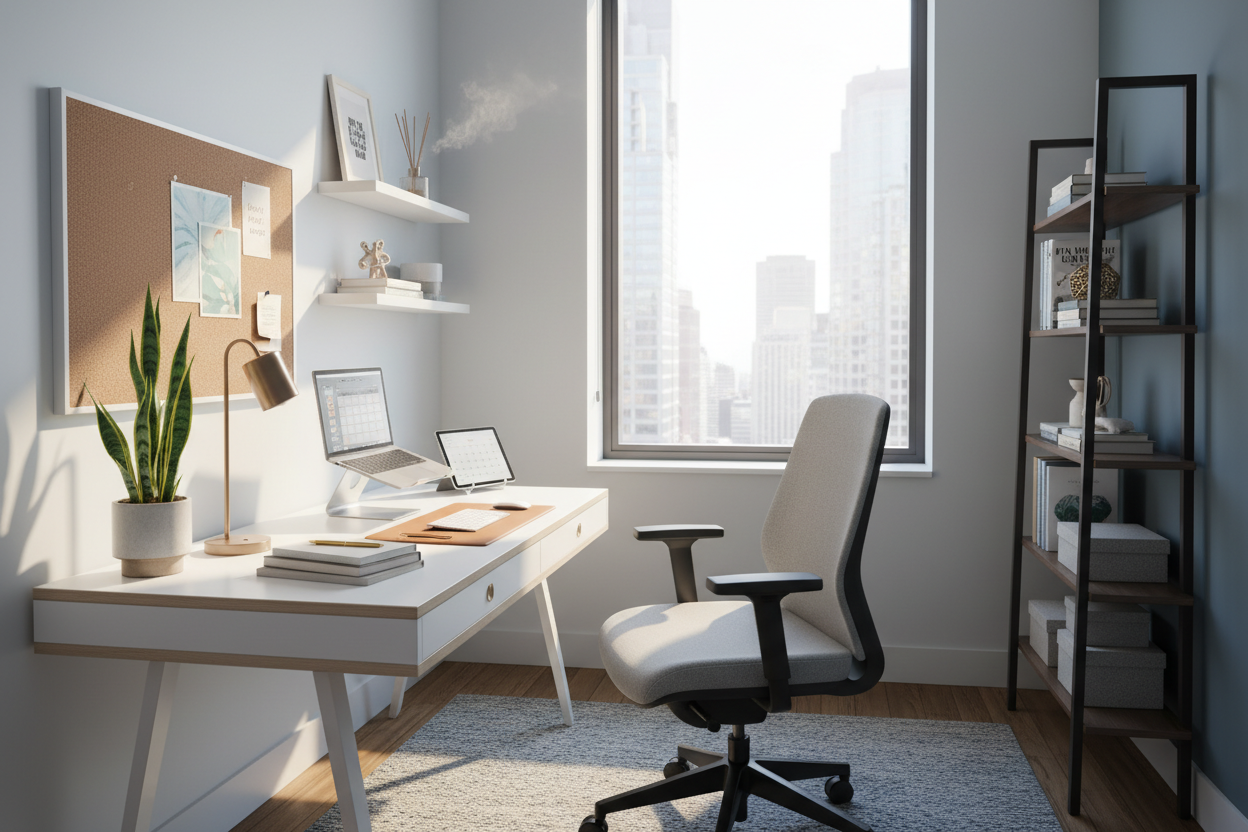
We have all experienced the visual fatigue of the corporate beige box. You spend forty hours a week in a space that often feels sterile, uninspiring, and completely devoid of personality. The dilemma for most professionals is balancing the desire for a stylish, comfortable sanctuary with the strict limitations of corporate furniture and square footage. The good news is that you do not need a C-suite corner office to curate a space that commands respect and fosters creativity.
In this guide, we will explore how to decorate a small office at work by applying high-end residential design principles to the corporate environment. We will move beyond simple trinkets and focus on ergonomic flow, lighting temperatures, and material textures that elevate your professional brand.
Quick Decision Guide: Essentials for Small Workspaces
Before purchasing decor, consider these core design elements to ensure your workspace remains functional and compliant with office standards:
- Scale & Proportion: Select decor items that do not overcrowd your desktop; aim for objects that occupy less than 10% of the surface area.
- Lighting Temperature: Opt for a lamp with a color temperature between 2700K and 3000K to counteract harsh overhead fluorescents.
- Vertical Utilization: Use magnetic or clip-on organizers to keep the horizontal plane clear for work.
- Materiality: Choose natural materials like wood, ceramic, or leather to add warmth and reduce the "plastic" feel of office furniture.
- Biophilia: Select low-light plants (like Zamioculcas zamiifolia) that improve air quality without requiring direct sun.
Strategic Space Planning
In a compact workspace, every square inch of surface area is premium real estate. The most common error I see is the accumulation of small, unrelated items that create visual noise. Instead, we want to curate "vignettes"—small, intentional groupings of objects.
The Monitor Anchor
Treat your monitor as the central anchor. Your decor should frame this focal point rather than compete with it. Place a substantial, taller item (like a structured desk lamp) on one side and balance it with a lower, wider item (such as a ceramic catch-all tray or a small succulent) on the other. This creates an asymmetrical balance that is pleasing to the eye and maintains a clear sightline.
Lighting: The Mood Setter
Corporate lighting is designed for utility, not comfort. To soften the harshness, introduce a dedicated task lamp. Avoid flimsy, plastic clip-lights. Instead, look for a lamp with a solid base and a metal or fabric shade. This not only directs light exactly where you need it for reviewing documents but also introduces a sculptural element to the desk. The pool of warm light creates a psychological "zone" of focus, separating your personal workspace from the open floor plan.
Textural Contrast and Materiality
Standard office furniture is typically laminate, metal, or mesh. To decorate small office at work effectively, you must introduce contrasting textures to break up the monotony.
Leather and Wood
Replace the standard-issue mouse pad with a high-quality leather desk blotter. The tactile experience of leather against your wrist is significantly better than synthetic fabric, and it visually grounds your keyboard and mouse. Similarly, swapping plastic pen holders for solid walnut or marble accessories adds immediate weight and sophistication. These materials age well and develop a patina, unlike plastic which simply degrades.
Textiles and Comfort
If your office chair allows, a lumbar pillow in a performance velvet or a heavy linen adds a residential touch that softens the hard lines of ergonomic seating. However, ensure the color palette remains neutral or deep jewel tones to maintain professional decorum.
My Personal Take on How to Decorate a Small Office at Work
I learned a hard lesson early in my career while designing a series of executive cubicles for a finance firm. I wanted the spaces to feel like high-end libraries, so I incorporated open shelving with intricate, textured felt organizers and velvet-lined trays.
It looked stunning on installation day. However, three months later, I visited the site and realized a critical error: commercial HVAC systems generate a surprising amount of dust. The velvet and felt were dust magnets that looked grimy, not luxurious. The clients were annoyed because they couldn't easily wipe them down.
Since then, my rule for office decor is "The Wipe Test." If I cannot clean an item with a simple microfiber cloth in five seconds, it doesn't belong on a work desk. Now, I stick to smooth ceramics, sealed woods, and leather—materials that maintain their dignity even in a dusty office environment.
Conclusion
Transforming your workspace is not about covering every surface with decor; it is about selecting a few high-quality pieces that improve your daily experience. By focusing on lighting, natural materials, and smart vertical storage, you can create a small office that feels expansive, organized, and distinctly yours. Reclaim your environment, and watch your productivity follow suit.
Frequently Asked Questions
How do I hang decor without damaging cubicle walls?
Avoid adhesives that leave residue. For fabric-walled cubicles, use "cubicle clips" or T-pins which slide into the fabric weave without causing damage. For hard surfaces, command strips are standard, but ensure the weight rating exceeds your object by at least 20% for safety.
What is the best plant for an office with no windows?
The Snake Plant (Sansevieria) and the ZZ Plant are the gold standards for windowless offices. They tolerate fluorescent light exceptionally well and require infrequent watering, making them perfect for surviving long weekends or vacations.
Is it unprofessional to have personal photos?
Not at all, but the presentation matters. Tape-on photos look dorm-like. Frame your photos in cohesive, high-quality frames (brushed brass or matte black) and limit the quantity to one or two. This treats the memory as art rather than clutter.

Leave a comment
This site is protected by hCaptcha and the hCaptcha Privacy Policy and Terms of Service apply.