










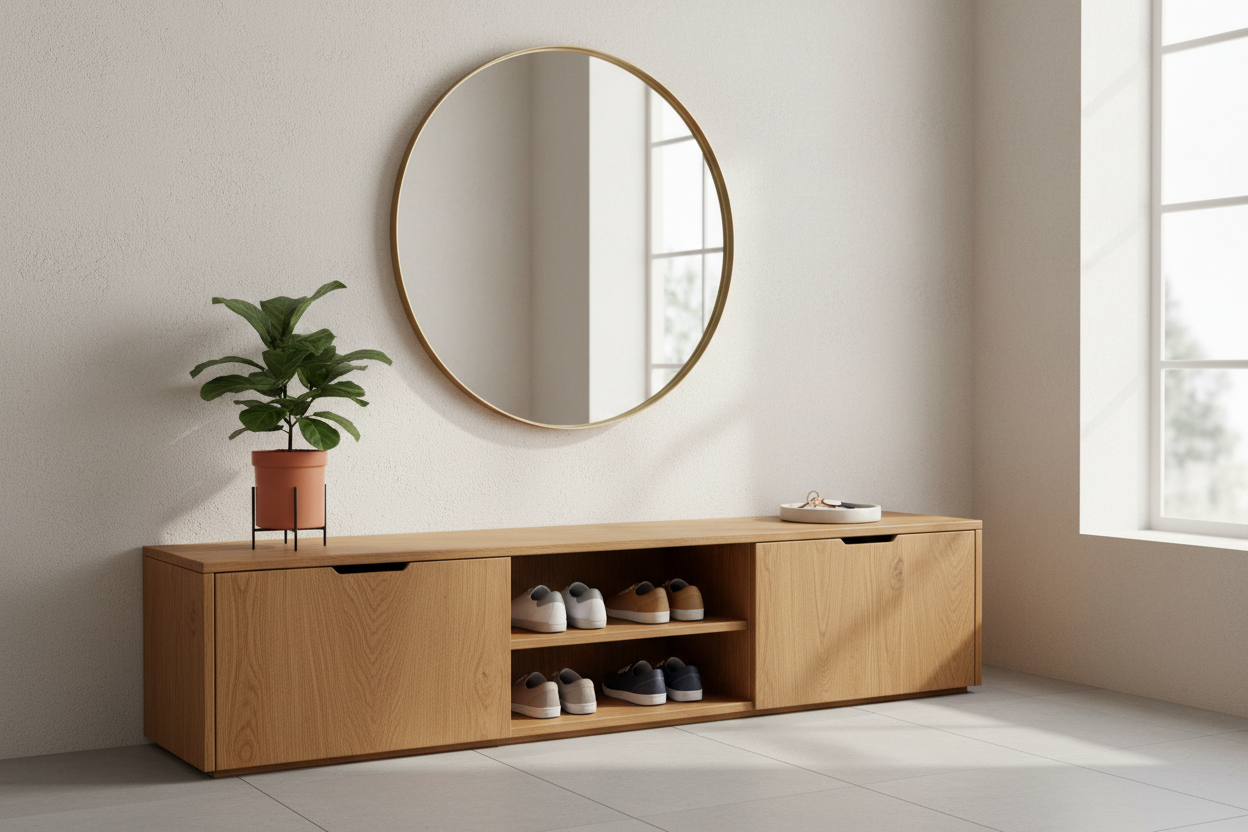
There is nothing quite as visually jarring as tripping over a chaotic pile of sneakers the moment you open your front door. It disrupts the flow of the home and immediately creates visual noise. As a designer, I often tell clients that the foyer sets the tone for the entire residence. The challenge, however, lies in finding entryway shoe storage furniture that balances the utilitarian need for organization with the aesthetic requirement of a welcoming entrance.
Key Features to Look For
- Ventilation: Look for louvred doors or open-back designs to prevent moisture buildup and odors.
- Depth & Capacity: Ensure the internal depth is at least 13 inches for standard shelving, or verify the angle of tilt-out drawers for larger sizes.
- Material Durability: Prioritize hardwoods or high-pressure laminates that can withstand moisture from wet soles.
- Visual Weight: Choose floating units or legs with height to maintain a sense of openness in small corridors.
Balancing Form and Function
When selecting a shoes cabinet for entrance areas, we must move beyond the plastic bins of college dorms. We are looking for pieces that mimic high-end console tables but work twice as hard. The goal is to disguise the storage so effectively that guests assume it is purely a decorative credenza.
Assessing the Layout and Circulation
The first step is measuring your circulation path. In narrow hallways, every inch counts. I often recommend an entryway shoe rack cabinet with a tilt-out mechanism for these tight spaces. These units typically have a depth of only 10 to 12 inches, compared to the standard 18 to 20 inches of a dresser. This slim profile preserves the walkway while keeping footwear accessible.
Materiality and Durability
Your entryway is a high-traffic zone. The furniture placed here endures impact from bags, keys, and wet shoes. While a lacquer finish looks stunning in a showroom, it is prone to chipping in an active family home.
Solid Wood vs. Veneer
For longevity, solid wood or metal construction is superior. If you opt for engineered wood, ensure it has a high-quality melamine finish which is scratch-resistant. Be wary of cheap particle board near the floor; if snow or rain drips off your boots and pools underneath, the base can swell and delaminate within a season.
Styling Your Entryway Furniture for Shoes
Once the functional piece is selected, treat it as a design opportunity. Entryway furniture for shoes should be anchored by a mirror or artwork above it to draw the eye up. Add a tray for keys (to protect the surface) and a table lamp to provide soft, ambient lighting. This creates a curated vignette that distracts from the furniture's utilitarian purpose.
Lessons from My Own Projects
I learned a hard lesson about internal dimensions during a renovation for a client with a size 13 shoe. We sourced a stunning, vintage-inspired mid-century cabinet that looked perfect in the rendering. However, when we installed it, the doors wouldn't close properly because the internal shelf depth was only 11 inches.
We had to have a custom carpenter cut out the back panel and install a deeper backing, which was an expensive fix. Now, I always measure the client's largest pair of shoes against the internal specs—not the external dimensions—before ordering. Another detail I always check is the clearance at the bottom. I once bought a unit that sat flush to the floor, and it became a nightmare to clean around. Always look for legs or a plinth base that allows a vacuum attachment to pass through; it keeps the dust bunnies at bay.
Conclusion
Investing in the right storage piece transforms your entryway from a drop zone into a proper reception area. By prioritizing durable materials and verifying internal dimensions, you ensure that your foyer remains elegant and functional for years to come.
Frequently Asked Questions
How deep should a shoe cabinet be?
For standard flat shelving, aim for a depth of 13 to 14 inches to accommodate most adult shoe sizes. If you are looking at tilt-out cabinets, they can be as slim as 9 to 10 inches deep because the shoes are stored vertically.
How do I prevent odors in closed shoe furniture?
Ventilation is key. If the cabinet doesn't have louvred doors, you can drill small, discreet holes in the back panel for airflow. Additionally, placing cedar blocks or charcoal sachets inside the drawers helps absorb moisture and neutralize smells.
Can I use a regular sideboard as a shoe cabinet?
Yes, but you may need to adjust the shelving. Standard sideboards often have tall shelf spacing meant for dishes. You might need to add extra shelves to maximize vertical space for shoes, ensuring you don't waste capacity.


Leave a comment
This site is protected by hCaptcha and the hCaptcha Privacy Policy and Terms of Service apply.