










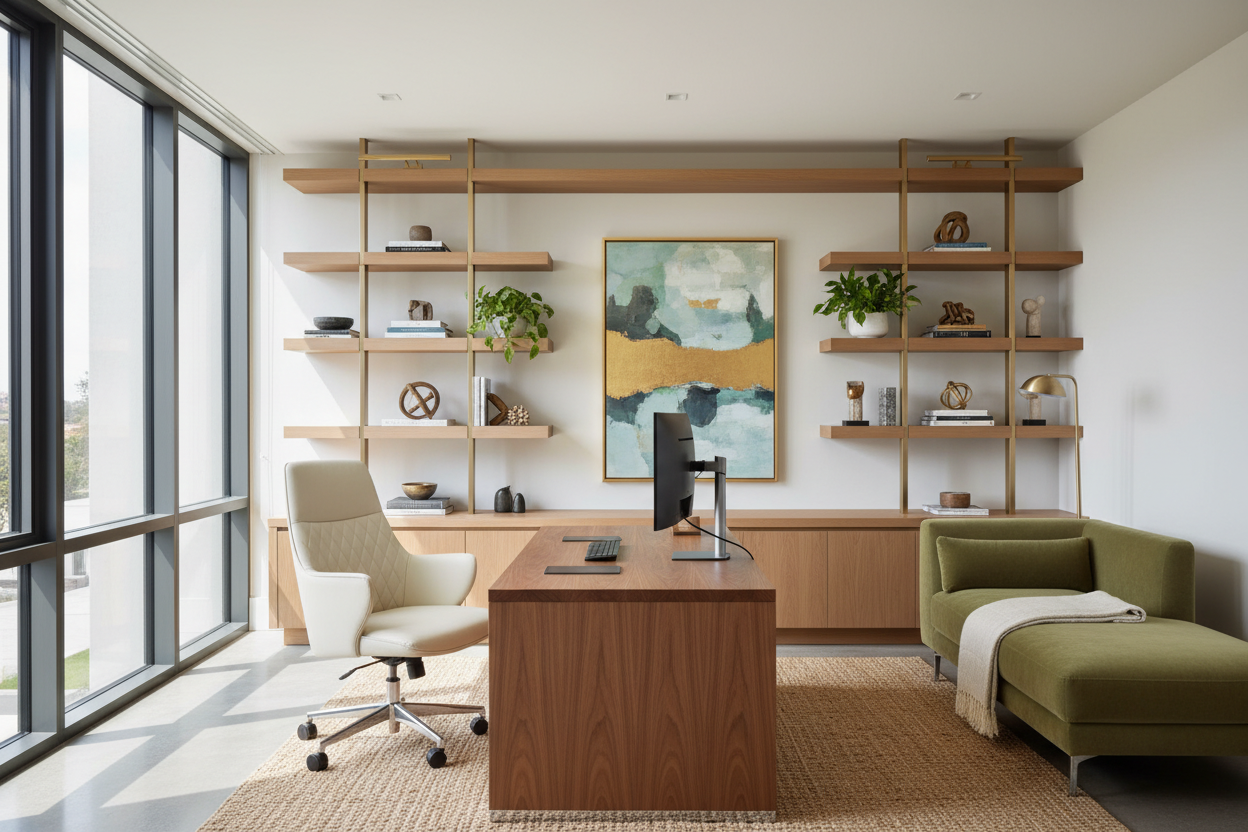
There is a distinct difference between a room with a desk and a truly functional workspace. As an interior designer, I often see clients prioritize aesthetics over ergonomics, or conversely, create sterile environments that kill creativity. A curated must have office strikes a delicate balance: it is a space where high-performance function meets sophisticated design, allowing you to work longer without fatigue while enjoying the visual harmony of your surroundings.
Key Features to Look For
- Ergonomic Integrity: Prioritize adjustable lumbar support and seat depth over pure aesthetics.
- Lighting Layering: Combine ambient overhead lighting with focused task lighting (aim for 3000K-4000K color temperature).
- Material Tactility: Choose surfaces like walnut or matte laminate that reduce glare and feel warm to the touch.
- Acoustic Control: Incorporate rugs or upholstered panels to dampen echo and improve focus.
The Foundation: Seating and Surfaces
When selecting new office must haves, the dialogue begins with the chair and the desk. These are not merely furniture pieces; they are the tools of your trade. For the chair, look beyond the standard mesh. High-quality leather or performance velvet adds texture and softens the room's acoustics. However, ensure the mechanism supports dynamic movement—static sitting is the enemy of focus.
regarding the desk, consider the silhouette. A heavy, solid wood desk commands authority, but a floating or leggy design can make a small room feel expansive. If you are dealing with limited square footage, a corner configuration can often double your surface area without encroaching on the room's traffic flow.
Lighting: The Often Overlooked Office Must Have
Lighting is arguably the most critical yet neglected element in workspace design. Relying solely on a ceiling can creates harsh shadows that strain the eyes. One of the top work office must haves is a dedicated, articulated task lamp. Look for fixtures with a high CRI (Color Rendering Index) to ensure colors on your physical documents look true to life. Position the light opposite your writing hand to eliminate shadows while you work.
Managing Visual Clutter
Nothing disrupts a design scheme faster than a tangle of cables. When sourcing must haves for office organization, prioritize cable management solutions that integrate seamlessly. Look for desks with built-in grommets or modesty panels that hide the 'spaghetti' of wires. Utilizing vertical space with floating shelves allows you to display curated artifacts while keeping the primary work surface clear for deep work.
Accessorizing with Intent
Once the architectural elements are in place, focus on the smaller must have office items that bring personality to the space. This isn't about filling shelves with knick-knacks; it's about selecting objects with purpose. A weighted brass pen holder, a leather desk blotter to protect the wood finish, or a structural plant like a Ficus Lyrata can serve as a focal point that rests the eye during screen breaks.
My Personal Take on must have office
I learned a hard lesson about surface materials early in my career during a renovation for a tech executive. We selected a stunning, high-gloss lacquered executive desk. It looked incredible in the portfolio photos—sleek, modern, and expensive. However, two weeks after installation, the client called me.
The issue wasn't the look; it was the usability. The high-gloss finish acted like a mirror, reflecting the overhead lights directly into his eyes, causing migraines by noon. Furthermore, every single fingerprint showed up, turning a 'luxury' piece into something that looked perpetually dirty. I had to bring in a custom leather blotter to cover 60% of the surface just to make it usable. Since then, I always advise clients to test the glare and tactile feel of a surface. A matte, honed, or satin finish is almost always the superior choice for a surface you touch for eight hours a day.
Conclusion
Designing a workspace is an investment in your own efficiency and mental well-being. By focusing on ergonomic support, proper lighting layers, and materials that age beautifully, you create an environment that invites you to do your best work. Don't just fill a room; curate a sanctuary for your ambition.
Frequently Asked Questions
What is the most important investment for a home office?
The chair is the non-negotiable priority. You spend hours in physical contact with it. Invest in a chair with adjustable armrests, lumbar support, and a seat pan that slides to fit your leg length before spending budget on a desk or decor.
How do I make a small office feel bigger?
Utilize vertical storage and choose furniture with exposed legs. Being able to see the floor underneath the desk and chair tricks the eye into perceiving more square footage. Mirrors can also reflect light, opening up tight corners.
What is the best desk depth for computer work?
Aim for a depth of at least 24 to 30 inches. This allows you to place your monitor at an arm's length away, which is essential for reducing eye strain and maintaining proper posture.


Leave a comment
This site is protected by hCaptcha and the hCaptcha Privacy Policy and Terms of Service apply.