










Working from a home office should never feel like a sentence to a sterile cubicle. As a designer, I see too many homeowners settle for utilitarian surfaces that drain energy rather than inspire it. The solution lies in creative desk design—an approach that treats your workstation not just as a tool, but as the architectural focal point of the room. This guide explores how to merge high-end aesthetics with rigorous functionality to curate a space that works as hard as you do.
Key Features of an Inspiring Workspace
Before committing to a custom build or a showroom piece, consider these fundamental elements to ensure longevity and style:
- Material Integrity: Prioritize solid hardwoods or high-grade composites over hollow-core veneers for durability.
- Sculptural Silhouette: Look for legs and bases that offer visual interest (e.g., trestle, cantilevered) rather than standard four-post structures.
- Cable Integration: Ensure the design includes hidden channels or grommets to maintain a clean visual plane.
- Tactile Feedback: The surface texture should be smooth enough for writing but tactile enough to prevent device slippage.
- Proportional Scale: The desk must command the space without overwhelming the room's traffic flow.
Rethinking the Silhouette: Innovative Desk Designs
The era of the rectangular block pushed against a wall is over. When we look at innovative desk designs, we are looking for shapes that encourage flow. Kidney-shaped desks or curved executive styles allow you to 'sit within' the furniture, increasing the accessible surface area without requiring you to stretch.
For open-plan homes, consider a floating desk anchored to the center of the room. This positioning commands authority and allows you to face the entrance, a principle often used in executive suites to establish command of the space.
Materiality: Creative Ideas for Office Desk Surfaces
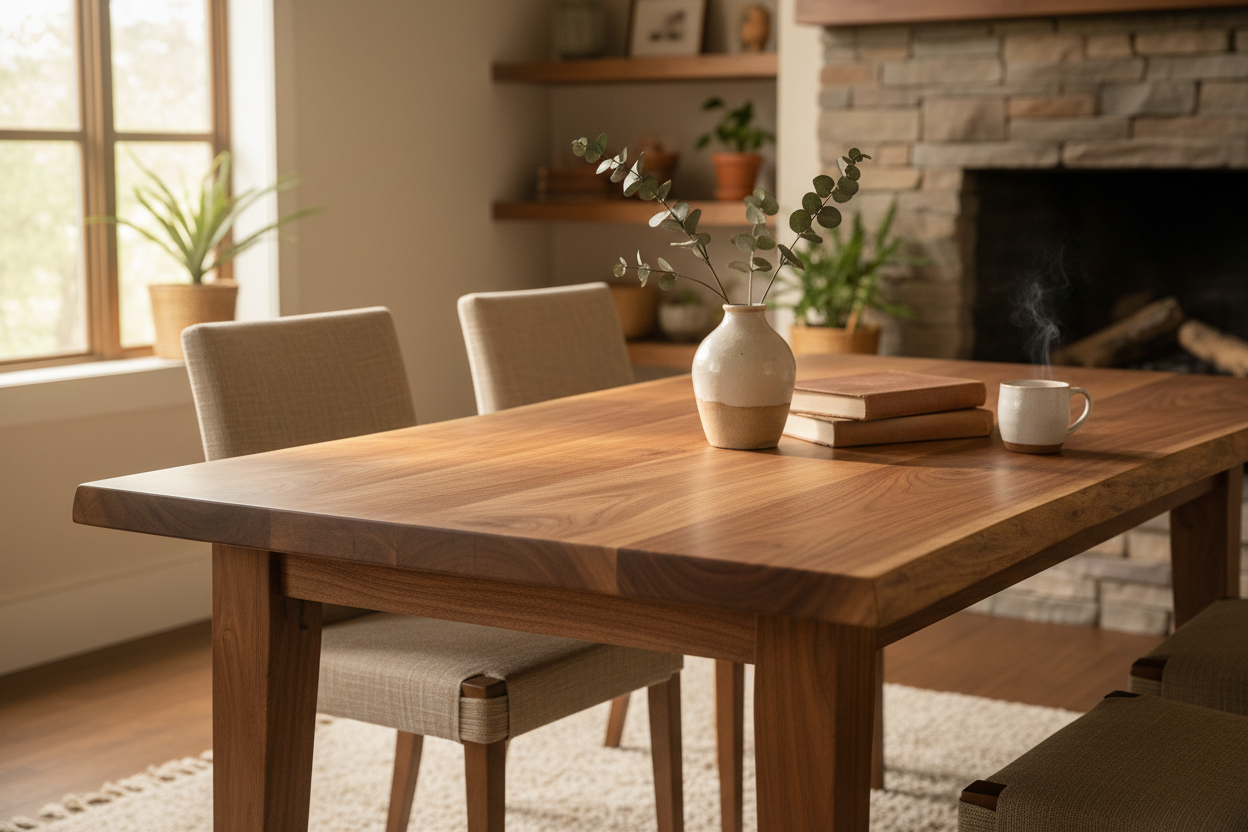
Your choice of material dictates the mood. While walnut and oak offer warmth and tradition, creative ideas for office desk surfaces often involve mixing mediums. I recently styled a space using a desk with a leather-wrapped top. The leather provides a soft, warm surface for your wrists and ages beautifully, developing a patina that glass or laminate simply cannot replicate.
Alternatively, consider a mixed-media approach: a live-edge wood slab paired with acrylic legs creates a 'floating' illusion that keeps small rooms feeling airy and uncluttered.
The Ergonomic Compromise
Creativity must never come at the cost of your spine. Many creative office desk ideas look stunning in a magazine but fail in practice because the apron (the drawer housing) is too low, restricting leg movement. Always ensure there is at least 24 to 26 inches of clearance for your legs, especially if you plan to use an ergonomic chair with armrests.
Integration and Storage: Creative Ideas Furniture Desk
Clutter is the enemy of design. Innovative desk ideas now focus heavily on 'invisible storage.' We are moving away from bulky pedestal drawers. Instead, look for slimline drawers integrated seamlessly into the desktop thickness or vertical shelving units that act as the desk's support leg. This asymmetry creates a modern, architectural look while keeping essential documents within arm's reach.
My Personal Take on Creative Desk Design
I want to share a lesson learned from a project I managed in a high-rise apartment last year. We designed a stunning, custom-built 'waterfall' desk made of quartz stone. It was visually breathtaking—a seamless loop of stone.
However, once the client started using it, we realized a critical oversight: thermal conductivity. Stone stays incredibly cold. In the winter, the client found it uncomfortable to rest their forearms on the desk for long periods. We had to retrofit a custom leather desk pad to solve the issue. Furthermore, because it was stone, we couldn't easily drill new holes for cable management when they upgraded their monitor setup.
The takeaway? Always consider the 'touch' temperature of the material and future-proof your tech needs. A desk that looks like a sculpture is useless if you can't live with it daily.
Conclusion
Investing in a well-designed desk is an investment in your mental clarity. By selecting the right silhouette, prioritizing tactile materials, and planning for technology, you create a workspace that pulls you in rather than pushing you away. Let your desk be the statement piece that defines your home office.
Frequently Asked Questions
How do I choose the right size desk for a small room?
For tight spaces, aim for a depth of 20-24 inches rather than the standard 30. Visual weight matters as much as physical size; choose legs that are thin (metal or tapered wood) to allow light to pass through, making the room feel larger.
Are standing desks considered "creative" design?
They can be. While many standing desks look industrial, high-end manufacturers now offer motorized legs hidden inside solid wood trestles or mid-century modern cabinets. The creativity lies in concealing the mechanism so it looks like a piece of fine furniture.
What is the best finish for durability?
For heavy daily use, a high-pressure laminate (HPL) or a catalyzed lacquer on wood is best. Oil finishes look natural and matte but require re-oiling and are susceptible to water rings from your coffee cup.


Leave a comment
This site is protected by hCaptcha and the hCaptcha Privacy Policy and Terms of Service apply.