










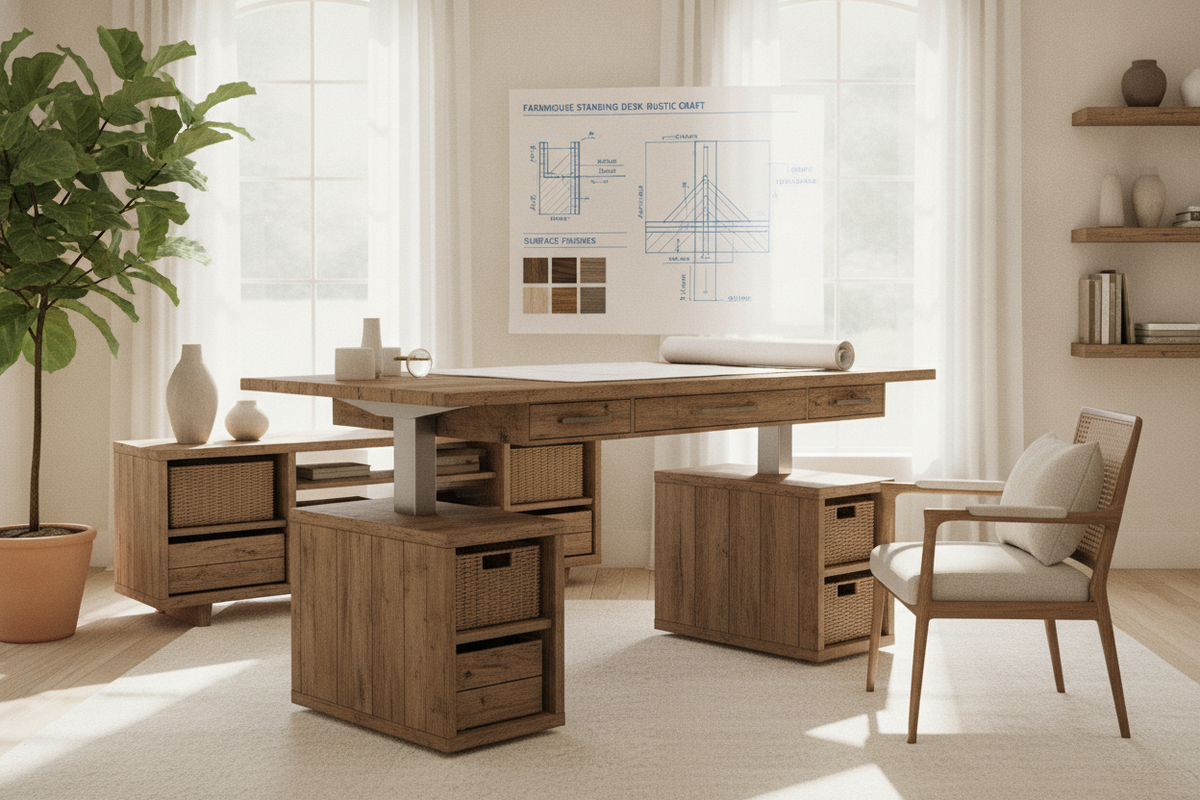
Bringing movement into a home office does not require surrendering the timeless warmth of traditional interior decor. For years, sit-stand workstations were dominated by utilitarian designs featuring stark industrial tops and cold metallic frames. Today, a farmhouse standing desk offers a sophisticated alternative, merging the architectural charm of weathered timber and cottage-inspired accents with modern height adjustability.
Creating a functional workspace centered around a rustic adjustable table requires a thoughtful balance between mechanical travel paths, textural materials, technology concealment, and peripheral storage coordination. This blueprint outlines how to design an ergonomic home office that remains visually rooted in classic farmhouse style.
The Evolution of the Farmhouse Standing Desk: Merging Rustic Warmth with Modern Ergonomics
The traditional farmhouse aesthetic celebrates authenticity, tactile warmth, and generous proportion. In contrast, dynamic sit-stand mechanisms focus on precision engineering and continuous motion. The modern farmhouse sit stand desk unites these philosophies by encasing dynamic lifting columns within organic textures and vintage-inspired hardware.
When designing a standing desk setup that balances aesthetics, the desktop itself serves as the visual anchor for the entire room. A farmhouse profile softens modern monitor arms, laptop docks, and task lamps, making a technology-heavy workstation feel natural within residential living rooms, dedicated studies, or open-concept dens.
Material Craft and Aesthetic Archetypes in Modern Farmhouse Workspaces
Choosing the right farmhouse adjustable desk begins with evaluating tabletop materials, edge profiles, and structural metal tones. Selecting harmonious finishes ensures that the desk complements existing flooring, baseboards, and architectural details.
Textured Wood Tones and Weathered Finishes
The hallmark of rustic design is the tactile quality of the working surface. Look for desktop surfaces that highlight natural grain patterns, subtle plank variations, or gentle wire-brushed textures. Light oak, weathered gray, natural pine, and warm walnut tones introduce visual depth without interfering with desktop utility.
A balanced top provides enough surface texture to celebrate organic wood variations while remaining smooth enough for comfortable writing and stable mouse tracking. Protective satin topcoats guard the surface against daily wear while keeping the natural grain visible.
Industrial Metal Hardware and Structural Bases
Underneath the wooden surface, the lifting columns and base frame provide essential structural stability. Farmhouse designs frequently integrate dark iron, matte black, or brushed bronze accents that evoke vintage forge work or sliding barn door hardware.
Subtle design elements, such as corner brackets, bevel-trimmed aprons, or chamfered frame details, help soften the geometric lines of motorized lifting legs. Pairing matte dark frames with rich wood surfaces delivers an authentic modern farmhouse silhouette.
Kinetic Travel Clearances and Spatial Planning for Dynamic Desks
Because an adjustable workstation moves vertically throughout the workday, spatial planning involves both horizontal floor space and vertical clearance zones. Unlike static executive desks that rest flush against a wall, an adjustable unit requires uninterrupted travel space.
When positioning an electric height adjustable standing desk, plan for the following spatial considerations:
- Wall and Trim Offset: Maintain a small perimeter gap between the desktop edge and the wall to prevent paint friction, baseboard collisions, or scuffs during elevation adjustments.
- Overhead Architecture: Verify clear vertical travel beneath low window sills, hanging pendant fixtures, wall sconces, and floating decorative shelves.
- Monitor and Peripheral Clearance: Account for the height of mounted screens at their highest standing position to avoid pinching display edges against sloped ceilings or picture frames.
Cable Routing and Technology Integration Without Breaking Rustic Charm
One of the primary challenges when styling a farmhouse adjustable standing desk is keeping black power cords, docking stations, and charging bricks from disrupting the rustic atmosphere. A clean wire management strategy preserves the clean lines of natural timber surfaces.
Utilize under-desk cable management trays mounted directly to the underside of the work surface. These trays gather power strips and excessive wire slack, moving with the desk so cables remain unseen whether you are sitting or standing. Use braided fabric cord sleeves or matte clips along the rear frame legs to guide the main power line neatly to the wall outlet.
Storage Architecture: Coordinating Rustic Desks with Perimeter Cabinets
Dynamic sit-stand desks prioritize open legroom to accommodate lifting columns and crossbars. Consequently, they rarely include the deep pedestal drawers found in traditional double-pedestal partner desks. Developing a dedicated perimeter storage strategy keeps work surfaces tidy.
Pairing your desk with complementary cabinetry prevents desktop clutter. Consider positioning modular adjustable shelf storage along adjacent walls to house reference materials, printer hardware, and decorative elements. When blending multiple cabinetry pieces within the room, consider curating balanced wooden furniture tones across your storage credenzas, floating shelves, and accent tables to achieve cohesive design throughout the space.
Selecting the Right Farmhouse Adjustable Desk for Your Room Dimensions
Selecting the right desk scale depends on your room layout and daily workflow needs. Compact layouts benefit from streamlined desks that preserve open floor space, while larger home offices can support wider surfaces accommodating multiple displays and reference documents.
For spacious rooms or multi-monitor workflows, a wide height adjustable standing desk provides ample surface area for dual displays, stationery organizers, and desktop lighting while maintaining the grand proportions typical of traditional farmhouse furniture. Ensure that open walkways remain clear around the perimeter so the desk integrates seamlessly into your daily routine.
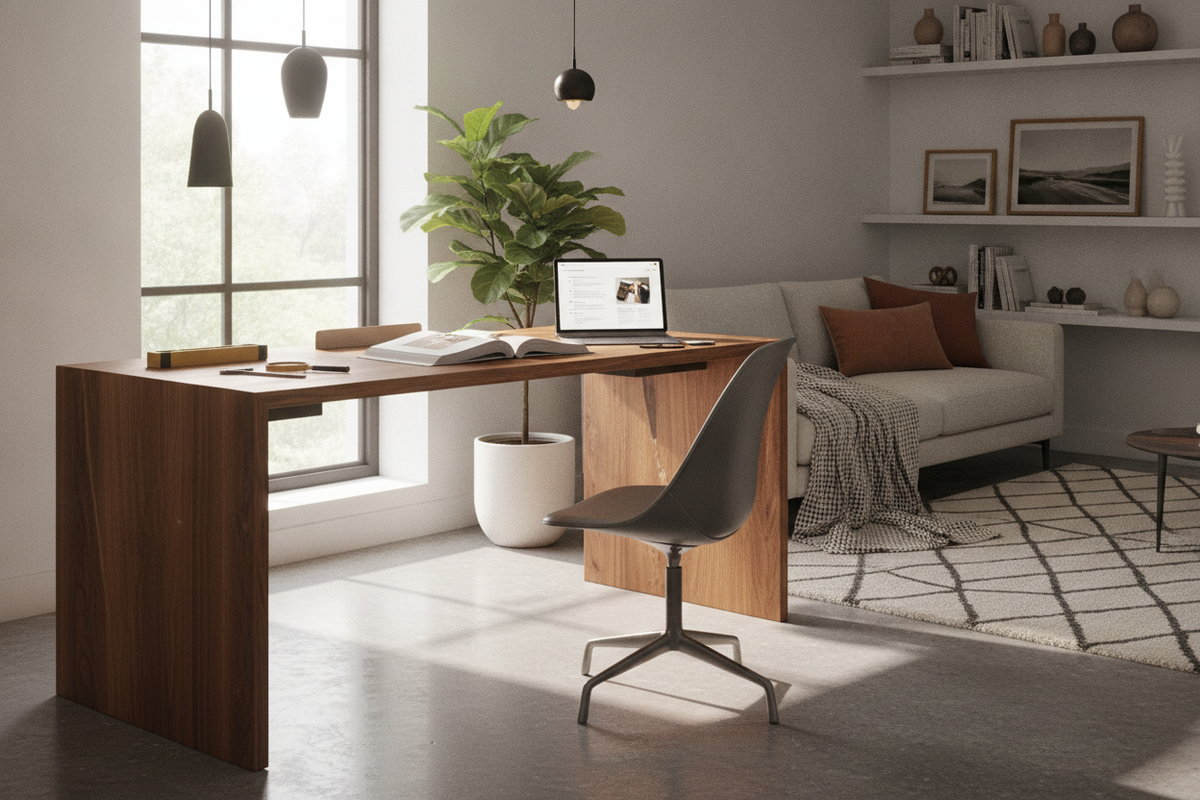
By combining textured wood grains, purposeful kinetic clearances, disciplined wire routing, and matching perimeter storage, a farmhouse standing desk becomes a centerpiece that delivers lasting ergonomic comfort alongside timeless home design.

Leave a comment
This site is protected by hCaptcha and the hCaptcha Privacy Policy and Terms of Service apply.