










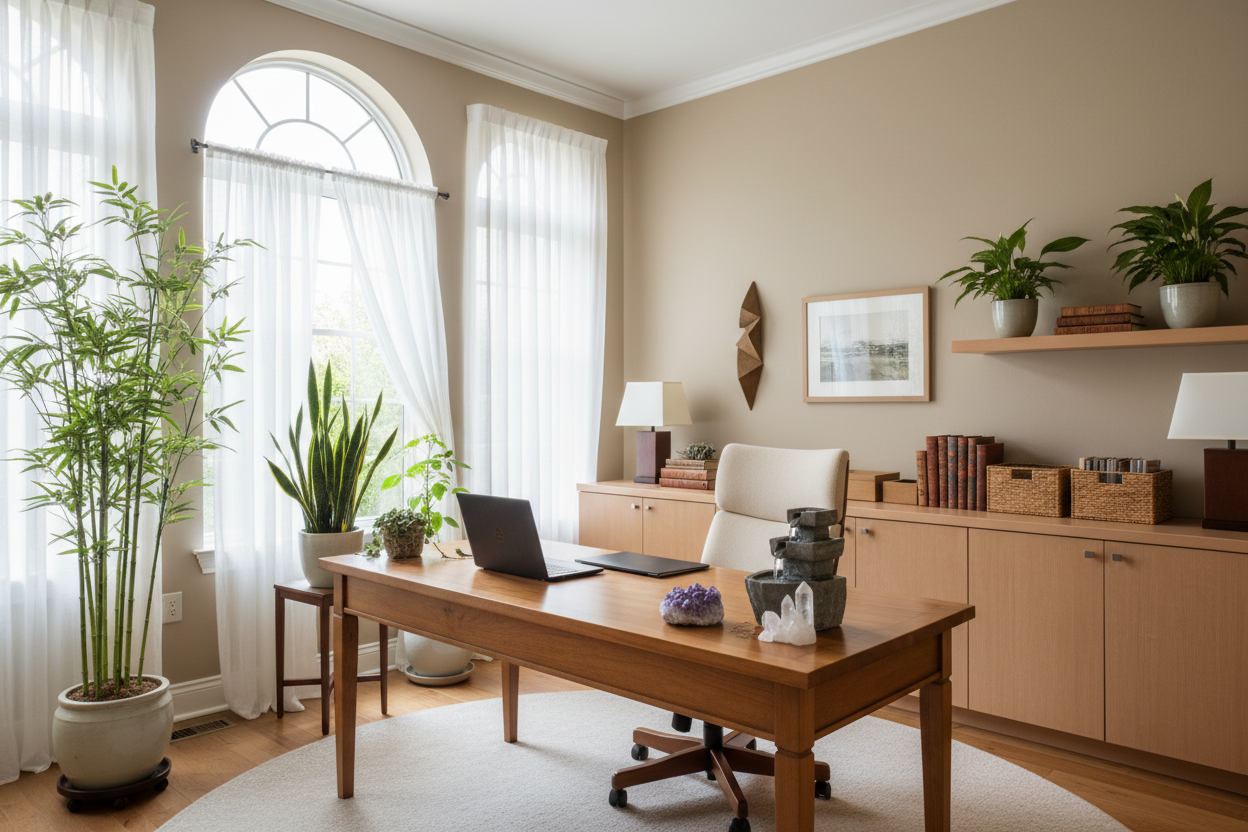
Your home office is more than just a place to work—it's the command center for your professional life, the space where creativity, productivity, and career success are either supported or hindered by the surrounding energy. In an era where remote work and home-based businesses have become increasingly common, creating a workspace with optimal feng shui has never been more important. The right arrangement can enhance focus, boost motivation, attract opportunities, and support sustained professional achievement.
This comprehensive guide will walk you through every aspect of feng shui home office design, from the critical commanding position for your desk to subtle energy enhancements that amplify success. Whether you're setting up a dedicated office room or carving out workspace in a multi-purpose area, these principles will help you create an environment where your best work naturally flows.
Understanding Home Office Energy
Before diving into specific arrangements, it's essential to understand what makes home office energy unique and why feng shui principles matter particularly in workspaces.
The Yang Energy of Productivity
Unlike bedrooms that require predominantly yin (passive, restful) energy, home offices thrive on yang (active, dynamic) energy. You need alertness, mental clarity, motivation, and sustained focus—all qualities associated with healthy yang energy. This doesn't mean creating a harsh, overstimulating environment, but rather a space that naturally awakens your mind and supports active engagement with your work.
The challenge in home offices is achieving the right balance. Too much yang energy creates stress, anxiety, and burnout. Insufficient yang energy leads to lethargy, procrastination, and difficulty concentrating. The ideal home office balances activating energy with enough calm to support deep thinking and creative problem-solving.
Separating Work from Home Life
One of the most challenging aspects of home offices from a feng shui perspective is the blurred boundary between professional and personal life. When your workspace occupies your living space, work energy can infiltrate areas meant for rest and relaxation, while home distractions can undermine professional focus.
Strong feng shui practice requires clear energetic boundaries between work and life, even when they occupy the same physical location. This separation is achieved through strategic placement, visual cues, closing rituals, and intentional space definition that allows you to mentally "leave work" even when your commute is just a few steps.
The Connection to Career Success
In feng shui philosophy, your home office directly influences your career trajectory, professional reputation, and financial prosperity. The energy quality in this space affects not just your daily productivity, but also how opportunities find you, how colleagues and clients perceive you (even in virtual meetings), and your overall professional growth.
A workspace with blocked chi might manifest as missed opportunities, creative blocks, difficulty advancing, or chronic professional frustration. Conversely, a well-arranged office with flowing chi supports recognition, advancement, innovation, and the sense that your career is progressing naturally in positive directions.
The Commanding Position: Your Desk Placement Foundation
Just as bed placement is fundamental in bedroom feng shui, desk placement forms the foundation of home office feng shui. The commanding position is the single most critical element for professional success and productive energy.
What is the Commanding Position for Desks?
The commanding position places your desk where you can see the office door while working, without sitting directly in line with the door. Ideally, position your desk diagonally from the entrance—far enough from the door to avoid direct energy rushing at you, yet positioned so you can see anyone entering without having to turn around significantly.
This placement creates a psychological and energetic advantage. You maintain visual awareness of your environment without needing to remain vigilant about threats approaching from behind. Your subconscious mind relaxes, knowing you're not vulnerable, allowing more mental resources to focus on actual work rather than background environmental monitoring.
Why This Position Transforms Productivity
When you sit with your back to the door, your subconscious mind maintains a low-level alert state, diverting mental energy from focused work. You might find yourself frequently checking over your shoulder, feeling anxious without clear cause, or experiencing difficulty concentrating. This isn't mere superstition—it's rooted in basic human psychology about safety and spatial awareness.
Similarly, sitting directly in line with the door places you in the path of rushing chi entering the space. This can feel like constant interruption or pressure, making it difficult to settle into deep work. The commanding position avoids both problems, creating optimal conditions for sustained focus and productive flow states.
Finding Your Commanding Position
Stand at your office door and observe the room. The commanding position is typically the corner diagonally opposite from the door, or along the wall furthest from the entrance. Your desk should be positioned so that when seated, you have a clear view of the door without needing to crane your neck or turn your body uncomfortably.
If your office has multiple doors—perhaps an entrance from the hallway and a closet door—prioritize positioning for visibility of the main entrance. The door people use to enter your workspace matters most. However, remain aware of all doors and avoid placing your desk where multiple doorways create conflicting energy flows.
Wall Support and Desk Backing
Beyond the commanding position relative to the door, your desk benefits from solid wall backing. Ideally, position your desk so a solid wall is behind you (not behind your computer screen—behind your actual seated position). This wall provides symbolic support for your career and creates a sense of stability and protection.
Avoid positioning your desk so you face a wall directly in front of you, as this creates a blocked, trapped feeling that limits your perspective—both literally and metaphorically. If space constraints force you to face a wall, hang inspiring artwork, a vision board, or images that create depth and possibility rather than barrier and limitation.
Windows and the Commanding Position
Windows present special considerations. While natural light is beneficial, sitting with your back directly to a large window creates instability similar to lacking wall support. The opening behind you—even though it brings light—creates energetic vulnerability.
If possible, position your desk so windows are to your side, bringing in natural light without creating exposure behind you. If you must sit with your back to a window, install substantial window treatments—curtains, blinds, or shades—that you can partially close to create symbolic solid backing while still allowing light entry.
When the Commanding Position Isn't Possible
Some office layouts make the true commanding position impossible due to built-ins, windows, or awkward room shapes. If you cannot position your desk to see the door, feng shui offers remedies. Place a mirror on your desk or wall where it allows you to see the door's reflection while working. This provides the visual awareness your mind needs, even if the positioning isn't ideal.
Alternatively, position a substantial piece of furniture—a bookshelf, filing cabinet, or decorative screen—between your desk and the door to create symbolic protection and buffer. While not as effective as the true commanding position, these adjustments help mitigate the challenges of less-than-ideal placement.
Desk Selection and Setup
Beyond position, your desk itself—its size, shape, material, and organization—significantly influences your work energy and professional success.
Desk Size and Proportion
Your desk should be substantial enough to support your work comfortably without overwhelming your space. A desk that's too small creates cramped, limited energy that can manifest as feeling constrained in your career. A desk that's too large and mostly empty can feel overwhelming or create the sense that you're not living up to your space's potential.
Choose a desk that accommodates your actual work needs—space for your computer, room to spread out documents, storage for essential supplies—with a bit of breathing room. The surface should feel abundant without being cluttered, creating the sense of possibility and capacity for growth.
Desk Shape Considerations
Rectangular desks are traditional and work well for most applications, providing stable, grounded energy. L-shaped desks offer expanded workspace and can work excellently in home offices, though be mindful of positioning—you should still maintain the commanding position from your primary seated position.
Avoid desks with sharp corners pointing directly at your body, as these create "poison arrows" or attacking energy. Desks with rounded corners or curved edges produce gentler energy that's less aggressive. If you have a desk with sharp corners, position yourself so the corners don't point at your torso, or soften them with plants or objects that interrupt the harsh angle.
Kidney-shaped or curved desks can create flowing, organic energy, though they may not provide as much usable workspace. Ensure any curved desk still allows you to maintain the commanding position and provides adequate surface area for your work.
Desk Material and Energy
Wood desks are considered ideal in feng shui, representing the wood element associated with growth, creativity, and upward movement—perfect qualities for career development. Solid wood desks carry vital, living energy and create grounding, substantial presence.
Metal desks bring metal element energy—focus, precision, and efficiency. They work well for analytical work, finance, or technology careers. However, all-metal desks can feel cold and impersonal, so soften them with wood or earth element accessories like wooden organizers or stone paperweights.
Glass desks are controversial in feng shui. While they create modern, clean aesthetics, glass lacks the solid, supportive energy of wood or metal. Energy can scatter on glass surfaces, and glass desks may contribute to feelings of instability or lack of grounding. If you have a glass desk, place a solid, non-transparent desk pad or mat on the surface where you work to create symbolic solidity.
Desk Height and Ergonomics
Proper desk height supports both physical health and energetic flow. Your desk should allow you to work comfortably with shoulders relaxed, elbows at approximately 90 degrees, and wrists straight. Poor ergonomics creates physical tension that manifests as energetic blockage.
If your desk height isn't adjustable, modify your chair height or add a keyboard tray to achieve proper positioning. Feng shui and physical health are deeply interconnected—chronic physical discomfort from poor ergonomics drains chi and undermines productivity regardless of how well-positioned your desk might be.
Desk Organization and Surface Clarity
Keep your desk surface organized and relatively clear. Clutter on your desk creates mental clutter and blocked chi that directly impacts your ability to think clearly and work efficiently. The left side of your desk (from your seated position) corresponds to incoming opportunities and new projects in feng shui, while the right side represents completed work and outgoing energy.
Keep the left side of your desk clear and open to welcome new opportunities. Use the right side for outboxes, completed files, or items leaving your workspace. The center of your desk—directly in front of you—should remain relatively clear as your primary work area, containing only what you're actively using.
Avoid allowing papers, supplies, and miscellaneous items to pile up on your desk. Use drawer organizers, desktop filing systems, and storage solutions that contain clutter visually while keeping necessary items accessible. A clear desk signals to both your conscious and subconscious mind that you're in control and ready for focused work.
Chair Selection and Positioning
Your office chair is where you spend the majority of your working hours, making it almost as important as the desk itself for productivity and career support.
The Importance of Solid Backing
Choose a chair with a substantial, solid back that provides strong support. The chair back represents career support and backing in your professional life. A chair with a weak, flimsy, or partial back symbolically suggests lack of support in your career, while a substantial chair back creates the sense of strong backing and protection.
High-backed chairs are particularly beneficial in feng shui terms, as they create a sense of authority and protection that's especially valuable if you cannot position your desk with wall backing. The chair itself becomes your supportive backing when spatial constraints prevent ideal desk placement.
Chair Features and Comfort
Invest in a quality ergonomic chair that supports healthy posture and prevents physical strain. Adjustable height, lumbar support, armrests at comfortable height, and smooth mobility all contribute to physical comfort that translates into energetic flow and sustained productivity.
Your chair should feel stable and grounded, not wobbly or precarious. Chairs that rock, lean, or feel unsteady create underlying anxiety and lack of grounding that undermines focused work. Test chairs thoroughly before purchasing to ensure they feel solid and confidence-inspiring.
Chair Color and Material
Chair colors and materials contribute to your office's overall energy. Leather or high-quality fabric in professional colors—deep blues, blacks, browns, or grays—create authority and gravitas appropriate for professional work. Bright, casual colors may feel too playful unless your work involves creativity or entertainment fields.
The chair should feel appropriate for the type of work you do. An executive chair might feel wrong for creative work, just as a casual chair might undermine authority if you lead teams or meet with clients virtually. Choose a chair whose energy matches your professional identity and aspirations.
Mobility and Grounding
Office chairs on wheels provide useful mobility, but ensure they're not so mobile that you feel ungrounded. Chairs that slide easily across smooth floors can create a sense of instability. If your chair feels too mobile, add a chair mat to provide some resistance, or adjust the wheels to create more friction and stability.
Computer and Technology Placement
In modern home offices, computer and technology placement significantly affects both feng shui energy and practical functionality.
Monitor Position Relative to You
Your computer monitor should be directly in front of you at eye level or slightly below, requiring no neck strain to view. The monitor should not be positioned where you must turn your head or body to see it, as this creates physical tension and energetic twisting that manifests as professional obstacles or misalignment.
If you use multiple monitors, arrange them so your primary screen is directly ahead and secondary screens are easily viewed with minimal movement. Avoid arrangements where monitors compete for your attention or create visual chaos that scatters your focus.
Monitor Position Relative to Windows
Avoid positioning monitors directly in front of windows where glare makes the screen difficult to see. Glare creates eye strain and frustration that drains chi and undermines productivity. Similarly, don't sit with windows directly behind your monitor if the backlighting creates contrast problems.
Ideally, windows should be perpendicular to your desk, providing natural light from the side without creating glare or contrast issues. If window positioning creates problems, use adjustable blinds or curtains to control light levels throughout the day.
Cable Management
Tangled cables, messy cords, and visible cable clutter create chaotic chi that affects mental clarity and creates visual stress. Use cable management solutions—cord clips, cable sleeves, under-desk cable trays, or wireless peripherals when possible—to minimize visible technology infrastructure.
Cables should run cleanly and be concealed as much as possible. The visual chaos of cable tangles directly translates into mental chaos and difficulty focusing. Taking time to organize cables pays dividends in improved mental clarity and reduced visual stress.
Separating Work and Personal Technology
If possible, use separate devices for work and personal use. This creates clear energetic boundaries between professional and personal life, preventing work from bleeding into every aspect of your home life. If you must use the same devices for both purposes, create clear separation through user accounts, folders, or scheduled access that maintains boundaries even on shared devices.
Printer and Peripheral Placement
Position printers, scanners, and other peripherals where they're accessible without cluttering your primary workspace. These devices generate electromagnetic energy and can be noisy, so placing them slightly away from your immediate desk area reduces their energetic impact while maintaining functionality.
Store printer paper, supplies, and equipment manuals in closed storage rather than leaving them visible on surfaces. This reduces visual clutter and keeps your workspace focused on active work rather than maintenance and support tasks.
Lighting for Productivity and Energy
Lighting profoundly affects both your ability to work effectively and the overall energy in your home office.
Maximizing Natural Light
Natural light is the most beneficial form of illumination for both feng shui and physical health. Sunlight carries vital chi, supports healthy circadian rhythms, and reduces eye strain compared to artificial lighting. Position your desk to take advantage of natural light without creating glare on your screen.
Keep windows clean and unobstructed during working hours. Natural light should flow freely into your workspace, bringing fresh chi and supporting alertness. If privacy is a concern, choose window treatments that allow light through while obscuring views—sheer curtains, top-down/bottom-up shades, or translucent films.
Task Lighting
Supplement natural light with task lighting that illuminates your work surface without creating shadows or glare. A desk lamp with adjustable positioning allows you to direct light precisely where needed. Choose LED bulbs in daylight or bright white spectrum (4000K-5000K) for workspaces, as this color temperature supports alertness and focus.
The desk lamp should be positioned on the opposite side from your dominant hand to prevent shadows when writing or working with documents. If you're right-handed, place the lamp on your left, and vice versa.
Ambient Lighting
Overhead ambient lighting should provide even, comfortable illumination throughout your office without being harsh or creating shadows. Recessed lights, track lighting, or semi-flush ceiling fixtures work well. Put ambient lighting on dimmers if possible, allowing you to adjust intensity based on time of day and tasks.
Avoid creating dramatic lighting contrasts in your office—very bright spots next to very dark areas strain eyes and create energetic imbalance. Aim for relatively even lighting distribution that makes the entire space comfortably illuminated.
Avoiding Harsh Fluorescent Lighting
Fluorescent lights are particularly problematic in home offices. They flicker (even when imperceptibly), create harsh, unflattering light, and emit electromagnetic frequencies that can cause headaches, eye strain, and fatigue. If your space has fluorescent fixtures, replace them with LED alternatives that offer better light quality and more comfortable working conditions.
Natural Light Cycles
Pay attention to natural light cycles throughout the day. Morning light entering east-facing windows brings fresh, activating energy perfect for starting work. Afternoon light from the west can become harsh and hot, requiring curtains or blinds to moderate. Working late into dark evenings requires thoughtful artificial lighting that doesn't create the harsh transition from bright screens to completely dark surroundings.
Color Psychology for Professional Success
Your home office color scheme influences both your mental state and the type of energy you attract professionally.
Wall Colors for Focus and Productivity
Professional offices benefit from colors that support focus without being dull. Soft blues promote clear thinking and communication, making them excellent for offices where you write, speak, or collaborate frequently. Green supports growth, balance, and sustained focus, working well for analytical work or fields requiring steady attention.
Soft, warm grays create sophisticated, professional energy appropriate for consulting, financial work, or client-facing roles. Beige and taupe tones are grounding and neutral, supporting focus without distraction—good choices if your work requires concentration and attention to detail.
Avoid pure white walls in offices, as they can feel stark, cold, and lacking in warmth. If you prefer light colors, choose warm whites with cream or beige undertones that create a softer, more inviting environment. Similarly, avoid very dark colors like charcoal or navy on all walls, as these can feel oppressive and energy-draining, though they can work as accent walls.
Accent Colors for Specific Goals
Use accent colors strategically to support specific professional goals:
Red accents introduce fire energy—passion, motivation, and action. Use red sparingly in home offices through small objects, a single piece of artwork, or a desk accessory. Too much red becomes agitating and can actually decrease focus, but touches of red provide motivational energy.
Purple stimulates creativity, intuition, and higher thinking. It works well for creative professionals, writers, artists, or anyone whose work involves innovation and imagination. Purple accents through artwork, throw pillows, or decorative objects can activate creative chi.
Gold and metallic accents represent wealth and metal element energy, supporting financial work, precision, and efficiency. Gold picture frames, bronze sculptures, or metallic desk accessories introduce prosperity energy appropriate for financial professions or when focusing on income growth.
Green in various shades represents wood element energy—growth, expansion, and new beginnings. Green is particularly beneficial if you're starting a new business, launching projects, or in growth phases of your career. Living plants are an excellent way to introduce green's growth energy.
Orange combines fire's energy with earth's stability, creating enthusiastic but grounded energy. It works well for social professions, teaching, coaching, or work involving people skills and communication.
Avoiding Overstimulation
While color can support professional goals, avoid overwhelming your office with intense colors. The dominant palette should remain relatively neutral and calming, with accent colors providing energetic support. An office painted entirely in bright red, orange, or purple would be exhausting to work in daily, even though these colors have beneficial properties in moderation.
Plants and Living Energy in Home Offices
Living plants are among the most powerful feng shui enhancements for home offices, bringing vitality, improved air quality, and natural beauty that softens technology's harsh energy.
Strategic Plant Placement for Career Growth
Position plants in your office's wealth corner—the far left corner from the entrance—to activate prosperity and career growth energy. This placement is particularly powerful for plants with upward growth patterns that symbolize rising career trajectories.
Place a healthy plant on your desk (preferably on the left side associated with incoming opportunities) to bring vital energy directly into your primary workspace. Choose small to medium plants that don't obstruct your view or take up excessive desk space—the plant should enhance rather than crowd your work area.
Position plants near windows to maximize their health while enhancing the beneficial chi entering through these portals. Plants near technology like computers and printers help balance the artificial, electromagnetic energy these devices emit, creating healthier energetic atmosphere.
Best Plants for Home Offices
Choose plants that thrive in your office's light conditions and that carry auspicious feng shui associations:
Lucky bamboo (Dracaena sanderiana) is a classic feng shui plant representing prosperity, flexibility, and upward growth. It thrives in low to medium light and requires minimal care—perfect for busy professionals. Arrange bamboo in odd numbers (3, 5, or 7 stalks) for best feng shui.
Money tree (Pachira aquatica) is associated with financial prosperity and good fortune. Its braided trunk and lush green leaves create vibrant energy, and it tolerates moderate indoor conditions well.
Jade plant (Crassula ovata) is known as the money plant in feng shui, with coin-shaped leaves symbolizing prosperity. It's extremely low-maintenance and grows slowly, making it perfect for desks or shelves.
Pothos (Epipremnum aureum) is versatile, nearly impossible to kill, and grows abundantly—symbolizing growth and expansion. Its cascading vines create flowing energy and work well in hanging planters or on high shelves.
Snake plant (Sansevieria) is excellent for air purification and tolerates low light and irregular watering. Its upward-growing leaves represent aspiration and advancement.
Peace lily (Spathiphyllum) purifies air, produces elegant white flowers, and brings peaceful, balanced energy to offices. It communicates when it needs water by drooping slightly, making care straightforward.
Avoid These in Home Offices
Avoid cacti and succulents with sharp spines in home offices, as they create hostile, prickly energy. If you love succulents, choose varieties without prominent spines. Also avoid bonsai in your personal office—the intentionally stunted growth can symbolically represent limited career growth.
Never keep dead, dying, or artificial plants in your office. Dead plants broadcast failure and decay energy, exactly opposite of what you want in your career space. Struggling plants send distress signals that affect the entire room's energy. If a plant isn't thriving despite your care, remove and replace it with something suited to your conditions.
High-quality artificial plants are controversial but acceptable if you cannot keep real plants alive. Choose the most realistic silk or high-quality plastic plants available, and maintain them meticulously—dust them regularly and ensure they look fresh. Poor-quality artificial plants that obviously look fake contribute negative rather than positive energy.
Plant Care as Career Care
The attention you give your office plants mirrors the attention you give your career. Well-maintained, thriving plants suggest a well-tended, thriving career. Neglected, dying plants suggest professional neglect. Make plant care part of your regular office routine, seeing it not as a chore but as a ritual of tending your professional growth.
Organizing for Success: Storage and Clutter Management
How you organize and store office materials directly impacts chi flow, mental clarity, and professional effectiveness.
The Bagua Map Applied to Your Office
The bagua map divides spaces into nine zones corresponding to different life areas. In your home office, these areas are:
Career zone (front center, by the door): Keep this area clear and flowing to ensure career opportunities can reach you. Avoid storage or obstacles that block this zone.
Knowledge zone (front left): Ideal location for bookshelves, reference materials, or educational resources that support professional development.
Wealth zone (back left): The most important zone for office prosperity. Place healthy plants, symbols of abundance, or career achievement awards here. Keep this area clean, well-lit, and activated.
Fame/Reputation zone (back center): Display credentials, awards, diplomas, or professional recognition here. This area represents how others perceive your work and professional standing.
Partnership zone (back right): If you collaborate or work with partners, activate this area. Display images of successful partnerships or keep project materials for collaborative work here.
Creativity/Children zone (center right): Good location for creative supplies, project brainstorming materials, or anything related to innovation and new ideas.
Helpful People zone (front right): Place business cards, networking materials, or items related to mentors and professional connections here.
Health zone (center): Keep the office center relatively open for chi circulation. A beautiful rug or meaningful object can ground this area without blocking flow.
File and Document Organization
Use closed storage for files and documents rather than open shelving where papers are visible. Filing cabinets, closed bookcases, or boxes with lids contain visual clutter while keeping materials accessible. Each file and document should have a designated location—when everything has a home, your office remains organized with minimal effort.
Implement a "touch it once" policy for papers entering your office. Decide immediately whether to act on, file, or discard items rather than creating piles for later sorting. These "later" piles become stagnant chi repositories that drain energy and create overwhelm.
Regularly purge old files, outdated materials, and completed projects you no longer need. Keeping every document you've ever created loads your space with dead weight that pulls down current energy. Archive truly necessary historical documents in clearly labeled storage outside your active workspace.
Supply Storage Solutions
Store office supplies in designated drawers or containers rather than leaving them scattered on surfaces. Desk organizers, drawer dividers, and labeled containers maintain order and make supplies easily accessible without creating visual chaos.
Keep only frequently used supplies in your immediate workspace. Store backup supplies, bulk items, and rarely used materials in a closet or storage area outside your office if possible. This prevents your workspace from doubling as a supply room.
Digital Organization Matters Too
Digital clutter affects chi just as physical clutter does. Organize computer files in logical folder structures, delete unnecessary files regularly, and maintain clear digital naming conventions. A cluttered computer desktop with hundreds of files creates mental stress even though the clutter isn't physically visible.
Keep your email inbox organized with folders and regular processing. Thousands of unread emails create subconscious stress and energetic heaviness. Unsubscribe from newsletters you don't read, delete unnecessary messages, and process inbox items regularly to prevent digital overwhelm.
Symbols, Art, and Inspiration
The imagery and objects in your home office communicate your professional aspirations and influence the energy supporting your career.
Choosing Meaningful Professional Art
Display artwork that inspires you and represents the success you're building. Images of mountains symbolize career stability and overcoming challenges. Upward-moving imagery—flying birds, rising paths, vertical lines—represents career advancement and growth.
Avoid artwork depicting struggles, violence, loneliness, or failure. Even if intellectually interesting, such imagery broadcasts negative energy that can unconsciously undermine your professional confidence and opportunities. Choose art that makes you feel capable, inspired, and successful.
Vision Boards and Goal Visualization
Create a vision board displaying images, words, and symbols representing your career goals and professional aspirations. Place this where you can see it daily from your desk—it serves as both inspiration and energetic magnet drawing desired outcomes toward you.
Update your vision board as goals are achieved and new aspirations develop. A static vision board from years ago loses energetic potency and may actually hold you in old patterns rather than supporting current growth.
Diplomas and Credentials
Display professional credentials, diplomas, certifications, and awards in your office's fame/reputation area (back center) or on the wall facing your desk where you can see them. These validate your expertise and serve as reminders of your capabilities when facing challenges.
Ensure all displayed credentials are in attractive frames in good condition. Crooked, dusty, or damaged frames undermine the positive energy credentials should contribute. If you have credentials you're no longer proud of or that don't represent your current professional identity, remove them—only display achievements that still resonate with who you are professionally.
Inspirational Quotes and Affirmations
Carefully selected quotes or affirmations can provide motivational energy, but choose wisely. Generic corporate motivational posters often feel hollow and may actually drain energy through their inauthenticity. Choose words that genuinely resonate with your personal values and professional philosophy.
Display quotes in attractive typography and framing that matches your office aesthetic. Printed pages taped to walls feel temporary and unprofessional, undermining the message they're meant to convey.
Success Symbols
Include objects that symbolize success, prosperity, and achievement in your professional field. This might be a trophy or award you've earned, an object associated with a career milestone, or a gift from a mentor or satisfied client. These objects carry energetic memory of success that continues radiating positive energy.
Avoid displaying anything associated with professional failures, difficult projects, or negative work experiences. Even if these taught valuable lessons, their negative energetic imprint doesn't belong in your active workspace.
Personal Meaning
While maintaining professionalism, include a few personally meaningful items that remind you why your work matters. This might be a family photo (positioned away from direct desk view if you work in video calls), an object representing your purpose, or something that connects work to deeper values.
These reminders prevent work from feeling like meaningless obligation and connect your daily tasks to larger life meaning and purpose.
Addressing Common Home Office Challenges
Real-world home offices often face challenges requiring creative feng shui solutions.
Offices in Bedrooms
Working in your bedroom is among the most challenging feng shui scenarios because work's yang energy directly conflicts with sleep's yin energy. If you must have your office in your bedroom, create the strongest possible separation between work and sleep zones.
Position your desk so you cannot see it from bed—ideally on a different wall or behind a screen or room divider. Face your desk away from the bed if possible. Never work in bed or on the bed, as this thoroughly confuses the space's energy and undermines both work focus and sleep quality.
Establish a clear closing ritual each workday—cover your desk with a cloth, turn your chair away, or close a folding screen. This ritual signals the workday's end and helps contain work energy from infiltrating your sleep space.
If possible, use a room divider, curtain, or bookshelf to create physical separation between office and bedroom zones, making them feel like two distinct spaces despite sharing a room.
Shared Spaces and Multi-Purpose Rooms
Offices in living rooms, dining rooms, or other multi-purpose spaces need clear definition even without walls. Use rugs to define your office zone, position furniture to create boundaries, and choose a desk that can be visually "closed" when not in use—perhaps one with a fold-down surface or doors that conceal the workspace.
Portable storage solutions allow you to clear work materials away when using the space for other purposes. This prevents work energy from dominating rooms meant for other activities and maintains appropriate energy for each room's primary function.
Small Spaces and Corner Offices
In very small workspaces, prioritize the commanding position even if it means sacrificing other ideals. A desk in the commanding position within a small space is better than a larger desk poorly positioned.
Use vertical space efficiently with wall-mounted shelves, pegboards, or floating storage that keeps floor space clear. Choose a smaller desk with excellent organization rather than a large desk that overwhelms the space. Consider a wall-mounted fold-down desk that can be closed when not in use if space is extremely limited.
Offices Under Stairs or in Unusual Spaces
Offices under staircases or in alcoves face the feng shui challenge of oppressive overhead energy. The slanted ceiling or low overhead space creates pressing energy that can manifest as feeling limited, restricted, or unable to advance in your career.
If you must work in such a space, paint the ceiling lighter than walls to visually "lift" it. Add upward-directing elements like vertical lines in artwork, tall plants, or a mirror on the wall to create the perception of expanded space. Ensure excellent lighting to counter the potentially cave-like feeling.
Basements and Windowless Offices
Basement offices or rooms without windows present challenges because they lack natural light and fresh air—both critical for vital chi. If your office has no windows, bring in as much artificial light as possible, using full-spectrum bulbs that simulate natural light.
Add extra living plants (choosing varieties suited to low light) to improve air quality and bring vital energy. Use light, bright colors on walls to counter the potential heaviness of underground or windowless spaces. Consider a light therapy lamp, particularly if you work during daylight hours in a space with no natural light access.
Open the door regularly to allow air circulation between your office and the rest of your home, preventing chi stagnation. Use a small fan to keep air moving if ventilation is poor.
Shared Home Offices
If two people share a home office, each needs their own designated workspace that feels equally valued. Avoid arrangements where one person has the commanding position and proper desk while the other makes do with a makeshift setup—this energetic imbalance will manifest in professional life.
Each person should have their own desk (or clearly defined desk zones if sharing one large surface), their own storage, and equivalent access to windows, outlets, and office resources. Position desks so neither person sits with their back directly to the other, as this creates either competitive or undermining energy depending on the relationship.
Technology Boundaries and Digital Feng Shui
Managing technology's energetic impact is crucial in modern home offices dominated by digital work.
Electromagnetic Field Management
Electronic devices emit electromagnetic fields (EMFs) that can interfere with both physical health and energetic clarity. While you cannot eliminate EMFs from an office full of computers and devices, you can minimize exposure:
Position your body at least 20 inches from your computer monitor. Sit at arm's length from laptops when possible, or use external keyboards and monitors to increase distance. Never work with a laptop directly on your lap for extended periods.
Turn off equipment when not in use rather than leaving everything on standby. This reduces EMF exposure and gives your office energetic rest overnight and during off-hours. Unplug chargers when not actively charging devices—even without devices connected, they emit low-level EMFs.
Avoid placing wireless routers directly in your office if possible. If your router must be in your office, position it as far from your primary workspace as practical while maintaining signal strength.
Screen Time Boundaries
Constant screen exposure—particularly to blue light—disrupts circadian rhythms and creates energetic depletion. Use blue light filtering glasses or screen filters, especially for afternoon and evening work. Many devices now include "night mode" settings that reduce blue light emission—activate these during late work sessions.
Take regular breaks from screens using the 20-20-20 rule: every 20 minutes, look at something 20 feet away for 20 seconds. This gives your eyes and energetic system brief recovery periods that prevent the depleted feeling from hours of uninterrupted screen focus.
Creating Tech-Free Zones
If possible, include a small tech-free zone within your office—perhaps a comfortable chair near a window with a side table for handwritten notes or reading physical books. This zone provides a retreat from technology's electromagnetic intensity and allows different types of thinking and processing.
Use this tech-free zone for activities like planning, brainstorming, creative thinking, or simply taking mental breaks. The contrast between tech-immersed work and tech-free thinking often sparks insights and prevents the mental flattening that can come from constant digital interface.
Rituals for Opening and Closing Your Workday
Creating clear rituals that mark the beginning and end of your workday helps establish energetic boundaries that protect both your productivity and your personal life.
Morning Opening Rituals
Develop a consistent ritual that signals the workday's beginning and shifts your energy into professional mode. This might include:
- Opening window blinds and turning on office lights
- Lighting a candle or incense to mark the transition
- Spending five minutes organizing your desk and reviewing priorities
- Playing specific music that signals work time
- Making tea or coffee to enjoy at your desk
- Taking three deep breaths while visualizing a productive day
The specific actions matter less than consistency—your mind learns to recognize these cues as the transition into work mode, making it easier to focus once you begin.
Evening Closing Rituals
Equally important are closing rituals that signal the workday's end and allow you to mentally leave work even though you're still at home:
- Shutting down your computer completely rather than leaving it in sleep mode
- Clearing your desk surface and organizing tomorrow's priorities
- Closing blinds or curtains
- Turning off office lights
- Extinguishing candles if you lit them
- Physically leaving the office space and closing the door if you have one
- Changing clothes to mark the transition from work to personal time
- Covering your desk with a cloth if you work in a bedroom or shared space
These rituals create psychological and energetic separation between work and personal time, preventing the bleeding together that leads to burnout and makes it difficult to be fully present in either domain.
Managing the "Just One More Thing" Urge
One of the biggest challenges in home offices is the temptation to do "just one more thing" because your office is always accessible. Your closing ritual should be non-negotiable—when you complete it, you're done for the day regardless of inbox status or incomplete tasks.
This firm boundary protects both your personal time and, paradoxically, improves your work quality. Knowing you have clear start and end times creates focus during working hours and prevents the diffuse, always-on-call mentality that undermines both professional and personal wellbeing.
Seasonal and Periodic Maintenance
Like all feng shui applications, home office energy requires regular maintenance and periodic refreshing to remain vital and supportive.
Quarterly Deep Clearing
Every three months, perform thorough physical and energetic clearing of your office. Move all furniture to vacuum and clean behind and underneath. Wipe down all surfaces, clean windows, and dust neglected corners. Wash or replace window treatments, and clean or rotate artwork.
During this deep cleaning, also perform energetic clearing—open windows for complete air exchange, burn sage or palo santo, or use sound clearing with bells or singing bowls. These practices refresh stagnant chi and create renewed energy for the coming quarter.
Regular Decluttering
Weekly or biweekly, perform quick decluttering of your office. File papers, clear desk surfaces, organize supplies, and remove anything that doesn't serve current projects. This prevents gradual accumulation of clutter that can sneak up unnoticed until it becomes overwhelming.
Monthly, review your filing system and digital organization, archiving completed projects and deleting obsolete files. This regular maintenance prevents buildups that require massive, time-consuming overhauls.
Responding to Career Changes
When your professional life shifts—new position, new clients, new business direction, or changing goals—update your office to reflect these changes. Remove symbols of old roles or completed projects, and introduce elements representing your current direction.
If you've achieved goals displayed on your vision board, celebrate by updating it with new aspirations. If displayed credentials become outdated or irrelevant to your current work, replace them with current achievements or remove them entirely.
Seasonal Energy Adjustments
Adapt your office to seasonal energy shifts. In winter, add warmer lighting, richer colors, and cozier elements that counter dark, cold months. Spring calls for thorough clearing, opening windows frequently, and adding fresh flowers or new plants.
Summer might mean lighter colors, increased air circulation, and reducing clutter to maintain cool, open feeling. Fall invites transitional preparations—organizing for year-end, evaluating annual progress, and setting intentions for the coming year.
Conclusion
Creating a feng shui home office is ultimately about designing a space that supports your professional success, enhances your productivity, and honors the important work you do. While specific placement rules and principles provide guidance, the true measure of success is whether your office helps you perform at your best and feel energized rather than depleted by your work environment.
Start with the fundamental principles—position your desk in the commanding position with solid backing, maintain clear pathways for chi circulation, manage technology mindfully, and keep your space organized and clutter-free. These core practices establish the foundation for good home office feng shui regardless of your space's specific constraints.
Then refine through attention to details—colors that support your professional goals, plants that bring vitality, lighting that maintains focus, and meaningful symbols that remind you of your capabilities and aspirations. Each conscious choice compounds, transforming your office from merely functional space into an environment that actively supports your professional growth.
Pay attention to how adjustments affect your work experience. Does your focus improve? Do opportunities arrive more readily? Do you feel more confident and capable? These experiential indicators matter more than perfect adherence to any set of rules. Your office should serve your actual needs and genuinely support your specific work, not conform to generic ideals that don't fit your situation.
Remember that feng shui is practical wisdom about creating harmonious environments where human potential flourishes. Your home office doesn't need to be perfect—it needs to genuinely support your productivity, protect your energy boundaries, and contribute to sustainable professional success that doesn't come at the cost of your wellbeing.
The workspace you create becomes the foundation for your professional achievements, the container for your creative output, and the daily environment that either supports or undermines your career trajectory. Investing intention and attention in optimizing this crucial space through feng shui principles pays dividends in enhanced productivity, increased opportunities, and the satisfying sense that your work environment truly supports rather than impedes your professional potential.
Trust your intuition, make adjustments gradually, observe what works in your specific situation, and remember that the best home office is one that helps you do meaningful work while maintaining healthy boundaries between your professional and personal life. Your career success and daily wellbeing both depend on creating workspace that truly serves you.


Leave a comment
This site is protected by hCaptcha and the hCaptcha Privacy Policy and Terms of Service apply.