










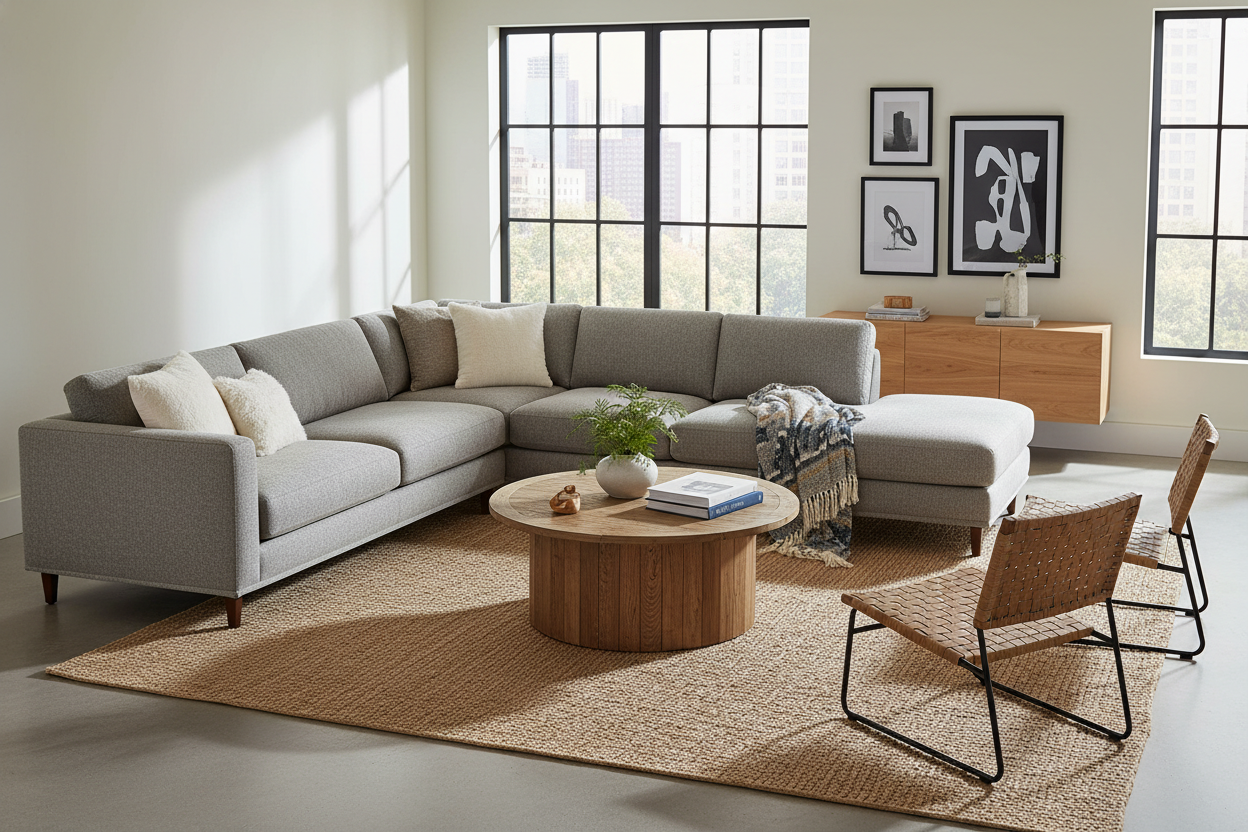
There is a pervasive myth in the interior design world that quality upholstery requires a five-figure budget. While custom Italian leather is undeniable luxury, the mid-range market has evolved significantly. The challenge isn't finding a sofa; it's sifting through the fast-furniture noise to find a piece that offers structural integrity and sophisticated aesthetics. If you are hunting for the best sectional under 2000, you are in a sweet spot where value meets durability—if you know exactly what to look for.
Key Features to Look For
Before committing to a purchase, use this checklist to ensure your investment will hold up to daily life while maintaining its silhouette.
- Frame Construction: Look for kiln-dried hardwood or furniture-grade plywood rather than particleboard to prevent warping.
- Suspension System: Sinuous springs (S-springs) are the industry standard at this price point; ensure they are heavy-gauge steel.
- Cushion Fill: High-density foam (1.8 lbs or higher) wrapped in Dacron or down-blend offers the best balance of support and longevity.
- Upholstery Performance: Prioritize high rub-count fabrics (over 15,000 double rubs) or performance weaves for stain resistance.
- Modularity: Reversible chaises or modular components allow you to adapt the layout if you move homes.
Assessing Build Quality: The "Bones" of the Sofa
As a designer, I always tell clients to look past the pretty throw pillows and inspect the skeleton. At the sub-$2,000 price point, you want to avoid staples and glue as the primary joinery methods. Look for corner-blocked frames. This reinforcement technique adds immense stability to the piece.
Furthermore, pay attention to the suspension. While eight-way hand-tied springs are rare in this bracket, a well-executed sinuous spring system is excellent. If you sit down and feel like you are rolling toward the center, the suspension is inadequate. The best sectional sofa under 2000 should provide firm, consistent resistance across the entire seating deck.
Fabric Selection & Tactility
The fabric is the primary interface between you and the furniture; it dictates both the comfort and the visual weight of the room. In this budget range, avoid cheap bonded leathers—they will peel within two years. Instead, lean into textured weaves or performance velvets.
Performance vs. Natural Fibers
Polyester blends are your best friend here. They mimic the hand-feel of linen or cotton but offer superior resistance to pilling and fading. A tight basketweave adds visual interest and hides minor stains better than a flat weave, making it a pragmatic choice for high-traffic living rooms.
Space Planning & Visual Balance
A common error I see is ignoring scale. A sectional is a dominant architectural feature. If your ceilings are low (8 feet or under), choose a low-profile back to preserve the vertical sightlines. Conversely, in a lofted space, you need a higher back or deeper depth to ground the room.
Consider the "flow" around the piece. You need at least 30 inches of clearance for walkways. If the sectional feels too heavy for the space, opt for a design with exposed legs. Seeing the floor underneath the sofa creates a sense of airiness, making the room feel larger.
Lessons from My Own Projects
I want to share a candid reality from a project I managed last year. We sourced a highly-rated sectional that looked stunning in photos—a sleek, mid-century modern aesthetic for about $1,800. Visually, it was a ten out of ten. However, three months in, the client called me regarding "cushion migration."
The back cushions were loose (unattached) and filled with a poly-fill that lacked a high-density core. Every time someone sat down, the back cushions looked sloppy and required aggressive fluffing. We ended up having to add extra Velcro strips to the back frame just to keep them upright. It taught me a valuable lesson I now pass to you: at this price point, semi-attached back cushions or tight-back styles often maintain their shape much better than loose cushions, which can look disheveled quickly without constant maintenance.
Conclusion
Finding the right sectional doesn't require compromising on style or comfort. By focusing on the structural essentials—frame, foam density, and fabric durability—you can secure a piece that anchors your living space beautifully. Trust your tactile instincts, measure twice, and choose a silhouette that complements your lifestyle.
Frequently Asked Questions
How long should a sectional under $2,000 last?
With daily use, a well-constructed sectional in this price range should maintain its structural integrity and aesthetic appeal for 5 to 7 years. Rotating cushions regularly can extend this lifespan significantly.
What is the best configuration for a small apartment?
For tighter spaces, a reversible chaise sectional is ideal. It allows you to switch the "L" shape from left to right, adapting to different room layouts or future moves without needing to buy new furniture.
Is a down-filled sectional worth it at this price point?
True down-fill is rare under $2,000 and often results in a very soft, unstructured look that requires constant fluffing. A high-density foam core wrapped in a down-alternative fiber usually offers better shape retention and support for the money.


Leave a comment
This site is protected by hCaptcha and the hCaptcha Privacy Policy and Terms of Service apply.