










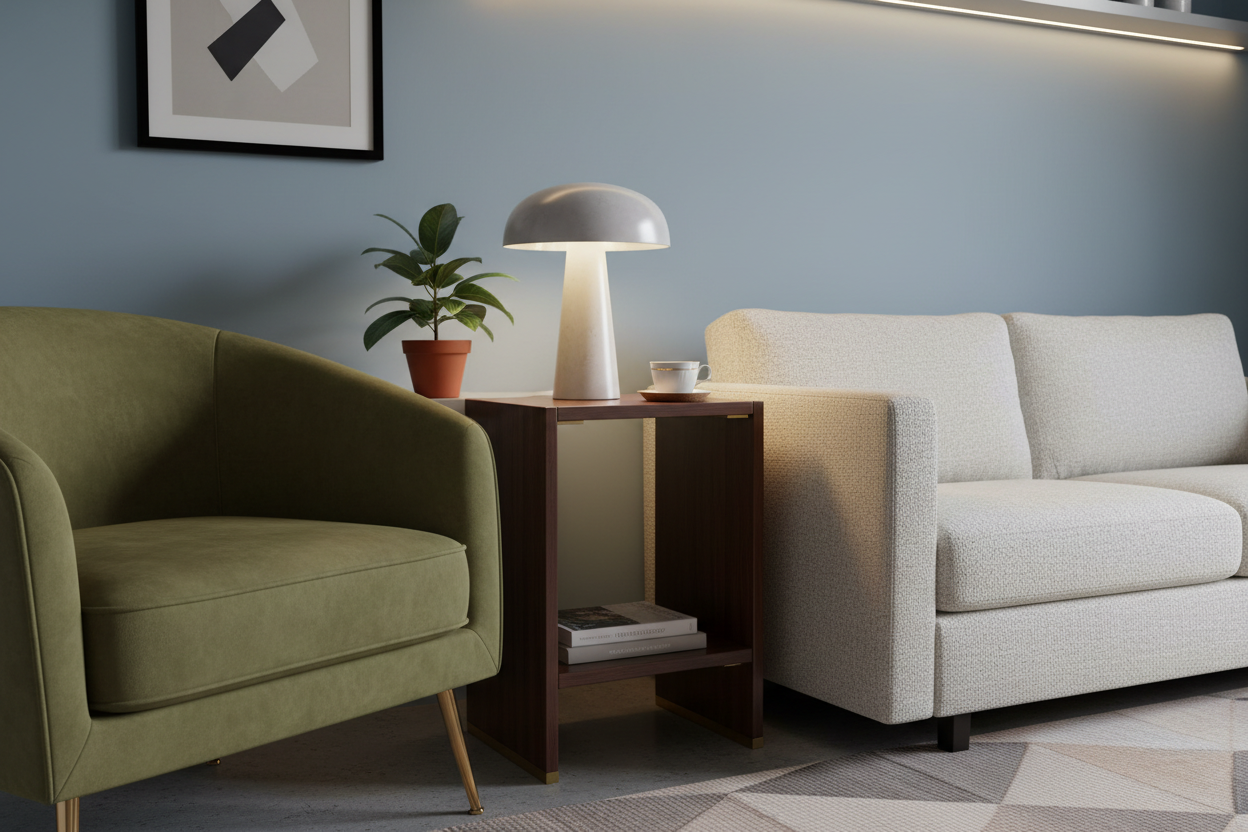
Living in a smaller apartment taught me something important: you don't need massive furniture to create a functional, beautiful space. When I moved into my 650-square-foot studio, I realized my beloved chunky end tables had to go. What I needed was something that could slip into tight corners, nestle beside my sofa without blocking the walkway, and still hold my evening tea and reading lamp. That's when I discovered the world of narrow end tables—and honestly, I should have found them years ago.
A thin end table typically measures between 10 to 15 inches in depth, making it perfect for spaces where every inch matters. Unlike standard end tables that can eat up 18-24 inches of floor space, these slimmer alternatives give you the surface area you need without overwhelming your room. I found one that's just 12 inches deep, and it fits perfectly in that awkward gap between my sofa and the wall that used to collect dust and lost remote controls.
Why Narrow Tables Work Better Than You Think
The beauty of an accent table narrow in design is that it forces manufacturers to get creative. Instead of relying on bulk, these pieces often feature thoughtful details like curved legs, open shelving, or interesting materials that draw the eye upward rather than outward. My current skinny accent table has a marble top and gold metal frame that makes it look far more expensive than it was, and it takes up less space than my cat's scratching post.
For living rooms, a narrow side table living room placement can actually improve traffic flow. I used to constantly bump my hip on my old table when walking from the kitchen to the couch. Now, there's a clear path, and guests don't have to do that awkward sideways shuffle to get to the bathroom. The room feels bigger, even though I didn't change anything else.
Storage Solutions in Slim Packages
One concern people have about going narrow is losing storage space. A skinny end table with storage addresses this beautifully. Look for designs with lower shelves, small drawers, or even magazine racks built into the side. Mine has a single drawer that's surprisingly roomy—it holds my reading glasses, a notepad, hand cream, and about six pens I keep forgetting are in there.
Short narrow end tables work particularly well in bedrooms where you need a bedside table but don't want to sacrifice floor space for yoga or getting dressed. A narrow end table for bedroom use should be tall enough to reach from your mattress height (usually 24-28 inches) but slim enough that you're not kicking it when you get out of bed in the middle of the night. Trust me on this one—I have the bruised toes to prove why measurements matter.
Specific Spaces, Specific Solutions
The sofa end table narrow category deserves special attention because this is where most people struggle with space. Your sofa is likely the largest piece of furniture in your living room, and adding bulky end tables on both sides can make the whole setup feel like a furniture showroom rather than a cozy living space. A thin end table living room arrangement keeps things proportional.
I've also become a fan of the narrow side chair table concept. These are perfect for reading nooks, beside accent chairs, or in those corner spots where you want a place to set a drink but don't have room for a full table. They're usually even slimmer than regular narrow tables—sometimes as little as 8-10 inches deep.
Narrow chair side tables and narrow chair table designs often feature C-shaped or slide-under bases that tuck partially beneath your chair or sofa. This design is genius for recliners or reading chairs where you want the table surface close to you without it jutting out into the room. My mom has one beside her favorite chair, and it holds her coffee, book, and phone without blocking the footrest.
Buying in Pairs: The Narrow End Table Set
If you want a cohesive look, consider a narrow end table set. Matching tables on either side of a sofa create visual balance without doubling your space problems. I went this route and found a set of two tables, each 11 inches wide, for less than I would have paid for one designer piece. They're identical in style but I've decorated them differently—one holds a lamp and books, the other has a small plant and coaster collection.
Sets also solve the problem of trying to find two tables that match in height and style but are sold separately. Plus, many retailers offer better pricing when you buy multiples. Just make sure you actually need two tables before committing. In my previous apartment, I bought a set and ended up using one in the bedroom and one in the living room, which worked out perfectly.
Material and Style Considerations
Narrow tables come in every style imaginable. Glass tops can make a thin end table feel even less imposing because you can see through them. Wood adds warmth and works in traditional or farmhouse settings. Metal and acrylic designs lean modern and industrial. I've seen beautiful narrow tables made from reclaimed wood, concrete, and even woven materials.
The key is choosing something that complements your existing furniture without trying too hard to match. My sofa is a deep gray fabric, and I chose end tables in a warm walnut finish with black metal legs. They coordinate without being matchy-matchy, and the contrast actually makes both pieces look better.
Measuring Your Space Properly
Before buying any narrow table, measure three things: the depth you have available, the height you need, and the width that will look proportional. I use painter's tape to mark out the table's footprint on the floor. It sounds excessive, but it's saved me from several return trips to the furniture store.
For sofa-side placement, your table should be within two inches of your sofa's arm height. Too low and you're reaching down constantly; too high and it looks awkward. The width can vary, but 12-18 inches usually looks balanced next to a standard sofa.
Real-World Function
After living with narrow tables for two years, I can tell you they're not just for small spaces. Even if you have a large room, these slimmer profiles can make your space feel more open and less cluttered. They're easier to move when you're vacuuming, they don't dominate the room visually, and they force you to be more intentional about what you keep on display.
The one trade-off is surface area. You can't spread out a full dinner on a 10-inch-deep table. But honestly? That's what coffee tables and dining tables are for. An end table should hold the essentials—a lamp, your current book, a drink, maybe a small decorative object. Anything more and you're just creating clutter anyway.
FAQ
What's the ideal depth for a narrow end table?
Between 10-15 inches deep is the sweet spot for most narrow end tables. This provides enough surface area for a lamp and a few essentials while maintaining a slim profile. If you're extremely tight on space, you can find options as narrow as 8 inches, though these work better as accent pieces than functional tables.
Can narrow end tables hold heavy lamps?
Yes, as long as the table is well-constructed and stable. Check the weight capacity before purchasing, and look for tables with a solid base or lower shelf for added stability. I've had a 12-pound lamp on my 11-inch-deep table for over a year without any wobbling or tipping issues.
How do I style a narrow table without making it look cluttered?
Stick to the rule of three: a lamp, one decorative object, and one functional item like a coaster or small tray. Vertical elements like tall vases or stacked books work better than spreading items across the limited surface. Keep the lower shelf (if there is one) minimal—maybe a basket or a few books laid flat.


Leave a comment
This site is protected by hCaptcha and the hCaptcha Privacy Policy and Terms of Service apply.