










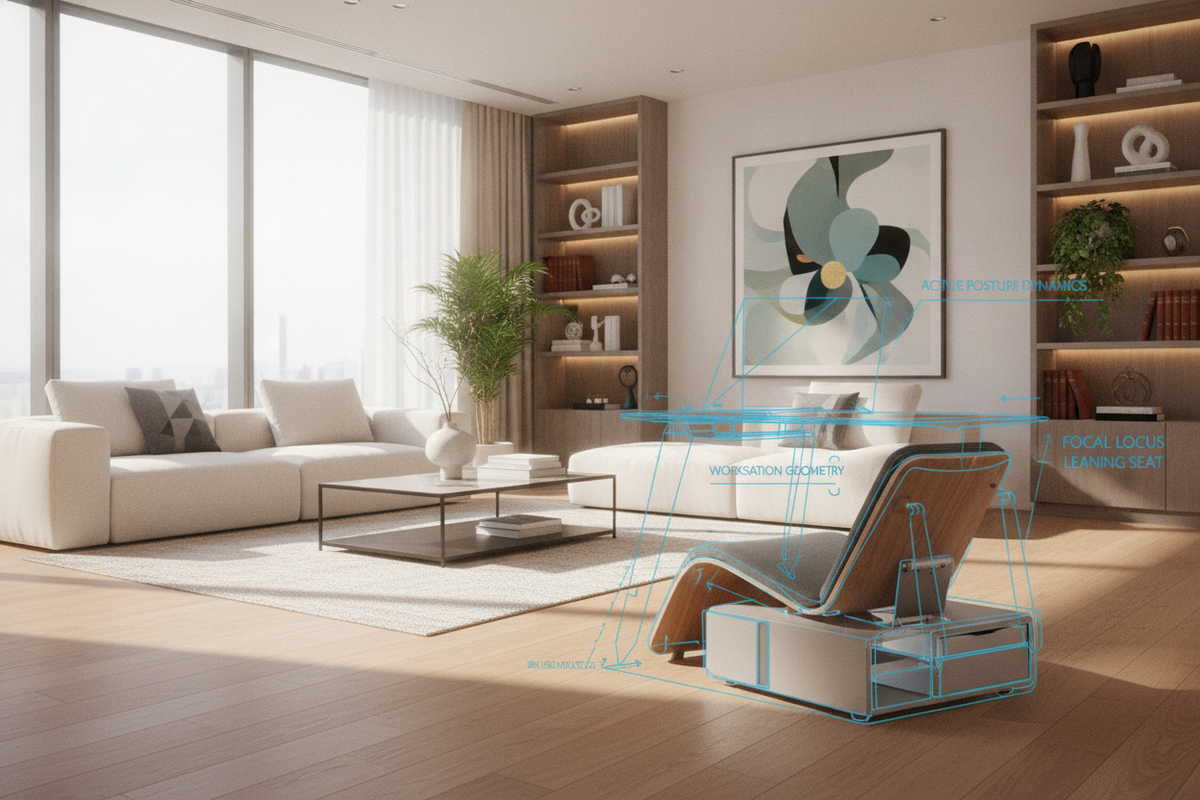
Dynamic work environments continue to challenge traditional assumptions about office seating. The introduction of leaning workstations, popularized by concepts such as the focal locus seat and the broader focal upright category, invites a fundamental rethink of how people engage with their work surface. Rather than locking the user into a rigid seated box or demanding continuous upright standing, a leaning stool or perch encourages an intermediate posture designed for active engagement throughout the day.
Understanding how a focal locus seat or comparable focal standing chair functions within an everyday workspace requires evaluating workstation mechanics, clearance envelopes, and surrounding room storage. By treating leaning seats as specialized postural instruments rather than passive lounge furniture, planners and remote professionals can assemble balanced, responsive workstations that harmonize active movement with supportive office cabinetry.
Understanding the Leaning Posture Concept: Beyond Seating Myths
Conventional desk chairs support total body weight by resting the user onto a horizontal seat pan, often encouraging a right-angle bend at the hips and knees. In contrast, upright leaning devices like the locus leaning seat or compact perches like the focal upright mogo support a hybrid half-standing, half-sitting posture. The seat pan tilts forward and elevates, distributing a portion of the body's weight through the legs down to an angled foot base or directly onto the floor.
A common misconception is that a leaning seat serves as a universal, all-day replacement for traditional seating or acts as a medical remedy for posture concerns. In practice, leaning furniture serves as an active postural platform. It engages leg muscles and core stability while opening the angle between the torso and thighs. Because this posture requires active muscular participation, leaning is best viewed as part of a varied daily rotation rather than a static holding position.
Workstation Geometry: Pairing Leaning Seats with Height-Adjustable Desks
Integrating a leaning seat into an office setup fundamentally alters spatial elevation requirements. Because the user perches in a semi-upright alignment, the desktop must sit significantly higher than standard seated height, resting just below standard standing height. Attempting to use a locus seat or focal stool at a fixed standard desk compromises wrist alignment and forces unnatural spinal bending.
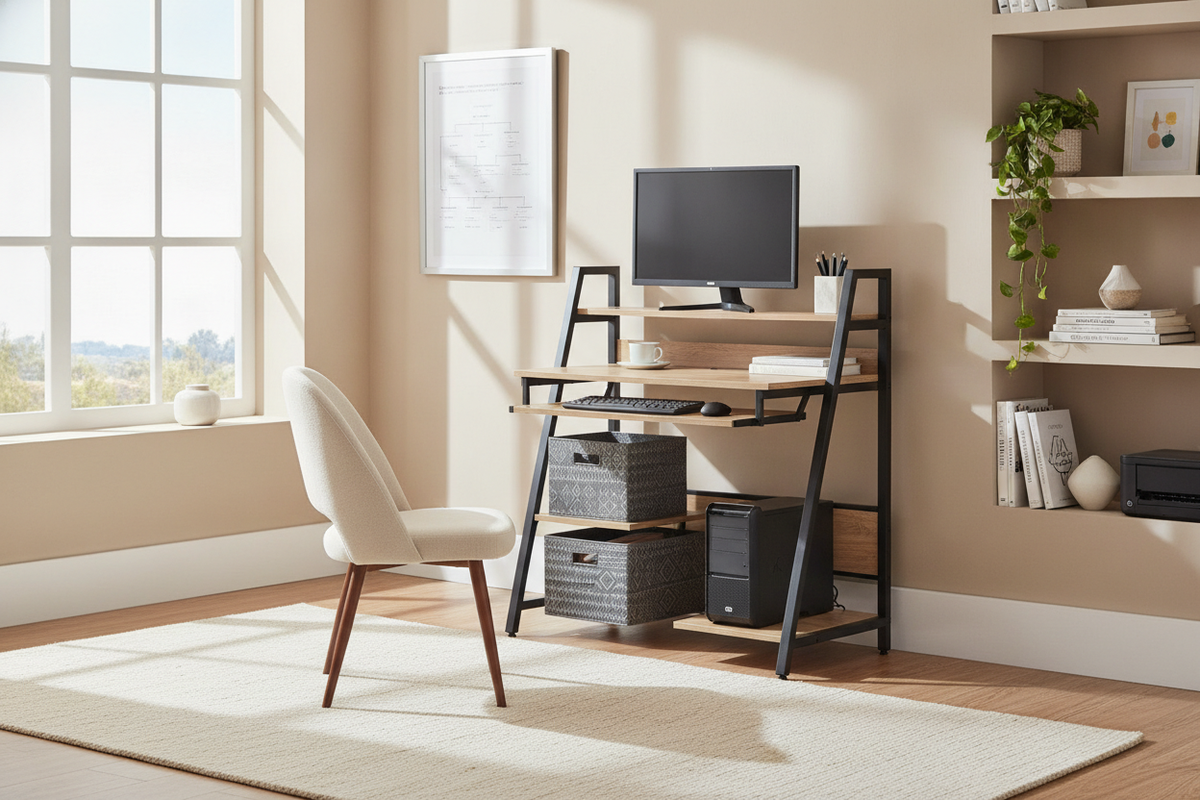
For this reason, pairing a leaning seat with a versatile standing desk product is essential. A dynamic desk allows the user to transition smoothly between seated, leaning, and fully standing heights. The tabletop height should allow the forearms to rest parallel to the desktop surface with relaxed shoulders, while the monitor remains centered at eye level.
Base Footprints and Kinetic Clearances
Unlike standard task chairs mounted on five-star caster bases, a specialized upright workstation seat often incorporates a substantial weighted base plate or an angled mono-pod post. This base requires deliberate floor zone planning:
- Base Plate Anchorage: The floor platform must remain stable on hard flooring or low-pile commercial carpet to prevent sliding during weight shifts.
- Reach Envelope: Because leaning positions the pelvis slightly farther back from the desk edge than standard seating, keyboard trays and monitor arms should offer generous depth adjustment.
- Clearance Radius: Clear floor space behind the workstation must accommodate the extended leg line and tilt arc of the post without striking nearby walls or storage units.
Comparing Active Leaning Seats and Traditional Task Seating
Choosing between an active upright seat and a conventional office chair depends on daily workflow patterns, task duration, and personal work preferences. Detailed comparisons found in our desk chair review guide highlight the differences between static support mechanisms and dynamic balance platforms.
| Workstation Element | Active Leaning Seat (e.g., Focal Locus) | Traditional Task Chair |
|---|---|---|
| Hip Angle | Open, semi-upright posture | Closed right-angle to slight recline |
| Muscular Engagement | Active core and lower-limb balance | Passive backrest and lumbar cradling |
| Optimal Duration | Targeted focus sprints and posture variation | Extended focus sessions and routine desk tasks |
| Mobility Profile | Stationary pivot or lightweight perch mobility | Omnidirectional rolling on casters |
For high-intensity computational tasks, document analysis, or prolonged telephone meetings, users often alternate between an active focal locus chair and a fully supported desk seat to prevent localized physical fatigue.
Spatial Layout and Auxiliary Storage Architecture
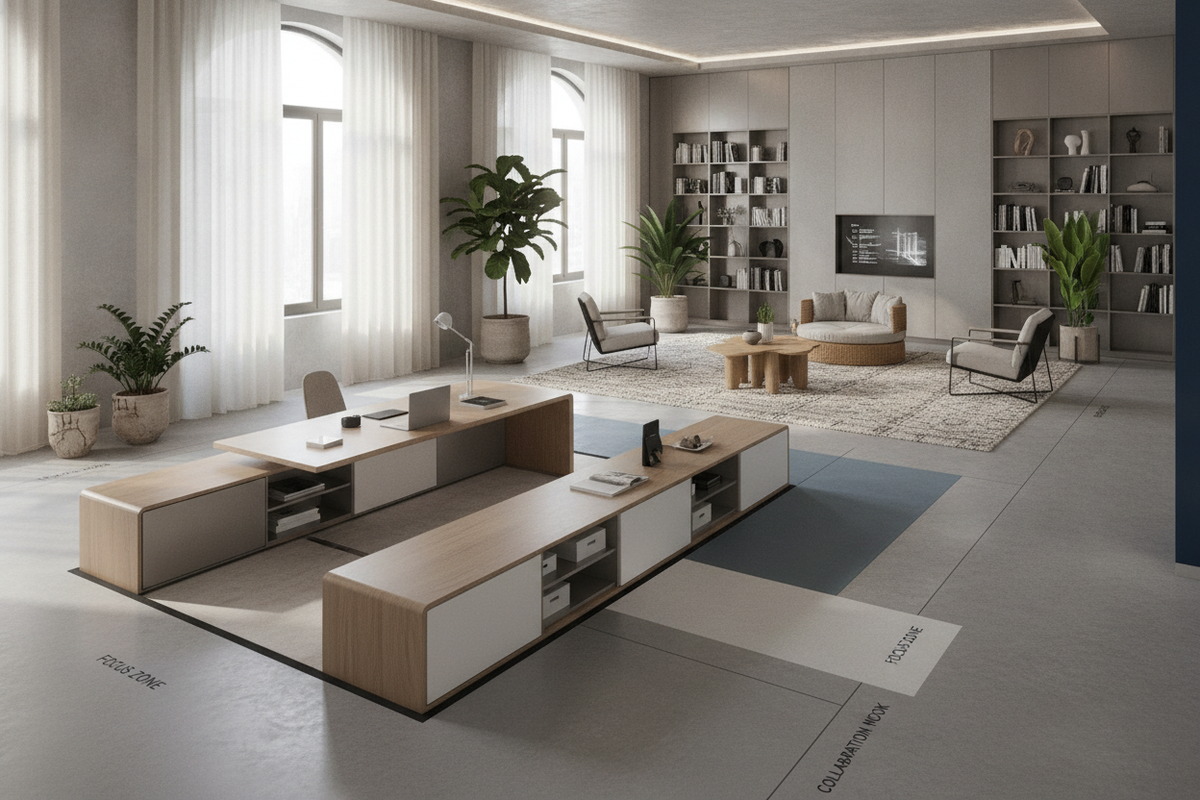
An active leaning setup requires an unobstructed kinetic zone around the desk. Swapping a standard rolling chair for an upright perch changes where files, technology peripherals, and personal items can be stored. Because the base of an upright leaning frame often projects rearward, surrounding furniture must be carefully arranged to prevent clutter.
To maintain a clean working perimeter, pair the workstation with a coordinated standing desk product alongside low-profile lateral credenzas or mobile under-desk pedestals. Placing mobile storage outside the central leaning lane preserves floor clearance for free leg movement and rapid height adjustments. Wall-mounted shelving, overhead hutches, and perimeter bookcases help draw storage upward, keeping the immediate movement envelope open and safe.
Material Durability, Care, and Daily Workday Transitioning
Maintaining active seating requires attention to mechanical joints, contact surfaces, and anti-slip textures. Because leaning furniture concentrates body weight along pivot points and non-slip floor interfaces, proper material selection and routine maintenance ensure consistent operation:
- Seat Cushioning: Semi-rigid molded foam or polyurethane seat pans provide essential grip and structure without bottoming out under concentrated contact pressure.
- Pivot and Adjustment Hardware: Regularly inspect locking levers, gas-assisted cylinders, and angle-adjustment pins to maintain smooth articulation across leaning angles.
- Floor Interface Pads: High-traction rubber treads prevent base slippage on smooth wood or laminate floors, protecting flooring finishes from localized friction.
When curating a functional office interior, selecting furniture that balances dynamic task zones with dedicated utility storage creates a productive home workspace. Exploring our broader chair desk guide provides additional practical context for building a cohesive, aesthetically organized workspace that supports continuous comfort and thoughtful spatial design.

Leave a comment
This site is protected by hCaptcha and the hCaptcha Privacy Policy and Terms of Service apply.