










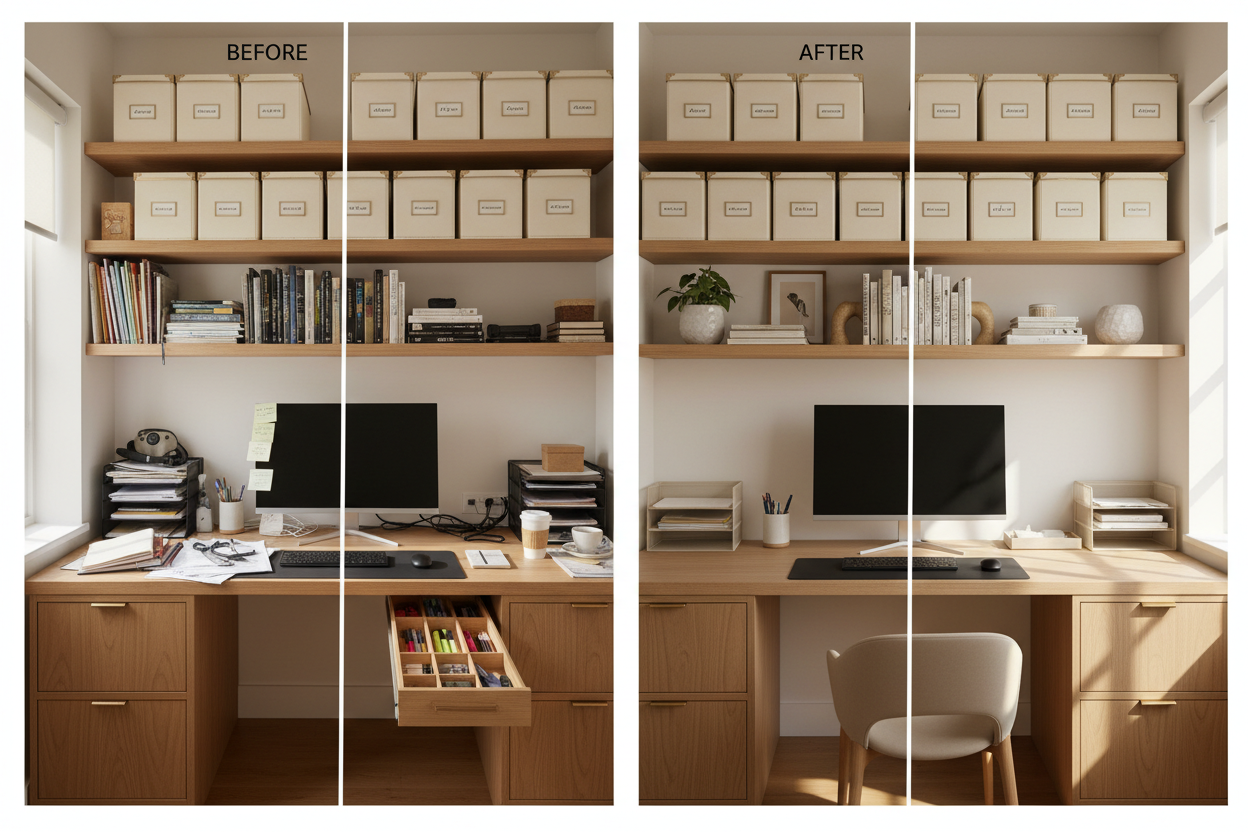
A chaotic desk often leads to a chaotic mind. When paperwork piles up and tech accessories scramble for surface area, productivity takes a hit. The immediate solution isn't just buying a plastic bin; it requires a strategic approach to furniture that balances concealment with accessibility. The most effective storage strategies combine vertical integration, dedicated concealed zones for unsightly items, and open display areas to keep the environment inspiring. By selecting the right cabinetry, you turn a utilitarian necessity into the focal point of your design.
Assessing Your Layout and Storage Needs
Before drilling holes or ordering furniture, take a hard look at what you actually need to store versus what you need to display. Many people make the mistake of buying storage based on aesthetics alone, only to find the shelves are too shallow for binders or the drawers don't fit their printer.
I learned this lesson the hard way a few years ago. I fell in love with a sleek, low-profile credenza that looked fantastic in the showroom. Once I got it into my workspace, I realized it lacked a cable pass-through, and the shelves were fixed, meaning my scanner didn't fit. I spent the next two years with a scanner sitting on the floor next to a beautiful, useless cabinet. Lesson learned: measure your largest equipment first, then hunt for office room cabinet ideas that accommodate those specific dimensions.
Maximizing Vertical Space with Wall Units
Floor space is premium real estate, especially in home offices or smaller corporate cubicles. If you have a small footprint, you have to build up. Utilizing the area above your desk or along an empty perimeter wall draws the eye upward and makes the room feel larger rather than cramped.
Office wall cabinet ideas range from floating modular systems to full floor-to-ceiling built-ins. Floating cabinets are excellent for maintaining an airy feel because seeing the floor underneath the furniture tricks the brain into perceiving more space. For a heavy-duty solution, floor-to-ceiling units offer the most volume. If you go this route, consider a two-tone approach: darker colors for the base cabinets to ground the space, and lighter colors or glass fronts for the upper cabinets to prevent the room from feeling closed in.
The "Hybrid" Wall Approach
You don't always need custom carpentry. A popular method involves flanking a desk with two tall bookcases and bridging them with a shelf or cabinet overhead. This creates a cozy, built-in look using standard retail furniture. It defines the work zone specifically and keeps all reference materials within arm's reach.
Styling: The Balance Between Function and Form
Once the heavy lifting of installation is done, the challenge shifts to aesthetics. A cabinet filled exclusively with manila folders looks sterile and depressing. Conversely, a shelf filled only with decorative vases is a waste of office utility. You need a middle ground.
Office cabinet decor is about breathing life into the workspace without creating visual noise. A good rule of thumb is the 60/40 split. Use 60% of the visible space for books, binders, and boxes, and 40% for decorative objects like plants, framed art, or sculptural bookends. This negative space allows the eye to rest.
Consider the top of low cabinets or credenzas as a secondary workspace or a gallery area. A structured tray can hold daily essentials like staplers and notepads, turning clutter into a vignette. Adding greenery here is crucial; a trailing Pothos plant on top of a file cabinet softens the hard edges of office furniture and improves air quality.
Creative Cabinet Solutions for Unique Spaces
Standard filing cabinets are rarely the answer for a modern creative professional. If your work involves samples, large format paper, or tech gear, you need to think outside the standard office supply catalog.
Repurposed Kitchen Cabinetry
One of the most versatile office room cabinet ideas involves using kitchen upper cabinets installed at desk height. They are generally deeper than standard office wall units, providing ample space for bulky equipment. With a custom countertop spanning across two base units, you create a massive workspace with substantial storage underneath.
The Credenza Revival
Mid-century modern credenzas are having a massive resurgence in office design. Originally intended for dining rooms, these long, low cabinets are perfect for offices. They hide a multitude of sins behind sliding doors and offer a vast surface area for printers and coffee stations. Because they are designed as furniture pieces first, they make a home office feel less like a cubicle and more like a library or study.
Organizing the Interior
The exterior aesthetic matters for your peace of mind, but the interior organization dictates your workflow. A beautiful cabinet is useless if you have to dig through a pile of cables to find a charger.
- Zone your drawers: Dedicate top drawers to high-frequency items like pens and hard drives. Bottom drawers should be for archival storage.
- Internal bins are mandatory: Never let loose items roll around in a drawer. Acrylic or felt organizers keep small items contained.
- Label the hidden spots: It might seem redundant to label a shelf inside a closed cabinet, but it prevents the "junk drawer" effect. If a shelf is labeled "Printer Paper," you are less likely to toss a random stapler there.
Lighting Your Storage
Lighting is often overlooked when planning office wall cabinet ideas. Dark corners in shelving units become black holes where items disappear. Installing simple battery-operated puck lights or LED strips under floating shelves serves two purposes: it makes finding items easier, and it adds a layer of ambient light that reduces eye strain during late-night work sessions. Accent lighting turns a simple storage unit into an architectural feature.
Ultimately, the best office storage is the kind you don't have to think about. It should be intuitive, accessible, and attractive enough that you enjoy being in the room. Whether you choose sleek modern wall units or a vintage wooden sideboard, the goal is to clear the desk so you can clear your head.
Frequently Asked Questions
What is the ideal depth for office wall cabinets?
For upper wall cabinets, a depth of 12 to 14 inches is standard. This provides enough space for binders and books without protruding so far that they make the desk area feel claustrophobic or cast shadows on your work surface.
How can I make cheap metal file cabinets look better?
You can upgrade metal cabinets by applying contact paper with a wood or matte finish to the drawer fronts. Alternatively, removing the hardware and spray painting the unit a bold, matte color can turn a generic metal box into a modern statement piece.
Should I choose open shelving or closed cabinets for a small office?
Closed cabinets are generally better for small spaces because they hide clutter, making the room feel calmer and larger. If you prefer open shelving, ensure you use matching baskets or bins to maintain a uniform look that doesn't overwhelm the eye.


Leave a comment
This site is protected by hCaptcha and the hCaptcha Privacy Policy and Terms of Service apply.