










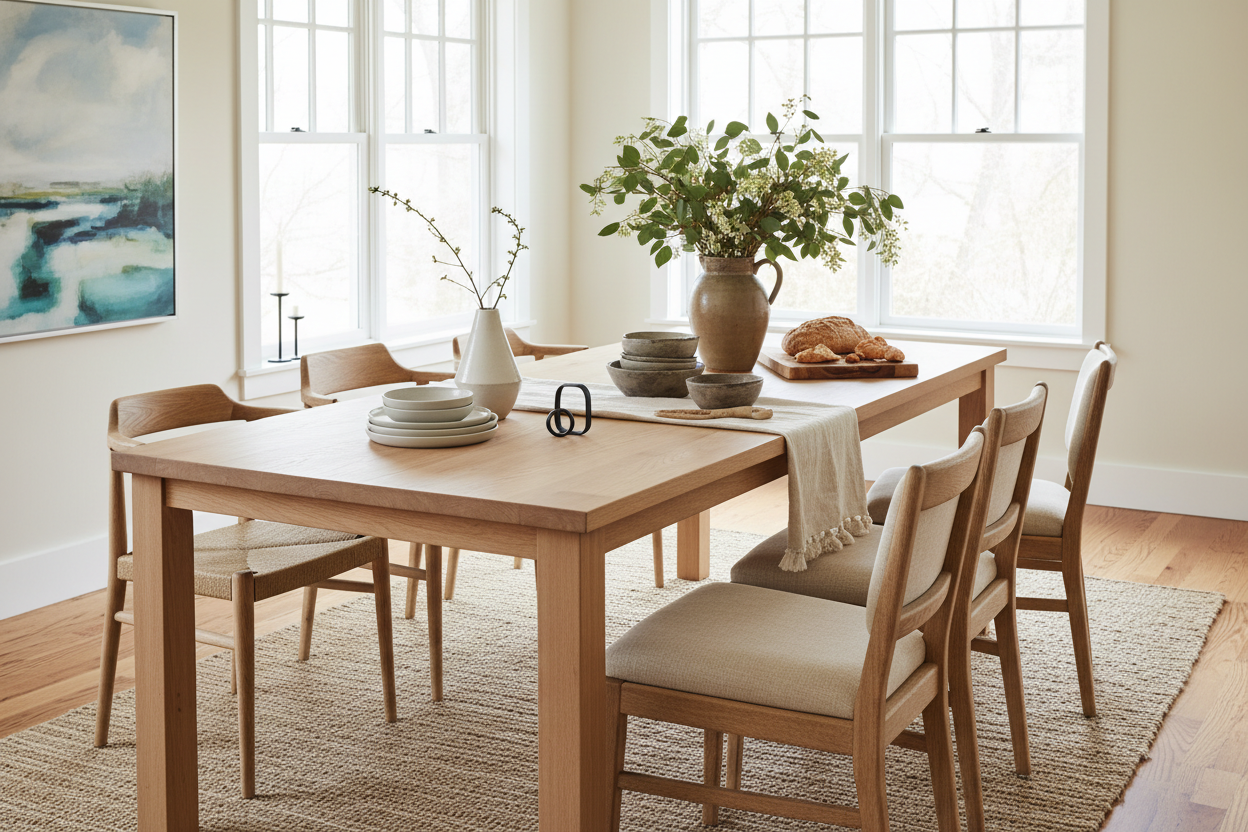
The dining table is the anchor of the home. It is where homework gets done, coffee is spilled, and meals are shared. When you are looking to refresh your dining space or furnish a new home, the visual weight of that furniture piece matters just as much as its dimensions. Choosing a lighter timber isn't just an aesthetic preference; it is a strategic design move that alters how a room feels. A table with blonde or bleached tones reflects natural light rather than absorbing it, instantly making a cramped dining nook feel airy and spacious.
If you are wondering if this style can withstand the chaos of daily life or fit your specific decor, the short answer is yes. Light wood is incredibly versatile, bridging the gap between stark minimalism and cozy rustic charm. It hides dust better than dark mahogany and offers a neutral canvas that allows you to change your rug or chair colors whenever you want a new look.
The Psychology of Space and Brightness
Interior designers often use lighter furniture to manipulate the perception of size in a room. A heavy, dark walnut table commands attention and can dominate a small room, making the walls feel like they are closing in. In contrast, a dining table light color palette—think white oak, ash, or birch—blends more seamlessly with the surroundings. This lack of visual friction allows the eye to travel across the room uninterrupted.
This optical illusion is particularly effective in open-plan living areas where the dining zone needs to flow into the kitchen or living room without creating a jarring border. By keeping the horizontal surfaces pale, you keep the visual "noise" to a minimum.
Choosing the Right Timber Species
Not all light woods are created equal. The durability, grain pattern, and undertone vary significantly between species. Understanding these differences is key to picking a piece that lasts.
White Oak
This is the gold standard for durable, light furniture. It is hard, heavy, and resistant to dents. White oak usually has a neutral to slightly cool undertone, making it perfect for contemporary homes that want to avoid the "orange" look of older varnished woods.
Ash
Ash is similar in strength to oak but often features a more pronounced, straight grain. It takes stains very well, meaning you can often find ash tables that have been whitewashed to look even paler than their natural state.
Maple
If you prefer a smooth texture without deep grain grooves, a pale wood dining table crafted from maple is an excellent contender. It has a creamy, consistent color that ages gracefully, though it can yellow slightly over time if exposed to direct, unfiltered sunlight for years.
Pine
Pine is softer and more affordable. It offers a rustic, knotty look that works well in farmhouse settings. However, be aware that pine dents easily. If you have children who like to bang cutlery on the table, pine will develop a "lived-in" patina very quickly.
Living with Light Wood: A Personal Perspective
A few years ago, I swapped a dark, lacquered espresso-colored table for a raw-finish solid oak one. I was terrified of the maintenance. I assumed that without a dark color to hide sins, every pasta sauce splatter would spell disaster. The reality was surprising. The lighter wood actually hid the daily accumulation of dust and fingerprints far better than the dark glossy finish ever did. On the dark table, a single crumb looked like a boulder; on the oak, crumbs blended in.
However, I did learn a hard lesson about water rings. With lighter, natural finishes, you cannot leave a sweating glass of ice water sitting directly on the wood for hours. I eventually treated the table with a high-quality matte hard-wax oil. It kept the natural pale look but created a barrier against liquids. The maintenance shifted from constant dusting to simply being mindful about coasters.
Styling for a Contemporary Aesthetic
The beauty of blonde wood is that it acts as a chameleon. If you are aiming for a Scandinavian or Japandi vibe, a modern light wood table with clean lines and tapered legs is essential. You can pair this with wishbone chairs or simple benches to maintain that minimalist ethos.
For a more eclectic or industrial look, you don't need to abandon light wood. You just need to mix your materials. Look for designs that incorporate metal elements. A light wood top dining table mounted on black steel legs creates a striking contrast. The warmth of the timber softens the harshness of the metal, resulting in a balanced piece that feels sophisticated rather than cold.
The Role of Finishes and Undertones
When shopping, pay close attention to the finish. A clear, water-based polyurethane will keep the wood looking close to its natural color. Oil-based finishes, however, tend to add an amber hue (the "honey" look) which deepens over time. If your goal is to keep the table looking as pale and desaturated as possible, look for "whitewashed," "bleached," or "soap finished" descriptions.
You also need to consider the undertones of your flooring. A common fear is that wood furniture will clash with wood floors. The trick is contrast. If your floors are warm and honey-colored, a very pale, cool-toned ash table will stand out nicely. If your floors are dark grey or walnut, almost any light wood will pop. The only time it gets tricky is when the table and floor are almost the same color but slightly "off"—like a pinkish beech table on yellowish oak floors. In that case, use a large area rug to create a visual buffer between the two wood tones.
Maintenance and Longevity
Keeping a pale table looking pristine requires a slightly different approach than maintaining dark furniture. While dust is less visible, dark liquids are the enemy. Red wine, balsamic vinegar, and turmeric are high-risk substances.
- Immediate Action: Wipe spills instantly. Do not let them sit.
- Cleaning Agents: Avoid harsh chemical cleaners or sprays containing silicone, which can leave a film. A damp cloth with a drop of mild dish soap is usually sufficient.
- Sunlight: Rotate your placemats and centerpieces. Light wood is photosensitive. If you leave a vase in the center of the table for six months, you might find a lighter (or darker, depending on the wood) patch underneath when you finally move it.
Investing in a lighter table is rarely a regret. It brings a sense of calm and cleanliness to the dining room that heavier furniture simply cannot replicate. Whether you are hosting a dinner party or working from home, the bright, organic surface provides a welcoming foundation for daily life.
Frequently Asked Questions
Can I mix a light wood table with dark wood chairs?
Absolutely. Mixing wood tones adds depth and character to a room, preventing it from looking like a showroom catalog. Just ensure the undertones (warm vs. cool) complement each other, or use black painted chairs to create a sharp, modern anchor for the light table.
How do I fix a dark stain on a pale wood table?
If the stain has penetrated the finish, you may need to sand the area lightly and re-apply the oil or wax finish. For surface stains on raw wood, a paste of baking soda and water can sometimes lift the discoloration, but always test this on the underside of the table first.
Is a light wood table suitable for families with young children?
Yes, especially if you choose a hardwood like oak or ash rather than soft pine. While you should be careful with markers and paints, light wood hides scratches and dents much better than dark wood, where the underlying raw timber often shows through as a high-contrast mark.


Leave a comment
This site is protected by hCaptcha and the hCaptcha Privacy Policy and Terms of Service apply.