










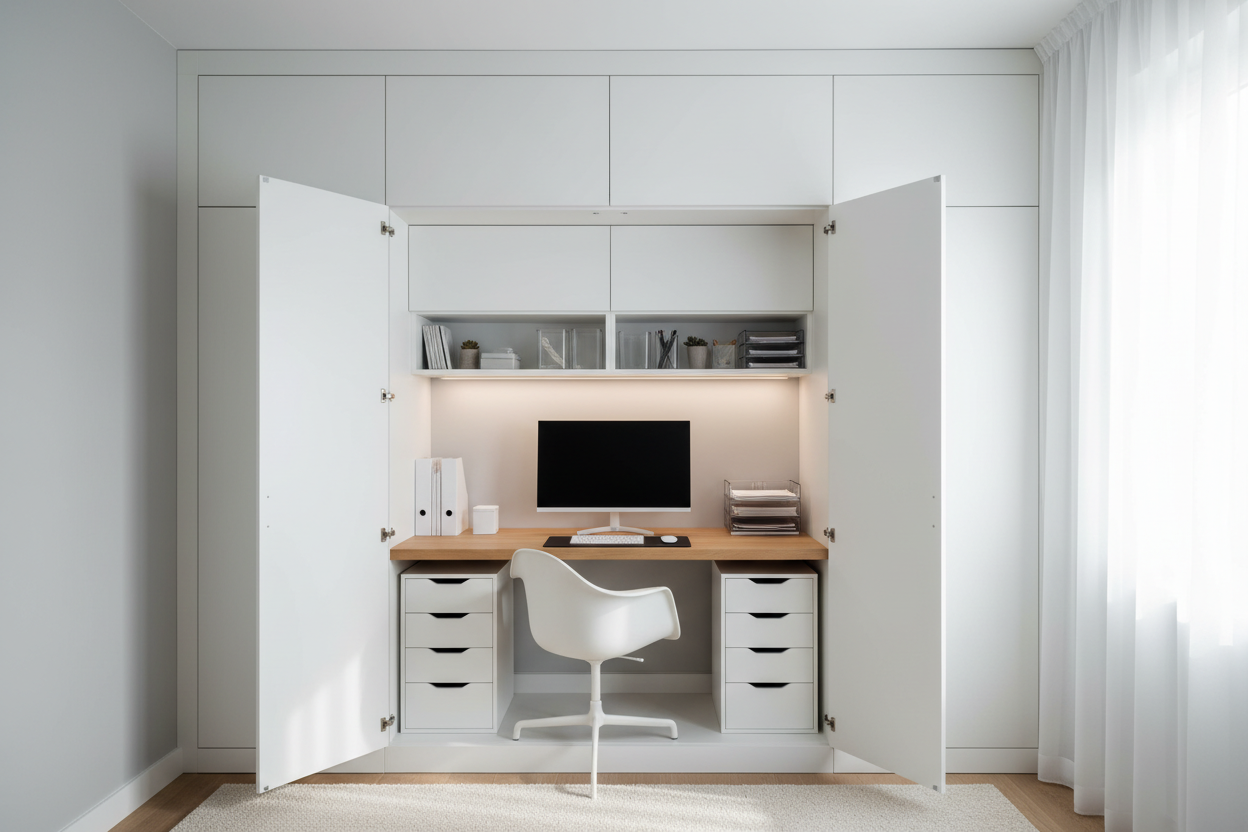
Visual clutter is the enemy of a restful home environment. When your workspace bleeds into your living area, it becomes impossible to truly switch off. As a designer, I frequently solve this by concealing technology behind joinery, creating a seamless transition from workday to evening relaxation. The most cost-effective yet high-end looking solution is creating an office in a cupboard ikea hack.
This approach allows you to maintain the architectural integrity of your room while harboring a fully functional workstation. Below, I will walk you through the structural and aesthetic considerations to ensure your hidden desk feels like a bespoke piece of furniture, not a temporary fix.
Key Features to Look For
- Depth Requirements: Ensure a minimum internal depth of 24 inches (approx. 60cm) to accommodate a monitor and keyboard comfortably.
- Hinge Functionality: Opt for 153-degree or 170-degree hinges so doors swing wide open, preventing obstruction of your elbows.
- Weight Capacity: Verify that the shelf or pull-out surface is reinforced (often requiring metal brackets) to support leaning weight.
- Cable Management: Plan for integrated grommets and ventilation to prevent hardware from overheating behind closed doors.
Choosing the Right Cabinet System
Not all Ikea lines are created equal when it comes to weight-bearing duties. While the PAX system is popular for wardrobes, it often lacks the structural rigidity required for a desk surface. For a truly robust built-in look, I almost exclusively recommend the SEKTION (kitchen) line.
The Sektion Desk Advantage
Using an ikea sektion desk setup allows for modular customization that bedroom furniture simply cannot offer. Kitchen cabinets are designed to hold heavy stone countertops, meaning the carcasses are incredibly stable. By utilizing ikea desk base cabinets (technically lower kitchen cabinets), you gain deep drawers perfect for filing and printer storage, ensuring the heavy lifting happens low to the ground.
Ergonomics and Vertical Space
The mistake many homeowners make is ignoring verticality. To achieve a balanced silhouette, you must pair your base units with office wall cabinets ikea styles that reach the ceiling. This draws the eye upward, making the room feel taller and more luxurious.
When installing ikea desk height cabinets, pay close attention to the finished height. Standard kitchen counters sit at 36 inches, which is too high for a seated desk (typically 29-30 inches). You will need to modify the toe-kick height or cut down the base cabinet frame slightly to achieve proper ergonomic alignment. Failing to do this will result in shoulder strain.
Materiality and Visual Balance
To elevate the piece from "flat-pack" to "custom joinery," focus on the touchpoints. Replace standard laminate tops with a solid wood veneer or a quartz remnant. The tactile experience of a cold stone or warm wood surface changes the psychology of the workspace.
Furthermore, consider the visual weight. If you have a wall of solid doors, the room can feel boxy. Break up the mass by using glass-fronted upper cabinets for books or display items, while keeping the chaotic work clutter hidden in the lower solid sections.
Lessons from My Own Projects
I recently designed a "cloffice" for a client in a pre-war apartment where every inch mattered. We used the PAX system initially, and it was a mistake I won't repeat. The back paneling on standard wardrobes is flimsy—essentially folded cardboard.
When we mounted the monitor arm, the entire back flexed. We had to retrofit a 3/4-inch plywood sheet inside the cabinet just to anchor the screen safely. Another unpolished detail to watch out for is the "knee knock." If you use a pull-out shelf for your keyboard, standard drawer runners often have a sharp metal edge on the underside. I now always wrap the underside of the keyboard tray mechanism with a thin felt strip to prevent snagging tights or scratching knees. It’s these invisible details that determine whether you love or hate using the space.
Conclusion
Creating a hidden office is about reclaiming your sanctuary without sacrificing productivity. By selecting the right carcass and paying attention to ergonomic heights, you can build a workspace that disappears the moment you close the doors. It is an investment in both your home's aesthetic and your mental separation between work and rest.
Frequently Asked Questions
How do I handle ventilation for a computer inside a cupboard?
Heat buildup is a serious concern. I recommend installing a mesh grill in the toe-kick area and cutting a small vent in the top of the cabinet (hidden by the crown molding) to create a chimney effect, allowing hot air to escape.
Can I use Ikea kitchen wall cabinets for the desk surface?
No. Wall cabinets are not deep enough (usually 15 inches) for a functional workspace. You must use base cabinets (24 inches deep) to ensure you have enough focal depth for your eyes to focus on a monitor comfortably.
What is the best way to hide the gap between the cabinet and the wall?
Use a "filler piece" or scribe molding. Ikea sells matching cover panels that should be cut to fit the specific contours of your wall. This eliminates shadow lines and gives the unit that built-in, architectural appearance.

Leave a comment
This site is protected by hCaptcha and the hCaptcha Privacy Policy and Terms of Service apply.