










I used to be a horizontal surface hoarder. If there was a flat plane of wood or laminate within arm's reach, it was destined to be covered in old mail, three different notebooks I never finished, and at least two lukewarm cups of coffee. It wasn't until I found myself trying to sign a legal document on the corner of a coaster that I realized I had no concept of what actually belonged at my desk or on my desk.
Quick Takeaways
- The desktop is for active work only; the area surrounding it is for storage.
- If you haven't touched an item in the last hour, it shouldn't be on the surface.
- Vertical storage and rolling carts are the best ways to keep the 'at the desk' zone functional.
- A daily five-minute reset is the only way to keep the ecosystem from collapsing.
The Great Preposition Debate: Area vs. Surface
Most people treat their workstation as a general geographic landing zone. They think about being 'at the desk' as a vague state of existence. But there is a massive psychological shift that happens when you start distinguishing between what is at the desk or on the desk. One is your environment; the other is your workbench.
My breakthrough came when I stopped viewing my desk as a piece of furniture and started viewing it as a high-performance tool. Everything 'at' the desk—the rug, the lamp, the trash can—supports the vibe. Everything 'on' the desk must support the immediate task. If you can't separate the room's ecosystem from the physical desktop, you'll never have enough room to actually think.
What Actually Deserves to Live On Your Desk
Prime real estate on your desktop should be harder to get into than an exclusive nightclub. I have a strict rule now: if it isn't a monitor, a keyboard, a mouse, or the specific notebook I am writing in right now, it gets evicted. Even my coffee cup has a designated side table because I've seen too many 'oops' moments ruin a perfectly good mechanical keyboard.
I found that a streamlined writing computer desk setup naturally forces this intentionality. When you have a surface that is designed for focus rather than storage, you stop seeing it as a place to park your stapler. You start valuing the empty space. That empty space is where your brain has room to breathe, and it's the first thing you lose when you let 'on the desk' become a catch-all.
Designing the Space At Your Desk (Without Ruining the Vibe)
The secret to a clean surface is a robust surrounding area. I use a rolling three-tier cart for all my reference books and tech gear. It stays within reach so I am technically 'at my desk,' but it never touches the actual work surface. I also swear by wall-mounted pegboards for headphones and cables.
When I spent a month standing at your desk, I realized that peripheral storage is even more vital. You don't want to be constantly bending down to the floor to grab a file. I moved my most-used items to eye-level shelving. This kept the 'at the desk' experience efficient without cluttering the 'on the desk' zone. If you have to move three things to get to your keyboard, your system is broken.
The Drawer Dilemma: In Your Desk or On Your Desk?
Desktop organizers are often a trap. Those cute acrylic trays usually just become tiny, visible junk drawers. The real battle is deciding what goes in your desk or on your desk. For me, 'in' is for the 'just in case' items—spare pens, batteries, and my stash of emergency chocolate. 'On' is for the 'right now' items.
If you find yourself constantly clearing off little piles of paper, you don't need a bigger desk; you need a better drawer system. I started using felt dividers inside my drawers to give every paperclip a home. Once you commit to keeping the clutter hidden, the urge to leave things out on the surface starts to fade. It’s about creating a boundary that protects your focus.
Stop Using Your Workspace as a Dumping Ground
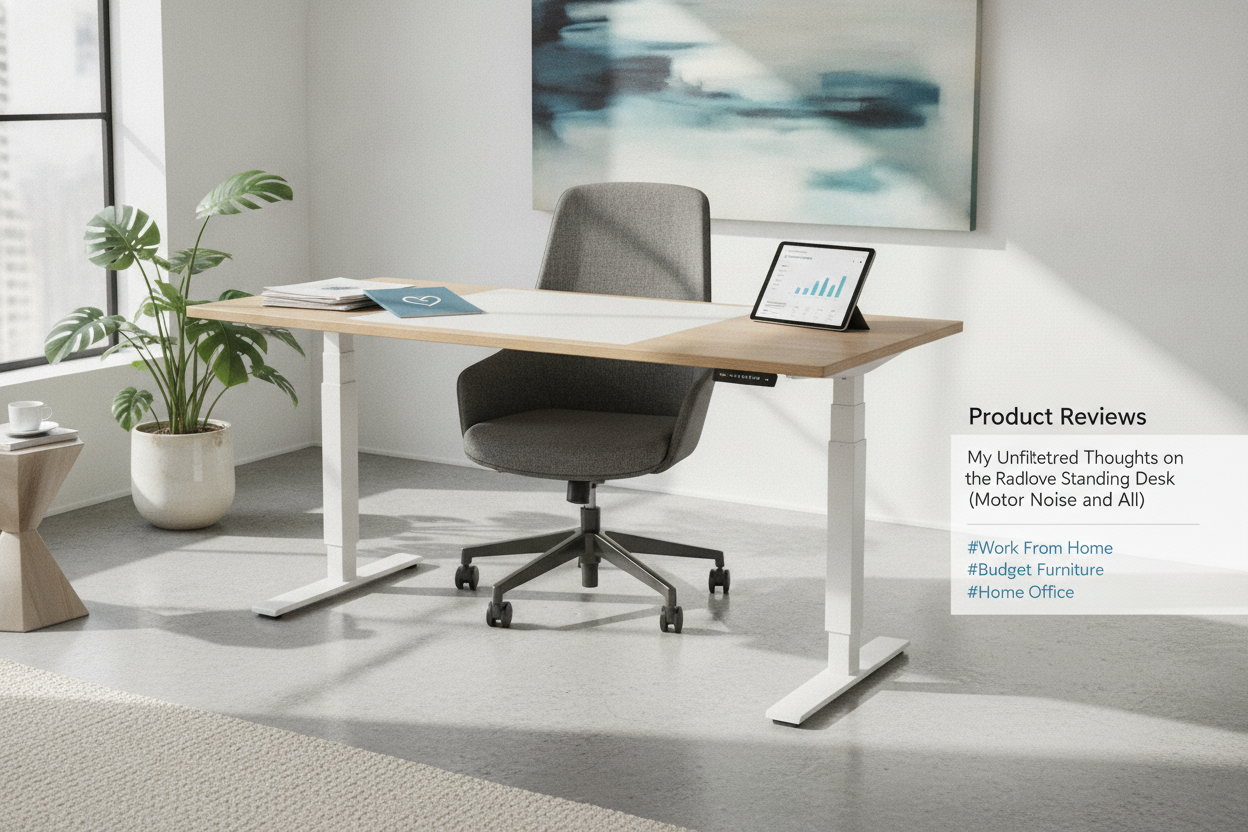
The hardest part isn't the initial clean—it's the maintenance. At the end of every day, I do a 'five-minute reset.' I clear the surface entirely. Upgrading to a high-quality ergonomic home office sit stand up desk actually made me care more about this. When you invest in a piece of furniture that feels professional, you're less likely to treat it like a kitchen counter.
Your desk is not a storage unit. It is a place where you produce work, solve problems, and create. By being brutal about what you allow to sit on that surface, you're not just organizing your room—you're organizing your mind. Keep the junk at the desk, keep the tools on the desk, and keep the distractions out of the room entirely.
FAQ
How do I handle cables without them cluttering the top?
Use an under-desk cable management tray. Everything should be routed underneath so the only thing on top is the actual device. If I see a wire snake, I lose my mind.
Is a desk mat necessary?
Yes, but not just for aesthetics. It defines the 'active' zone. Anything not on the mat is technically 'at' the desk and should probably be moved or put away.
What if I have a tiny desk?
Then your rules must be even more ruthless. Use a monitor arm to reclaim the footprint of your screen's stand. Every square inch you win back is a victory for your productivity.


Leave a comment
This site is protected by hCaptcha and the hCaptcha Privacy Policy and Terms of Service apply.