










We have all been there: trying to send a professional email while balancing a laptop on the kitchen island, surrounded by domestic chaos. It is a recipe for distraction and poor posture. As an interior designer, I often tell my clients that treating their workspace as an afterthought is the quickest way to kill productivity. Learning how to set home office layouts correctly is not just about buying a desk; it is about architectural psychology and ergonomic precision. This guide will walk you through curating a space that feels like a high-end study rather than a corporate cubicle.
Quick Decision Guide: The Essentials
- Orientation: Always aim for the "Command Position"—facing the door, not the wall.
- Lighting Layers: Combine ambient overhead light with focused task lighting (aim for 3000K-4000K temperature).
- Ergonomics: Your elbows should be at a 90-degree angle when typing; prioritize chair adjustability over aesthetics.
- Materiality: Choose matte finishes (wood, laminate) over glass to reduce glare and tactile coldness.
- Acoustics: Incorporate soft furnishings like rugs or drapery to dampen echo.
Mastering the Layout and Flow
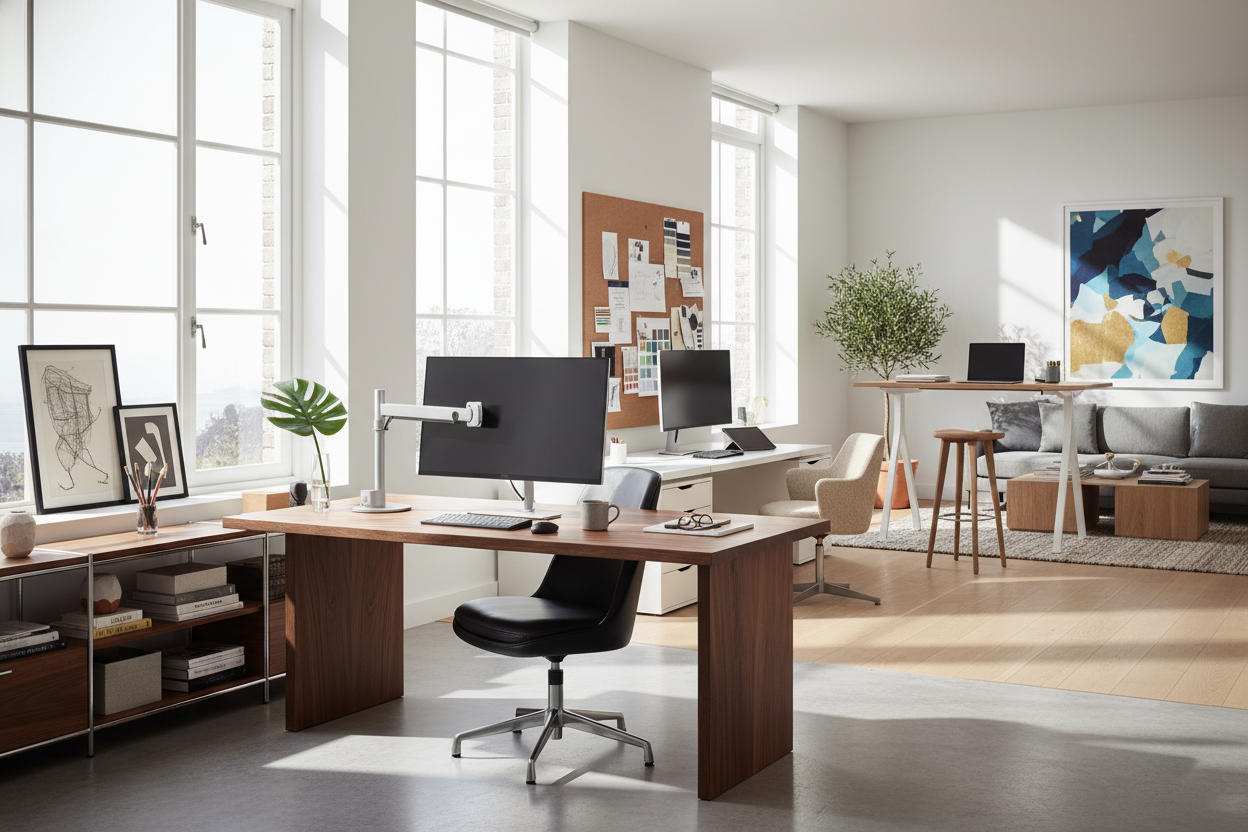
When setting up an office at home, the biggest error I see is the "dungeon effect"—pushing the desk flush against a wall. This creates a visual dead-end. Instead, float the desk in the room if space permits. This anchors the room and allows you to keep an eye on the entrance, a subconscious signal that lowers anxiety and boosts focus.
If you are working with a compact footprint, utilize verticality. Floating shelves above the workspace draw the eye upward, making the room feel larger while providing essential storage for reference materials and decor.
Furniture Selection: Function Meets Form
To set up your home office for longevity, invest in the chair first, the desk second. A stunning mid-century modern chair with zero lumbar support will become a torture device by 2:00 PM. Look for task chairs that offer a synchro-tilt mechanism and breathable mesh or high-quality leather.
The Desk Dilemma
For the surface, consider the visual weight. In smaller rooms, a writing desk with slender legs (parson style) keeps the floor visible and the room feeling airy. For executive gravity, a double-pedestal desk in walnut or white oak adds warmth and texture. Pay close attention to the depth; you need at least 30 inches to accommodate a monitor and keyboard without cramping your wrists.
Lighting: The Invisible Design Element
Poor lighting causes eye strain faster than a small screen. Avoid relying solely on recessed can lights, which cast unflattering shadows on your face during video calls. Layer your lighting. A dedicated task lamp with an adjustable arm is non-negotiable. Position it opposite your writing hand to prevent shadows while you write.
My Personal Take on how to set home office
I learned a hard lesson early in my career regarding materials. Years ago, I fell in love with a sleek, tempered glass desk for my home office desk. It looked architectural and virtually invisible in the showroom.
The reality? It was a nightmare. Every single fingerprint was visible, requiring constant Windex. Worse yet, in the winter, the glass sapped the heat right out of my wrists, making typing uncomfortable after twenty minutes. I also hadn't considered cable management—glass hides nothing. I spent weeks trying to zip-tie cables down the metal legs, but it never looked clean. Now, I exclusively recommend wood or high-quality matte laminates. They are warmer to the touch, hide dust, and offer modesty panels to conceal the inevitable wire spaghetti.
Conclusion
Your workspace should be a destination, not just a utility. By balancing ergonomic rigor with sophisticated textures and proper lighting, you create an environment that respects your profession. Take the time to measure, select tactile materials, and position your furniture with intent.
Frequently Asked Questions
What is the minimum space needed for a home office?
Ideally, you need a minimum of 60 inches in width and 84 inches in depth to allow for a desk and chair movement. However, a functional "cloffice" (closet office) can be achieved in spaces as shallow as 24 inches if you use wall-mounted solutions.
How do I hide wires in a floating desk setup?
If your desk lacks built-in grommets, mount a cable tray or J-channel underneath the back edge of the desktop. Run all cords through a cable sleeve that matches your wall color, guiding them down a single leg to the outlet.
Should my desk face the window?
While a view is nice, facing a window directly often causes brightness contrast issues for your eyes and backlighting problems for your webcam. It is better to position the desk perpendicular to the window so the light washes across your workspace from the side.


Leave a comment
This site is protected by hCaptcha and the hCaptcha Privacy Policy and Terms of Service apply.