










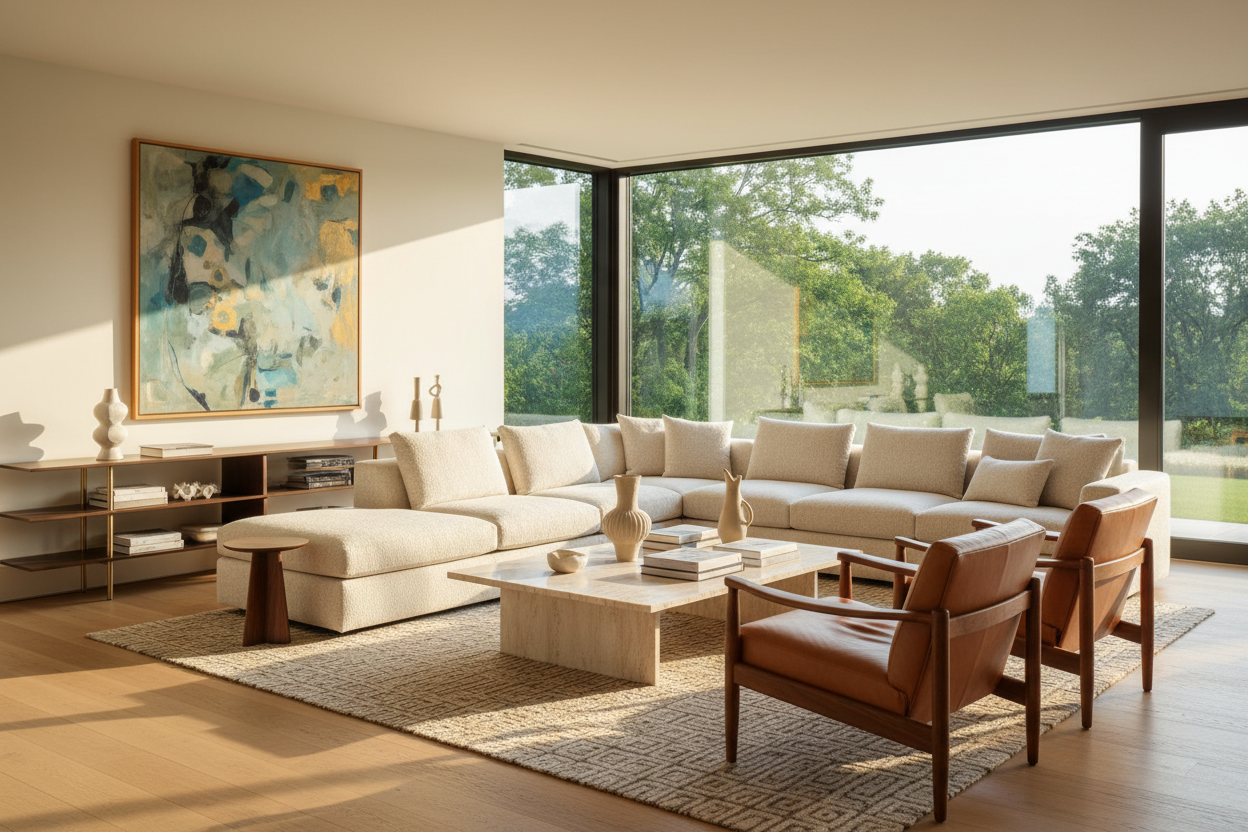
There is nothing more frustrating than falling in love with a sofa's aesthetic, only to have the cushions collapse or the fabric pill within six months. As a designer, I see this heartbreak constantly. The difference between a showroom beauty and a piece that endures lies in the hidden details of construction. This guide strips away the marketing fluff to help you identify quality living room furniture that offers both lasting style and structural integrity.
Quick Decision Guide: The "Must-Haves"
If you are scanning product descriptions or walking a showroom floor, check these four critical pillars before pulling out your credit card:
- Kiln-Dried Hardwood Frames: Avoid particle board or metal staples; look for solid wood that resists warping.
- Advanced Joinery: Corner blocking, dowels, and screws indicate superior structural stability compared to glue alone.
- High-Resiliency Foam: For upholstery, density matters. Look for a density rating of 1.8 lbs or higher to prevent sagging.
- Suspension Systems: Eight-way hand-tied springs are the gold standard, though heavy-gauge sinuous springs are acceptable for modern, low-profile silhouettes.
Decoding Construction: What Lies Beneath
When curating a space, the "bones" of the furniture are far more important than the fabric covering them. True luxury is not just about the visual; it is about the engineering.
The Frame Foundation
The longevity of good quality living room furniture starts with the frame. In my projects, I strictly avoid softwoods like pine unless they are kiln-dried to remove moisture. Moisture causes wood to shrink and crack over time. When testing a piece, lift one front corner of the sofa or chair six inches off the ground. If the other front leg does not rise immediately, the frame is too flexible and lacks proper bracing.
Suspension and Support
The suspension is the shock absorber of your seating. While eight-way hand-tied springs offer the most customized support, they require a deeper seat deck. For sleeker, contemporary Italian designs, you will often find web suspension. However, be wary: high-quality webbing should feel taut like a drum. If you press down and it feels hammock-like, walk away.
Textiles and Tactility: Choosing the Right Skin
Selecting the right upholstery is a balance of ergonomics and durability. I always advise clients to look at the "double rub" count—a measure of abrasion resistance.
Natural vs. Performance Fabrics
While linen and cotton offer a beautiful, breathable hand-feel, they are susceptible to staining. For high-traffic family rooms, I recommend performance velvets or crypton fabrics. These mimic the texture of natural fibers but offer industrial-grade resistance to spills. If you prefer leather, insist on full-grain or top-grain. Bonded leather is essentially a synthetic slurry on a paper backing and will peel within years.
Visual Balance and Scale
Quality is also about how the furniture interacts with your architecture. A common error is buying pieces that are too large, choking the room's flow. Allow for at least 30 inches of walking paths between pieces. Furthermore, vary the "leg lines" in the room. If your sofa has a skirt that goes to the floor, pair it with armchairs that have exposed legs to maintain a sense of airiness.
My Personal Take on Quality Living Room Furniture
I learned a hard lesson early in my career regarding "fast furniture" versus investment pieces. I once sourced a stunning, budget-friendly sectional for a client who wanted a specific mid-century look without the price tag. Visually, it was perfect.
However, six months later, I visited for a follow-up. The difference was shocking. The specific issue wasn't even the fabric—it was the foam. The seat cushions had developed permanent "valleys" where the family sat every night, and the back cushions looked like deflated balloons. But the worst part? The squeak. Every time someone sat down, the cheap plywood frame groaned against the metal springs. It was embarrassing for me and frustrating for them. Since then, I refuse to specify upholstery where I cannot verify the foam density (aim for 2.0 lbs if you can) and the frame joinery. It is better to wait and save for the right piece than to pay twice for the wrong one.
Conclusion
Investing in your home is not just about spending money; it is about spending wisely. By prioritizing construction integrity over fleeting trends, you ensure your living room remains a sanctuary of comfort for decades, not just seasons. Take your time, ask the hard questions about materials, and curate a space that truly serves you.
Frequently Asked Questions
How can I tell if a sofa is high quality without seeing the inside?
Weight is a great indicator. High-quality frames and dense foam are heavy. If a sofa feels suspiciously light or slides too easily when you bump it, it likely uses inferior materials.
Is custom furniture worth the extra cost?
Yes, if you have specific spatial constraints or ergonomic needs. Custom upholstery allows you to dictate the seat depth and cushion fill (e.g., down-wrapped vs. firm foam), ensuring the piece fits your body perfectly.
What is the most durable fabric for pets?
Tight-weave synthetic blends or distressed leather are best. Distressed leather hides claw marks well, developing a rich patina over time, while tight weaves prevent claws from snagging the threads.


Leave a comment
This site is protected by hCaptcha and the hCaptcha Privacy Policy and Terms of Service apply.