










There is a misconception in interior design that a high-end workspace requires a four-figure solid walnut slab. As a designer, I frequently advise clients to allocate their budget differently. You can achieve a sophisticated, highly functional workspace without draining your savings on the surface itself. The secret lies not in the price tag of the furniture, but in the curation of the environment—lighting, texture, and cable management. By applying fundamental design principles, a **cheap desk setup** can rival the aesthetic of a bespoke executive suite.
Quick Decision Guide: Elevating Budget Furniture
- Surface Texture: Opt for matte or textured finishes over high-gloss laminates, which tend to show scratches and fingerprints, revealing the price point immediately.
- Leg Stability: Look for metal legs with adjustable feet to combat uneven floors; wobble is the enemy of a premium feel.
- Visual Weight: In small spaces, choose open-frame legs to maintain an airy silhouette; for larger rooms, a desk with side storage anchors the space.
- Hardware Upgrades: If your budget desk setup comes with drawers, immediately swap the stock handles for brushed brass or matte black hardware.
Choosing Materials That Lie to the Eye
When sourcing affordable furniture, material selection is paramount. Avoid the standard "shiny white" laminate often found in big-box stores. It reflects light harshly and creates a sterile, clinical atmosphere. Instead, look for high-quality melamine with a wood grain texture or a faux-concrete finish.
If you must go with a hollow-core door or particle board top to save costs, focus on the edge banding. Thicker edge banding (1mm or more) mimics the look of solid wood. If the edges are sharp and thin, they will eventually peel and dig into your forearms, ruining both the ergonomic experience and the visual integrity of the piece.
The Importance of Visual Balance and Layout
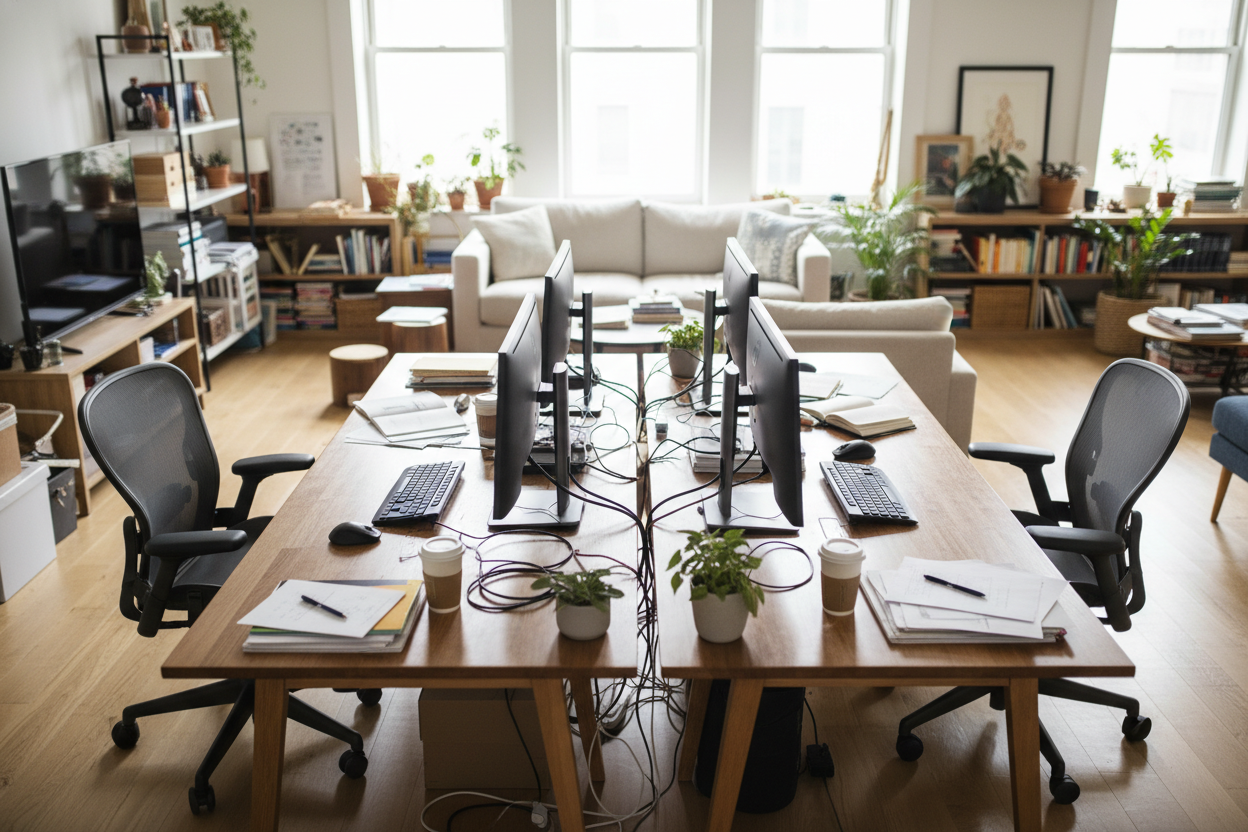
A common error with a budget desk setup is pushing it flush against a wall in a corner, which highlights the compact nature of the furniture. If space permits, try "floating" the desk perpendicular to the wall or facing into the room. This command position changes the focal point from the furniture itself to the person utilizing the space.
Furthermore, consider the visual weight of your peripherals. A cheap desk often lacks the structural rigidity to support a heavy triple-monitor mount without bowing. Distribute weight evenly. If you are using a clamp mount, reinforce the underside of the desk with a small block of wood or a steel reinforcement plate to prevent the clamp from crushing the honeycomb filler inside hollow desks.
Lighting: The Ultimate luxury Hack
Lighting is where you can truly mask the humble origins of your furniture. Overhead lighting is unflattering and utilitarian. To create a luxury atmosphere, layer your lighting:
- Task Lighting: A monitor light bar saves desk real estate and reduces eye strain, offering a modern, minimalist silhouette.
- Ambient Lighting: Place a warm-toned LED strip (approx. 2700K-3000K) behind the rear edge of the desk. This creates a "wash" of light against the wall, adding depth and reducing the contrast between your screen and the dark room.
My Personal Take on Cheap Desk Setups
I learned a hard lesson about budget furniture early in my career while staging a home office for a client in a rental property. We bought a very popular, affordable tabletop that was essentially honeycomb cardboard sandwiched between thin veneer. It looked fantastic in photos.
However, when I returned two weeks later to check on the client, I noticed a distinct "crunch" sound every time they adjusted their heavy microphone arm. The clamp had slowly crushed the internal structure of the desk because there was no solid wood to grip. Furthermore, the matte black finish—while stylish—was a nightmare for oil stains. I could see exactly where their wrists rested. Since then, I always advise clients: if you buy a hollow-core budget desk, use a large desk mat. It covers the inevitable wear spots and adds a tactile layer of luxury that the desk surface itself lacks. It’s a $20 fix that saves the furniture and improves the feel immediately.
Conclusion
Creating an inspiring workspace isn't about how much you spend; it's about how you curate the elements. By selecting the right textures, managing your cables ruthlessly, and lighting the space with intention, you can transform a modest investment into a design-forward haven. Trust your eye, not just your wallet.
Frequently Asked Questions
Can I paint a cheap laminate desk to make it look better?
Yes, but it requires preparation. You must sand the laminate surface to create a "key" for the paint to adhere to, use a high-adhesion bonding primer, and finish with an enamel paint for durability. However, using high-quality contact paper is often a cleaner, more durable solution for beginners.
How do I stop a lightweight budget desk from wobbling?
Wobble is usually caused by uneven floors or lightweight frames. First, adjust the leveling feet. If the desk is still unstable, push it against a wall to anchor it, or place a heavy storage unit (like a filing cabinet) underneath or beside it to add mass and friction.
What is the best depth for a desk setup?
For a standard setup, a depth of 24 inches (60cm) is the minimum for comfort. However, if you use a large monitor (27 inches or larger), aim for 30 inches (75cm) of depth. This ensures your eyes are at the correct focal distance, regardless of the desk's price point.

Leave a comment
This site is protected by hCaptcha and the hCaptcha Privacy Policy and Terms of Service apply.