










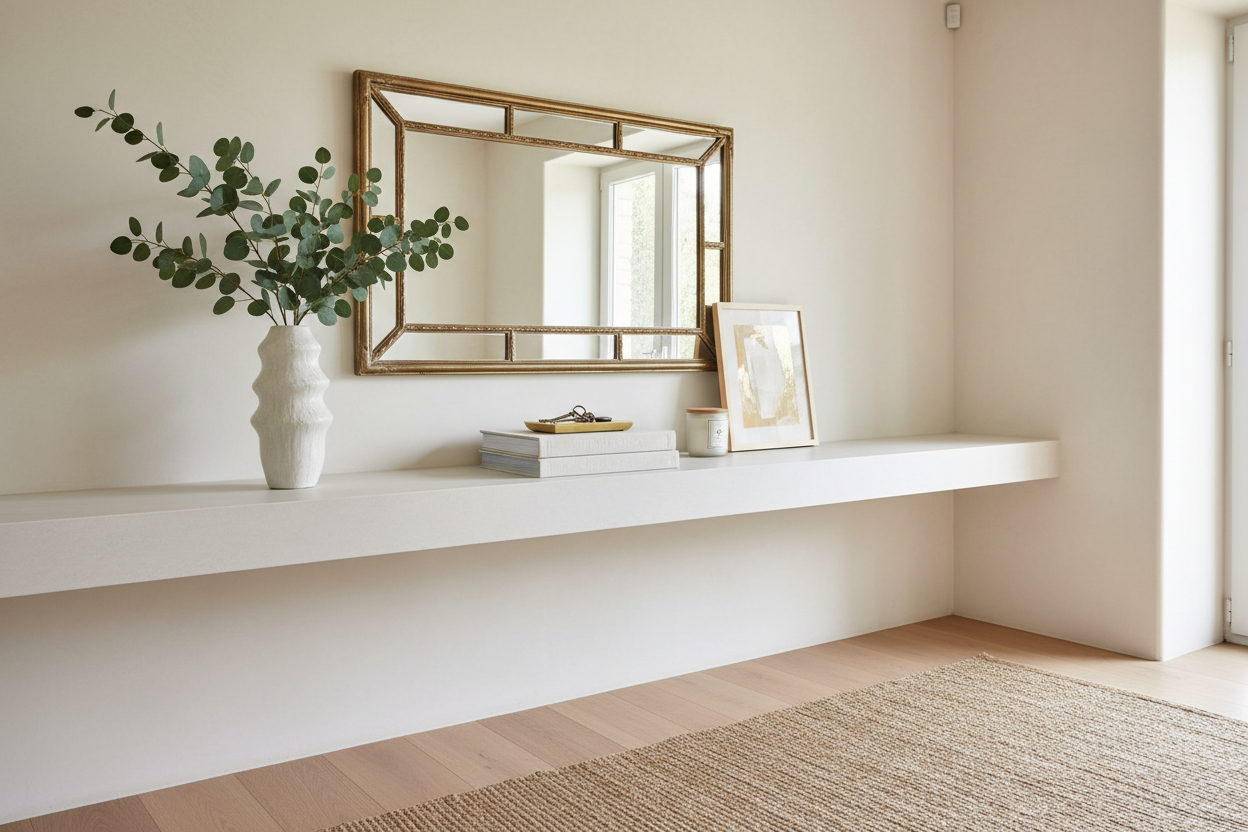
The foyer is the handshake of your home; it sets the tone before a guest even takes off their coat. Yet, this high-traffic zone often devolves into a chaotic collection of mail, keys, and bags. A well-chosen white entryway shelf does more than just hold your essentials—it acts as an architectural highlighter, bouncing light into often-dim corridors and providing a crisp, neutral canvas for styling. Whether you are working with a sprawling vestibule or a tight urban hallway, selecting the right piece requires balancing visual weight with functional durability.
Key Features to Look For
- Finish Durability: Look for catalyzed lacquer or high-pressure laminate (HPL) rather than standard foil veneer to resist key scratches.
- Depth Constraints: For narrow hallways, ensure the depth does not exceed 10–12 inches to maintain comfortable traffic flow.
- Weight Capacity: If using a floating design, verify it includes heavy-duty brackets capable of supporting at least 30 lbs (for mirrors or leaning art).
- Undertone Matching: Identify if the white is cool (blue-based) or warm (cream-based) to prevent clashing with your existing trim.
Choosing the Right Material for Longevity
In my years sourcing furniture, I have seen clients prioritize silhouette over substance, only to regret it six months later. When selecting white furniture, the material core is critical because white shows wear faster than wood grains.
Solid Wood vs. Engineered Composites
While solid wood is often the gold standard, painted solid wood can develop hairline cracks at the joints due to humidity expansion. For a white painted finish, high-quality MDF (Medium Density Fiberboard) is actually often superior because it is stable and provides a glass-smooth surface free of grain texture. However, if you prefer a "whitewashed" look where the grain peeks through, stick to solid oak or ash.
The Finish Factor
The sheen level dictates the vibe. A high-gloss finish reflects light and feels ultra-modern, making small spaces feel larger. However, it is a fingerprint magnet. A satin or matte finish offers a more sophisticated, understated elegance that blends seamlessly with traditional or farmhouse aesthetics.
Space Planning & Ergonomics
Placement is just as vital as the piece itself. A shelf mounted too high feels disconnected; too low, and it becomes a tripping hazard.
The Ideal Mounting Height
For a floating shelf used as a console, the sweet spot is typically 30 to 36 inches from the floor. This places the surface at a comfortable height for dropping keys without bending down. If you are placing a mirror above it, leave 4 to 6 inches of breathing room between the shelf surface and the bottom of the frame to avoid visual crowding.
Styling for Visual Balance
A white shelf is a blank slate, which can be a blessing or a curse. Without proper styling, it can look sterile—reminiscent of a hospital corridor rather than a home.
To create warmth, rely on texture. Contrast the sleek white surface with organic elements like a woven wicker mail basket, a clay bowl for keys, or a brass lamp. Use the "Rule of Three" to arrange items: a tall element (like a vase with greenery), a horizontal element (a stack of design books), and a sculptural object. This triangulation keeps the eye moving and prevents the shelf from looking cluttered.
My Personal Take on white entryway shelf
I want to share a specific lesson from a renovation I did in a pre-war apartment in Chicago. We installed a beautiful, matte white floating shelf in a very narrow entry. It looked pristine on install day.
Two months later, the client called me. The issue wasn't the structure—it was the "denim transfer." Because the hallway was tight, people were brushing against the edge of the shelf with their jeans as they walked by. The matte finish, which has a microscopic texture, was grabbing the blue dye like a mild abrasive.
I learned the hard way that for high-traffic, narrow spaces, a semi-gloss finish is far more forgiving and easier to wipe down. Also, I now always recommend a "magic eraser" sponge as an essential maintenance tool for anyone buying white entry furniture. It’s these unglamorous details that dictate whether you love a piece for years or resent it after a season.
Conclusion
Integrating a white entryway shelf is a strategic design move that elevates your foyer from a drop zone to a curated vignette. By focusing on the correct undertones, durable finishes, and ergonomic placement, you ensure the piece serves your lifestyle while enduring the daily rush.
Frequently Asked Questions
How do I prevent my white shelf from yellowing over time?
Yellowing is usually caused by UV exposure affecting oil-based paints or lacquers. To prevent this, choose furniture finished with water-based acrylics or UV-resistant polyurethane, and try to avoid placing the shelf in direct, harsh sunlight.
Can I install a floating shelf on drywall without studs?
Technically yes, using heavy-duty toggle bolts, but I strongly advise against it for an entryway. Since people often lean on these surfaces while putting on shoes, anchoring at least one side into a wall stud is crucial for safety.
What is the best depth for a shelf in a narrow hallway?
If your hallway is less than 40 inches wide, keep the shelf depth under 10 inches. This ensures you don't compromise the walking path or create a "hip-bruiser" obstacle in the dark.


Leave a comment
This site is protected by hCaptcha and the hCaptcha Privacy Policy and Terms of Service apply.