










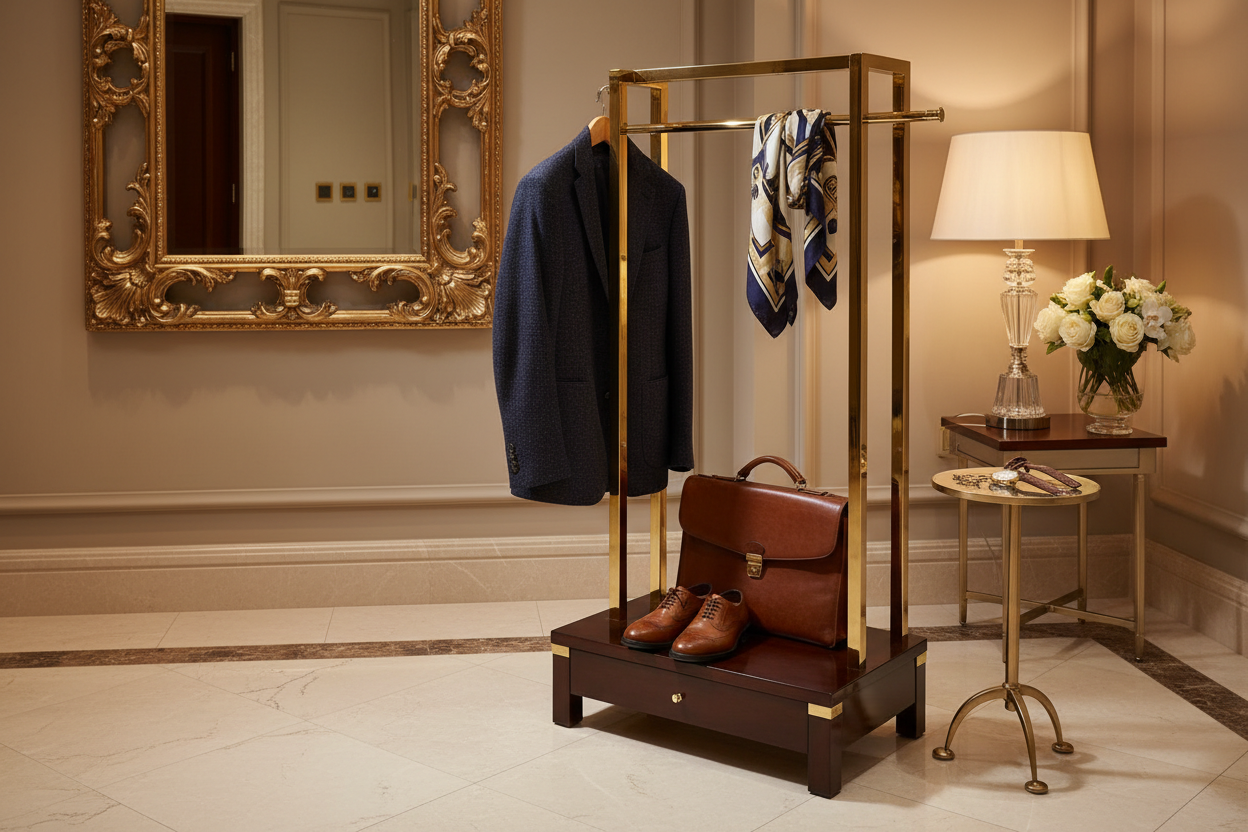
The foyer is the handshake of the home; it sets the tone before a guest even steps into the living room. Yet, too often, this critical transition space descends into chaos—a clutter of keys, mail, and discarded outerwear. As a designer, I frequently see homeowners try to solve this with bulky cabinets that overwhelm the space. A more refined solution is the entryway valet. This piece offers the functionality of a mudroom locker but with the slender silhouette of high-end furniture, ensuring your home remains curated rather than cluttered.
Key Features to Look For
- Weighted Base: Essential for stability, especially when hanging heavy winter coats on one side.
- Integrated Catch-All: Look for a tray or drawer at waist height for keys and wallets to prevent surface scratching.
- Material Integrity: Solid hardwoods (walnut, oak) or powder-coated steel offer longevity over particle board.
- Vertical Profile: A slim footprint is crucial to maintain at least 36 inches of walking clearance in the hall.
Selecting the Right Materials
When specifying a hallway valet, material choice dictates both durability and aesthetic cohesion. For a warm, organic modern feel, solid wood is superior. However, be wary of softwoods like pine which dent easily under the duress of metal zippers and heavy bags. I often recommend hardwoods like walnut or white oak; they develop a beautiful patina over time rather than looking worn.
If your aesthetic leans industrial or contemporary, a metal entryway storage valet is an excellent choice. Ensure the finish is high-quality—anodized aluminum or powder-coated steel resists chipping better than painted metal. Pay close attention to the joinery; visible welds should be ground smooth to avoid snagging delicate fabrics like silk scarves or wool cardigans.
Spatial Planning and Ergonomics
The placement of a valet is as important as the piece itself. In a narrow corridor, you are battling for inches. A standard mudroom valet might be too deep. Look for a design that sits flush against the wall or has a semi-circular footprint to reduce visual bulk.
Ergonomically, the hook height matters. A valet isn't just a sculpture; it is a tool. The primary hooks should be accessible without stretching (roughly 60-65 inches high), while the secondary storage for umbrellas or bags should be low enough to keep the visual weight grounded, preventing the piece from looking top-heavy.
Visual Balance and Styling
To achieve a luxury look, treat the valet as a vignette. Do not overload it. It is intended for the coat you are wearing today, not your entire winter wardrobe. Pair the valet with a runner rug to define the zone and perhaps a small wall sconce above it to create ambient lighting. This turns a purely functional spot into a deliberate design moment.
Lessons from My Own Projects
I learned the hard way about the importance of "load balance" early in my career. I specified a stunning, sculptural cantilevered valet for a client in a high-traffic Chicago apartment. It looked like art. However, the first time the client hung a heavy, wet wool trench coat on the extended arm without counterbalancing it, the entire unit became unstable.
It was an embarrassing oversight. Now, whenever I source a valet, I physically test it in the showroom. I bring a heavy bag and hang it on the outermost hook. If the base lifts even a millimeter, I walk away. I also check the "tray" texture—I once bought a valet with a metal key tray that made a loud, jarring clatter every time keys were dropped. Now, I always line those trays with leather or felt for my clients. It’s those silent details that define luxury.
Conclusion
An entryway valet is more than a coat rack; it is a discipline in design. It forces you to edit your belongings and treat your entry with respect. By focusing on material quality, stability, and proper scale, you can turn a chaotic drop zone into a serene, welcoming entrance.
Frequently Asked Questions
What is the ideal height for an entryway valet?
Most standard valets range between 45 to 70 inches tall. For an entryway, aim for something around 65 to 70 inches to accommodate long coats without them touching the floor, while keeping the shelf or tray at a comfortable 30 to 36 inches.
Can a valet work in a house without a mudroom?
Absolutely. In fact, that is where they shine. A mudroom valet is designed to condense the storage needs of a full room—shoe rack, coat hook, and console table—into a single vertical footprint, making it perfect for homes lacking dedicated transition spaces.
How do I prevent the valet from scratching my floor?
Since valets are high-traffic items, they shift slightly when items are grabbed in a hurry. Always apply high-density felt pads to the feet. Avoid rubber pads on hardwood floors, as the chemical reaction can sometimes discolor the wood finish over time.

Leave a comment
This site is protected by hCaptcha and the hCaptcha Privacy Policy and Terms of Service apply.